The Island Enoshima — History & Analysis
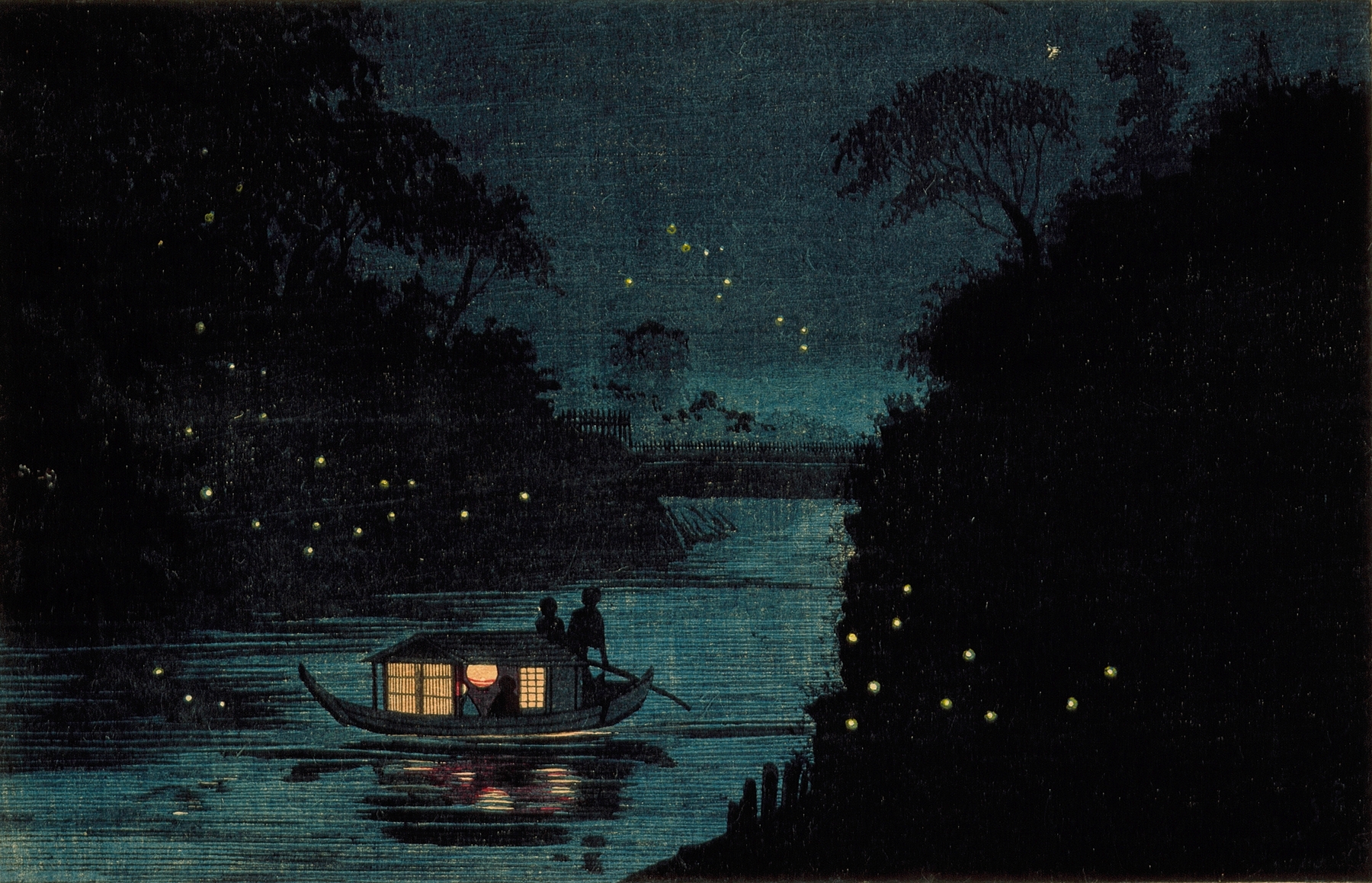
“Every silence here is a confession.” In the gentle embrace of twilight, the whisper of mortality lingers in the air, making each vibrant stroke of color resonate with the weight of existence. Look to the horizon, where the azure waves kiss the shore, and the golden hues of sunset intertwine with the soft silhouette of Enoshima Island. The artist employs a delicate balance of light and shadow, using subtle gradations to evoke an atmospheric depth that invites contemplation. Notice how the warm ochres and deep blues create a symphony of tranquility, contrasting the fleeting beauty of the scene with the inevitable passage of time.
In this tableau, the juxtaposition of serenity and impermanence emerges: the island stands resolute against the ebbing tide, yet its form too is subject to the relentless force of nature. The rhythmic strokes evoke the motion of waves, a reminder of life's ceaseless cycles, while distant figures hint at the transient human experience. Each element encapsulates a moment suspended in time, urging the observer to reflect on their own temporal journey amid the stillness.
Painted in 1896, this work came during a period of dynamic change in Japan, where traditional aesthetics began to interact with Western influences. Kiyochika was known for his mastery of light and color, and during this time, he sought to portray the nuances of modernity mixed with the essence of Japanese culture. His exploration of themes like nature and mortality resonates deeply, capturing a transitional era in both his life and the broader art world.