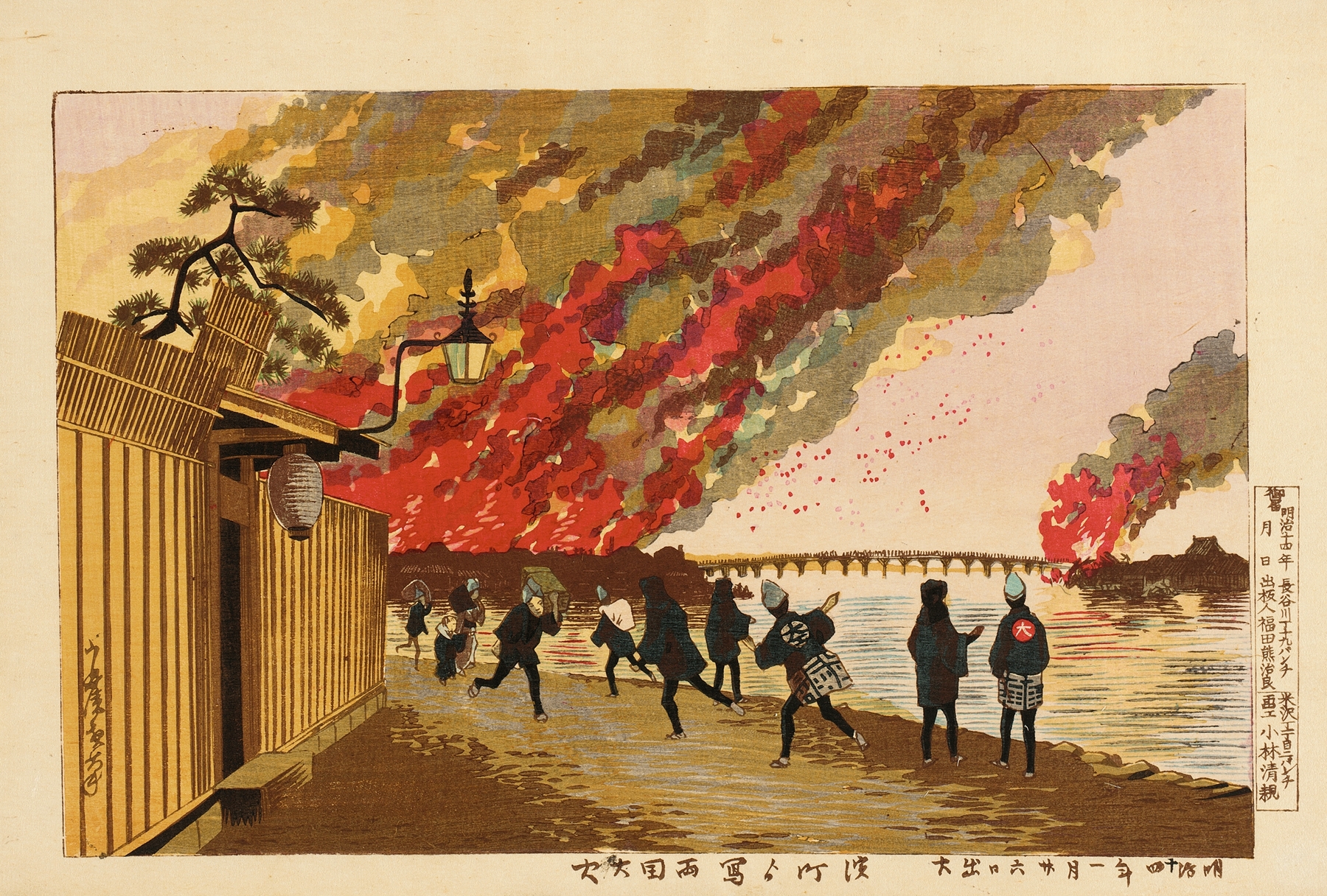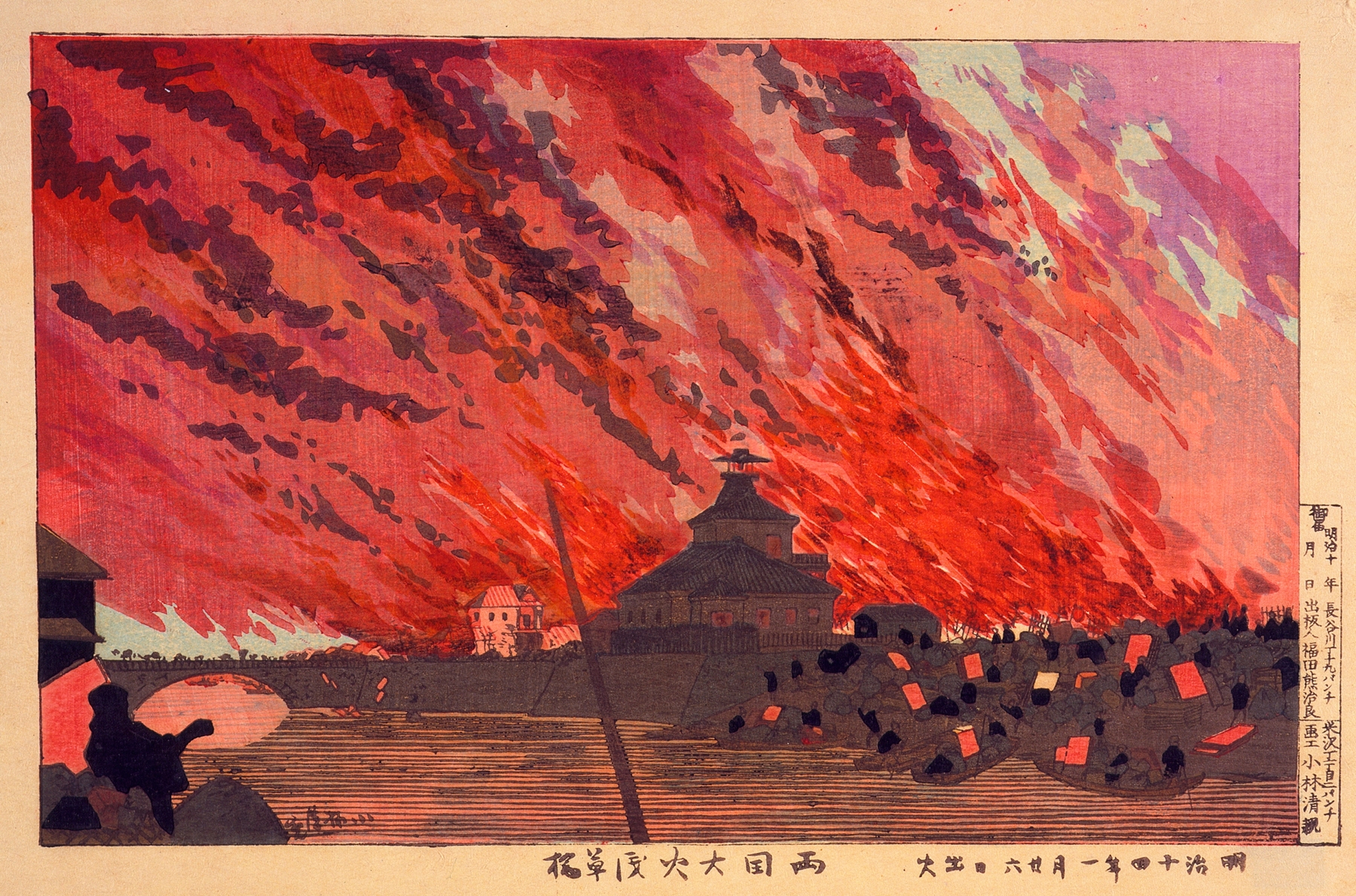
The Great Fire at Ryōgoku Bridge, Viewed from Asakusa Bridge on the 26th of January, 1881 — History & Analysis
Is this a mirror — or a memory? The flames leaping toward the night sky remind us that beauty can exist even in devastation, encapsulating the sorrow of loss that reverberates through time. Focus on the vivid orange and crimson hues emanating from the fire, contrasting sharply with the deep indigo of the night. Look to the left, where the silhouette of Ryōgoku Bridge frames the chaos, creating a stark division between the serene observer and the turmoil beyond.
Notice how the brushstrokes pulsate with energy, mimicking the flicker of the flames that dance with abandon, pulling the viewer's eye toward the inferno that dominates the scene. Beneath the vibrant hues lies a profound tension between destruction and resilience. The figures in the foreground, seemingly distant witnesses to the calamity, embody a mixture of awe and grief, each person lost in their own contemplation of what has been lost. The juxtaposition of the towering flames and the tranquil observers invites reflection on how beauty can emerge from grief, hinting at the dual nature of existence itself.
Created in 1881, this masterpiece emerged during a time when Japan was grappling with rapid modernization and its associated struggles. Kobayashi Kiyochika painted this scene amid the transforming landscape of Tokyo, where traditional values clashed with the onslaught of Western influence. His work not only captured a moment of chaos but also served as a poignant commentary on the emotional turmoil experienced by a society in flux.