Springtime, Harlem River — History & Analysis
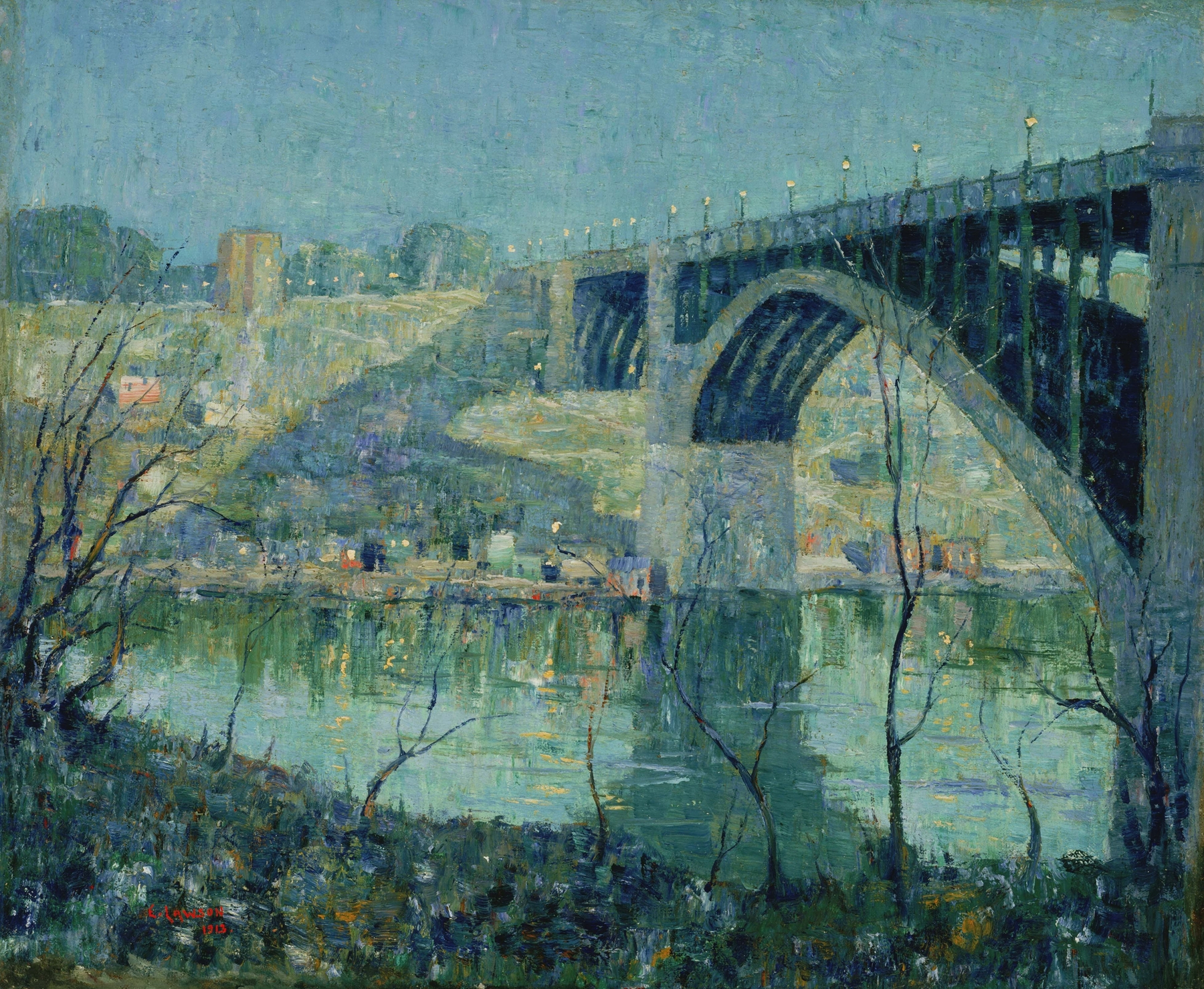
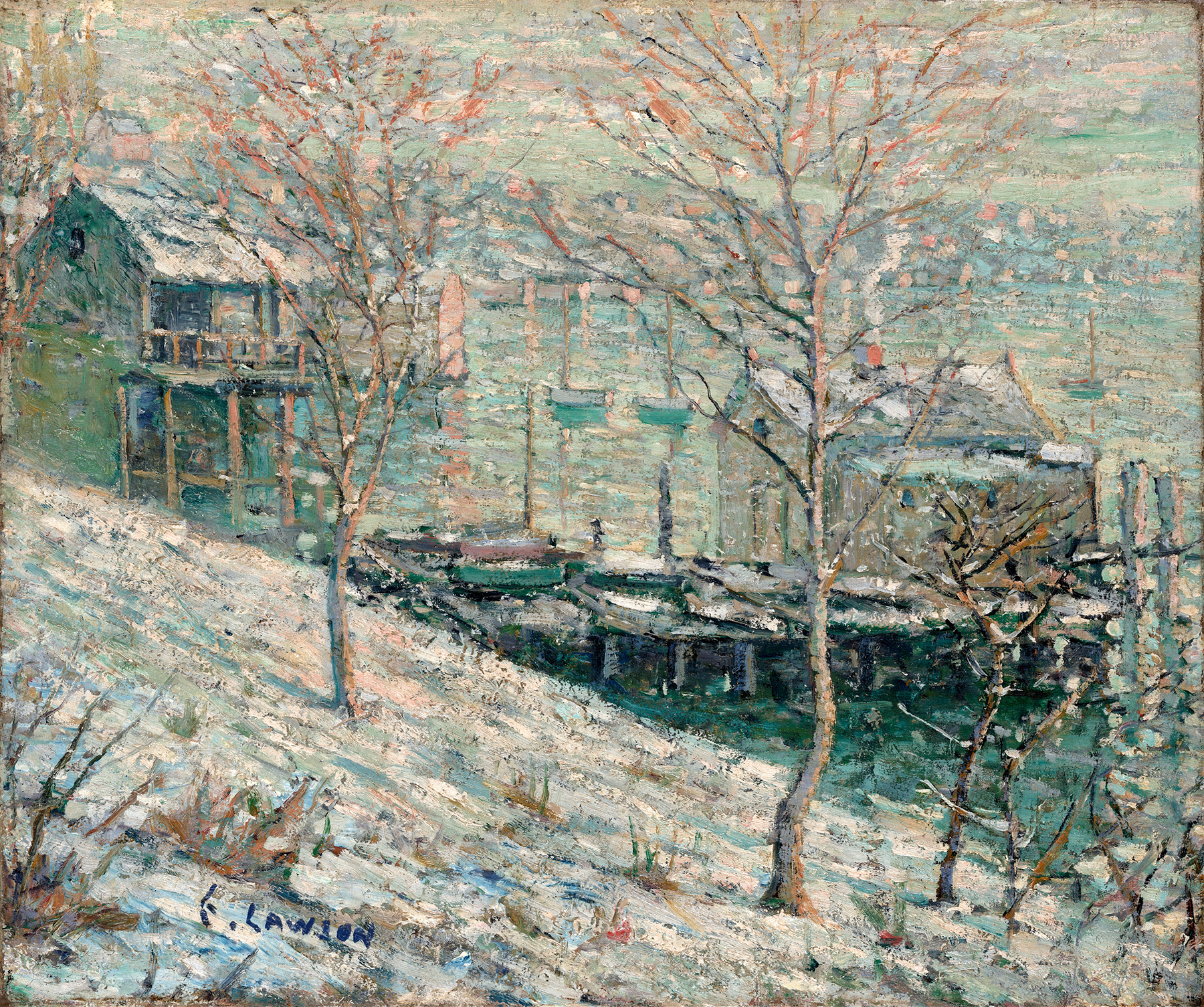
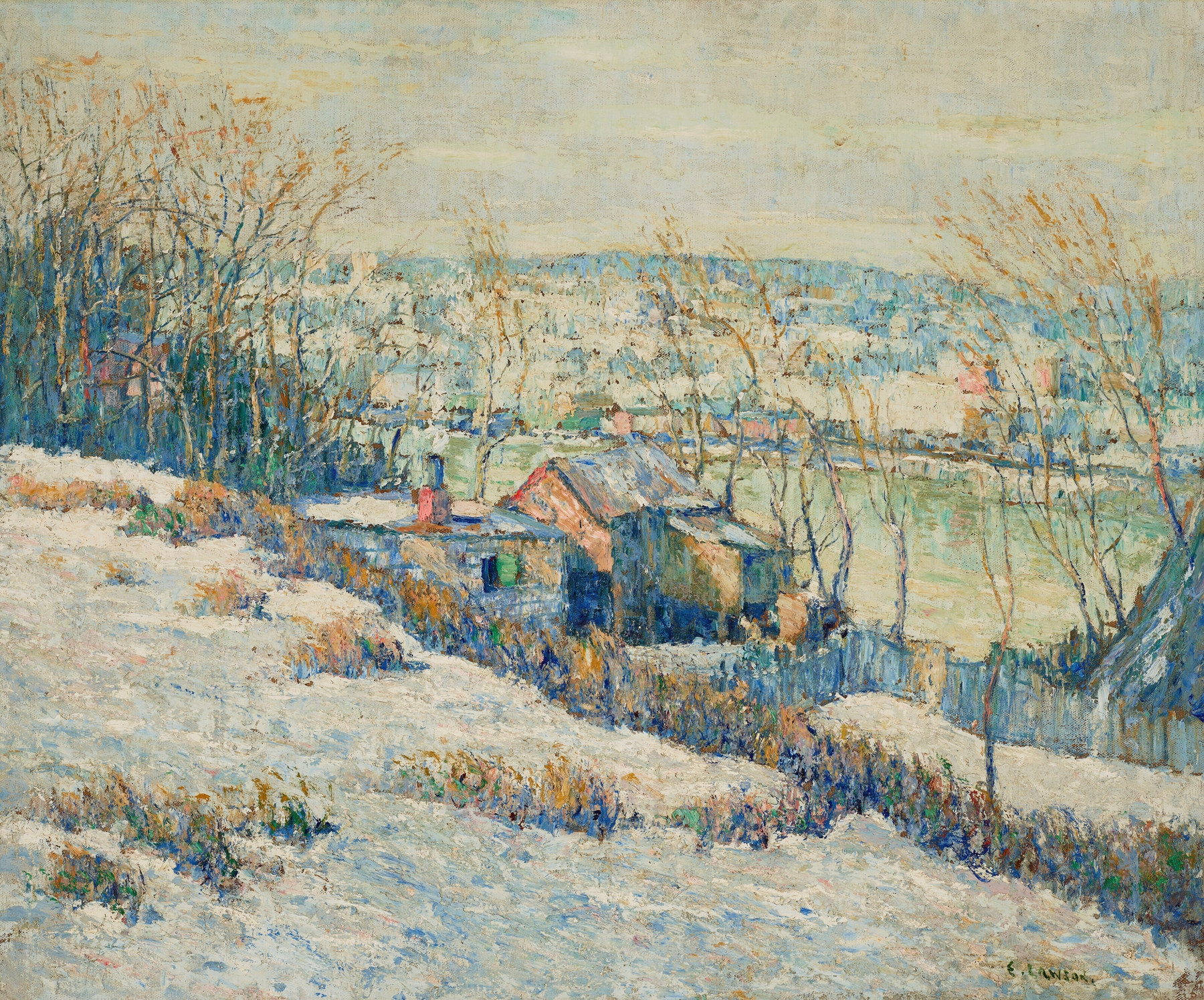
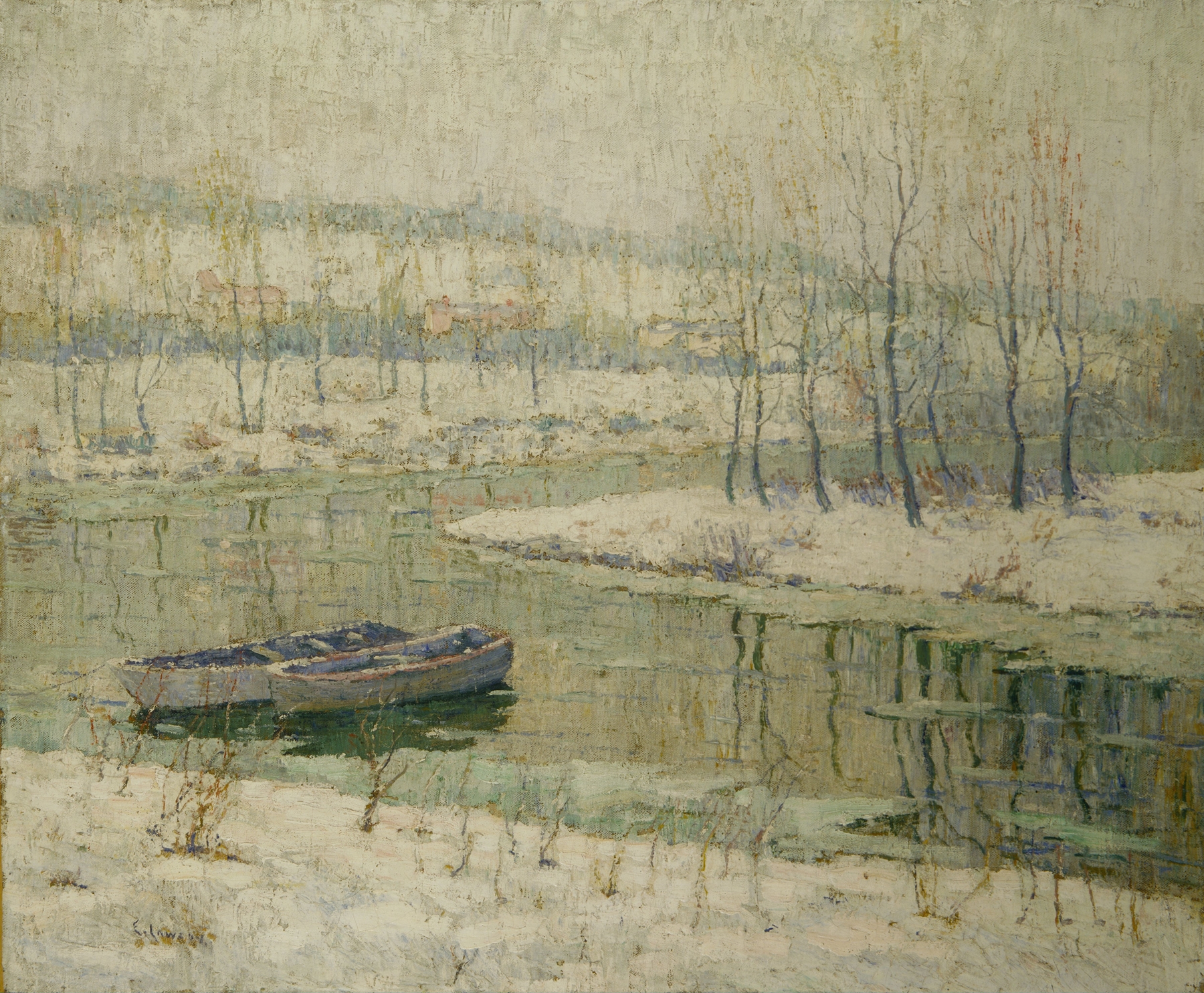
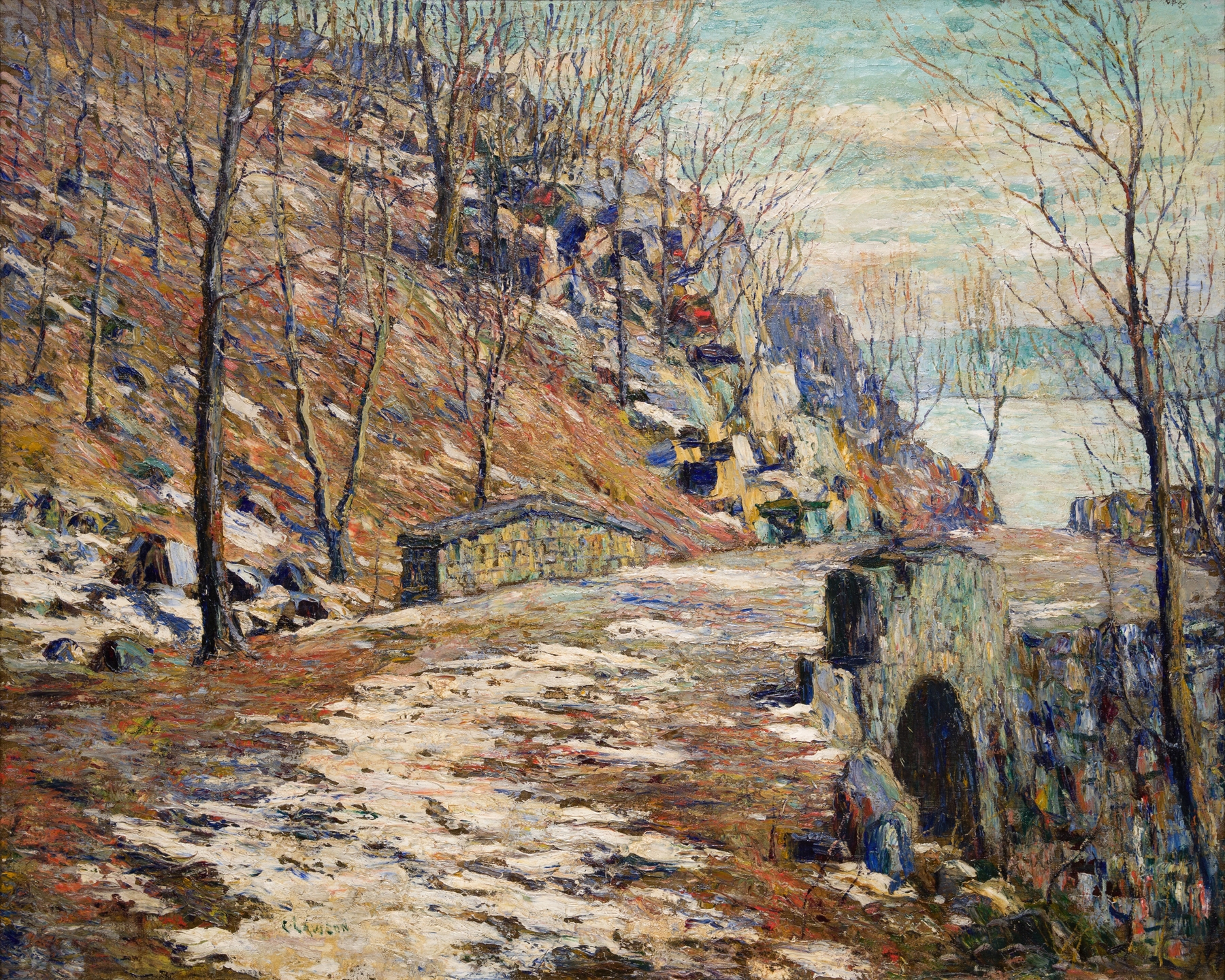
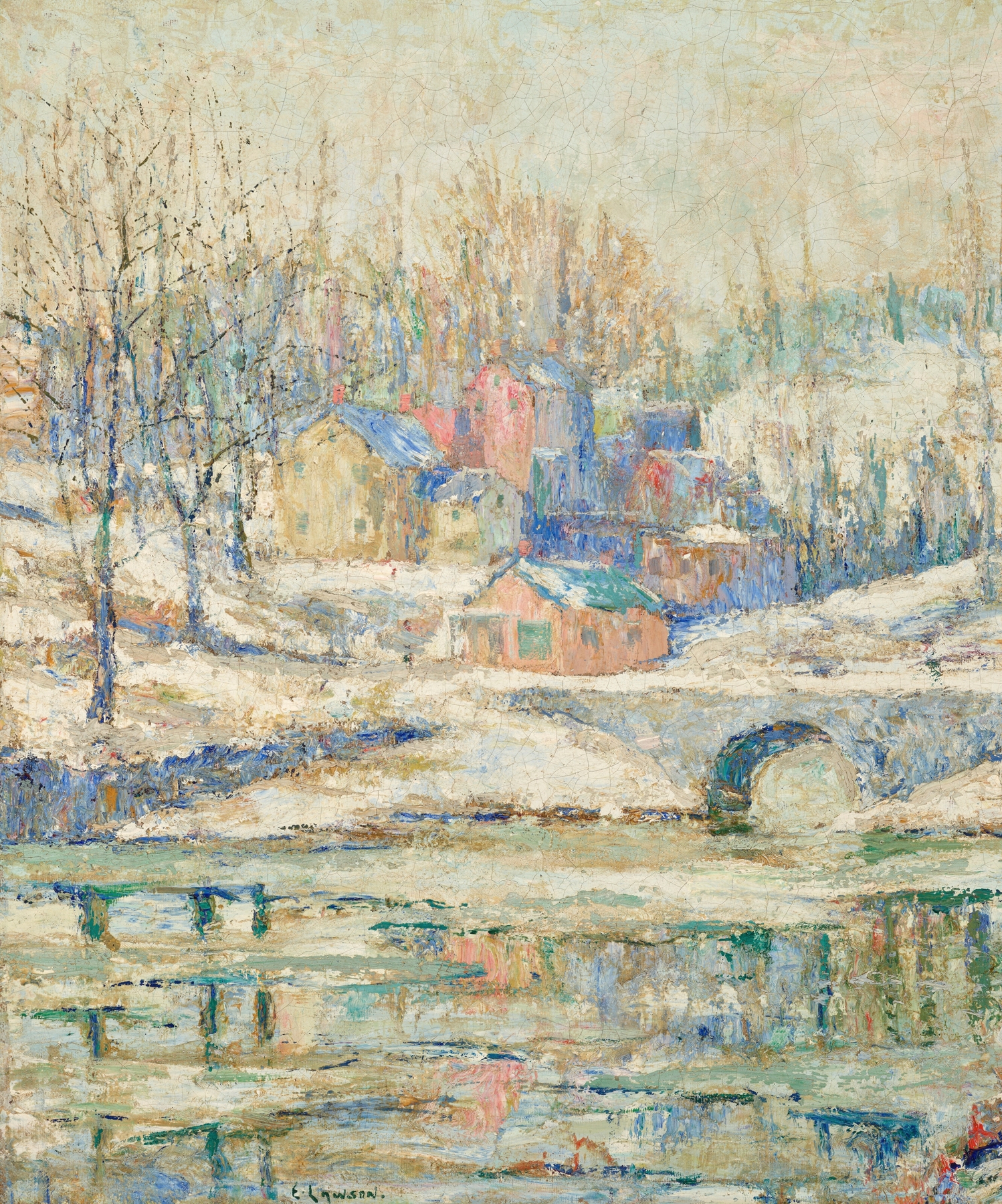
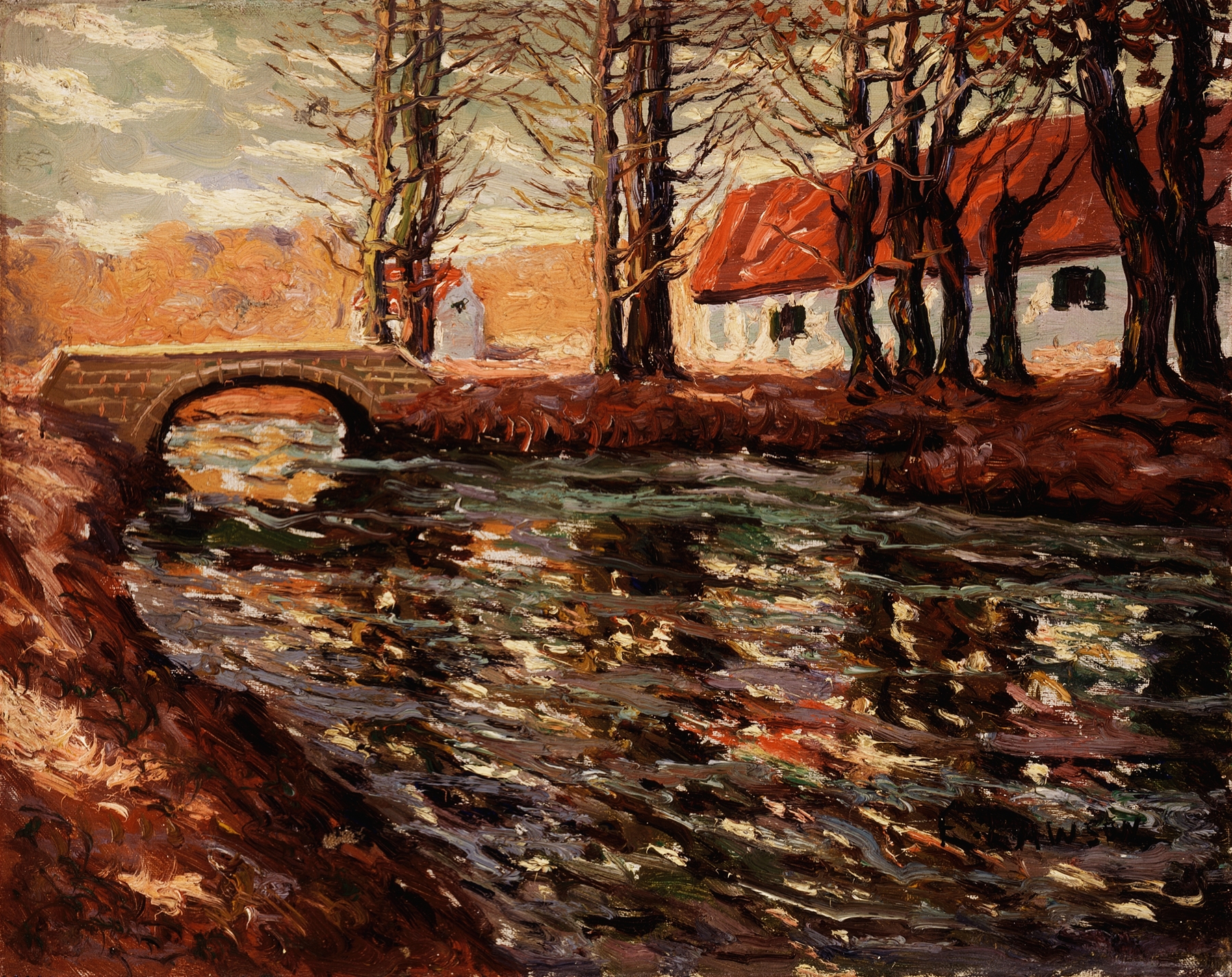
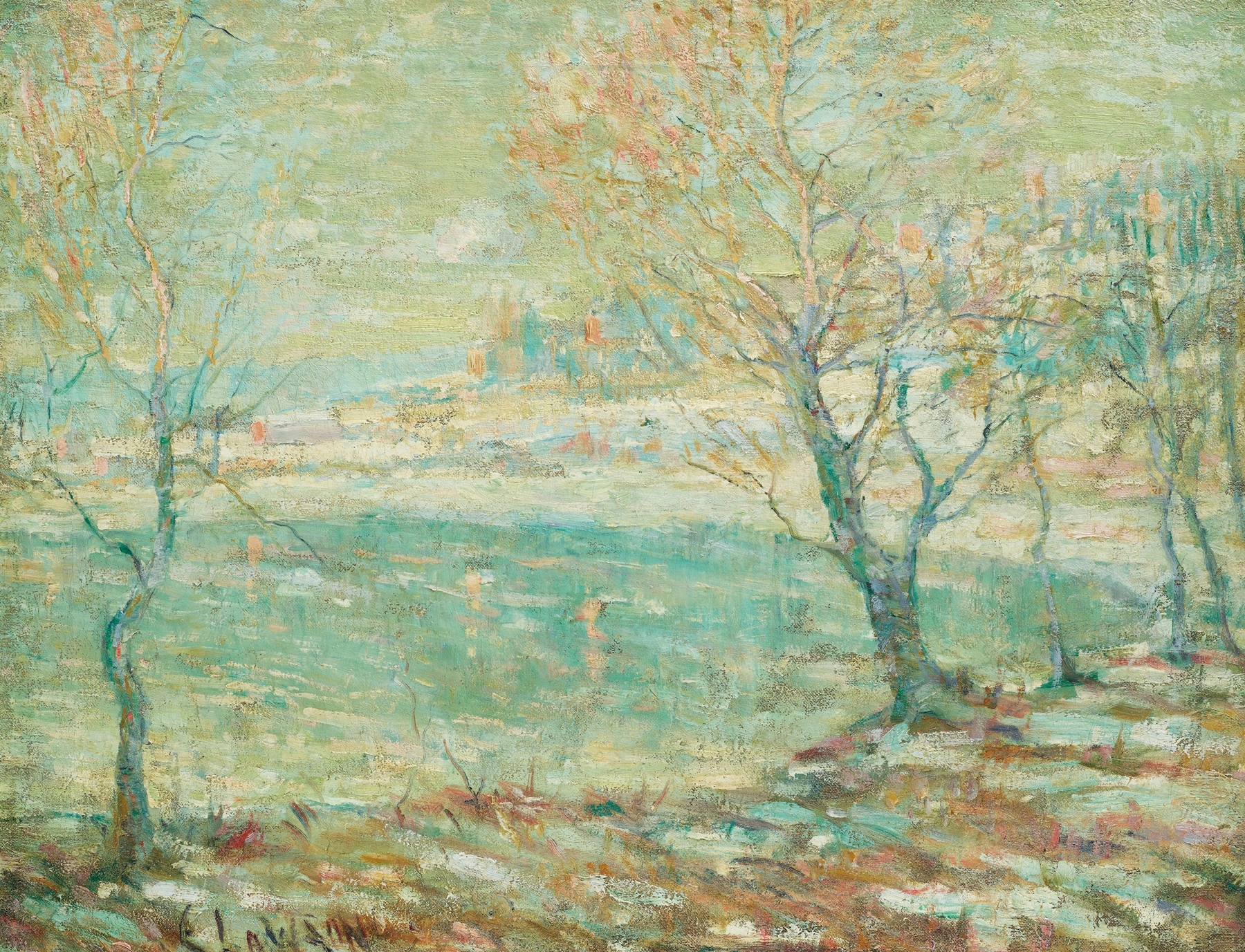
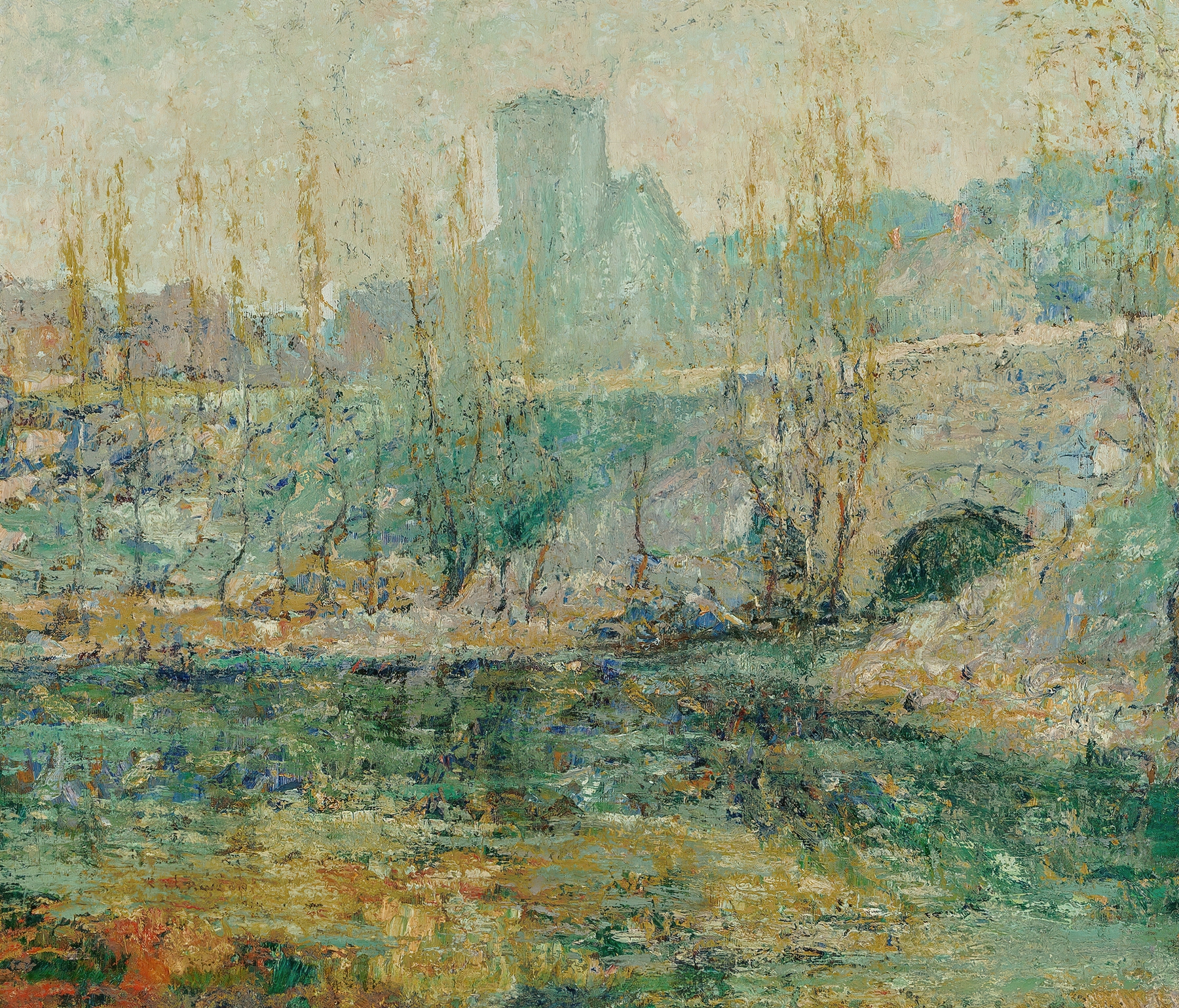
Could beauty survive in a century of chaos? In Springtime, Harlem River, a moment suspended in time beckons us to consider the fragile balance between nature's resilience and the relentless march of urban progress. Look to the foreground, where lush greenery blooms vibrantly against the tranquil waters of the Harlem River. The brush strokes dance with life, each stroke celebrating the awakening of spring. Notice how the light, soft and warm, caresses the leaves and casts gentle reflections on the water's surface, creating an interplay between light and shadow that breathes vitality into the scene.
The painter's choice of color harmonizes the blues and greens, evoking a sense of serenity amidst the bustling city. As you venture deeper into the composition, the emotional tension becomes palpable. The juxtaposition of the serene landscape with the encroaching city skyline in the background hints at a deeper narrative of change and loss. Nature, vibrant and flourishing, stands as a poignant reminder of what is at stake in an evolving world.
The work encapsulates not just the beauty of spring but also the underlying fragility of such moments, suggesting that they may soon be overshadowed by the demands of urban life. Created between 1900 and 1910, the painting reflects Lawson's deep affinity for the landscapes of New York City, particularly during a time of great transformation. The artist was part of the Ashcan School, which sought to depict the realities of modern life, yet in this piece, he chose to celebrate the enduring beauty of nature. This work, painted during a period of rapid industrialization, serves as both a tribute and a lament for the beauty that is often lost in the wake of progress.