Sunset, Navarro Ridge, California Coast — History & Analysis
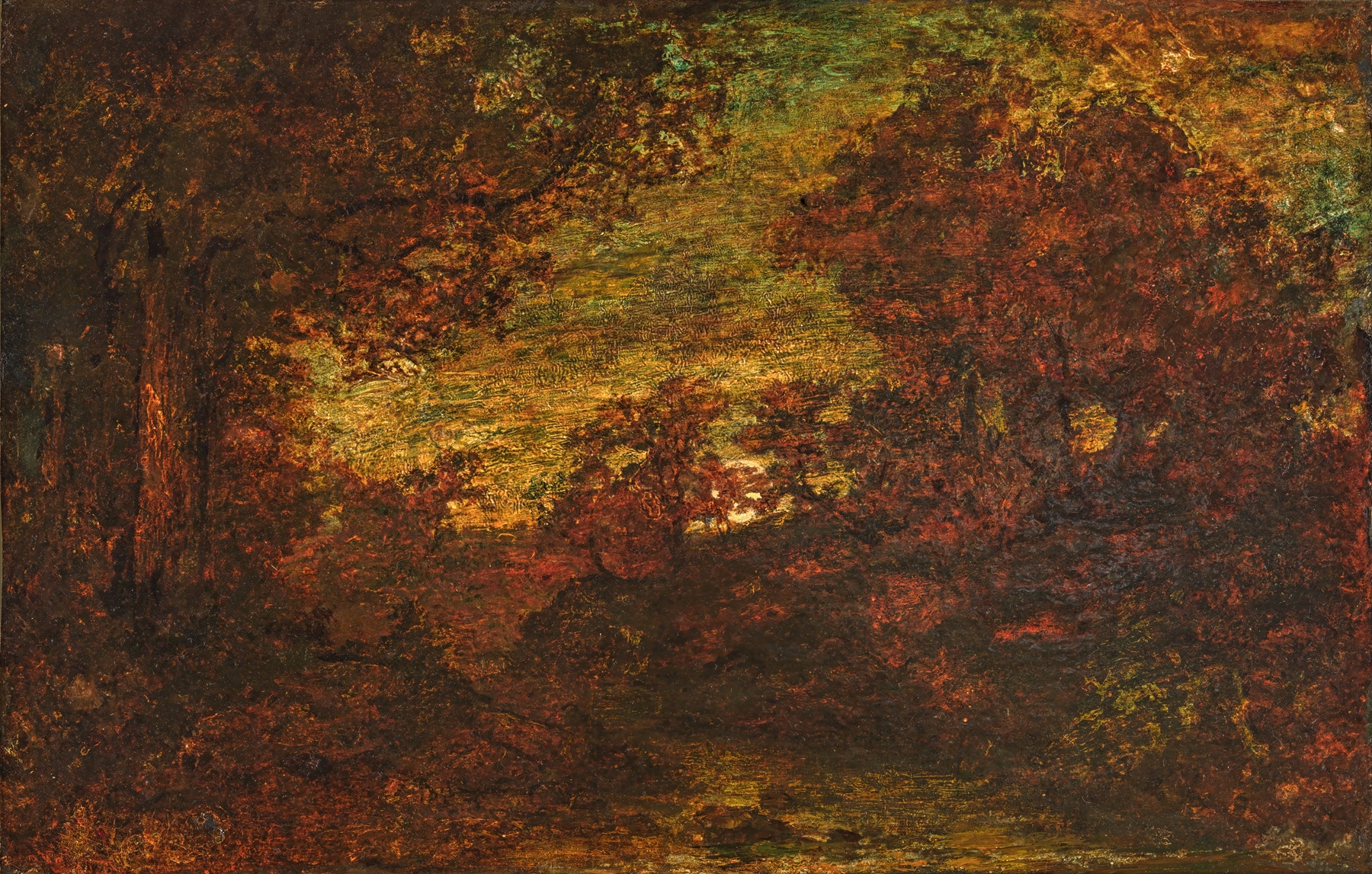
“Sometimes beauty is just pain, disguised in gold.” This sentiment echoes through the layers of Ralph Albert Blakelock's Sunset, Navarro Ridge, California Coast, where the sky is both a canvas and a catharsis. The abstract swirls of color suggest an ethereal moment, a fading light that signals the end of day and a transition to the unknown. Look to the horizon where fiery oranges and deep purples converge, casting a glow that envelops the rugged coastline. The brushstrokes dance with fervor, conveying a sense of movement as the sun sinks, each stroke weaving emotion into the fabric of the sky. The juxtaposition of colors—warm against cool—invites you to linger, teasing at the emotions that lie beneath the surface.
Notice how the light plays upon the jagged cliffs, illuminating their contours and accentuating the drama of the landscape. Beneath the surface of this breathtaking vista lies a tension between serenity and turmoil. The vivid hues evoke joy, while the encroaching darkness hints at an inevitable melancholy. There’s a delicate balance in the transition from light to shadow, capturing the essence of fleeting moments—where beauty and sadness coexist.
Each brushstroke speaks to the human experience: a longing for transcendent beauty amidst the inevitable cycles of life. Created in the late 1870s, during a period of personal challenges, Blakelock sought solace in nature while exploring the American landscape painting movement. His introspective journey led him to embrace a more emotional approach to representation, aiming to convey not just the visual beauty of his surroundings but the profound feelings they evoked. This work embodies that quest, inviting viewers to confront their own emotions while traversing the vast landscapes of the soul.