Talschlucht mit Sennerin — History & Analysis
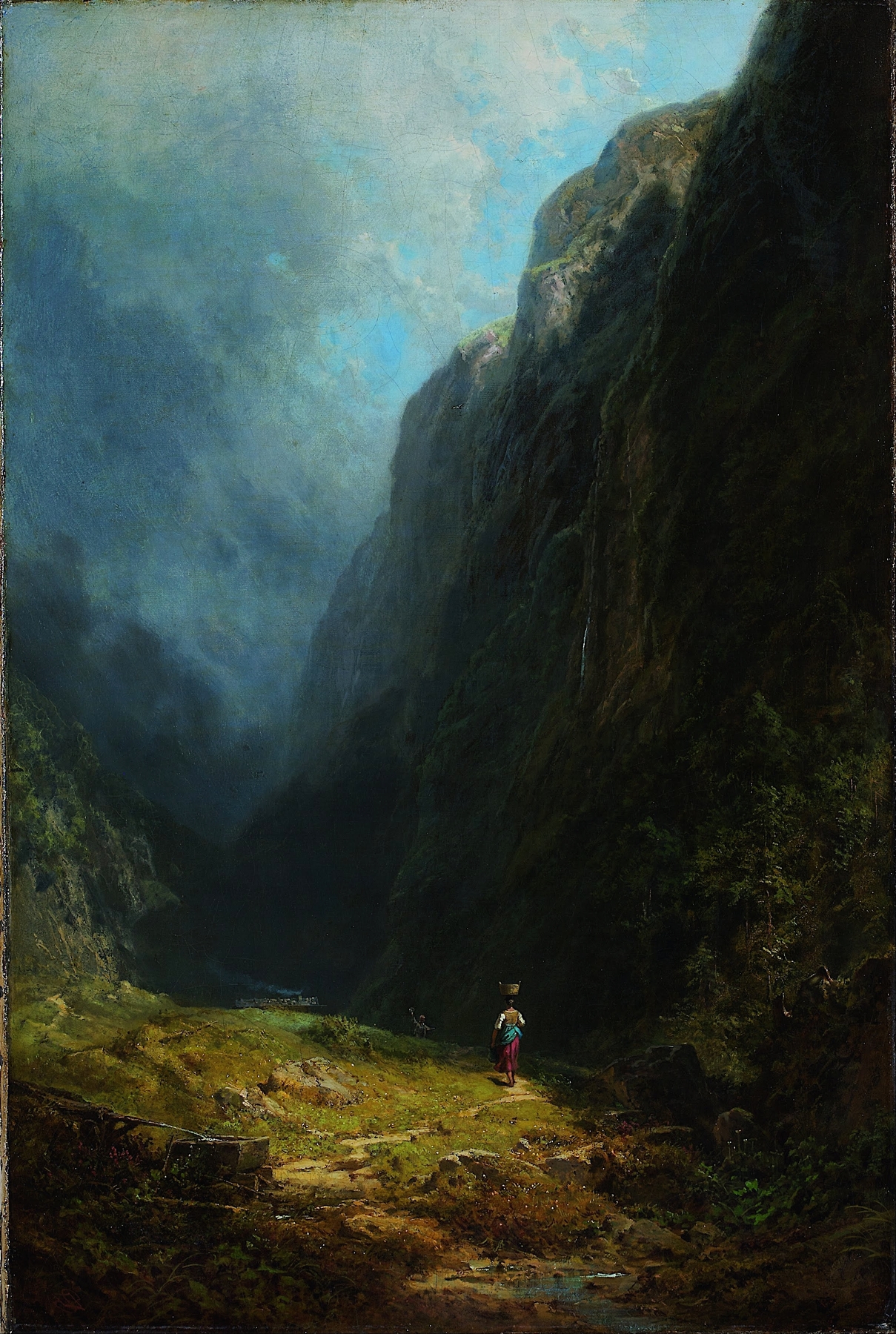
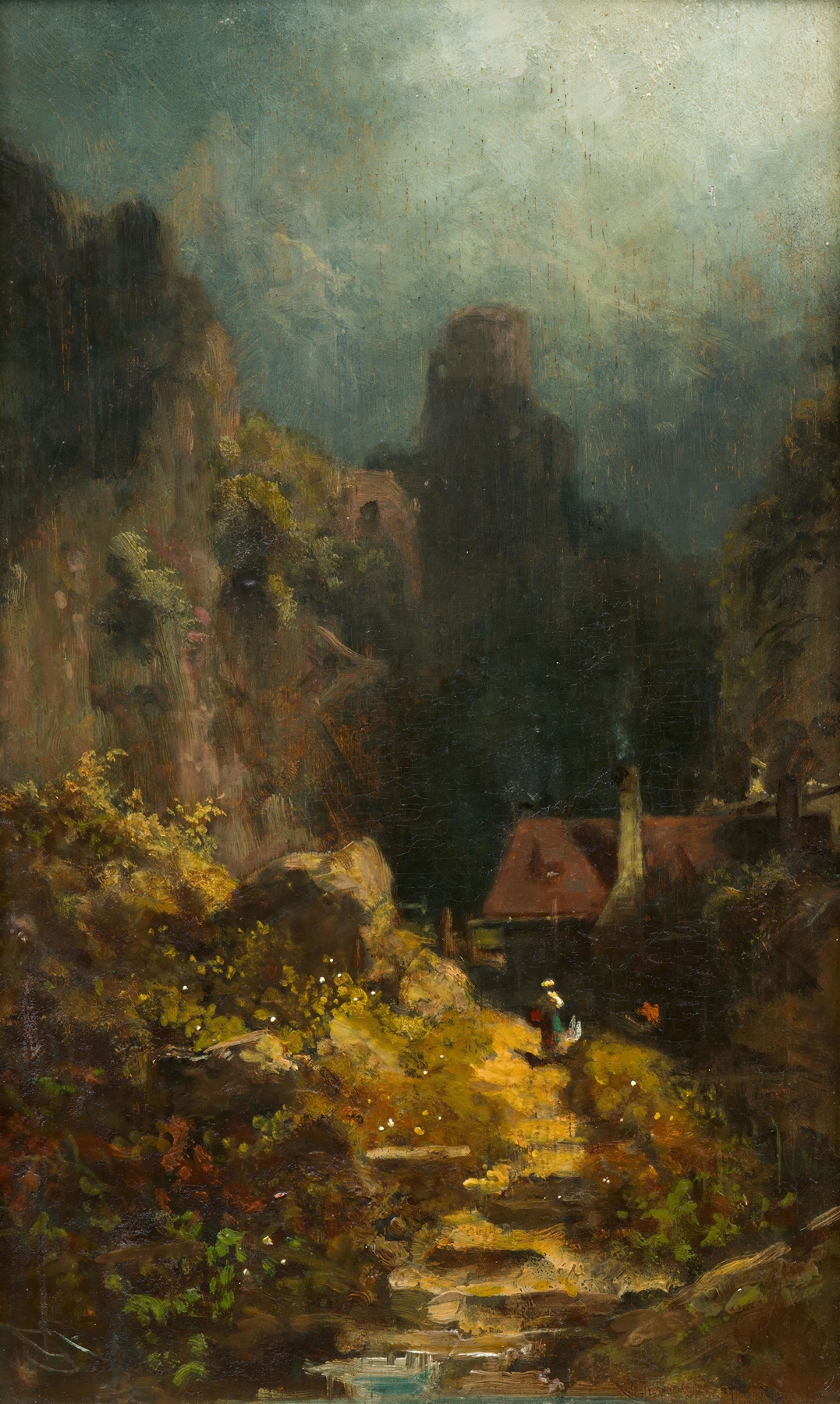
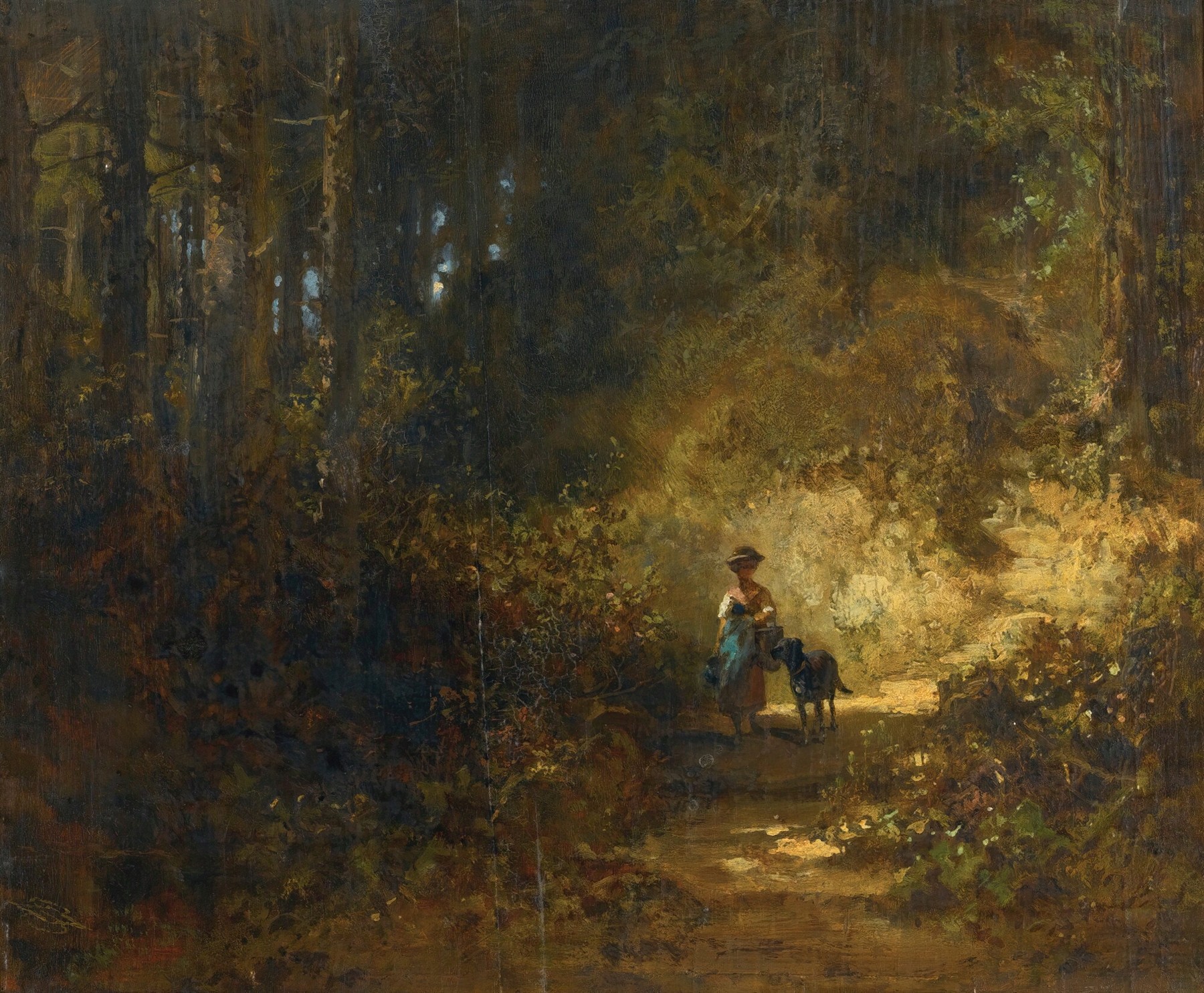
What if beauty was never meant to be finished? In Talschlucht mit Sennerin, the artist invites us to ponder this profound question as we explore a fleeting moment suspended in time. To fully appreciate this piece, focus on the gentle curves of the valley nestled beneath a grand sky. The viewer's gaze is immediately drawn to the solitary figure of the young dairymaid, her posture suggesting both grace and a sense of duty. Notice how the soft, warm hues of the sunlit landscape contrast with the cool shadows cast by the surrounding cliffs, an interplay that evokes the delicate balance between serenity and solitude.
Each brushstroke captures not only the beauty of nature but also the profound stillness of the scene. Digging deeper, one might consider the juxtaposition of the vibrant landscape against the solitary figure. While the valley flourishes in life, the dairymaid represents a moment caught in the inexorable flow of time—her responsibilities pulling her from the blissful embrace of nature. This tension between the ephemeral beauty of the surroundings and the quiet labor of life speaks to the fleeting nature of existence itself.
The intricate details in her attire and the wildflowers around her serve as reminders that while beauty is present, it is often accompanied by hardship and transience. Created in 1875, this work captures a transitional moment in Carl Spitzweg's career, marked by a shift towards more contemplative themes. Living in Munich during a time of artistic and societal change, he was influenced by the Romantic movement, which emphasized emotion and nature. The serenity and simplicity of this piece reflect not only his personal journey but also the broader cultural shift towards celebrating the everyday lives of ordinary people intertwined with nature.