The Crossroads of the Eagle’s Nest, Fontainebleau Forest — History & Analysis
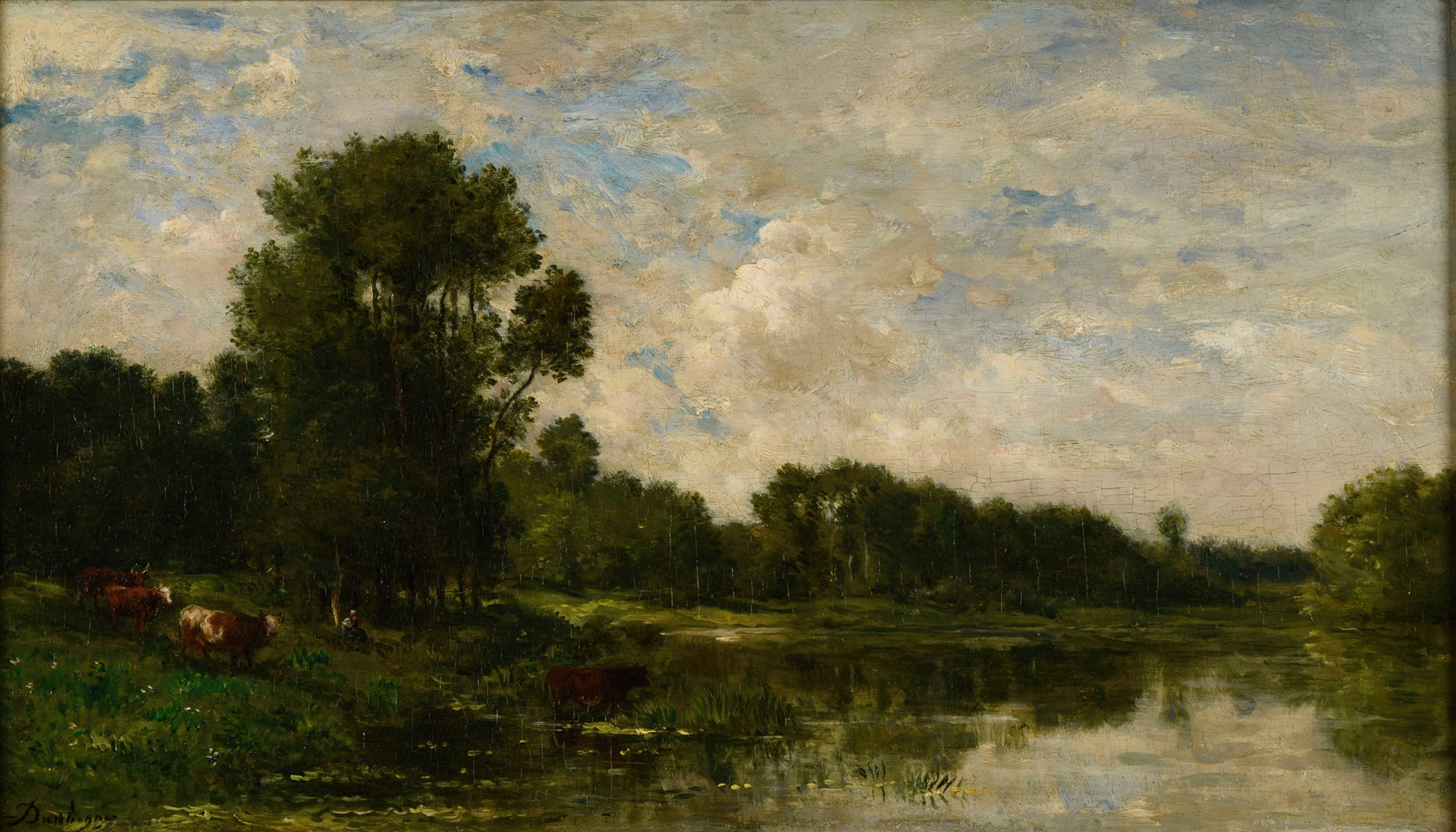
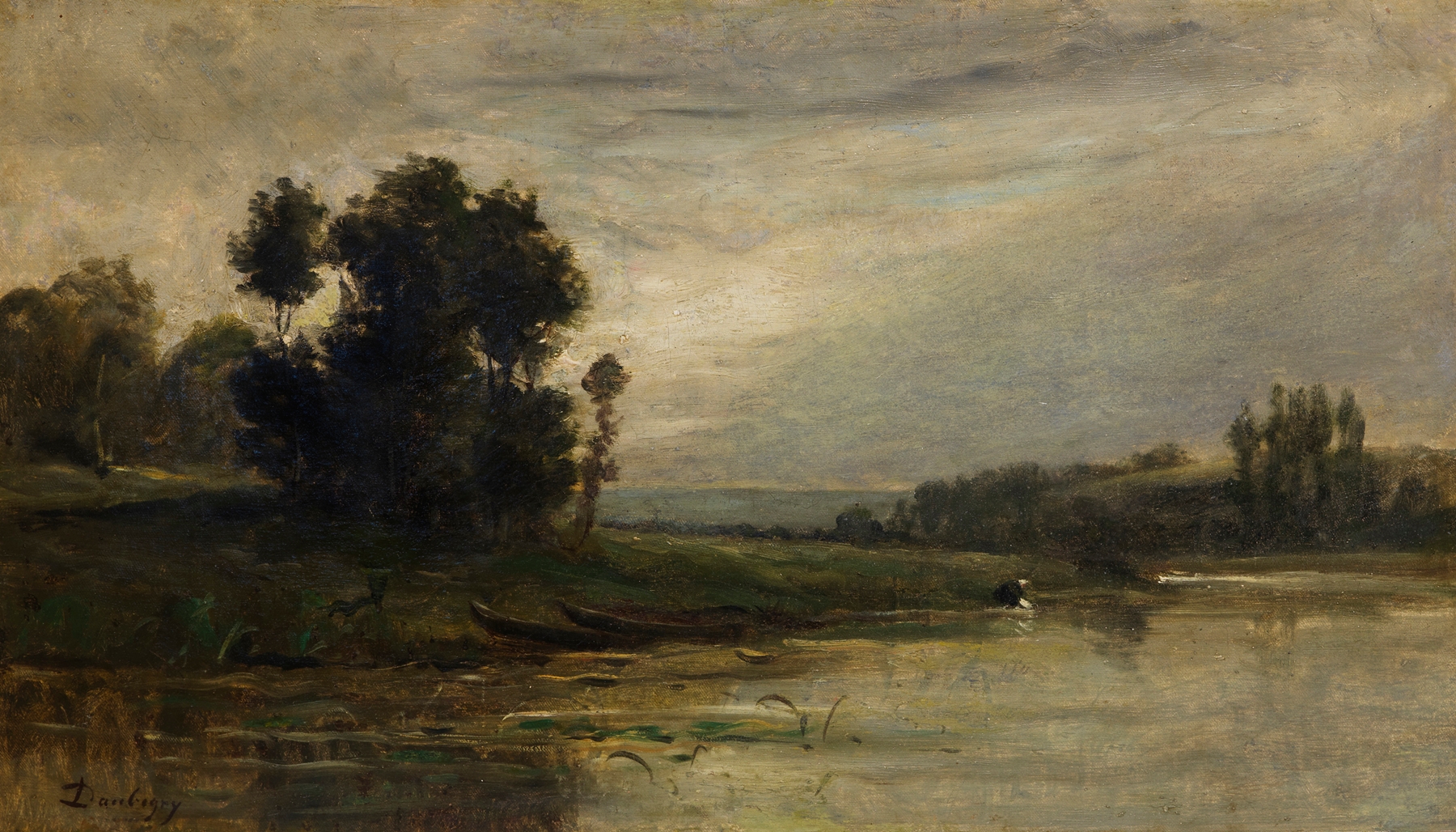
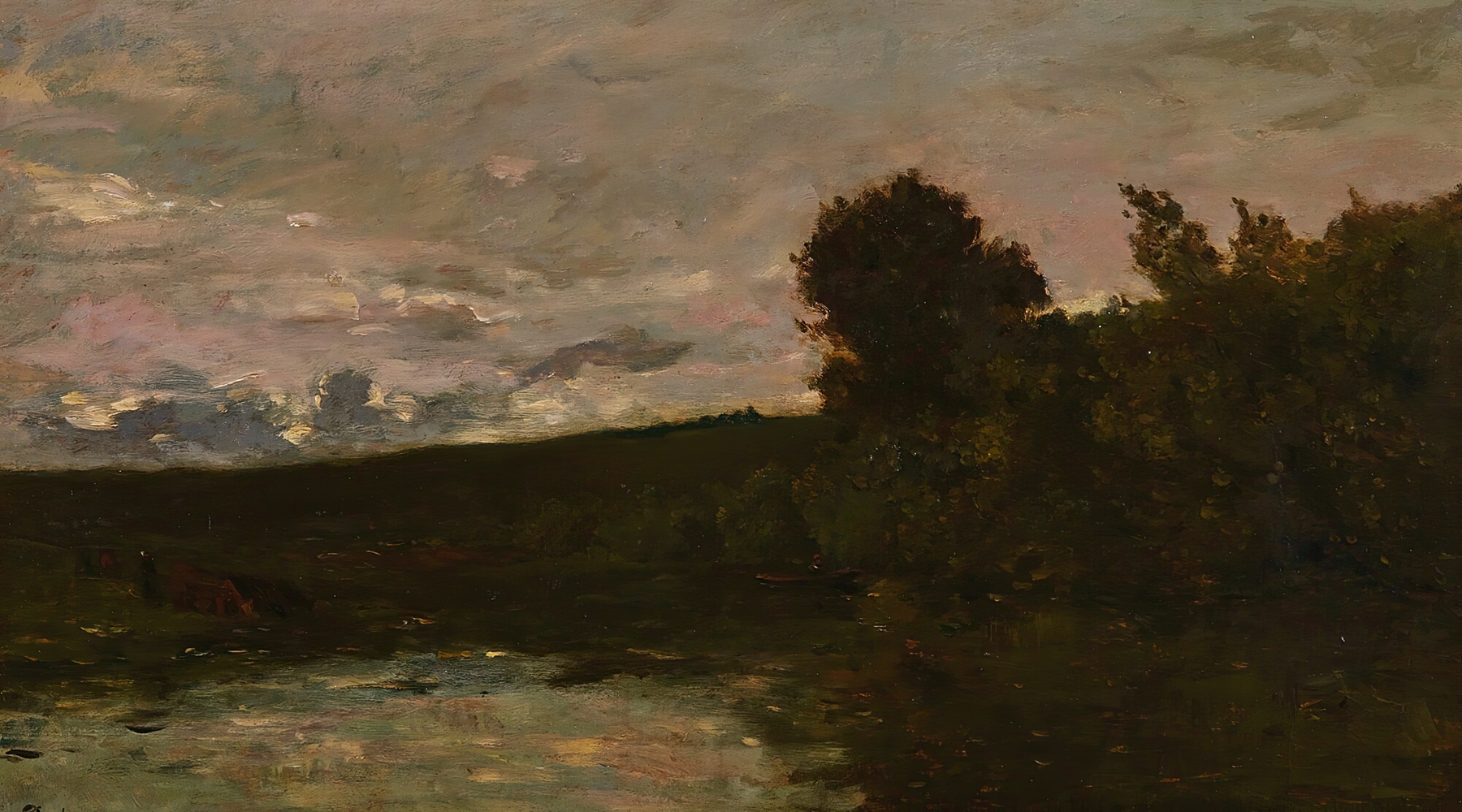
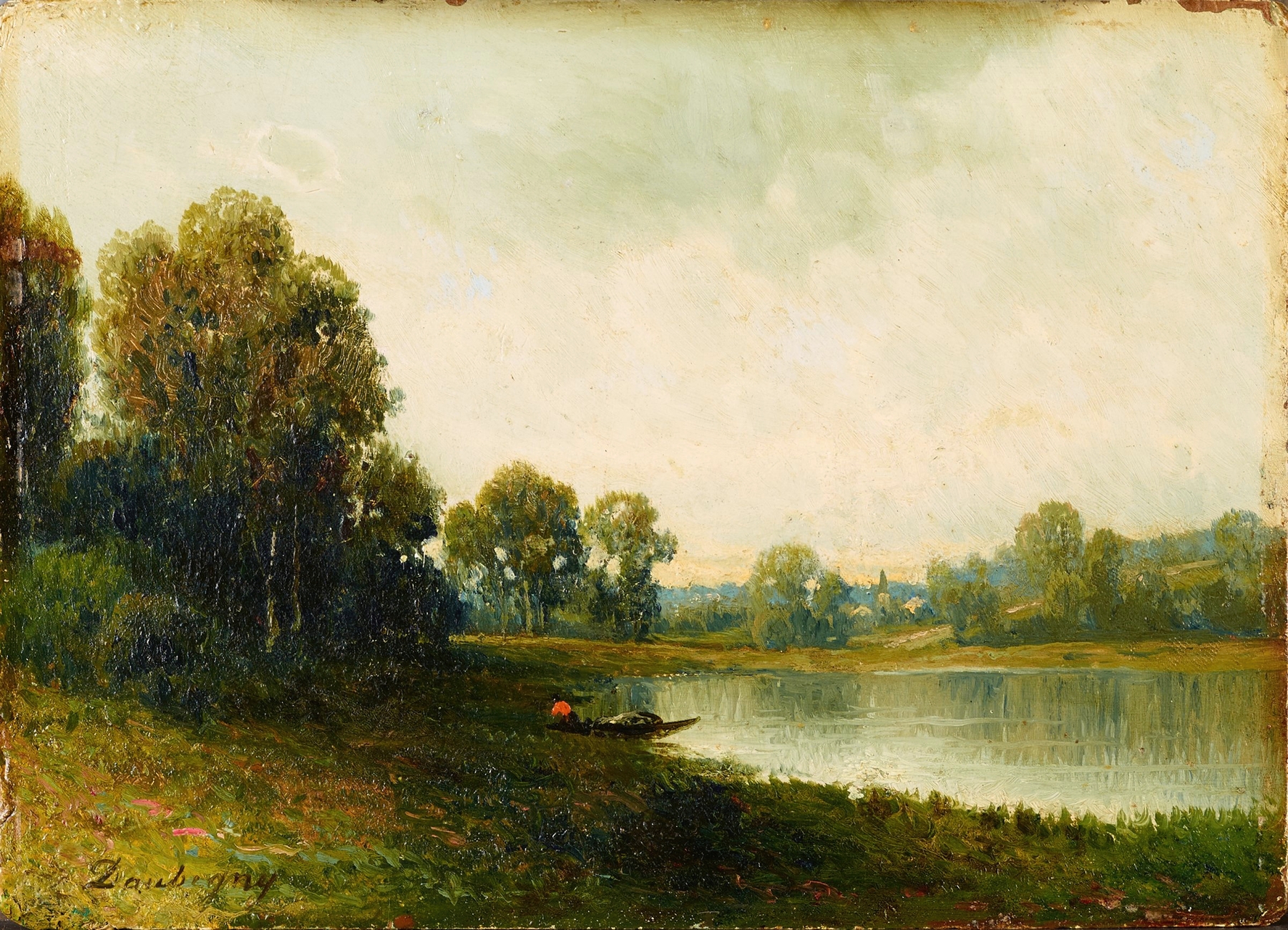
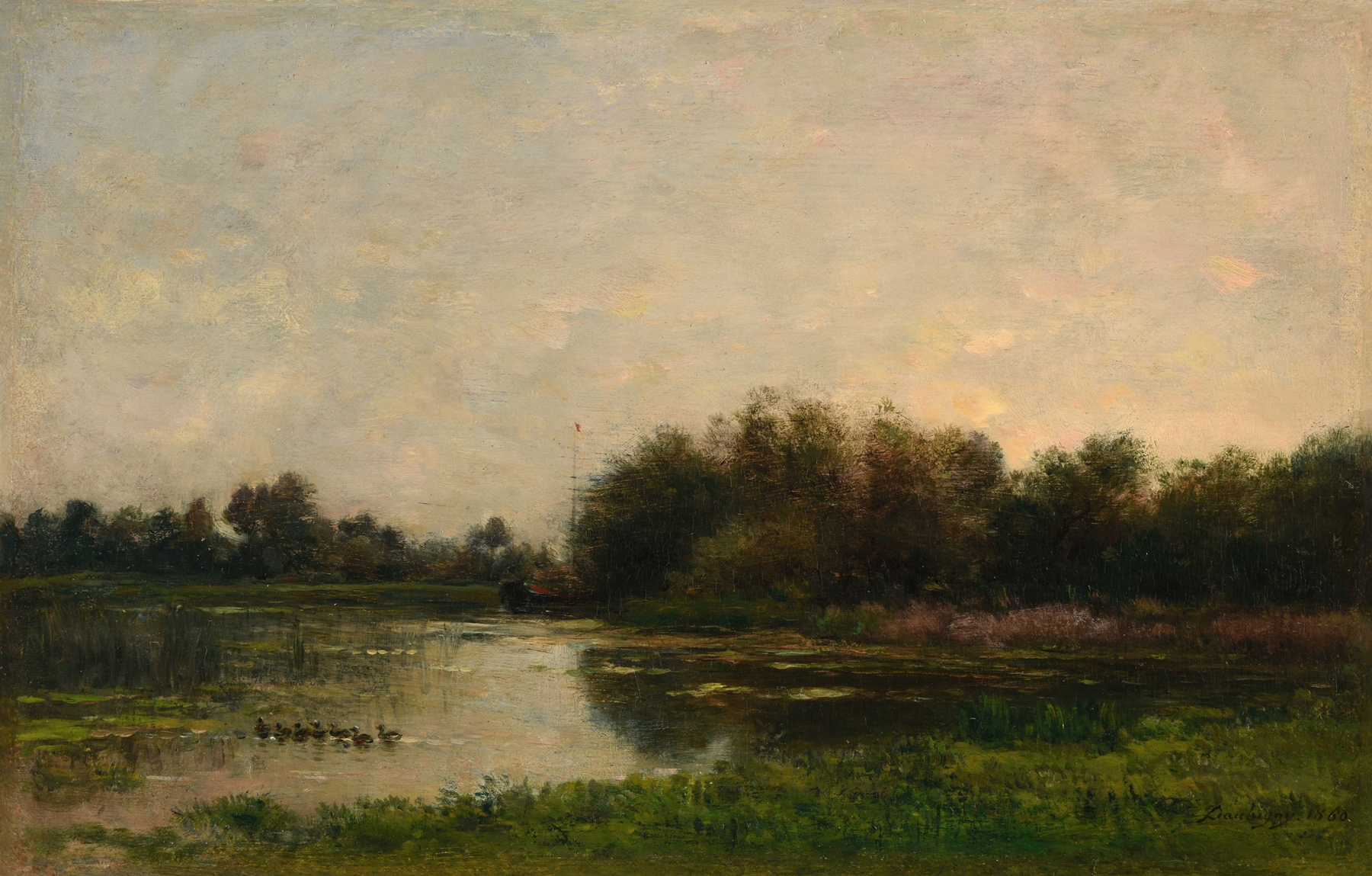
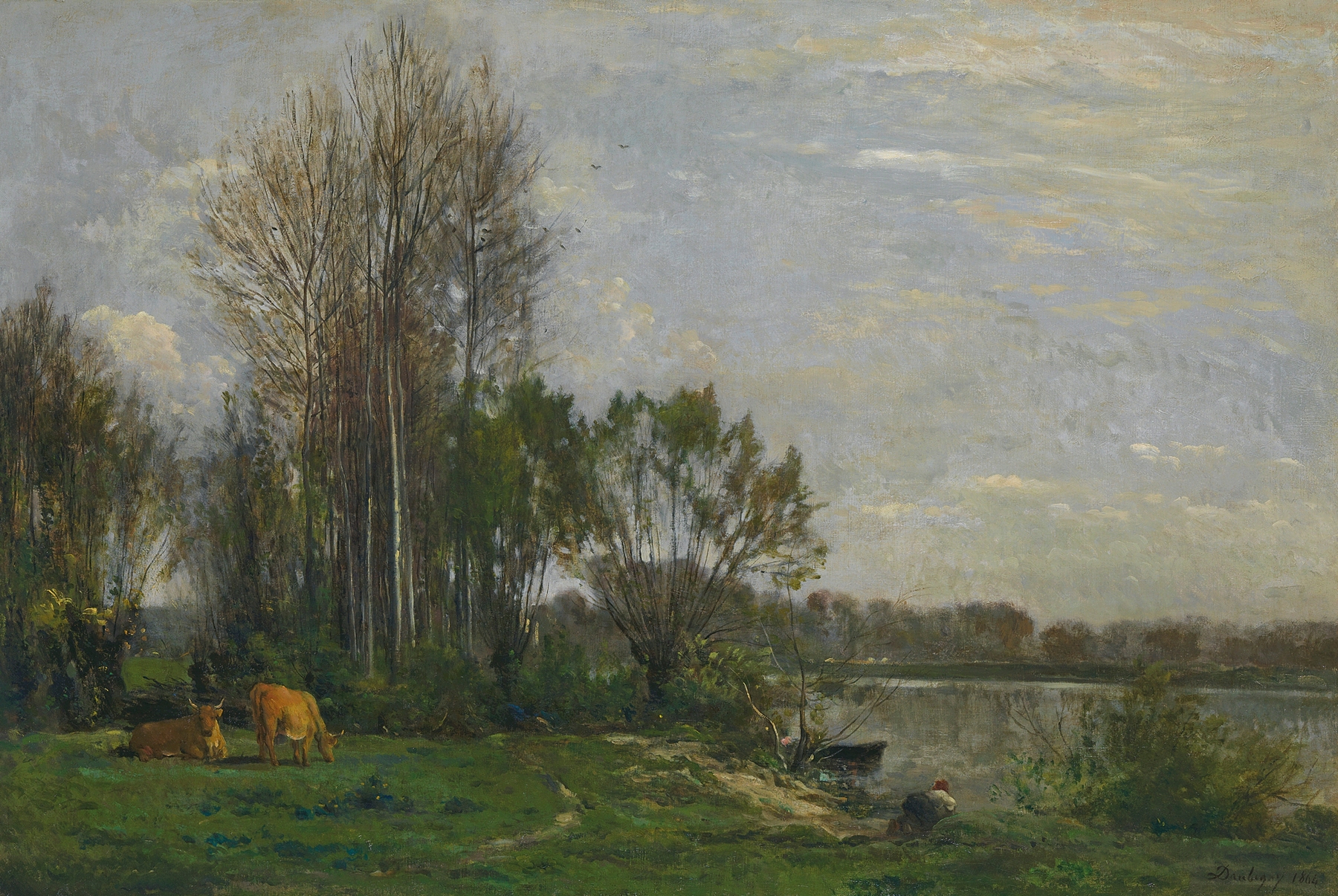
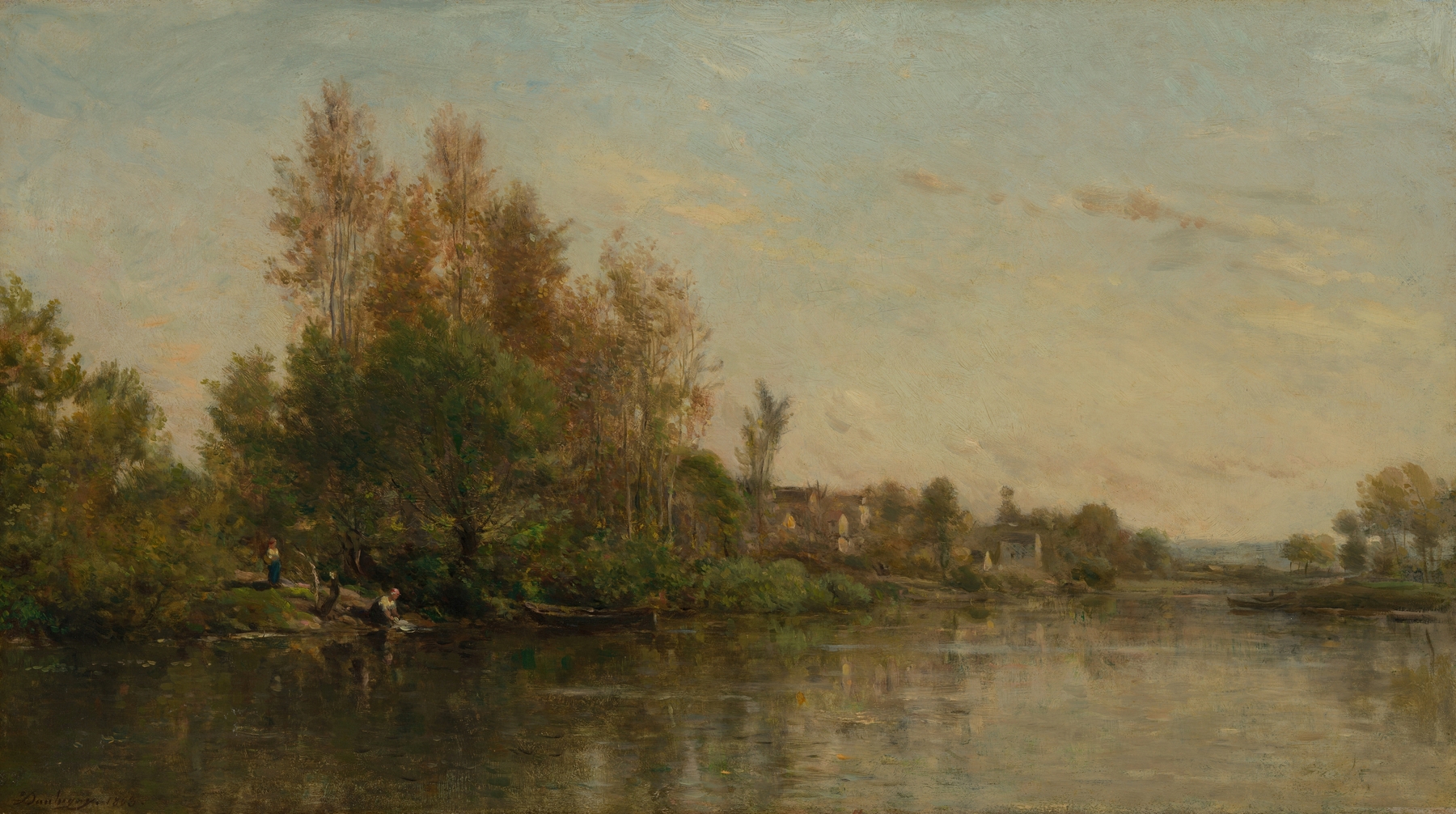
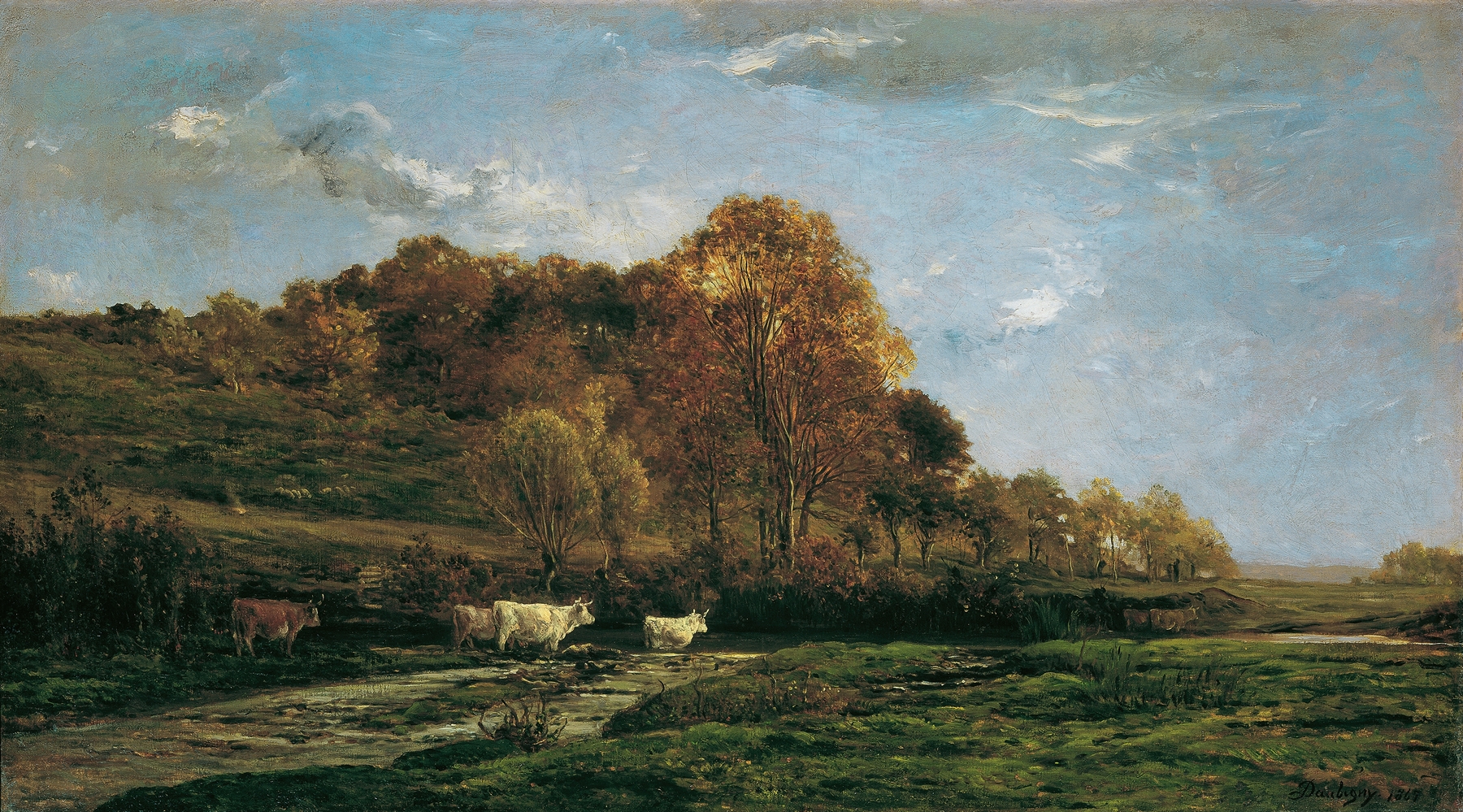
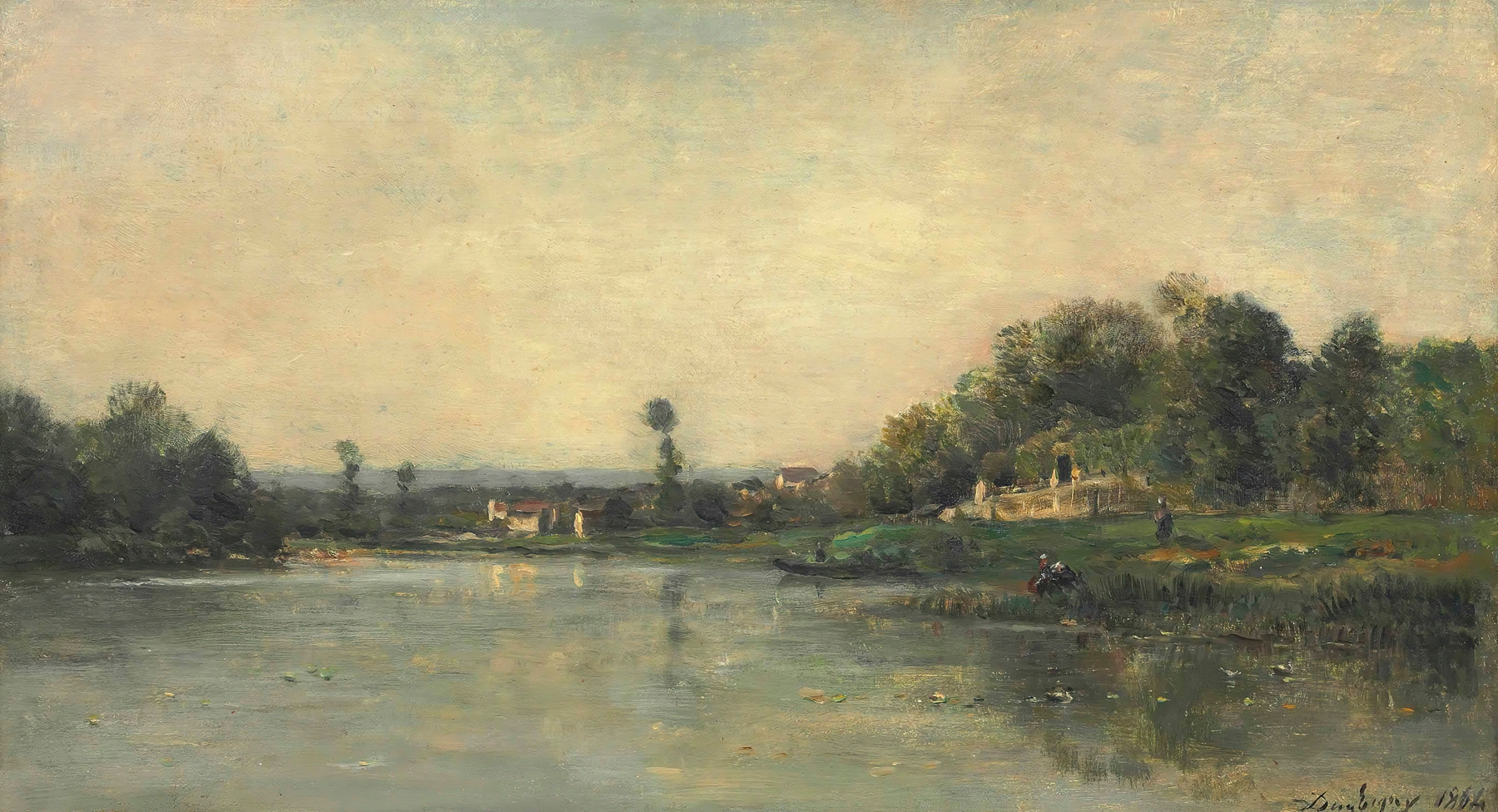
Who listens when art speaks of silence? In *The Crossroads of the Eagle’s Nest, Fontainebleau Forest*, chaos simmers beneath the surface, inviting viewers to contemplate the stillness of nature's embrace. Look to the center of the composition where a quiet pathway diverges, flanked by dense trees that almost whisper their secrets. The light filters through the leaves in dappled patches, creating a dance of shadows on the forest floor. Rich greens and earthy browns dominate the palette, giving a sense of both warmth and concealment, while soft strokes evoke the gentle rustle of foliage. Daubigny’s technique, a masterful blend of impressionism and realism, captures a fleeting moment in time, urging the observer to step closer into the serene chaos of the woods. Delve deeper into the canvas, and you’ll find subtle contrasts that speak of conflict within tranquility. The vibrant foliage surrounds the path like a guardian, yet the diverging trails hint at choices and uncertainty, embodying the chaos of life’s crossroads. The interplay of light and shadow not only enhances the depth but also suggests the tension between clarity and obscurity—what is seen and what remains hidden. This ambiguity invites personal reflection, as nature becomes a mirror for one’s own decisions. In the early 1840s, Daubigny painted this work during a significant shift in the art world, as the Romantic movement began to yield to Realism. Creating it in the idyllic Fontainebleau Forest, he found inspiration amidst nature, reflecting his desire to capture the essence of the landscape that many artists had previously idealized. At this time, he was establishing his reputation, exploring the interaction between the natural world and the human experience, and connecting deeply with the emotions that chaos can evoke in moments of solitude.