The Langlois bridge — History & Analysis
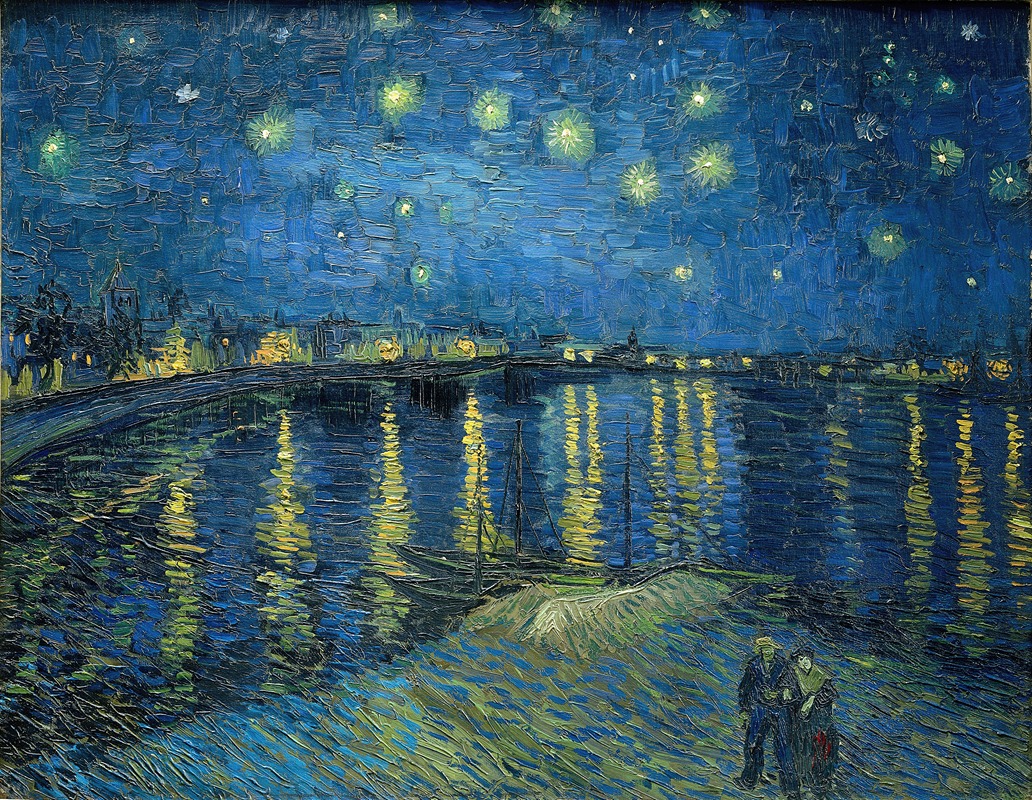
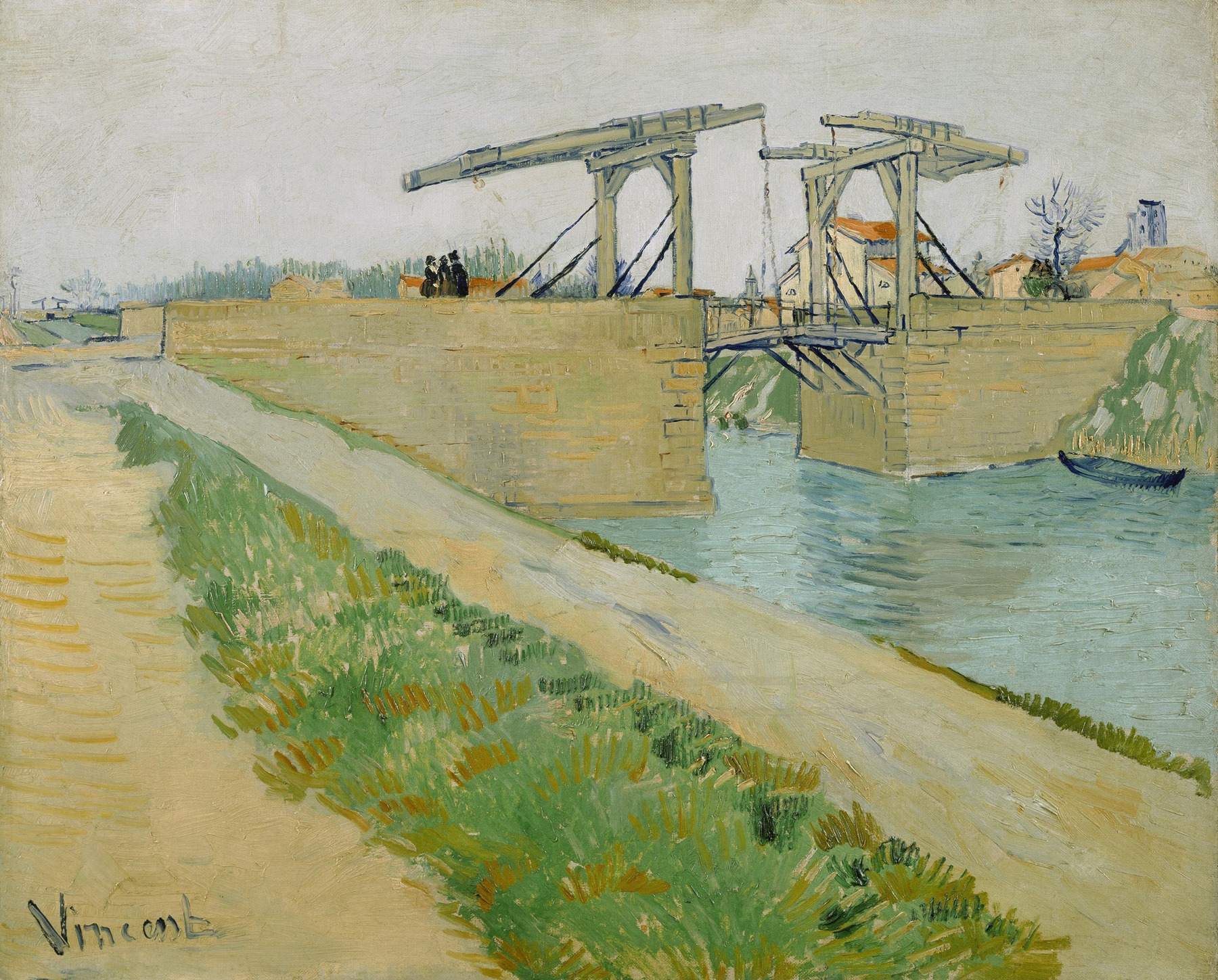
Where does light end, and longing begin? In The Langlois Bridge, this question resonates through the vibrant blues and yellows that seem to pulse with a life of their own, painting a narrative steeped in both chaos and beauty. Look to the left at the bridge, a delicate structure cradled by nature. The sweeping strokes create a sense of movement, as if the scene itself is alive, constantly shifting under the weight of its colors. Notice how the sunlight dances upon the water, reflecting shards of bright hues that whisper of warmth and promise.
The chaotic brushwork blurs the lines between reality and emotion, capturing a fleeting moment that feels both intimate and expansive. Beneath the surface, the contrasting elements reveal deeper tensions. The bridge, a symbol of connection, stands against a background of tumultuous skies, hinting at the unrest in Van Gogh’s own life. The vibrant colors suggest a harmony that feels fragile, almost as if the scene teeters on the brink of disruption.
The boats bobbing by add a touch of stillness against the ever-changing canvas, embodying a dichotomy of peace amidst chaos. In 1888, Van Gogh was in Arles, seeking solace and inspiration away from the turmoil of his past. Surrounded by the vibrant landscapes of Provence, he was experimenting with color and form, attempting to articulate his emotional truth through the sheer force of his brush. This period marked a pivotal moment in his artistic journey, as he sought to infuse his work with the raw intensity of his experiences, a quest that would ultimately define his legacy.