The Olive Trees — History & Analysis
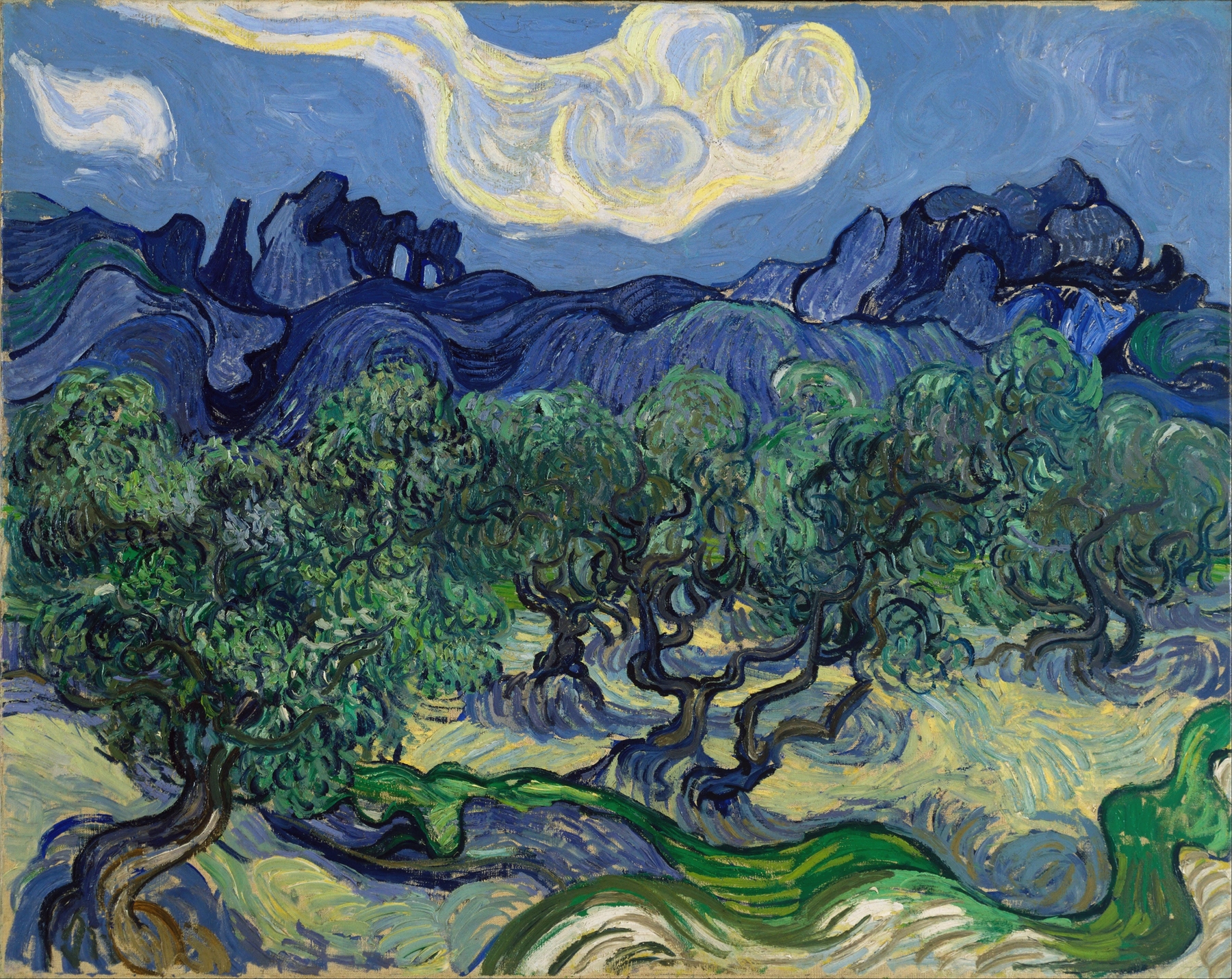
“Sometimes beauty is just pain, disguised in gold.” In a world where the silence of nature speaks volumes, Van Gogh’s brush reveals the aching heart entwined with solace. Look closely at the vibrant swirls of blue and green that envelop the olive trees, leading your gaze through a dance of motion and texture. Notice how the sunlight splashes against the leaves, capturing a moment where the natural world holds its breath. The thick application of paint, a hallmark of the artist's style, creates a tactile sensation, inviting you to trace the contours of each limb as if they pulse with life.
This canvas tells a story of contrast; the serene beauty of the olive grove juxtaposed with the turmoil in the artist's soul. The vibrant colors may seem joyful at first glance, but they mask an undercurrent of unease—a reflection of Van Gogh's own struggles during this period. The trees, sturdy yet twisted, embody resilience born from pain, evoking both strength and vulnerability within the viewer.
In 1889, while residing at the Saint-Paul-de-Mausole asylum in Saint-Rémy-de-Provence, the artist created this work amidst profound personal challenges. This was a time of intense emotional turmoil, yet also of artistic exploration, as he sought to harness his inner chaos into vibrant landscapes. The olive trees, symbols of peace and endurance, become a poignant metaphor for his journey through suffering towards a profound, albeit turbulent, beauty.