The Prison Courtyard — History & Analysis
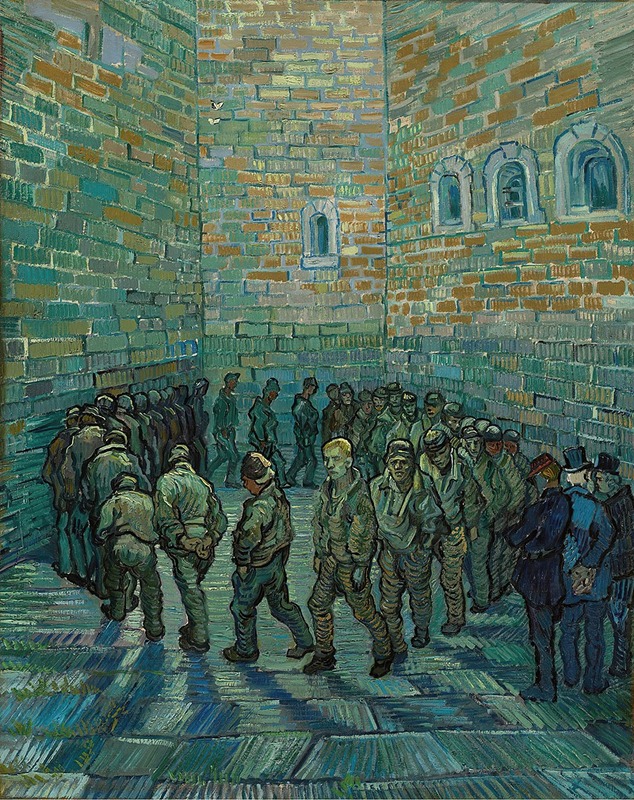
“To paint is to remember what time wants us to forget.” In a world awash with gray shadows and muted tones, color remains a fierce testament to memory and emotion. Look to the center of the composition, where vibrant hues collide in a tumultuous dance of blue and yellow, creating a prison courtyard alive with tension. The stark walls loom on either side, their rough surfaces capturing the unforgiving light of day. Notice how the sunlight spills onto the cobblestones, illuminating the somber blues of the shadows while inviting warmth into the otherwise bleak atmosphere.
Each color seems to pulse, revealing the artist’s intent to evoke a visceral response from the viewer. Beneath the surface, the contrasts between the vivid colors and the starkness of confinement speak volumes. The courtyard feels both suffocating and alive, as the intertwined shadows hint at the weight of isolation, while flashes of brightness suggest fleeting hope or fleeting memories. The open sky, though present, is painted in shades that almost seem to trap the air, reflecting a deeper struggle between freedom and captivity.
Here, color transcends mere aesthetic; it becomes a language of longing and despair. In June 1890, Vincent van Gogh, grappling with his mental health, found himself in Auvers-sur-Oise, France, painting The Prison Courtyard. This period marked a tumultuous chapter in his life, where he sought solace in art amid personal turmoil. Surrounded by the tumult of his thoughts and the evolving world of Post-Impressionism, he poured his soul into this work, capturing the raw essence of confinement through his unique use of color and emotional depth.