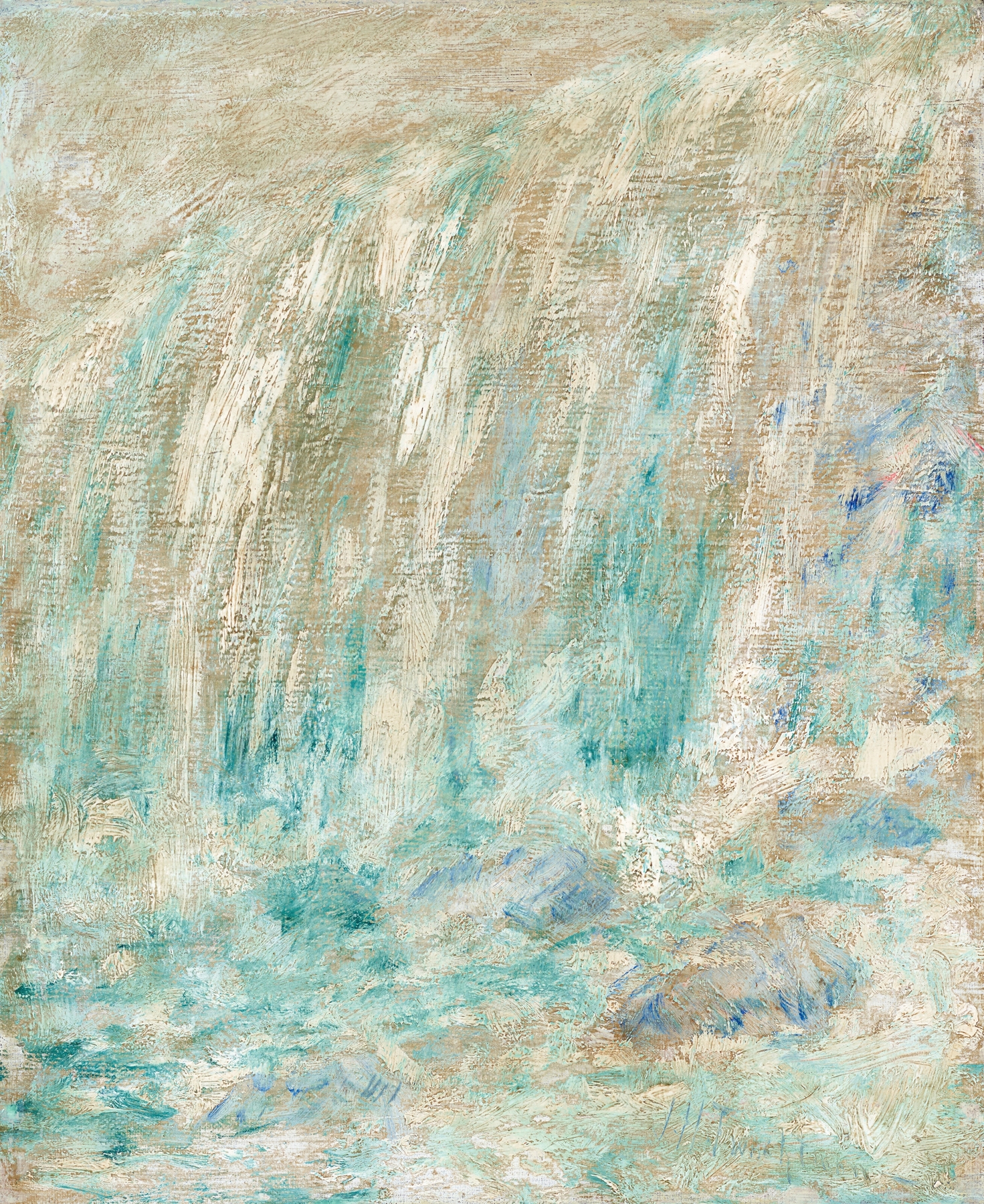
The Wild Cherry Tree — History & Analysis
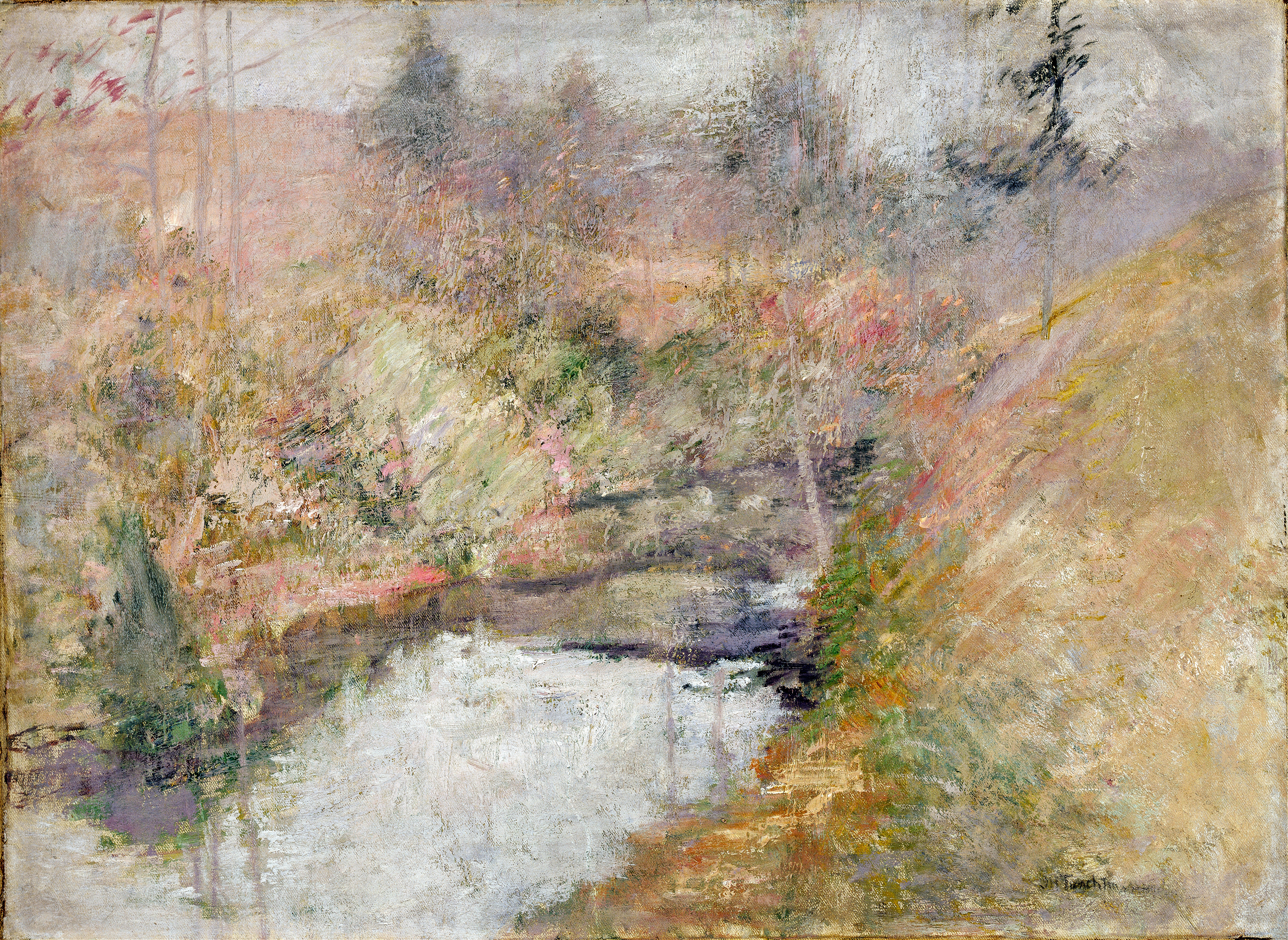
Can paint confess what words never could? In The Wild Cherry Tree, the delicate blooms whisper secrets of isolation and yearning, inviting the viewer into a world brimming with unsaid emotions. Look to the left, where the vibrant pink blossoms burst forth against a backdrop of soft greens and blues. Twachtman's brushwork reveals a masterful play of light, as dappled sunlight filters through the tree branches, casting a gentle glow on the ground below.
The composition draws the eye toward the tree's sprawling limbs, which stretch like a yearning hand, beckoning for connection while simultaneously embodying the weight of solitude. As you absorb the scene, consider the tension between the lush beauty of the cherry blossoms and the emptiness of the surrounding space. Each petal seems alive, yet they float in a moment suspended in time, hinting at transience and the inevitable passage of life. The contrast between the vivid colors of the flowers and the muted tones of the background reflects the bittersweet nature of existence—beauty intertwined with longing.
In 1900, Twachtman created this piece during a period of artistic exploration in the American Impressionist movement. Living in Connecticut, he was influenced by the natural landscape around him, but also grappling with personal turmoil, including the loss of his young daughter. This profound experience shaped his artistic vision, allowing him to translate deep emotional landscapes into the vivid imagery that characterizes his work.