Trout Stream, North Conway — History & Analysis
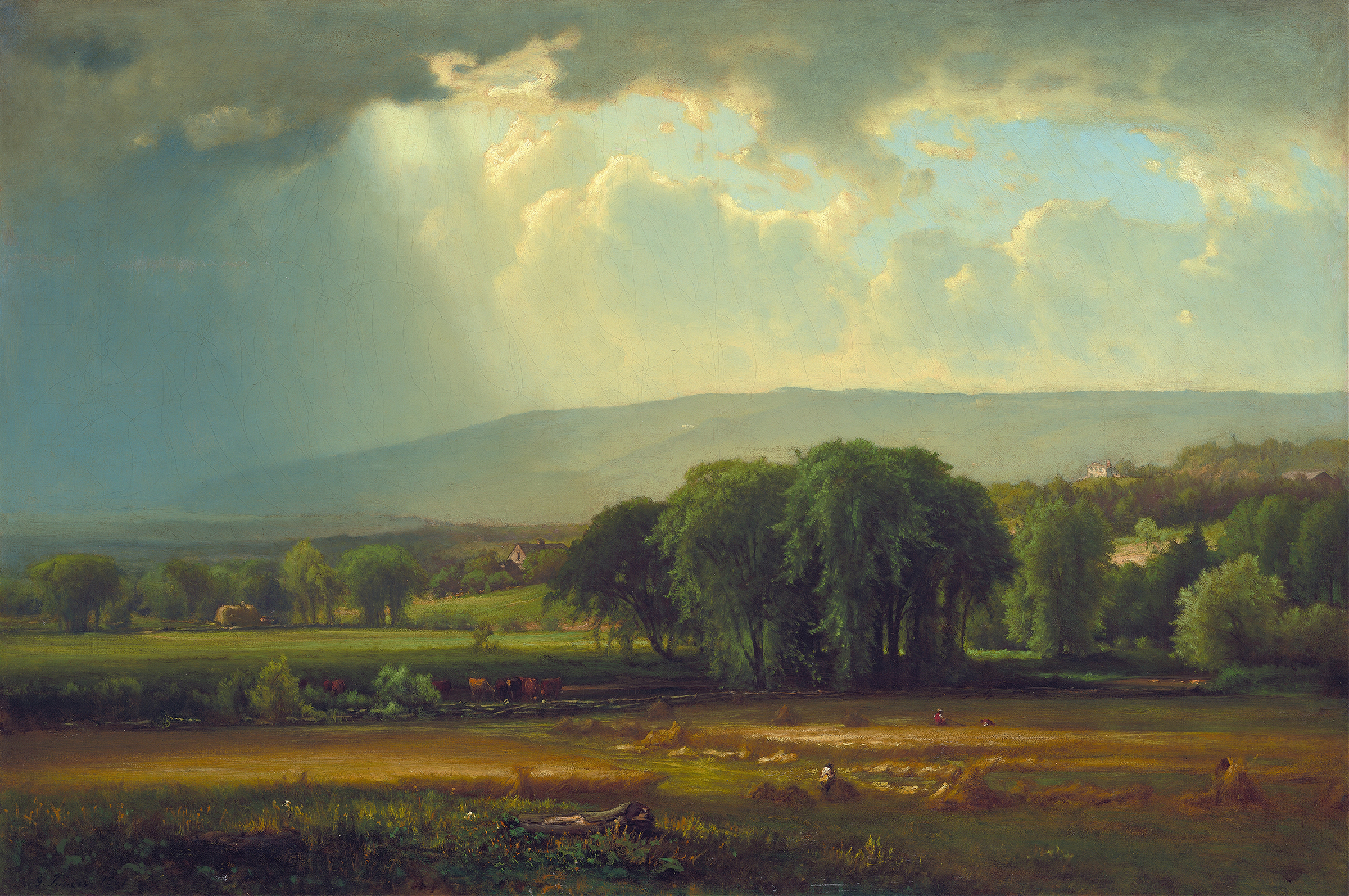
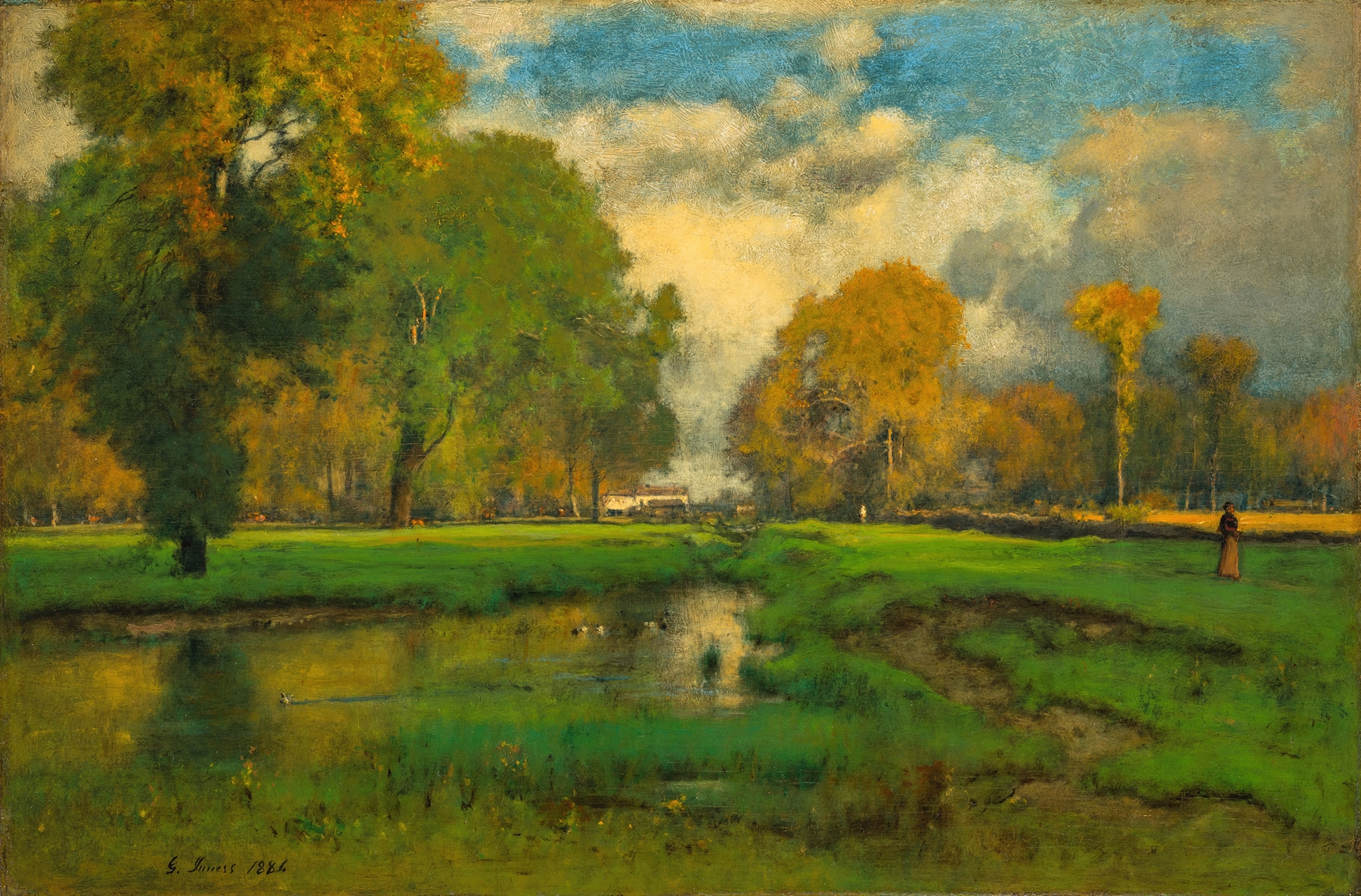
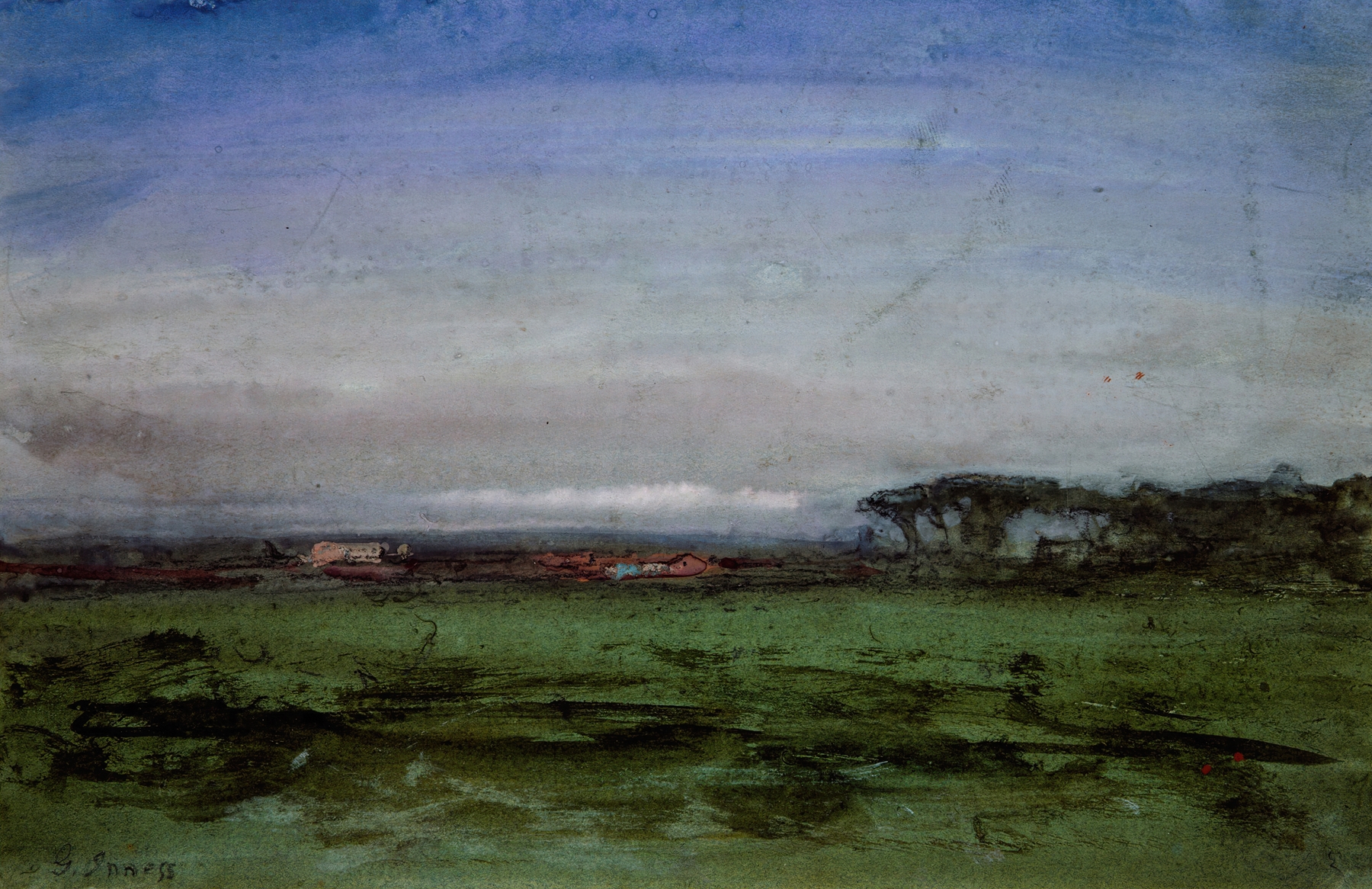
What if silence could speak through light? In George Inness’s Trout Stream, North Conway, the serenity of nature whispers in hues of gold and green, inviting contemplation on the beauty and eventual decay of life. Focus on the gentle flow of the stream in the center, where the water glimmers with dappled sunlight. Here, the artist employs soft brushstrokes to evoke a sense of tranquility, while the surrounding trees arch gracefully, their leaves a rich tapestry of greens.
Notice how the light dances on the water’s surface, creating a shimmering pathway that leads the eye deeper into the landscape. Inness’s use of color and form effectively melds realism with an impressionistic touch, capturing both detail and mood. Delve into the contrasts present in the painting: the vibrant vitality of the brook juxtaposed with the encroaching shadows cast by the trees suggests the inevitability of change and decay. The delicate interplay between light and shadow highlights not just the beauty of the scene but its transient nature, whispering of a world in constant flux.
Each element—be it the sturdy rocks or the fluttering leaves—holds the weight of time, echoing the duality of life’s splendor and its eventual fading. Inness created Trout Stream, North Conway during a pivotal moment in his life, around 1875-76, while residing in New York. This period marked a shift in his artistic focus toward more spiritual interpretations of nature, influenced by the Hudson River School and his own philosophical explorations. The painting captures his intent to convey an emotional response to the natural world, a pursuit reflecting broader trends in American art of his time.