Vlucht naar Egypte — History & Analysis
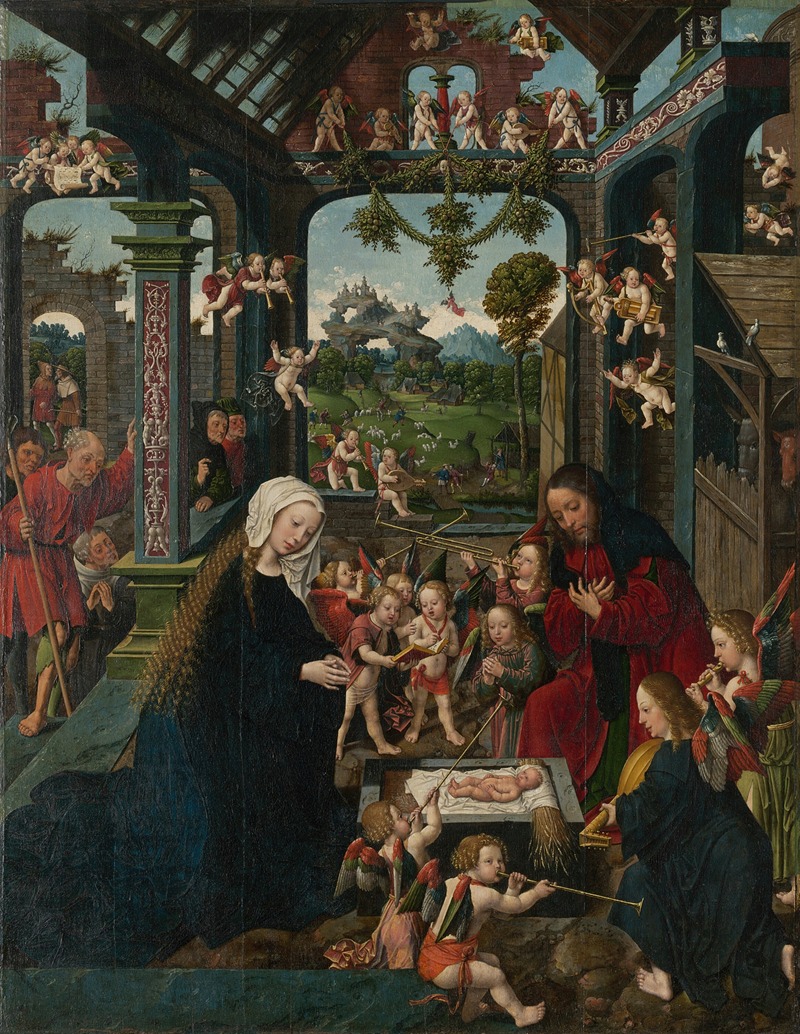
Who listens when art speaks of silence? In Vlucht naar Egypte, the weight of destiny rests heavy on the figures depicted, a quiet tension palpable in the air, as if the painting itself holds its breath. Look closely at the central figures, particularly the serene expressions of Mary and the infant Christ, cradled protectively in her arms. Notice how the soft light illuminates their faces, casting gentle shadows that convey a sense of both refuge and foreboding.
The surrounding landscape is rendered in muted earth tones, with a deepening horizon that suggests an endless journey ahead, guiding your gaze toward the barely visible path that disappears into the distance. The contrast between tranquility and impending peril is striking. The golden halo surrounding the child hints at divinity, while the darkening sky looms ominously, symbolizing the trials yet to come. In the folds of Mary’s garment, one can see the intricacies of her maternal devotion, a juxtaposition to the foreboding atmosphere that envelops them.
Each brushstroke vibrates with a narrative of sacrifice and hope, where the innocent are shielded against the uncertainties of their fate. Painted between 1520 and 1521, this work emerged during a period of personal transformation for the artist. Living in Haarlem, he witnessed the shifting tides of the Reformation and an evolving artistic landscape that gravitated toward humanism and greater emotional depth. In this context, Vlucht naar Egypte not only reflects a biblical journey but also resonates with the era's complex tapestry of faith and the pursuit of understanding in a rapidly changing world.