Wheat Field Behind Saint-Paul Hospital with a Reaper — History & Analysis
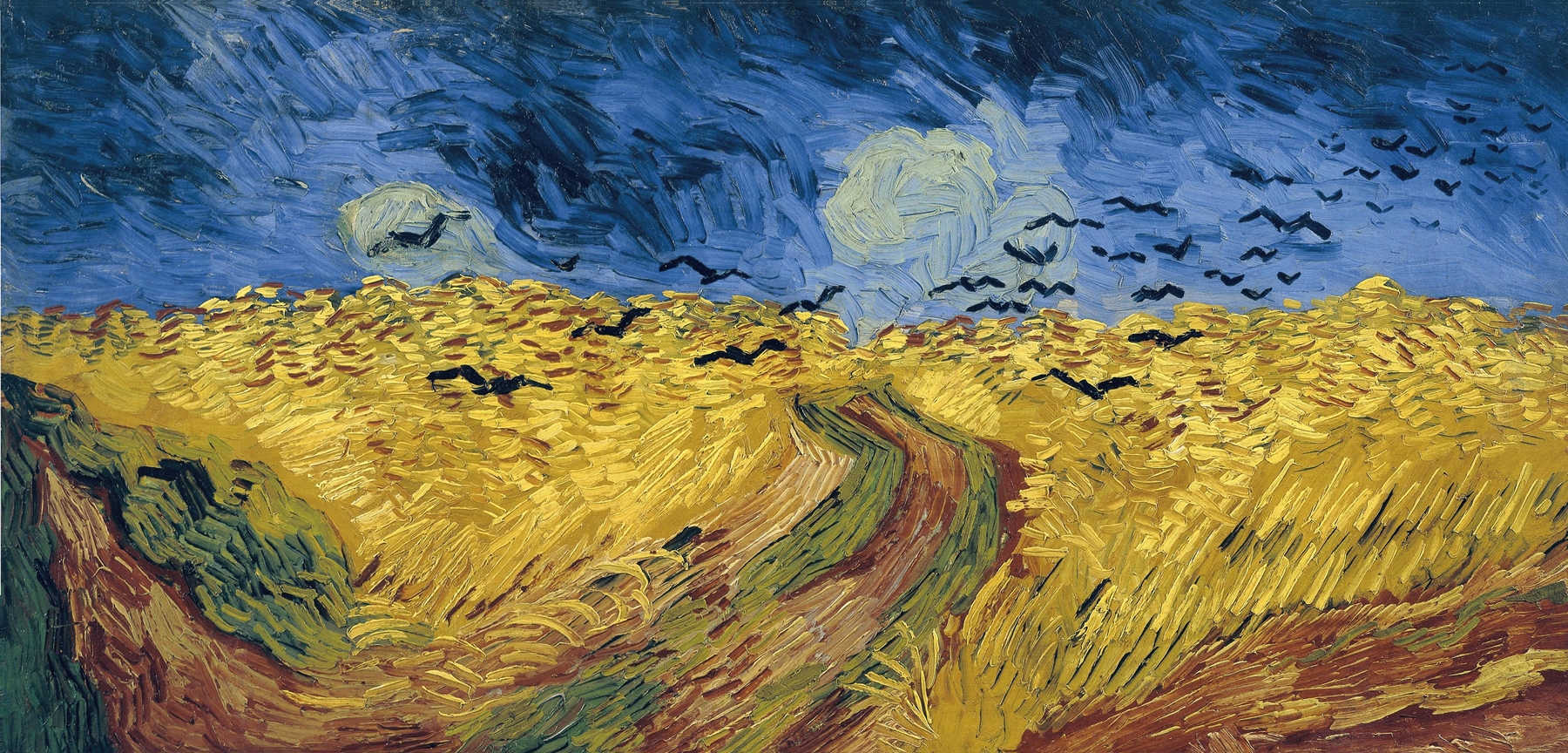
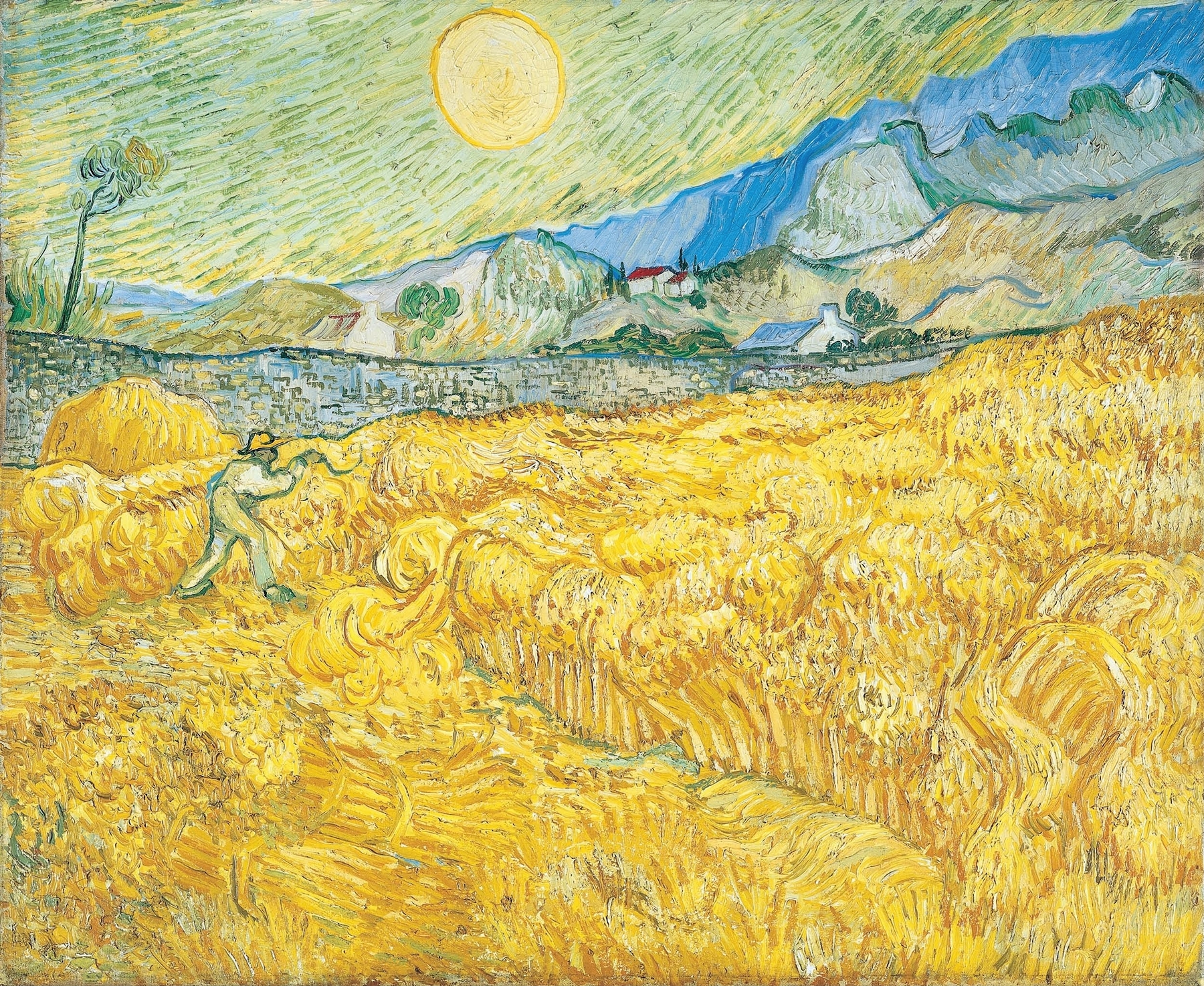
“Every brushstroke is a heartbeat remembered.” Within the vibrant chaos of this painting, one can sense the pulse of life intertwined with the quietude of the countryside. Van Gogh captures a moment where the swirling wheat meets the fervent sky, revealing the delicate balance between turmoil and tranquility. Look to the left at the bold strokes of golden wheat swaying in the breeze, almost alive with energy. Notice how the reaper, rendered in earthy tones, stands resolute against the overwhelming backdrop of rolling fields and a tempestuous sky.
The dynamic brushwork creates a rhythm, guiding your gaze across the canvas, while the contrasting colors of intense yellows and deep blues echo a sense of both harvest and hope amidst chaos. The juxtaposition of the serene yet turbulent landscape suggests an inner struggle, perhaps reflecting Van Gogh's own emotional tumult during this period. The reaper, alone yet purposeful, may symbolize the labor of both nature and the artist’s relentless search for meaning amid confusion. Each stroke conveys a tension between the beauty of creation and the shadows of despair, inviting viewers to contemplate their own journeys through life's complexities.
In 1889, while residing at the Saint-Paul-de-Mausole asylum near Arles, the artist painted this piece during a time of profound mental struggle. The world around him was undergoing significant changes, as Impressionism was evolving into Post-Impressionism, with Van Gogh standing at the forefront of this transformation. He channeled his emotional chaos into his art, expressing the tumult of his mind through vivid colors and dynamic forms.