Wild Flowers — History & Analysis
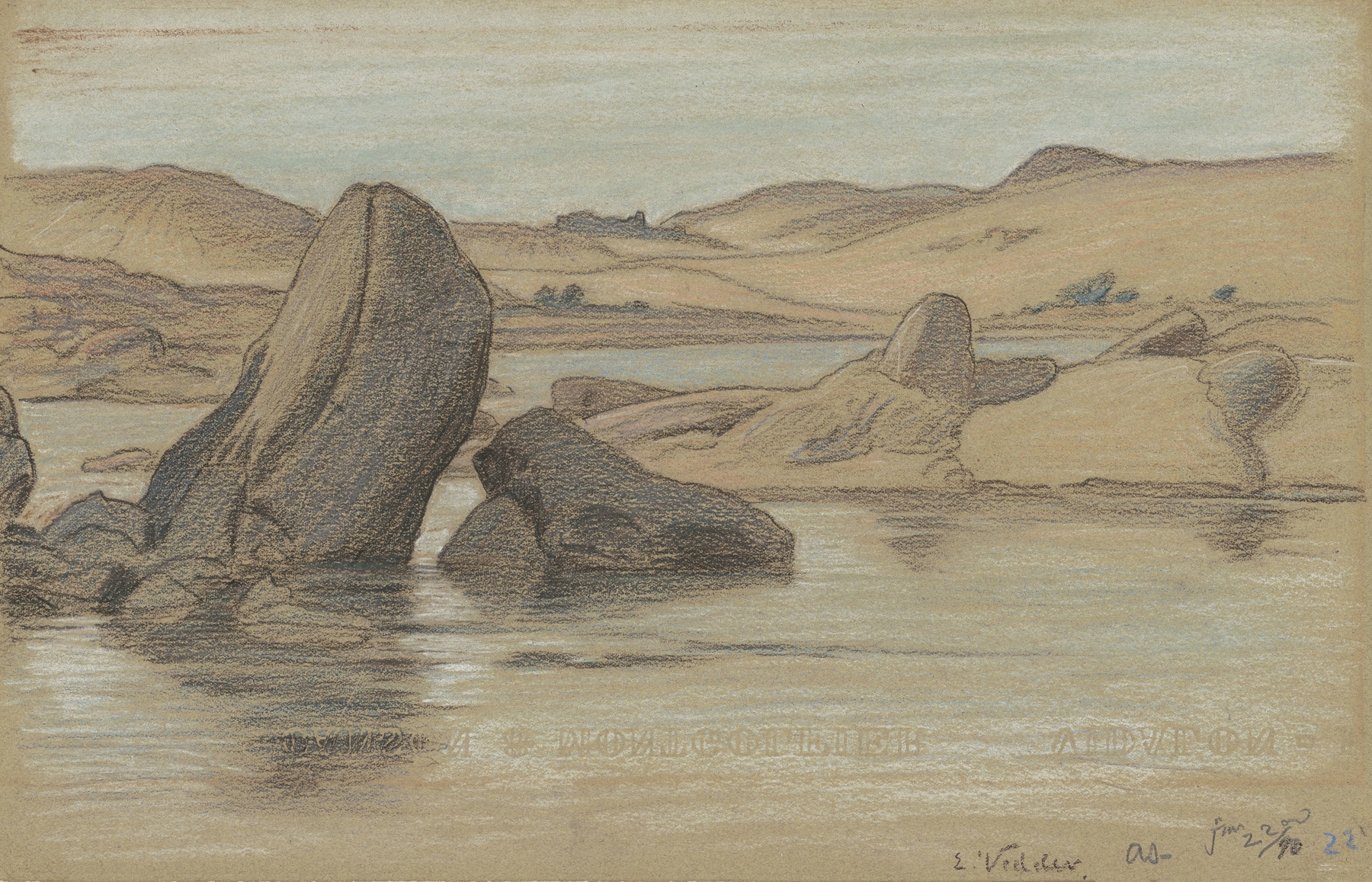
Could beauty survive in a century of chaos? In Wild Flowers, Elihu Vedder encapsulates the fragility of existence within the delicate petals of nature’s finest blooms. This exploration of life's ephemerality invites contemplation on the resilience of beauty amid turmoil. Look to the center of the canvas, where vibrant wildflowers burst forth, their colors dancing between gentle purples, soft yellows, and verdant greens. The brushwork is intricate yet fluid, capturing the natural sway of the blossoms as they reach toward an unseen light.
Notice how the background fades into an earthy backdrop, emphasizing the vividness of the flowers, creating both contrast and harmony. The layering of colors reveals Vedder's deft technique, imbuing the scene with a sense of depth and vitality that draws the viewer into this intimate oasis. Yet, as one gazes deeper, the emotional tension becomes palpable. The wildflowers, though radiant, appear solitary, suggesting both resilience and vulnerability in their isolation. The interplay of light and shadow subtly evokes a sense of transience, hinting at the inevitable decline that shadows all beauty.
Each petal, a testament to the fleeting nature of life, offers a bittersweet reminder of the impermanence that surrounds us. The tension between the vibrant blossoms and their encroaching decay reflects our own struggles against time and chaos. Created during a time of personal reflection around 1890, the artist immersed himself in the contemplative world of nature while residing in Italy. The late 19th century was marked by rapid societal changes and artistic experiments, and Vedder sought to capture the essence of beauty amidst these shifts. Wild Flowers stands as a poignant reminder of how art can encapsulate delicate moments, even in the face of uncertainty.