Winter Landscape — History & Analysis
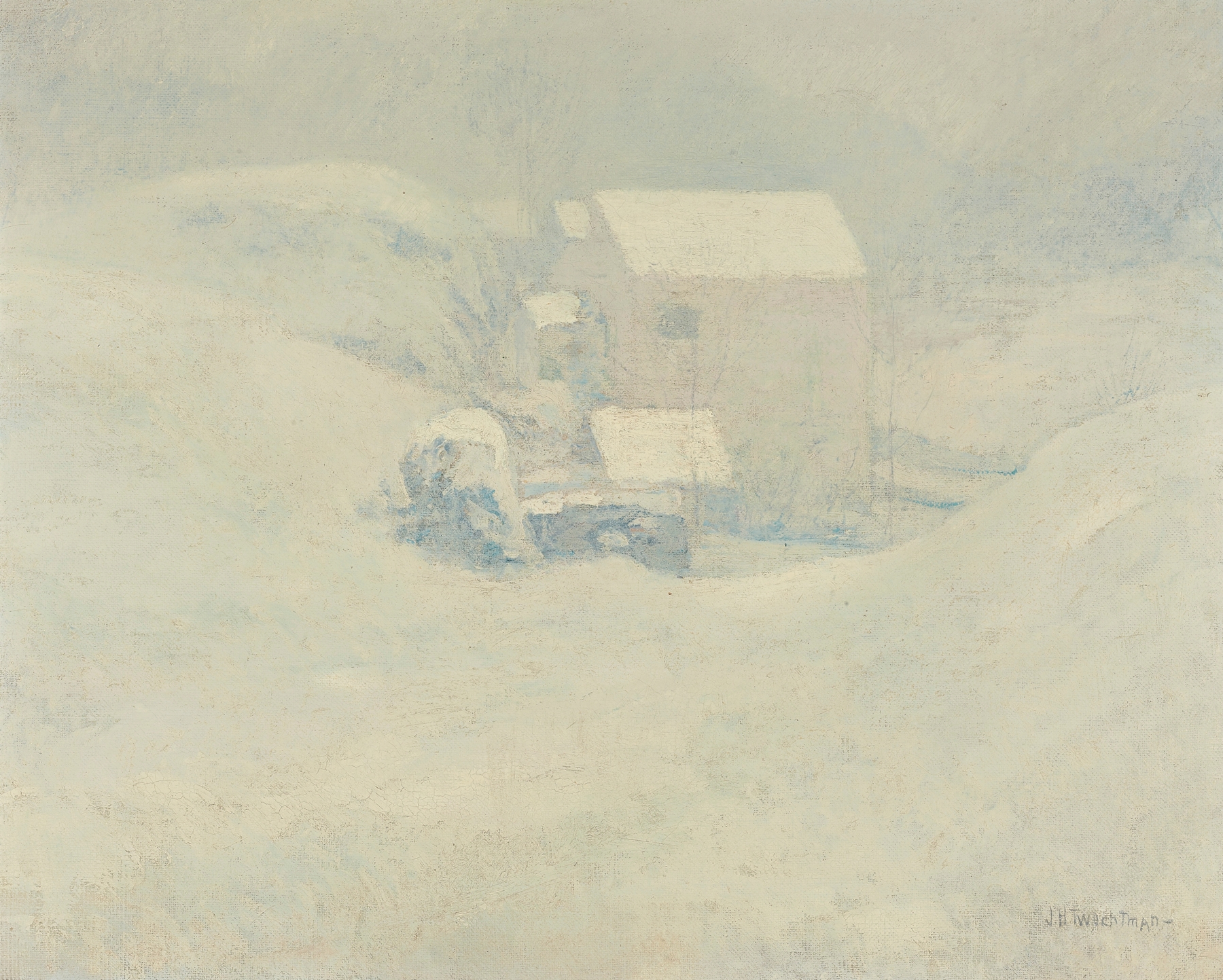
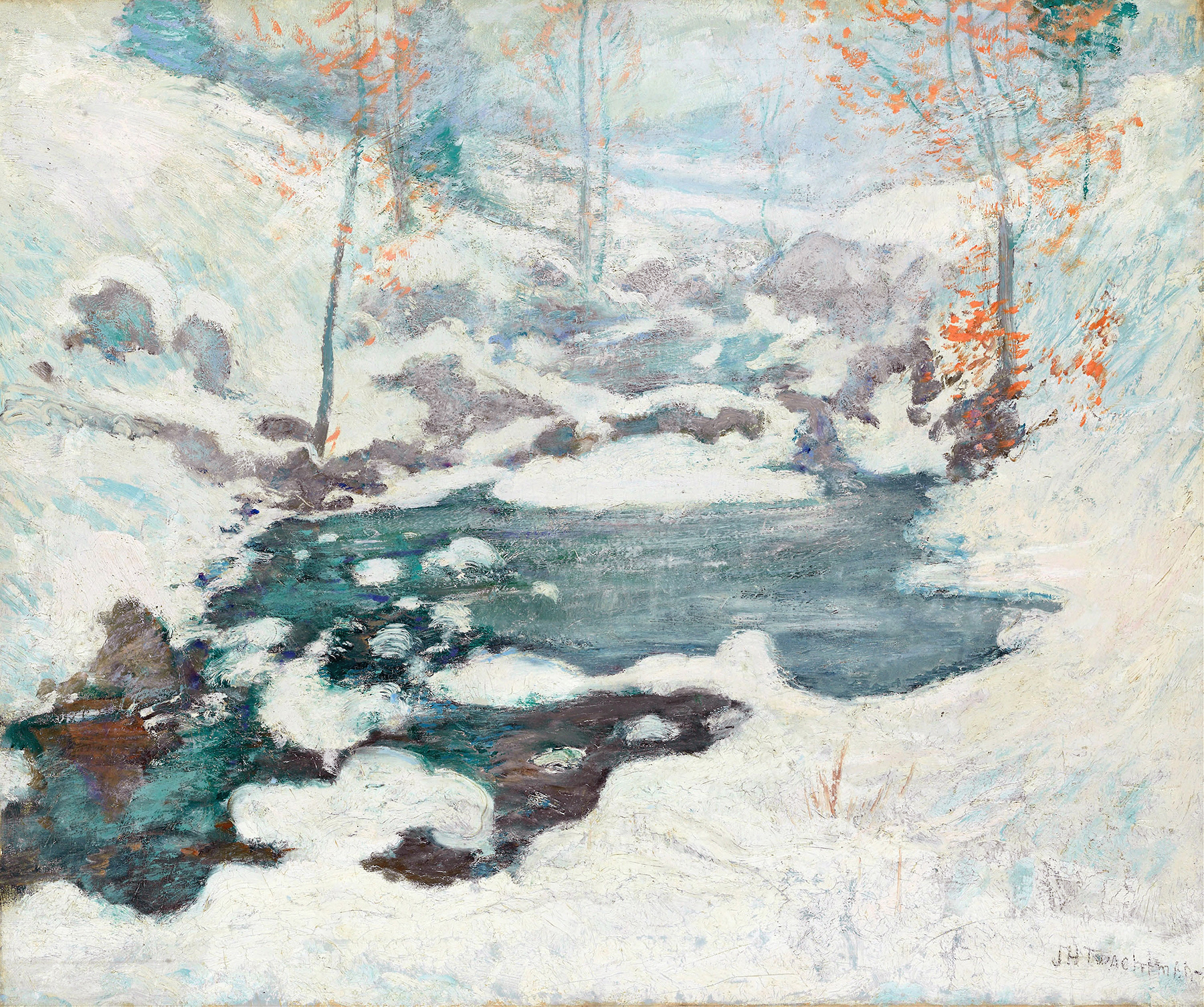
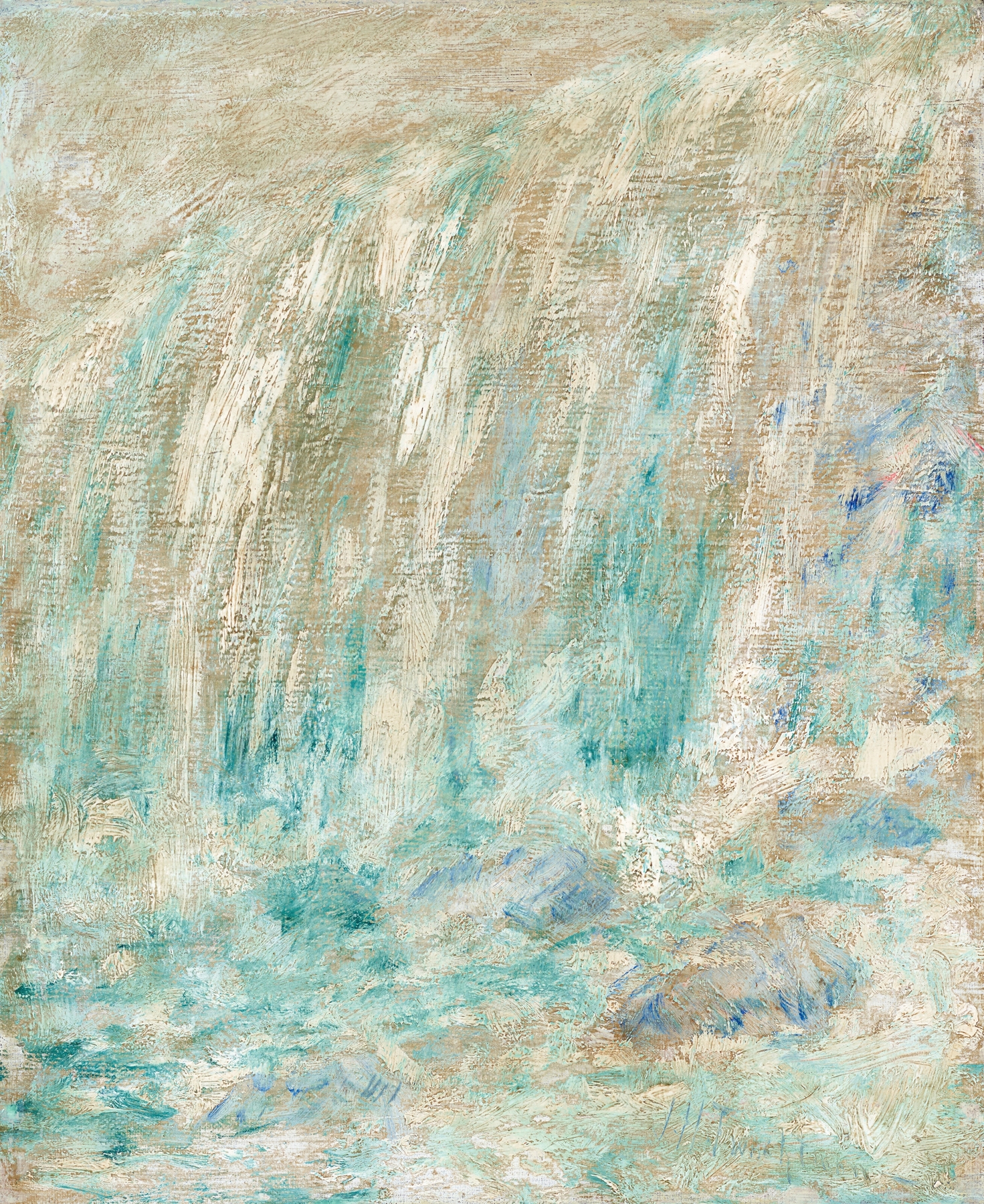
Where does light end, and longing begin? This eternal question echoes through the delicate brushstrokes of a winter landscape, where the stark beauty of nature collides with the introspection of mortality. First, look to the horizon, where soft white snow meets an ethereal sky brushed in gentle blues and grays. Twachtman’s technique of layering translucent color creates a palpable depth, inviting you to wander deeper into the serene yet haunting expanse. Notice how the trees, cloaked in snow, reach out like bony fingers against the cold air, their shapes both graceful and sorrowful.
The gentle play of light across the landscape captures the fleeting beauty of winter, encapsulating a moment where time seems to stand still. Yet, within this tranquil scene lies a profound tension. The starkness of the landscape evokes a sense of isolation and vulnerability, reminding us of life’s fragility. The interplay of light and shadow not only highlights the quietude of winter but also hints at the inevitable passage of time—a stark reminder of mortality.
The reflection in the frozen ground invites contemplation, as if the landscape is holding its breath, waiting for the thaw that will bring life back to the barren expanse. During the late 19th century, Twachtman was at the forefront of the American Impressionist movement, painting Winter Landscape around 1890-1900 while living in Greenwich, Connecticut. This was a period marked by an exploration of light and color, as artists sought to capture the essence of the moment. His work both reflects the changing seasons and mirrors the artist’s own introspective journey through personal loss and the societal shifts of a world on the brink of modernity.