Zugeschrieben – Kleine Landschaft mit Sennerin — History & Analysis
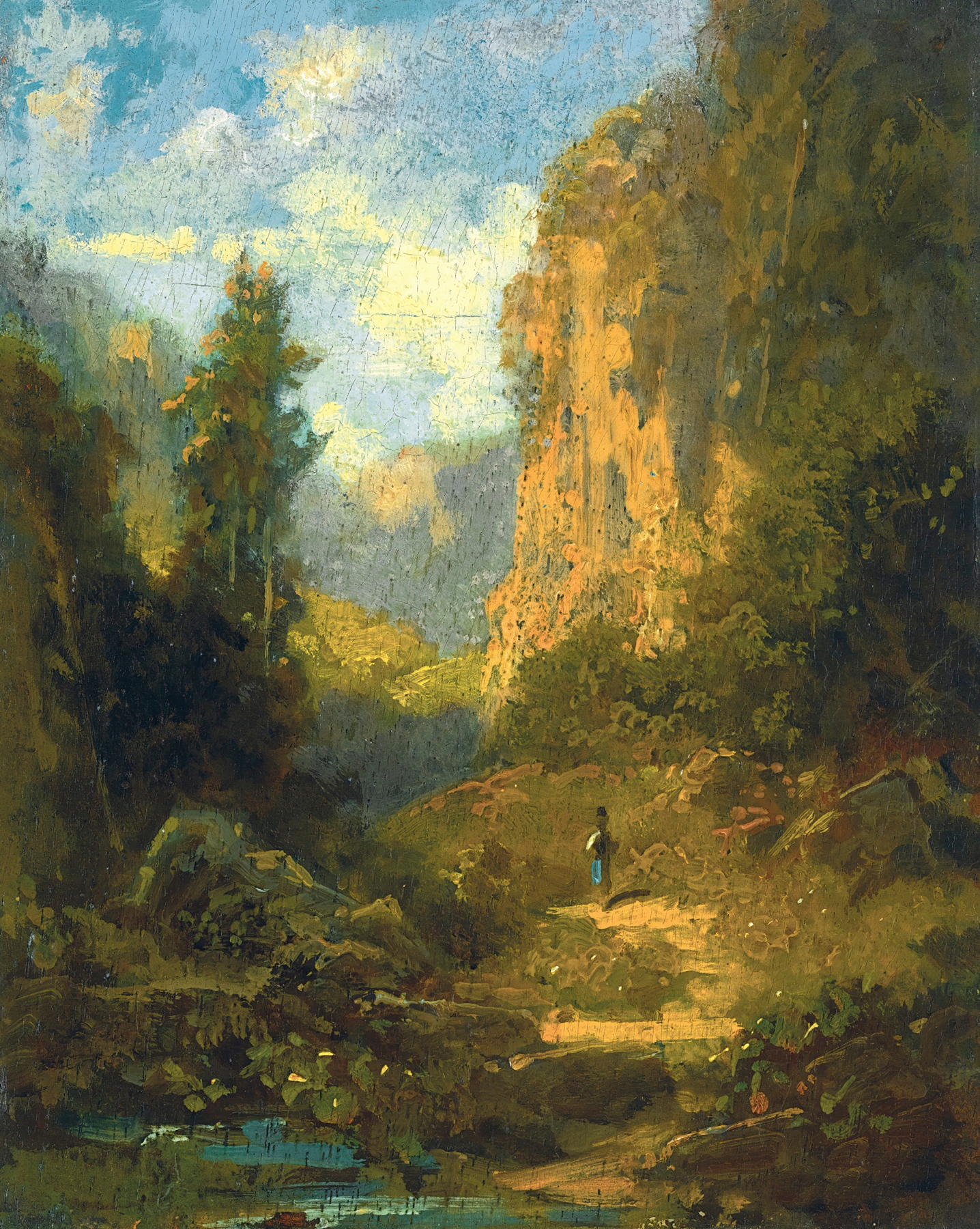
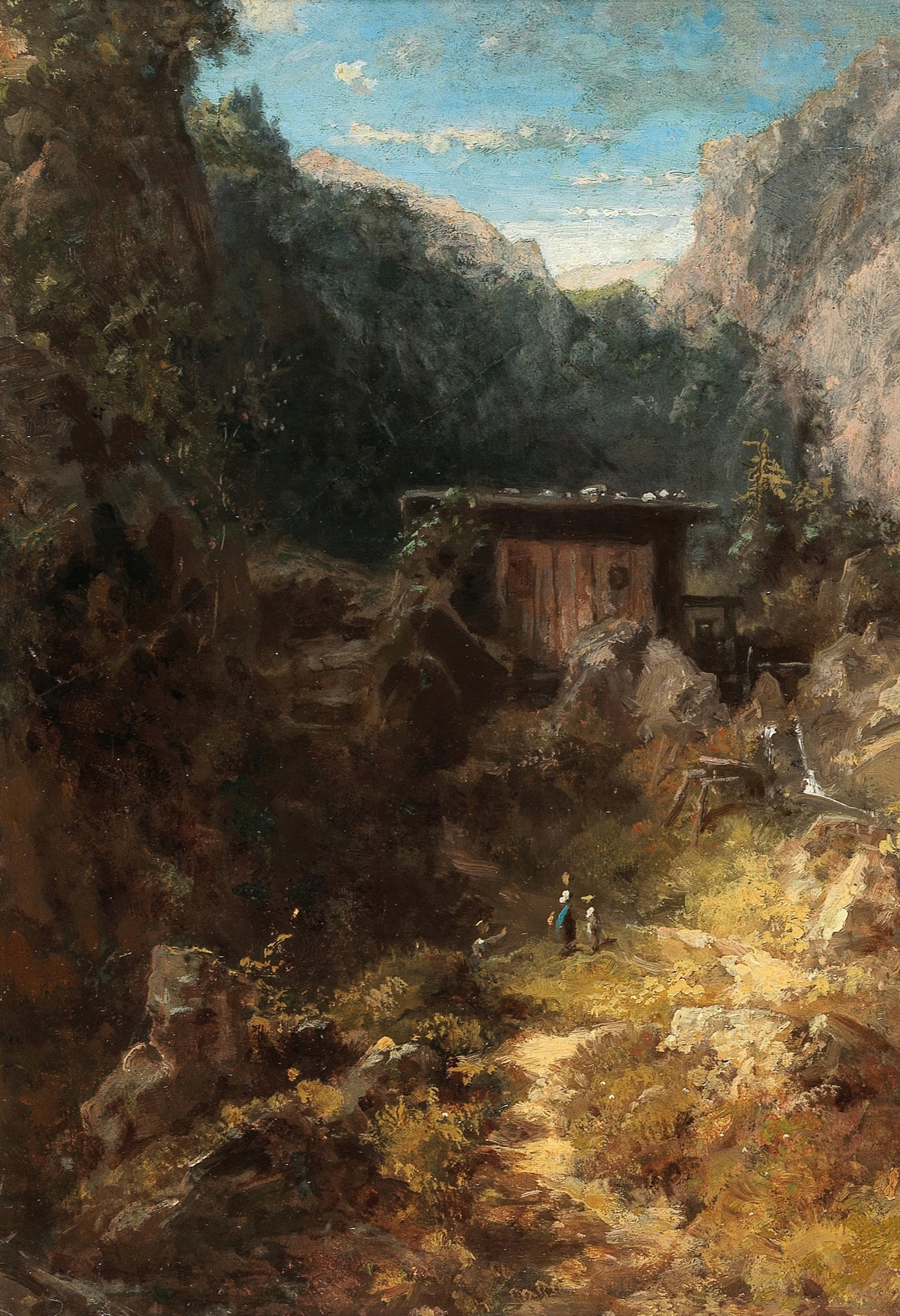
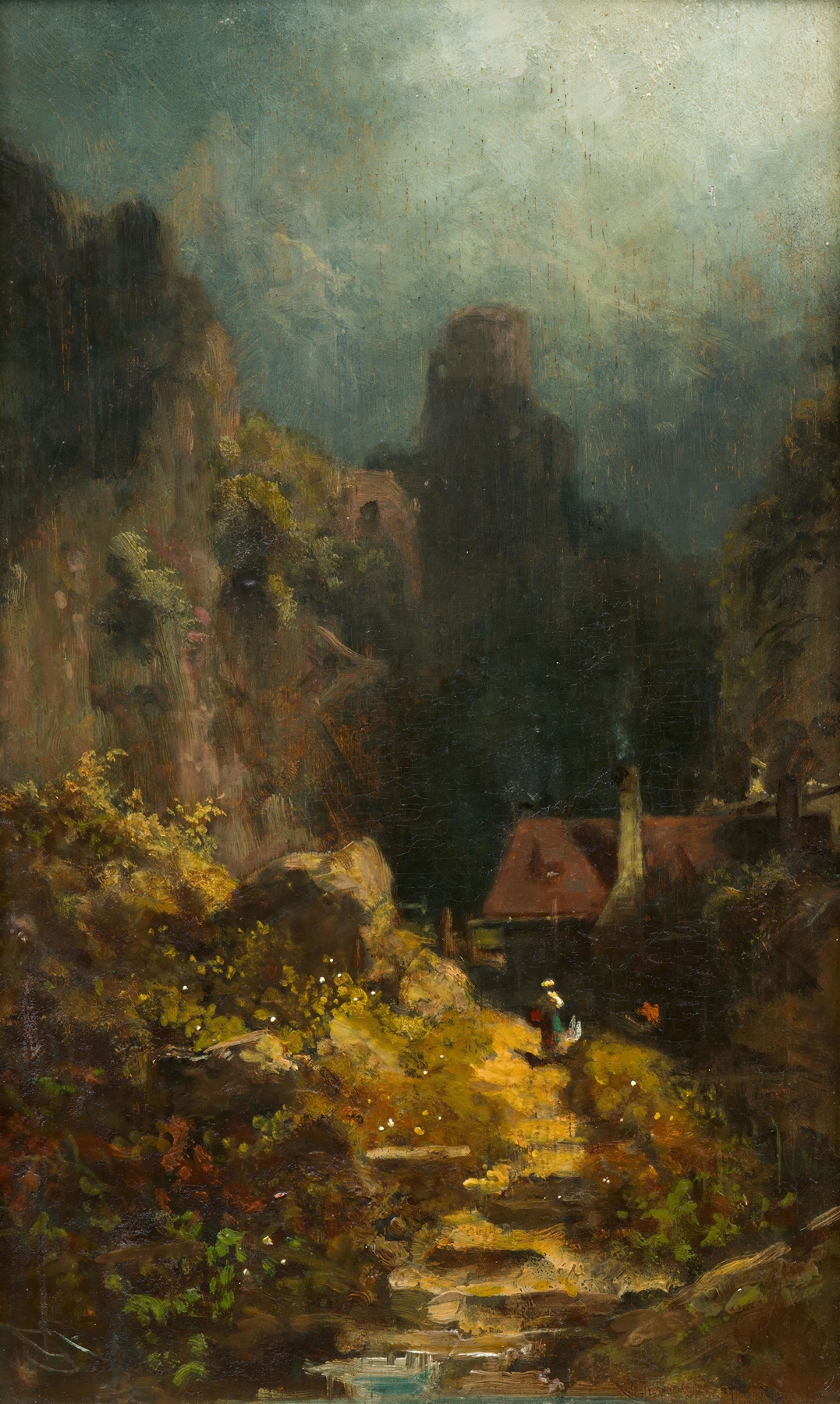
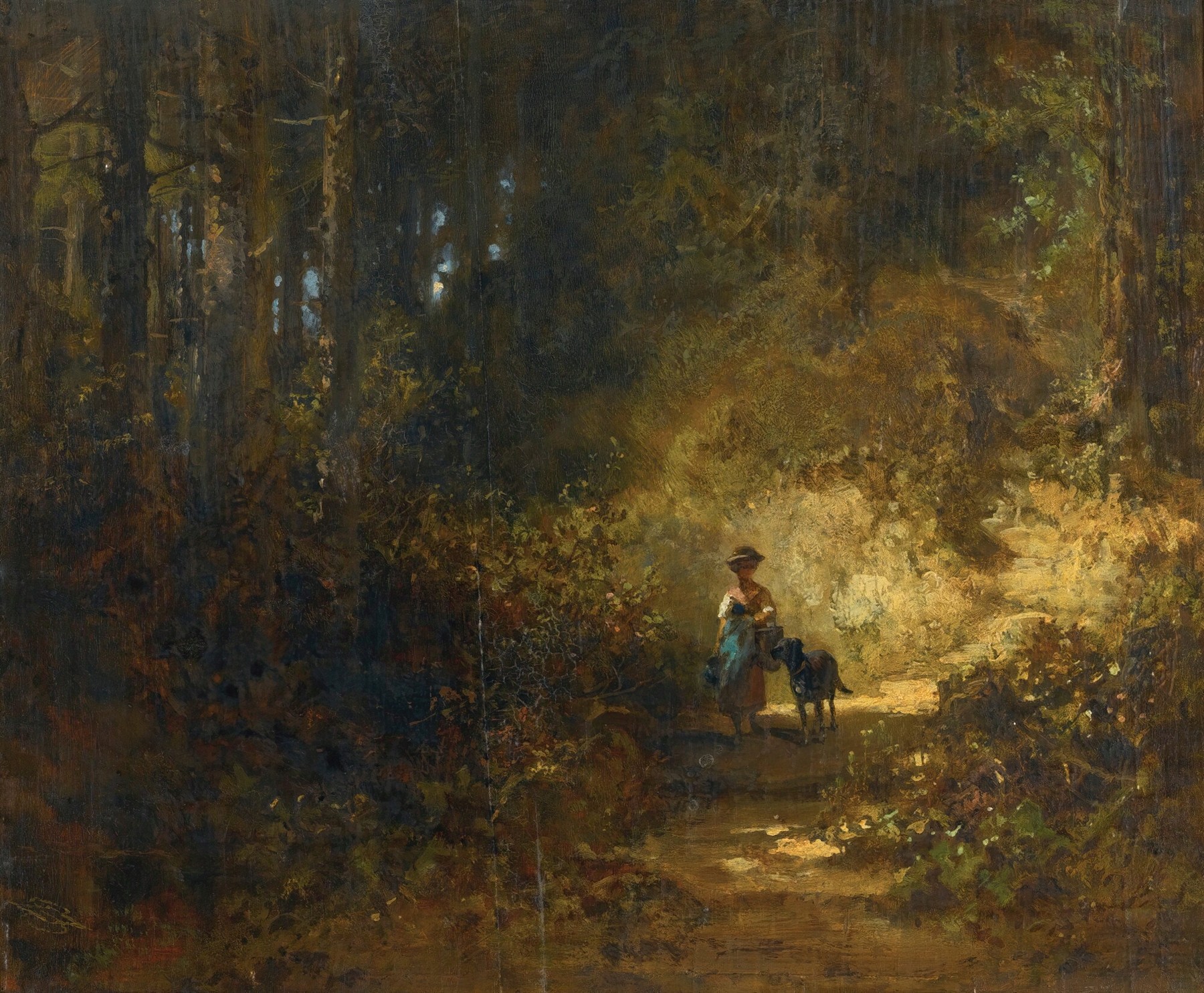
Could a single brushstroke hold eternity? In Zugeschrieben – Kleine Landschaft mit Sennerin, the quiet yet profound beauty of a simple landscape speaks volumes about truth in both nature and humanity. Look to the left at the gentle slope of the hills, where a soft, verdant green meets the earthy tones of the soil. The figure of the shepherdess, cloaked in delicate pastel hues, stands poised in the foreground, her serene expression mirroring the tranquility of the scene. Notice how the light cascades over the landscape, highlighting the dappled shadows that dance beneath the trees, creating a harmony between light and shadow, solitude and presence.
The meticulous brushwork embodies both the charm of rural life and the artistry that elevates a mere scene into a moment of reflection. Within the simplicity lies a complex interplay of themes—solitude, labor, and connection to nature. The shepherdess, cradling her staff, embodies the timeless relationship between humanity and the pastoral land, a symbol of both diligence and introspection. The surrounding landscape, lush yet unassuming, encapsulates the essence of a life lived in harmony with nature, evoking a sense of nostalgia and longing.
Each detail, from the texture of the grass to the softness of the sky, speaks to the fleeting beauty of existence, reminding us of the truths often obscured by modernity. In 1870, while working in Munich, Carl Spitzweg painted this piece during a time of rapid industrialization and social change across Europe. He was deeply influenced by the Romantic movement, which emphasized the connection to nature and the celebration of the ordinary. This work reflects his commitment to capturing the simplicity of life amidst the complexities of contemporary society, showcasing a moment of peace that resonates through the ages.