
The Three Crosses — Historia y Análisis
Cuando rascas una línea en una placa de grabado, produce un pequeño borde elevado llamado 'burr'. El burr, que le da a las líneas de punta seca un aspecto aterciopelado y lujoso, se desgasta rápidamente. Como resultado, el efecto decorativo de la técnica disminuye y la representación se vuelve cada vez más ligera.
Aquí, Rembrandt resolvió ese problema oscureciendo nuevamente áreas de sombra con líneas adicionales, por ejemplo, debajo del perro en primer plano.
Más obras de Rembrandt van Rijn
Ver todo →
The Night Watch Militia Company of District II under the Command of Captain Frans Banninck Cocq
Rembrandt van Rijn

The Return of the Prodigal Son
Rembrandt van Rijn

The Hundred Guilder Print: the figures leaning on the wall in the centre left
Rembrandt van Rijn

The Hundred Guilder Print: the central piece with Christ preaching, the plate arched
Rembrandt van Rijn

Isaac and Rebecca, Known as ‘The Jewish Bride’
Rembrandt van Rijn
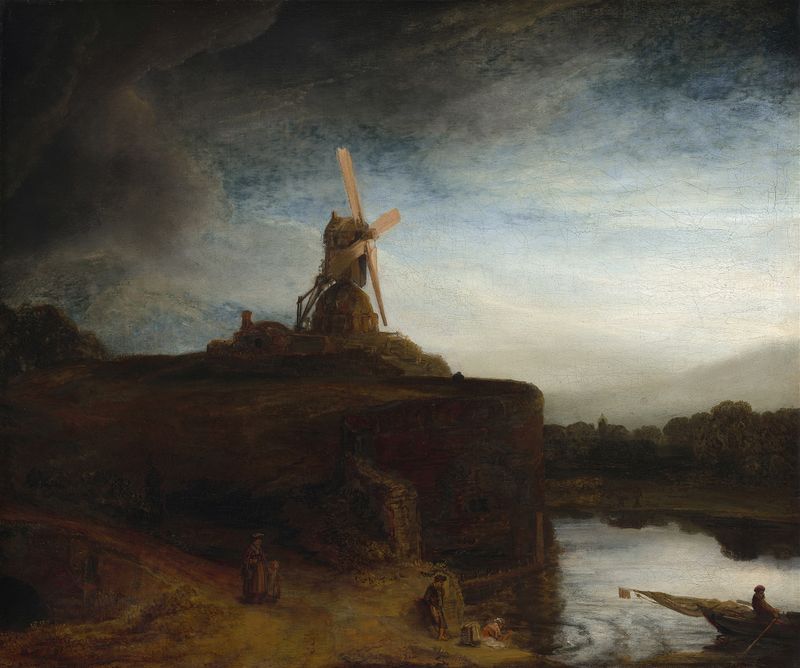
The Mill
Rembrandt van Rijn

The Sampling Officials of the Amsterdam Drapers’ Guild, Known as ‘The Syndics’
Rembrandt van Rijn

The return of the prodigal son
Rembrandt van Rijn
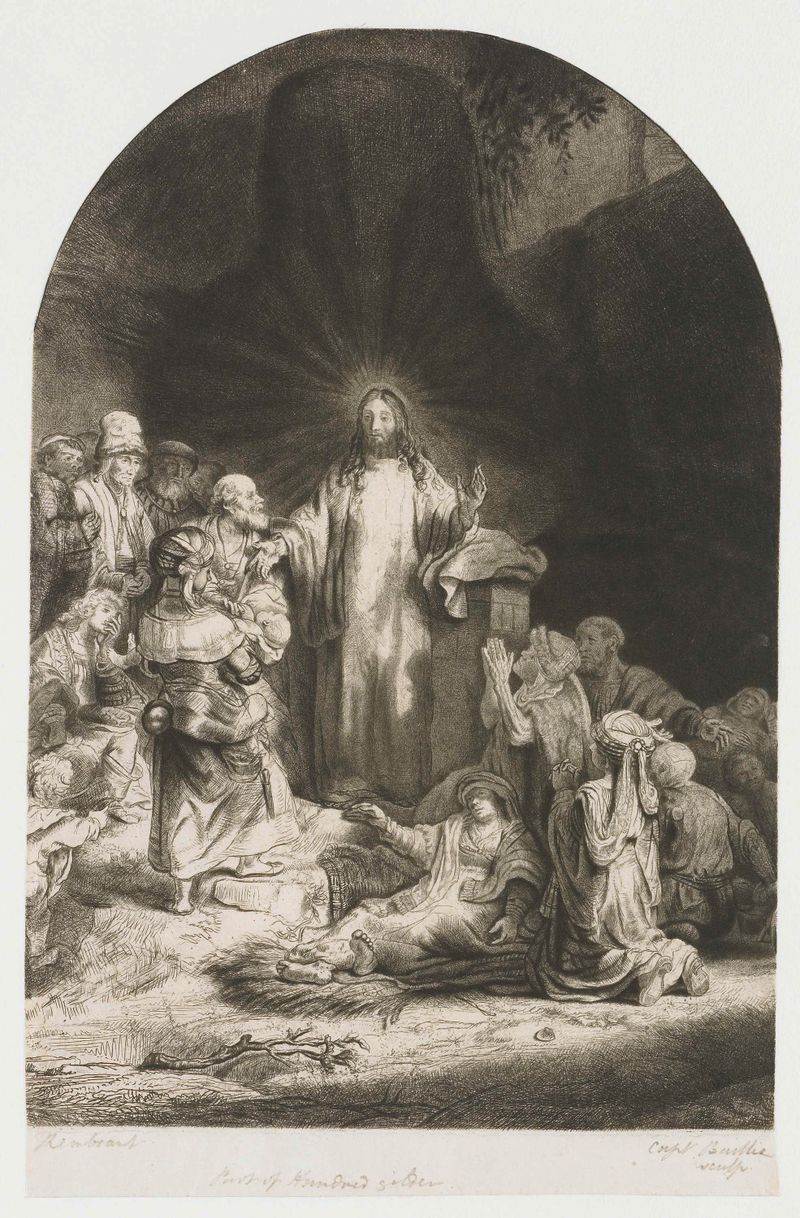
The Hundred Guilder Print: the central piece with Christ preaching, the plate arched
Rembrandt van Rijn

The Hundred Guilder Print: the man seen on the back in the lower left corner
Rembrandt van Rijn
Más arte de Arte Religioso
Ver todo →The Return of the Prodigal Son
Rembrandt van Rijn

The Garden of Earthly Delights
El Bosco

Count Orgaz’ funeral
El Greco
The Hundred Guilder Print: the central piece with Christ preaching, the plate arched
Rembrandt van Rijn

The Descent from the Cross
Rogier van der Weyden
The return of the prodigal son
Rembrandt van Rijn