A Bright Day, Spain (Segovia) — History & Analysis
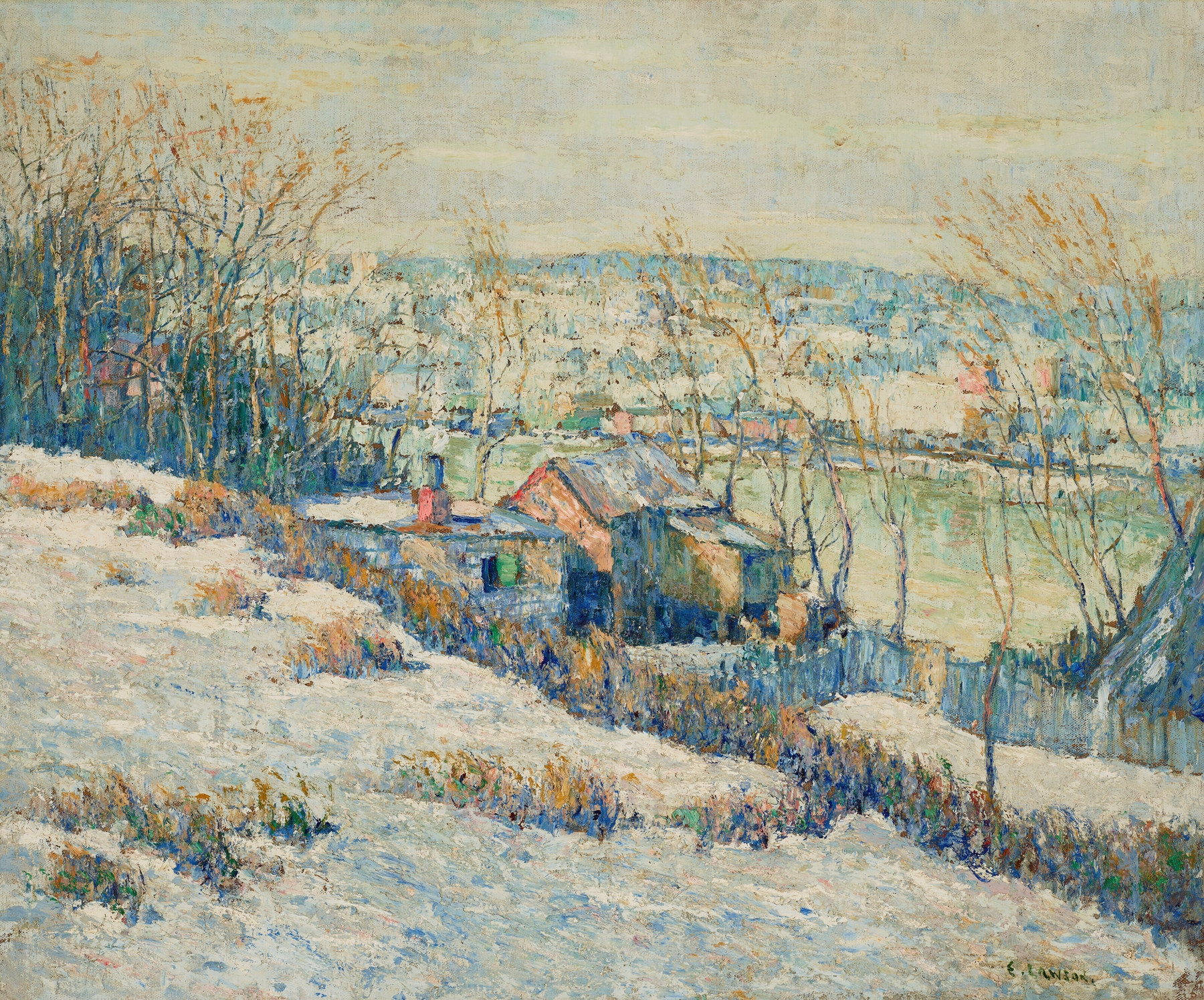
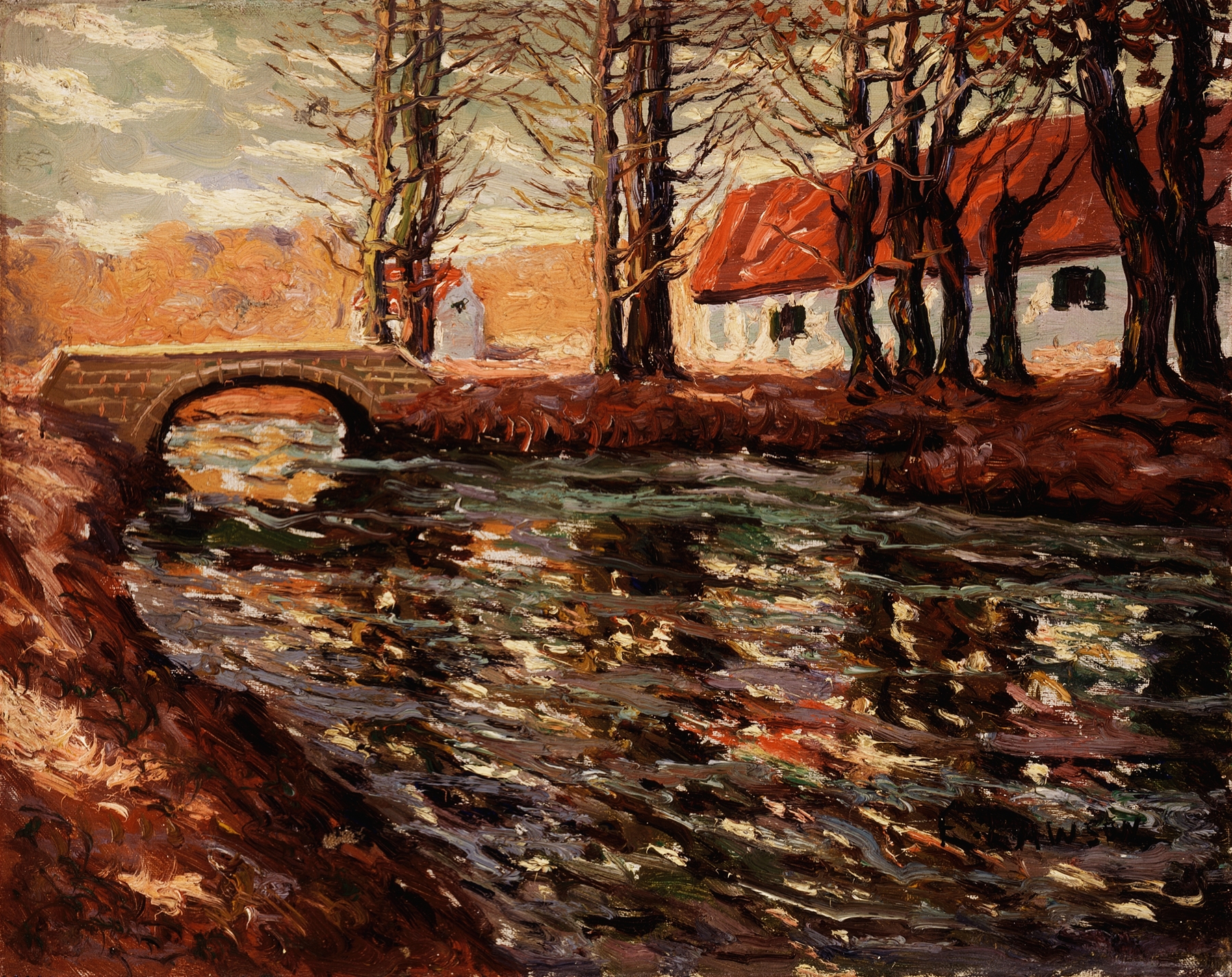
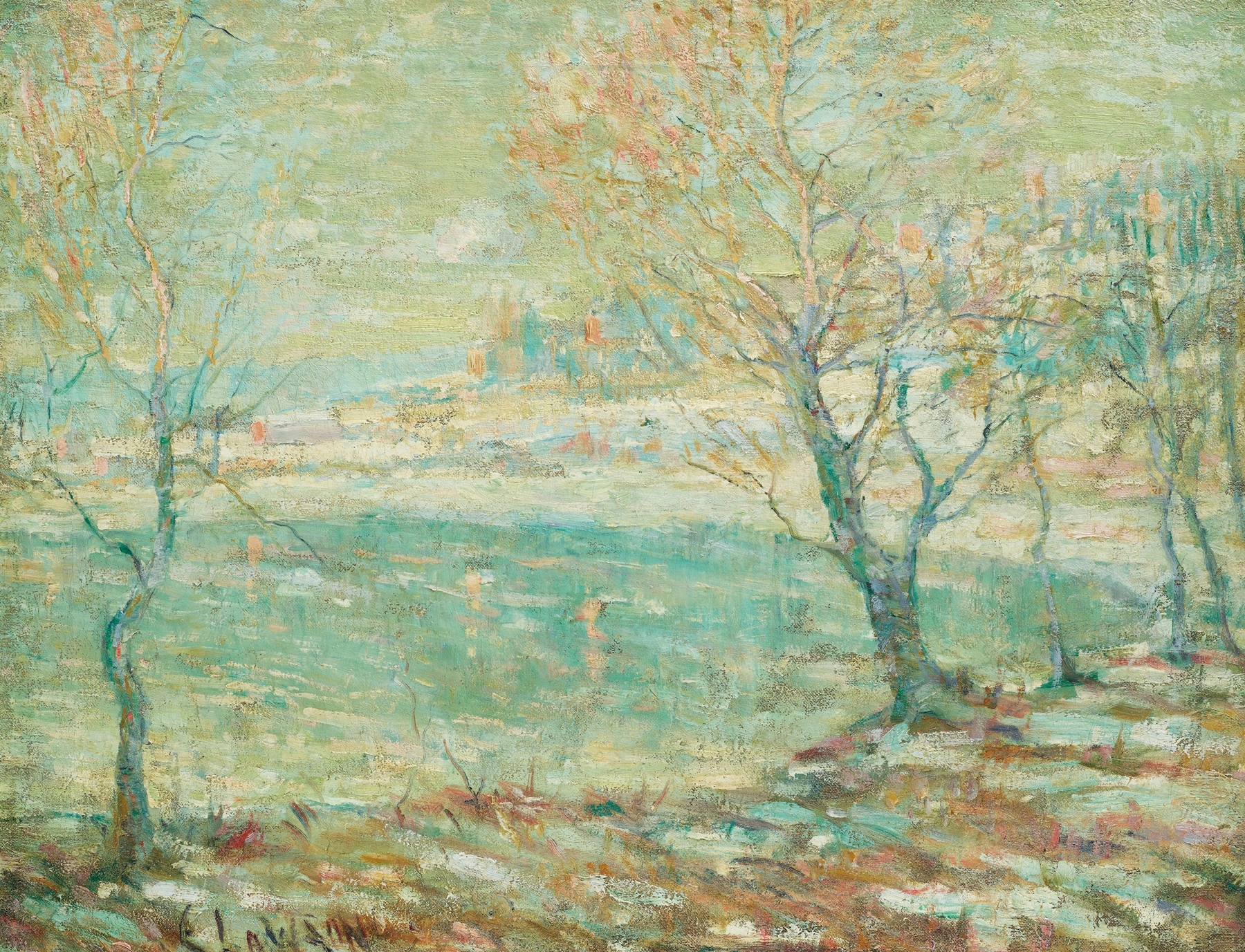
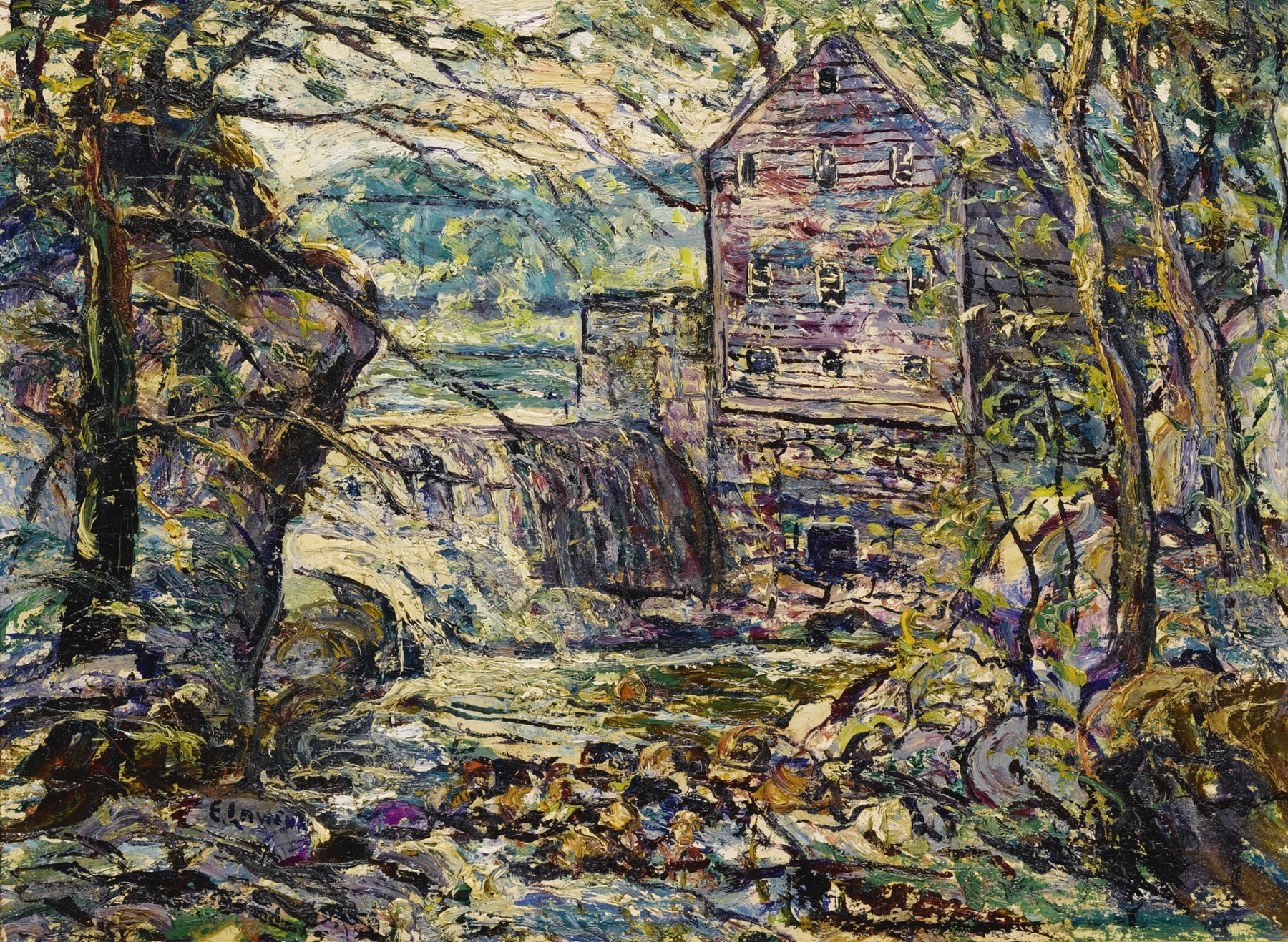
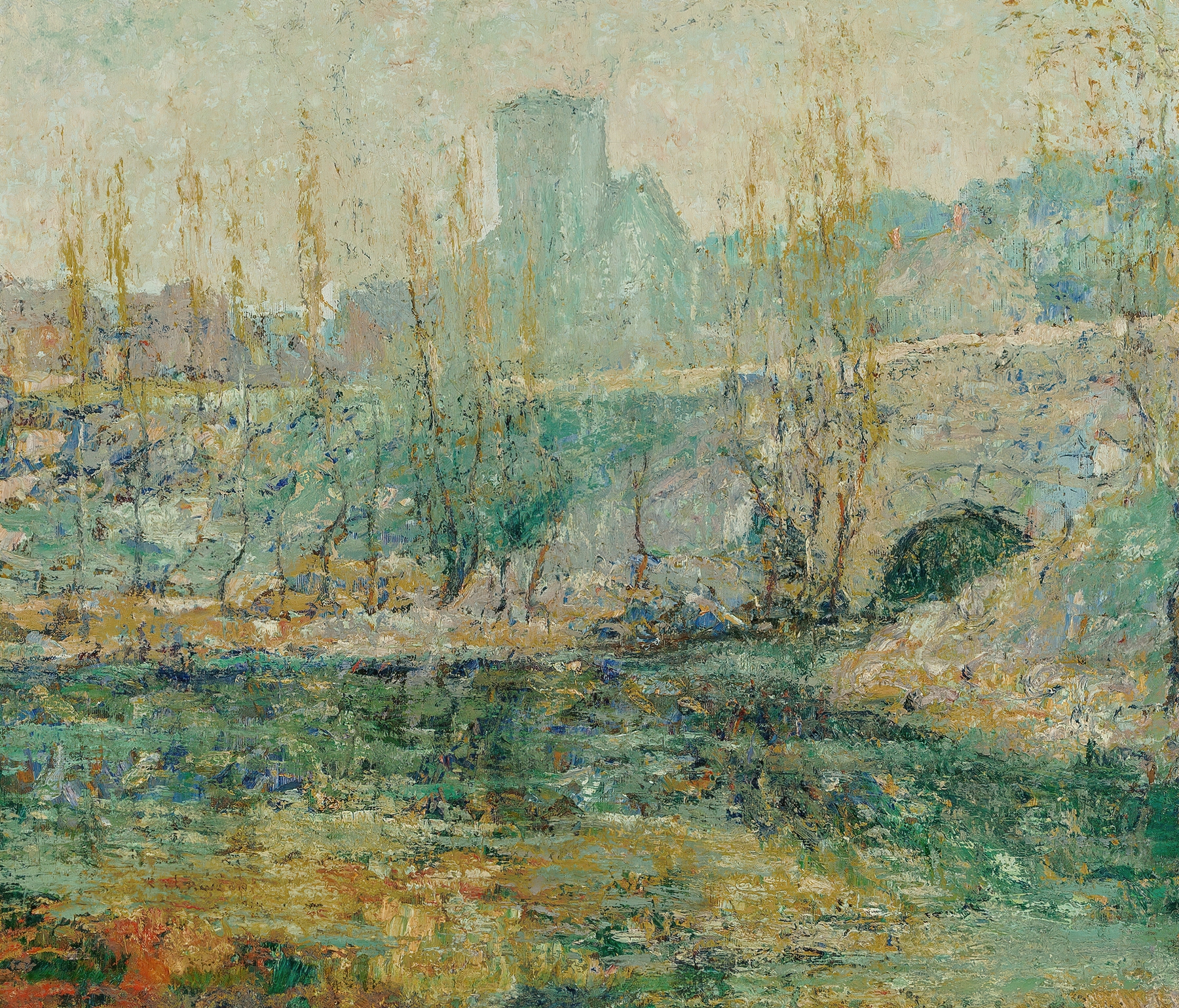
Can beauty exist without sorrow? In A Bright Day, Spain (Segovia), Ernest Lawson captures a moment drenched in brilliance, yet hinting at the undercurrents of change surrounding it. Look to the left at the striking interplay of sunlight filtering through the leaves, dappled shadows creating patterns on the ground. The vibrant greens and warm ochres pulse with life, drawing the viewer into a serene landscape that feels both inviting and ephemeral.
Notice how the geometric forms of the buildings rise in the distance, their crisp lines contrasting with the organic curves of the trees, establishing a dialogue between nature and manmade structures. Yet, within this idyllic scene lies a deeper narrative. The juxtaposition of light and shadow suggests a tension, a fleeting beauty amid uncertain times. The carefully rendered details, from the textured bark of the trees to the rippling water, evoke a sense of nostalgia, reminding us that every moment of joy is shadowed by the inevitability of change and loss.
Here, the revolution brewing in the world beyond the canvas looms like a silent specter, hinting at the fragility of peace. In 1916, Lawson painted this work while living in New York, a period marked by both artistic exploration and the turmoil of World War I. As he sought to capture the essence of a brighter Spain, a sharp contrast emerged between the vibrancy of his palette and the tumultuous events unfolding globally. This painting reflects not only a personal connection to the landscape but also a broader commentary on the delicate balance between beauty and the sorrows that often accompany it.