An der Thaya bei Lundenburg I — History & Analysis
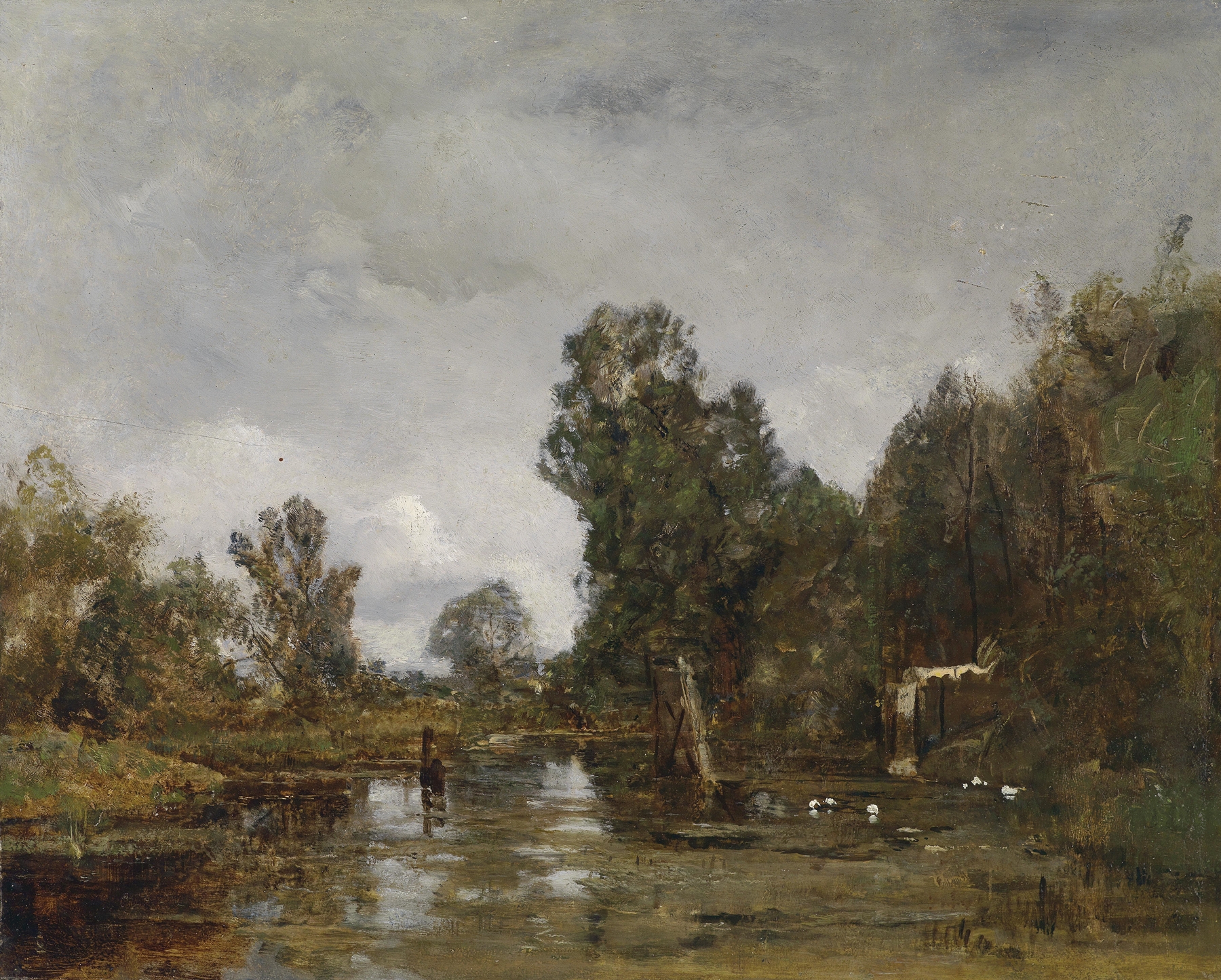
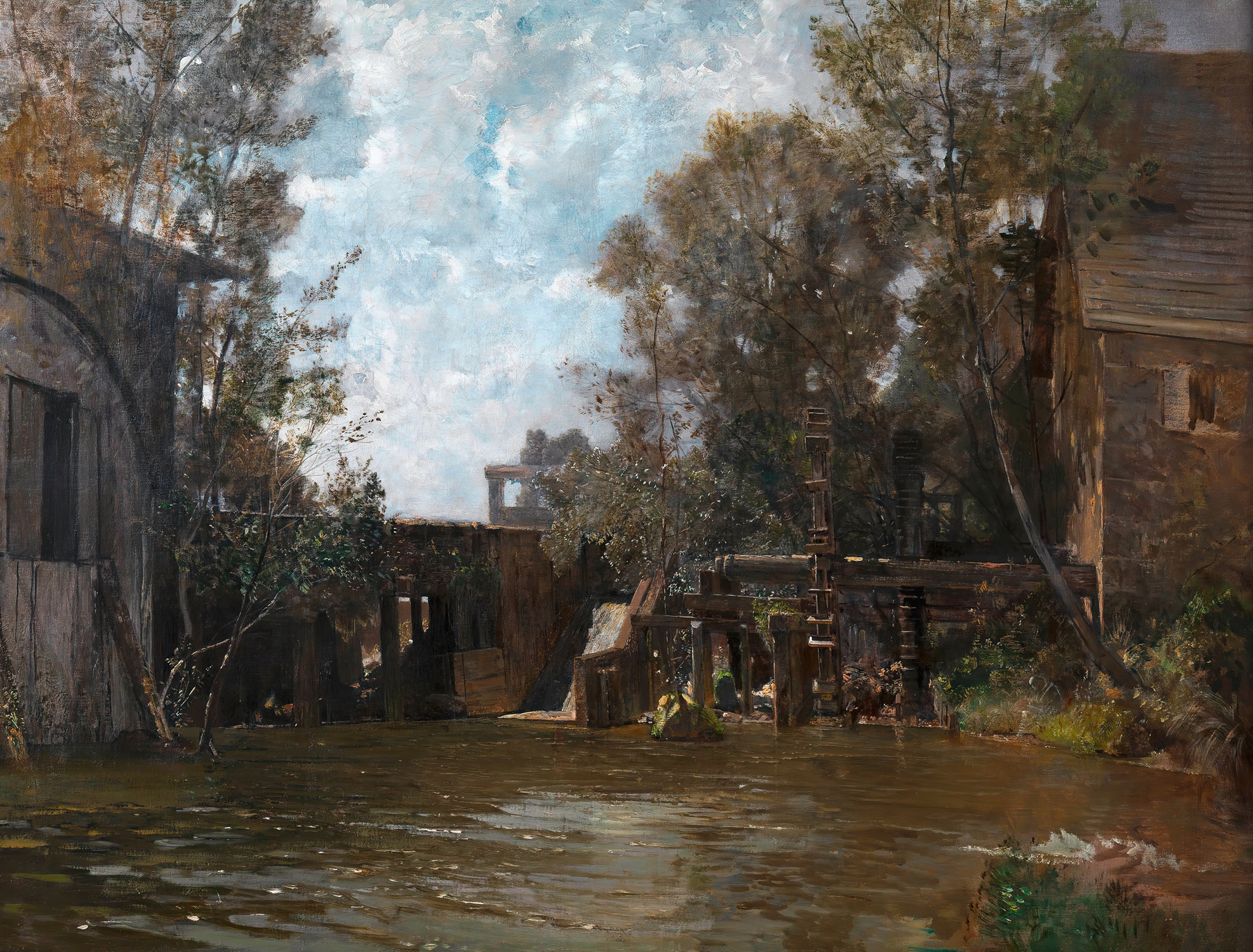
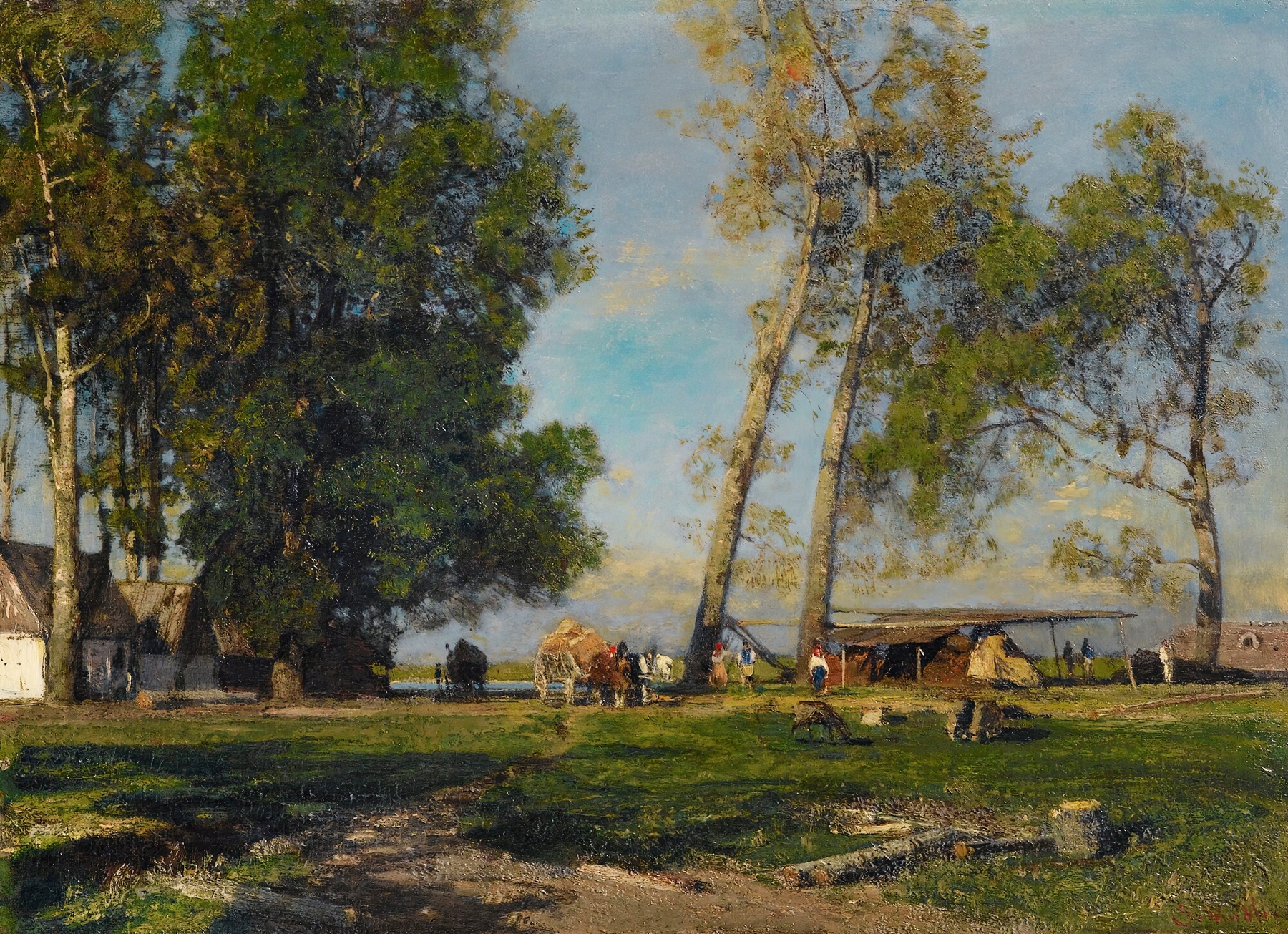
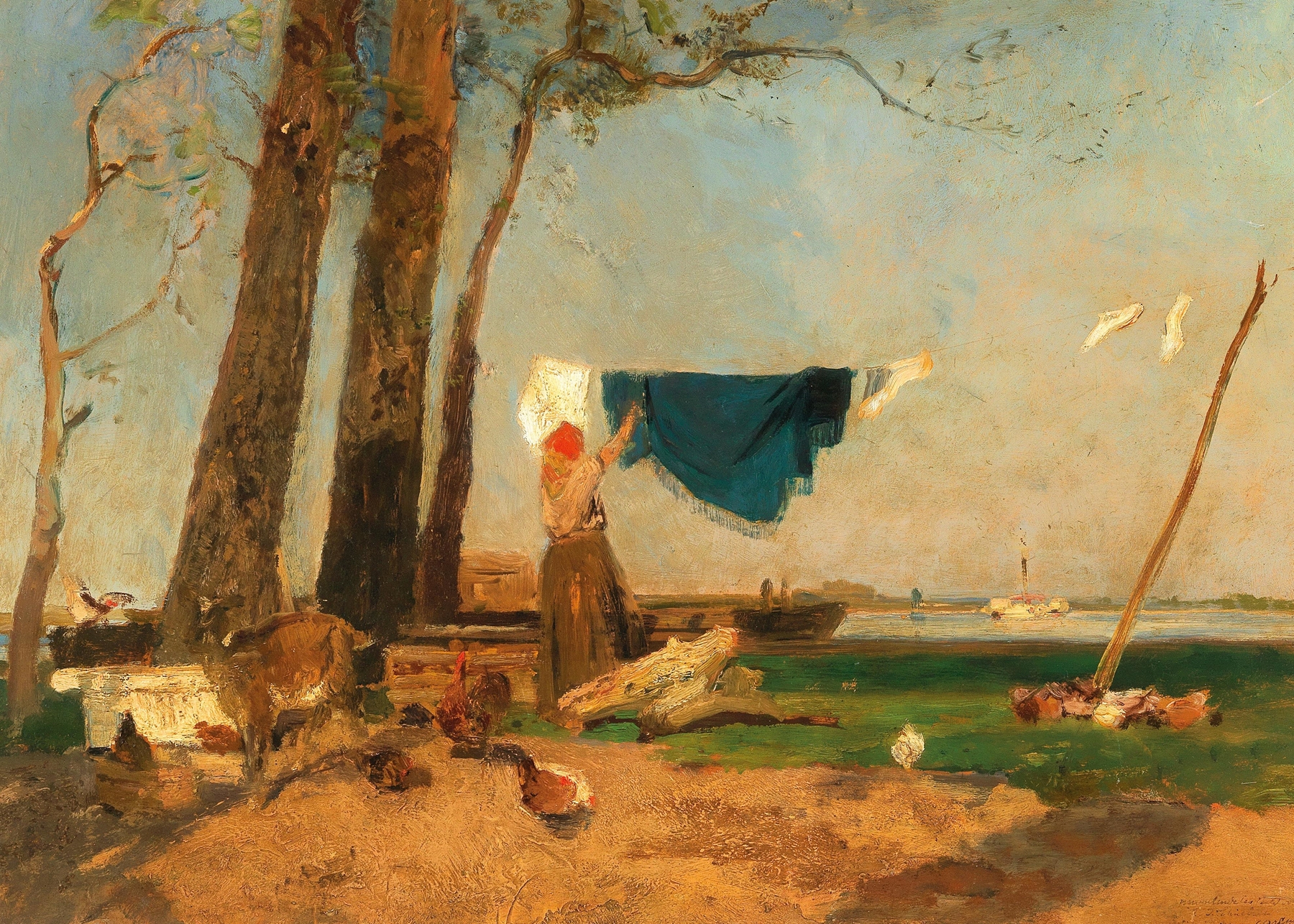
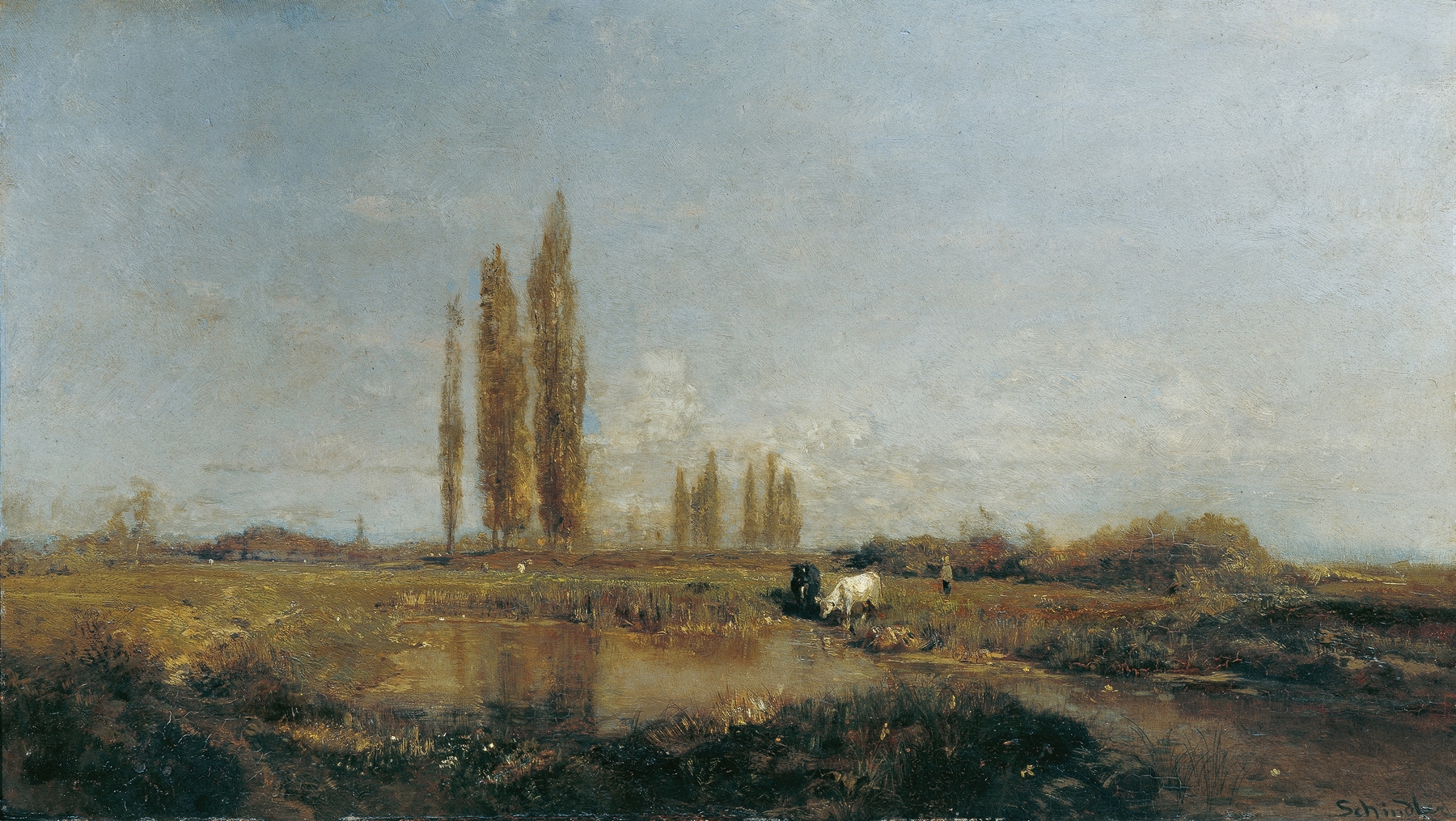
Could a single brushstroke hold eternity? In An der Thaya bei Lundenburg I, melancholy reverberates through every stroke, weaving a tapestry of nature's transient beauty and the quiet weight of time. Look to the center where the river meanders gracefully, its surface a shimmering mirror reflecting the muted hues of the sky. Notice how the soft blues and greens blend seamlessly, creating a soothing palette that invites the viewer to linger.
The delicate brushwork captures the gentle ripples of water, while the distant trees stand sentinel, their forms slightly blurred, suggesting both presence and absence. The light dances delicately across the scene, drawing your eye to the horizon where land meets sky, a visual invitation to contemplate the passage of time. The interplay between light and shadow evokes a sense of longing, a reminder of moments that slip through our fingers like water. The solitary figure in the foreground, though small, symbolizes the human experience against the vastness of nature, embodying both solitude and reflection.
This painting speaks to the transient beauty of existence, each element echoing the bittersweet cadence of life, where the serene landscape juxtaposes the inner turmoil of the soul. In 1877, Emil Jakob Schindler painted this work in Lundenburg, a small town in what is now the Czech Republic. At this time, Schindler was immersed in the Austrian art scene, influenced by Romanticism and naturalism. His focus on landscape painting reflected a growing interest in capturing the emotional resonance of nature, a theme that was resonating deeply in the hearts of European artists during this period.