Motiv aus dem Wiener Prater (Krieau) — History & Analysis
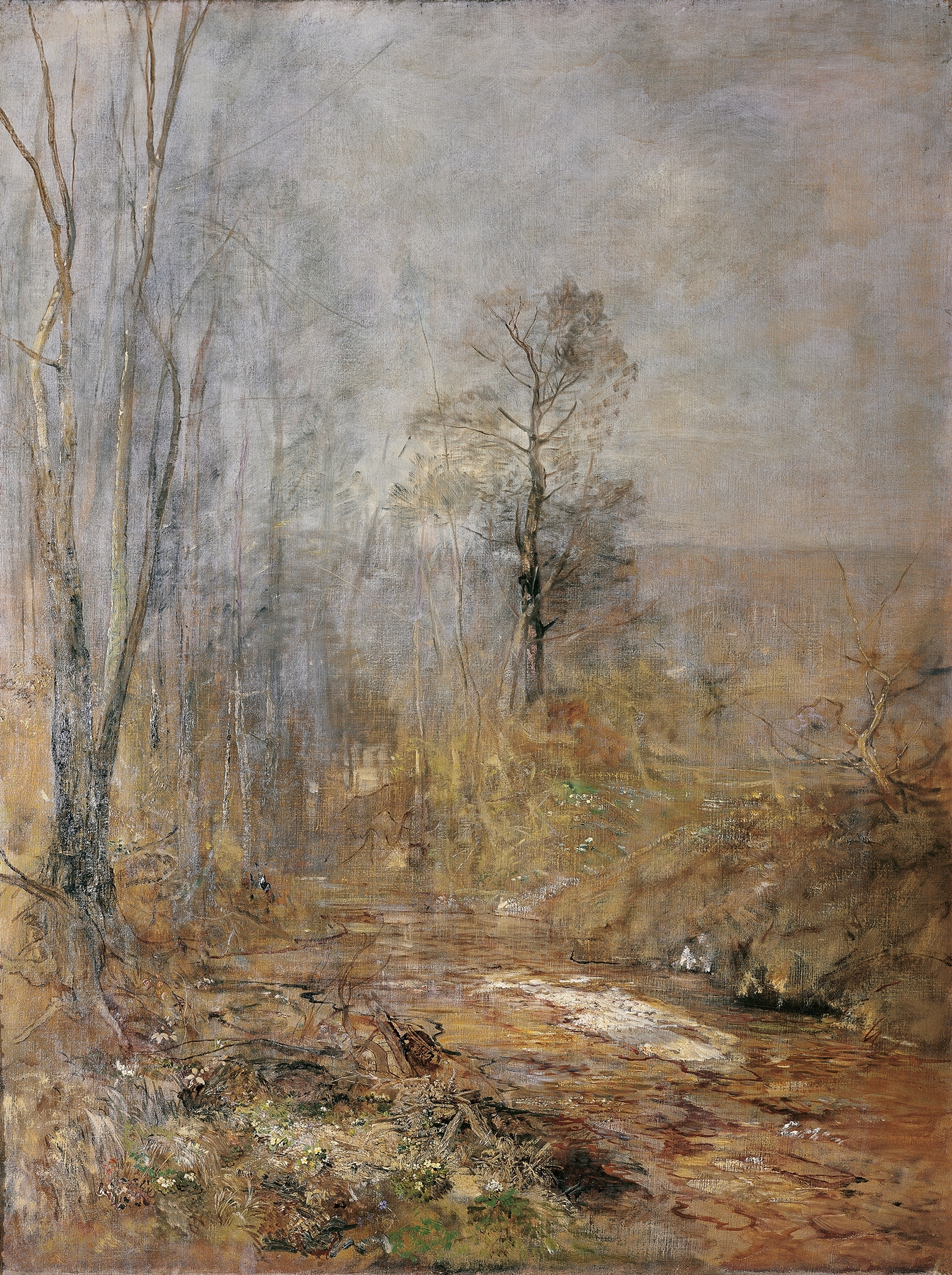
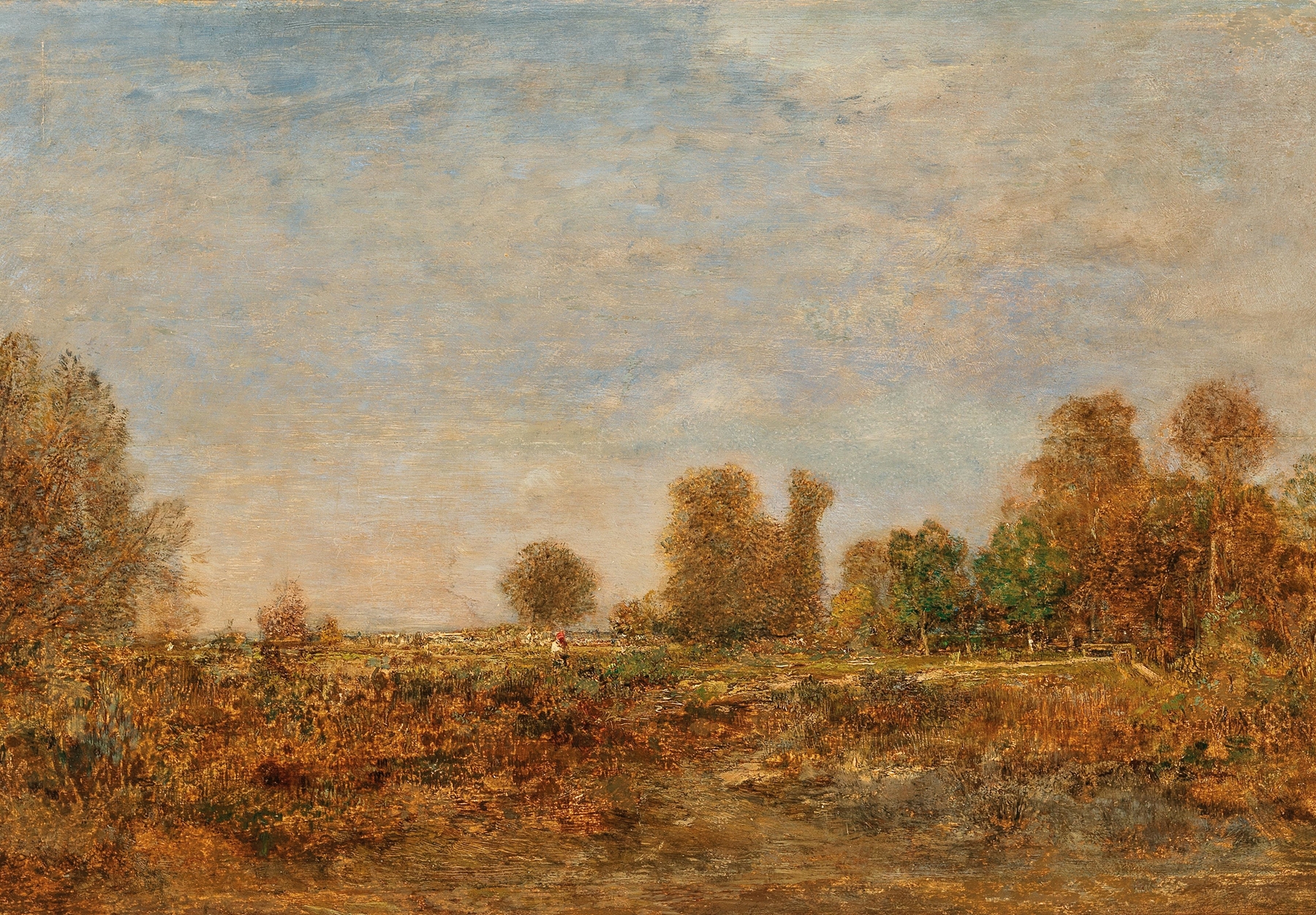
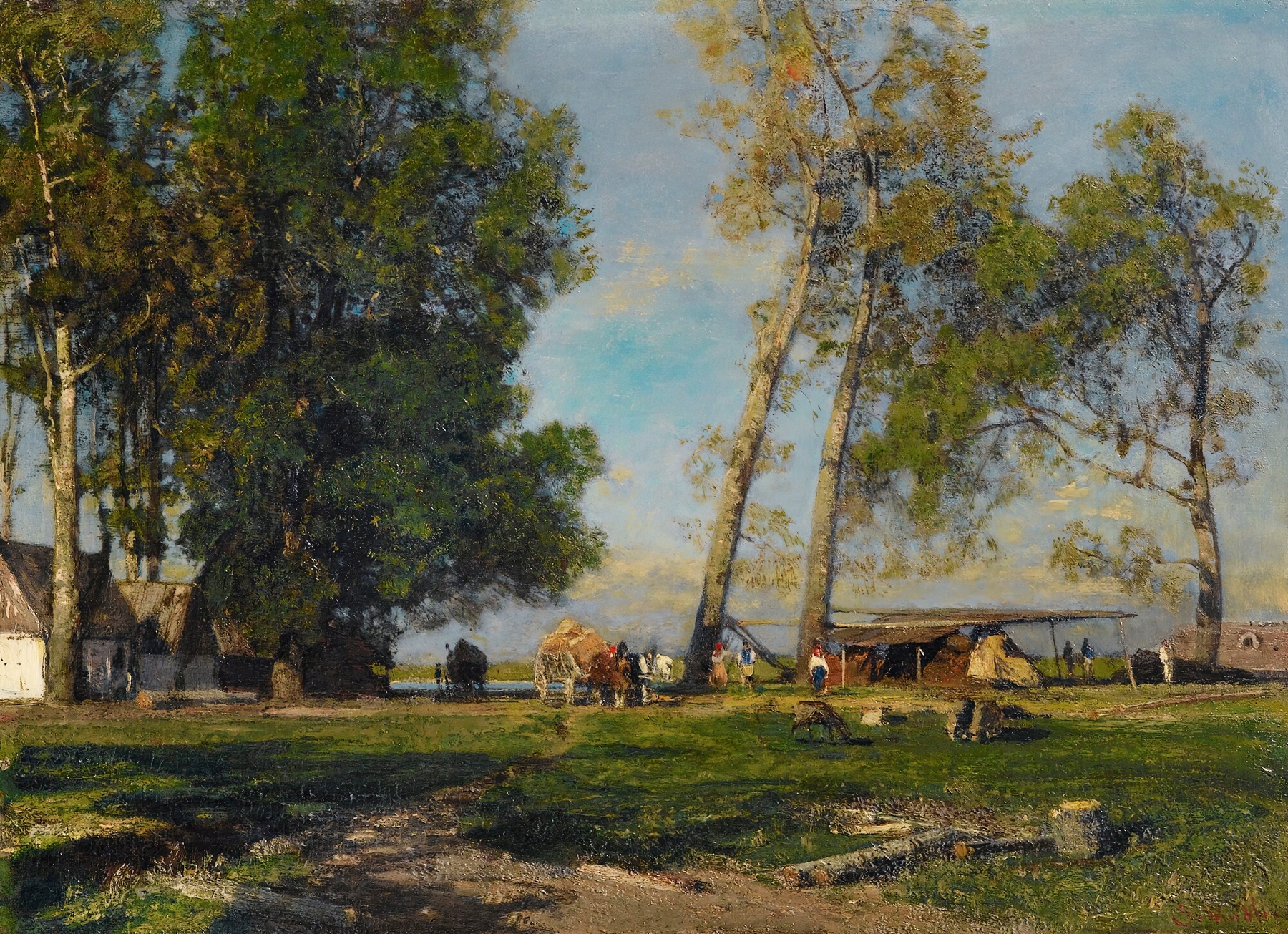
What if beauty was never meant to be finished? In Motiv aus dem Wiener Prater (Krieau), that haunting question lingers, inviting viewers to ponder the fragile nature of fleeting moments and the hope imbued within them. Look to the left where a gentle cascade of sunlight filters through the leafy canopy, casting dappled shadows on a serene pathway. The vibrant greens contrast with hints of warm earth tones, drawing the eye into a tranquil yet alive scene.
Notice how the figures in the foreground, engaged in animated conversation, embody a sense of community, their gestures and postures reflecting the jovial spirit of the moment, while the distant landscape stretches towards the horizon, evoking a whisper of longing. Delve deeper, and you’ll find emotional layers woven into this picturesque setting. The juxtaposition of the joyful figures against the vastness of the park captures a fleeting joy that hints at transience—an acknowledgment that such moments, while perfect, are often ephemeral. The play between light and shadow creates not only a stunning visual effect but also symbolizes hope, suggesting that beauty exists in both the seen and the unseen, the remembered and the forgotten.
Painted in 1876 while living in Vienna, the artist was deeply inspired by the vibrant life of the city and its surrounding landscapes. At this time, Schindler was emerging as a significant figure in the art world, exploring new techniques that fused realism with impressionistic elements. Capturing the essence of the Wiener Prater, he rendered a scene that goes beyond mere representation, inviting contemplation on the nature of beauty and hope amidst the ephemeral moments of life.