Mühle in Plankenberg — History & Analysis
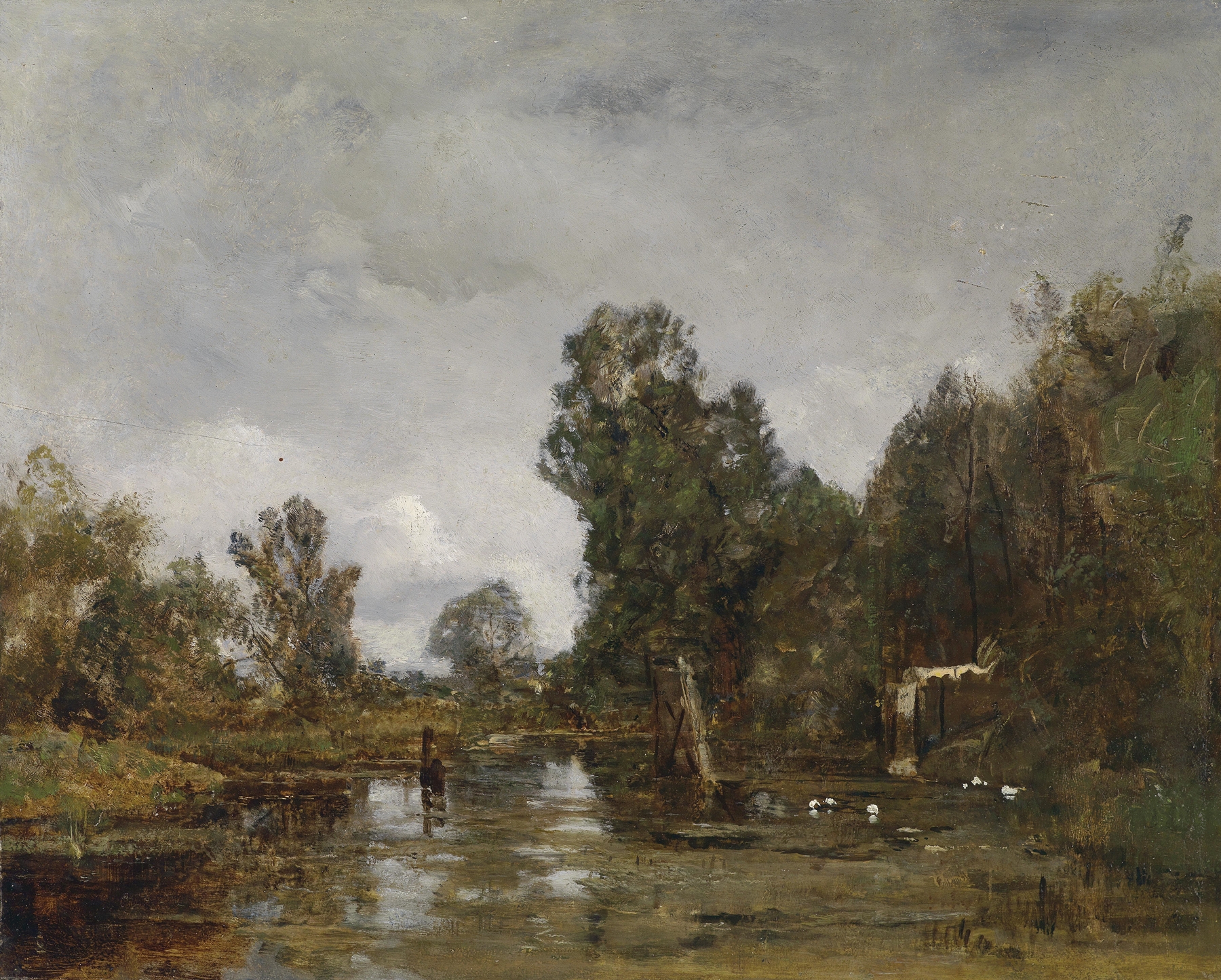
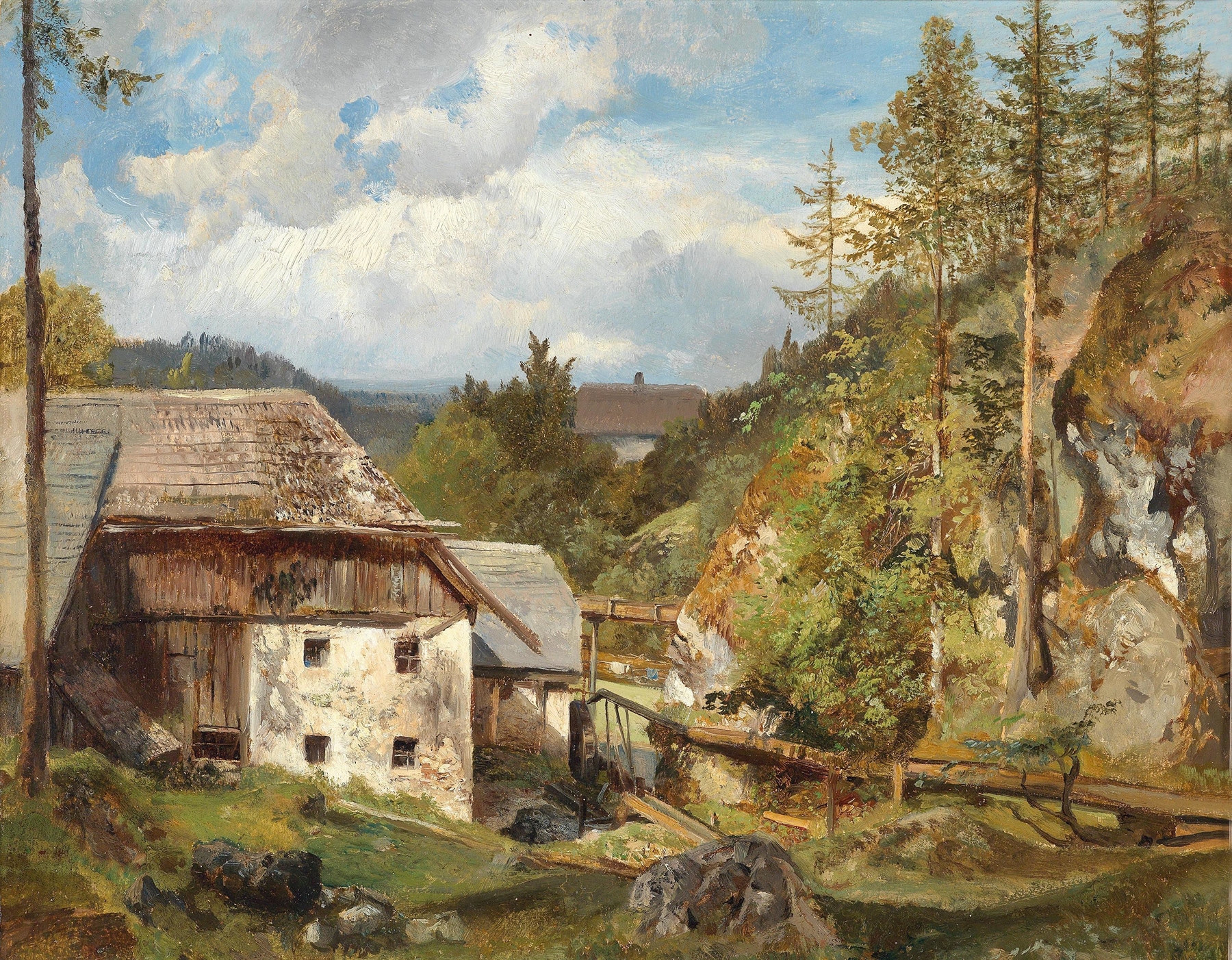
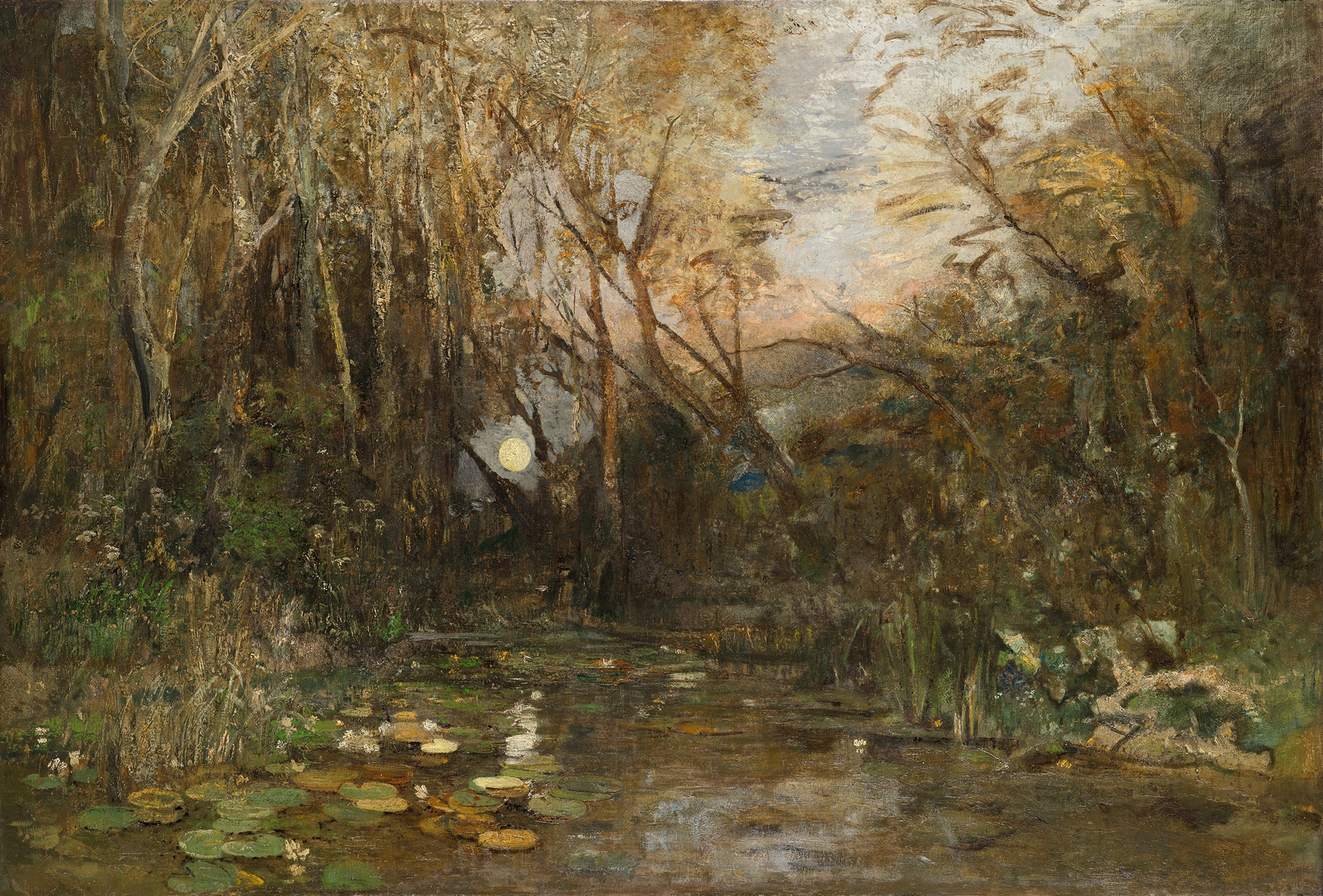
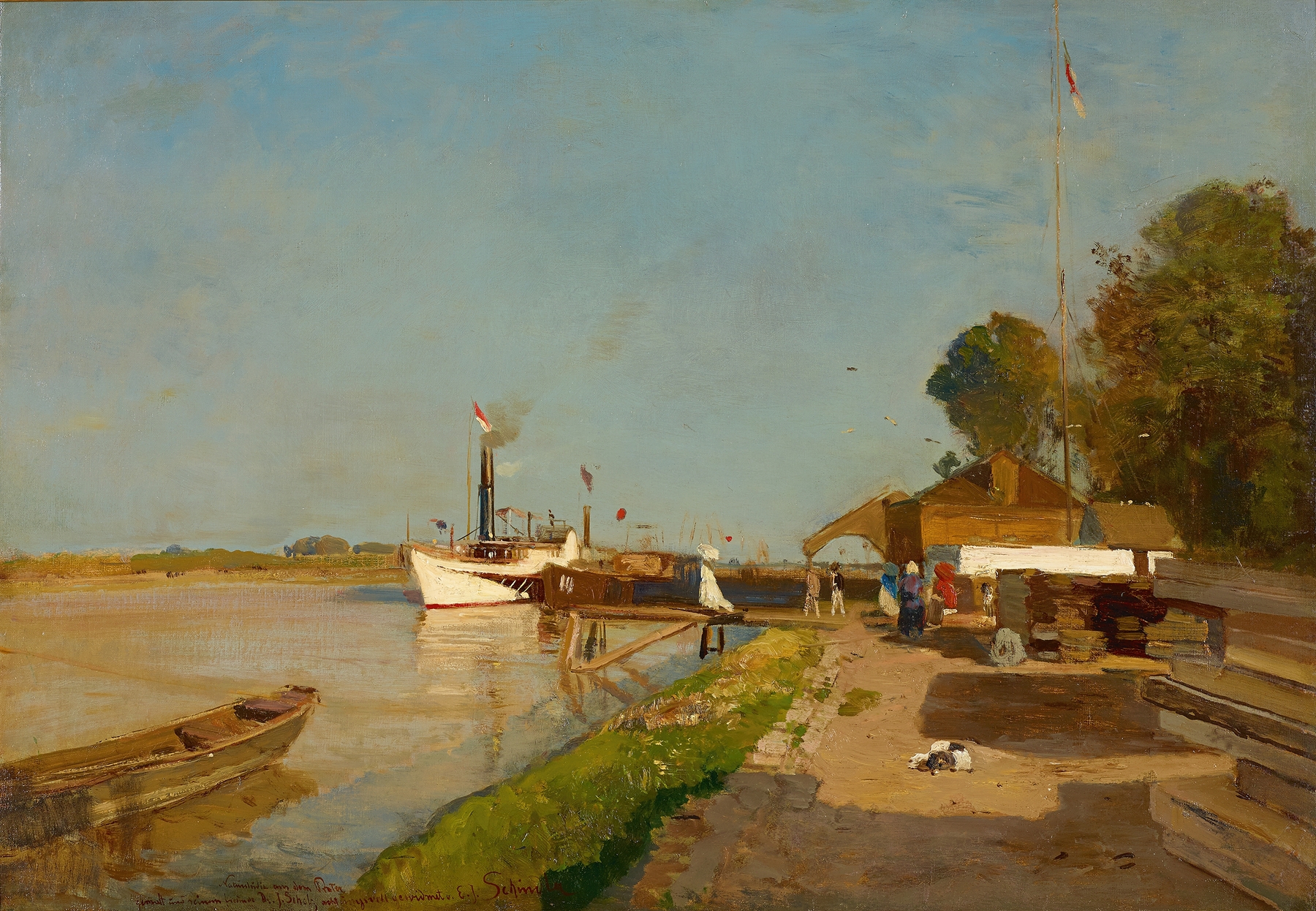
“Under the brush, chaos becomes grace.” How reflections can alter our perception of the world, revealing depths unseen and complexities hidden in plain sight. In Mühle in Plankenberg, Schindler invites the viewer into a serene landscape that transcends mere representation, offering a glimpse into the harmony and tension between nature and human existence. Look closely at the center, where the mill stands stoically against the backdrop of gentle hills. The artist’s deft brushwork captures the play of light on water, drawing your gaze to the shimmering surface that mirrors the surrounding greenery. The vibrant greens and soft blues blend seamlessly, evoking tranquility while hinting at the vitality of life that thrives around the mill.
The composition is meticulously balanced, with the mill’s solid structure contrasting the fluidity of the reflecting water, creating an intimate dialogue between the two. Yet, beyond the surface beauty lies a deeper narrative. The quiet water encompasses the mill, suggesting both the passage of time and the cycle of life that ebbs and flows around it. Consider the dappled light filtering through the trees; it speaks to the fragility of these moments, juxtaposing the stability of the mill with the ephemeral nature of the world.
This tension invites you to ponder what remains when the light fades and the reflections disappear, revealing the underlying truths that persist in silence. Emil Jakob Schindler painted Mühle in Plankenberg between 1889 and 1891 during a period of artistic evolution in Vienna. At that time, he was deeply immersed in the burgeoning plein air movement, capturing the essence of landscapes in natural light. The late 19th century was marked by a shift toward impressionism, and Schindler’s work reflects this transition as he sought to harmonize his personal vision with the collective ethos of the art world, while establishing his own distinctive style.