An der Thaya bei Lundenburg II — History & Analysis
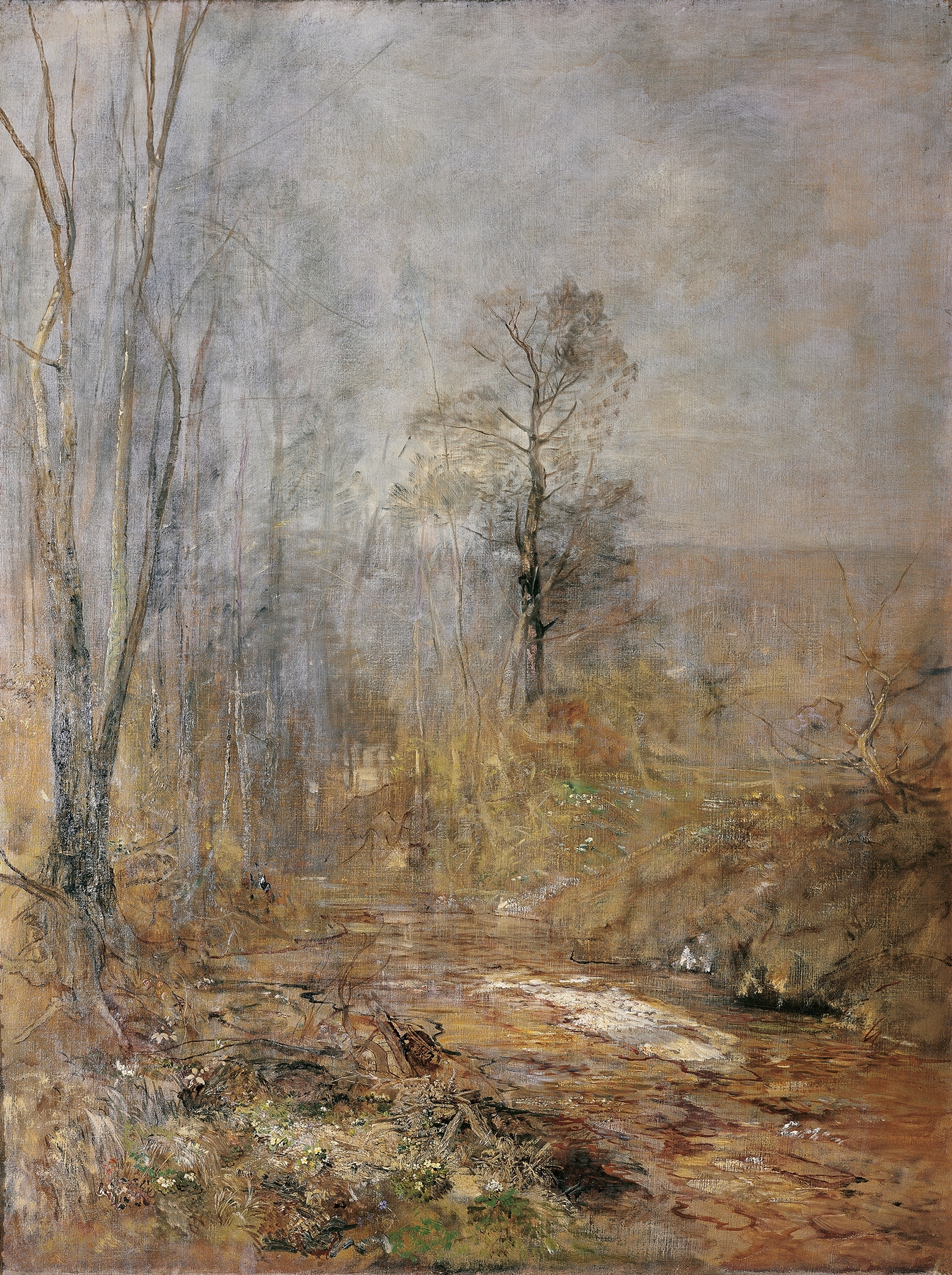
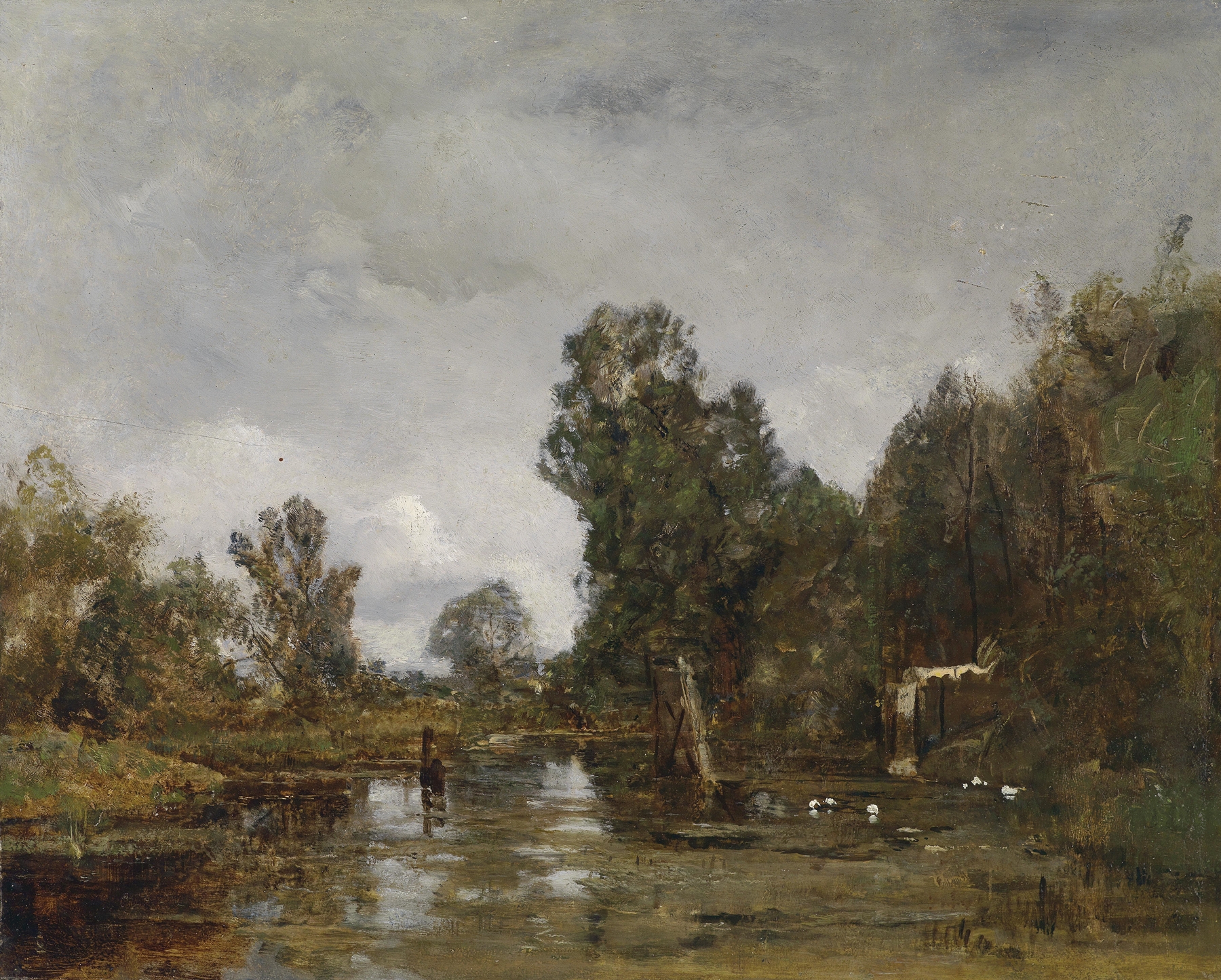
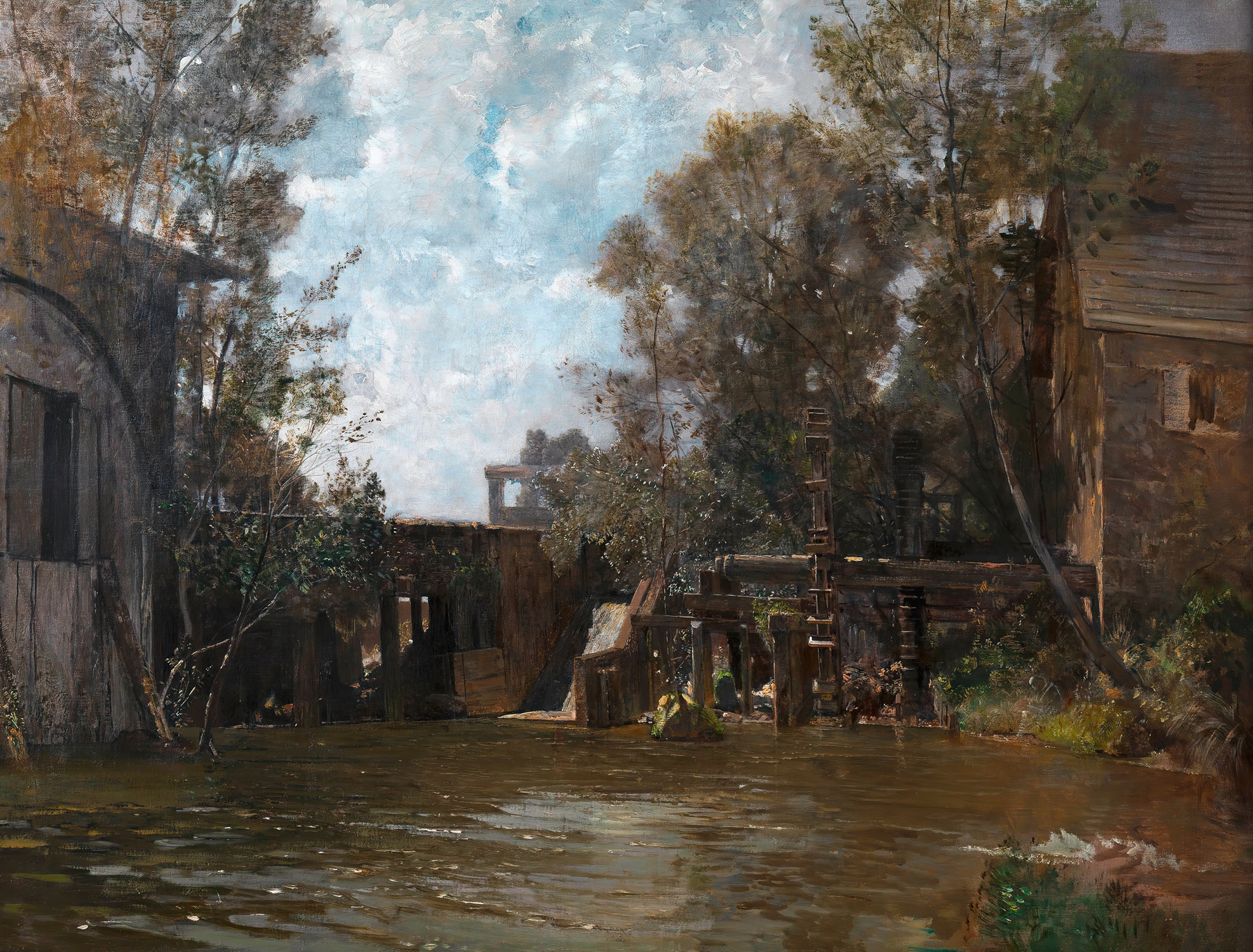
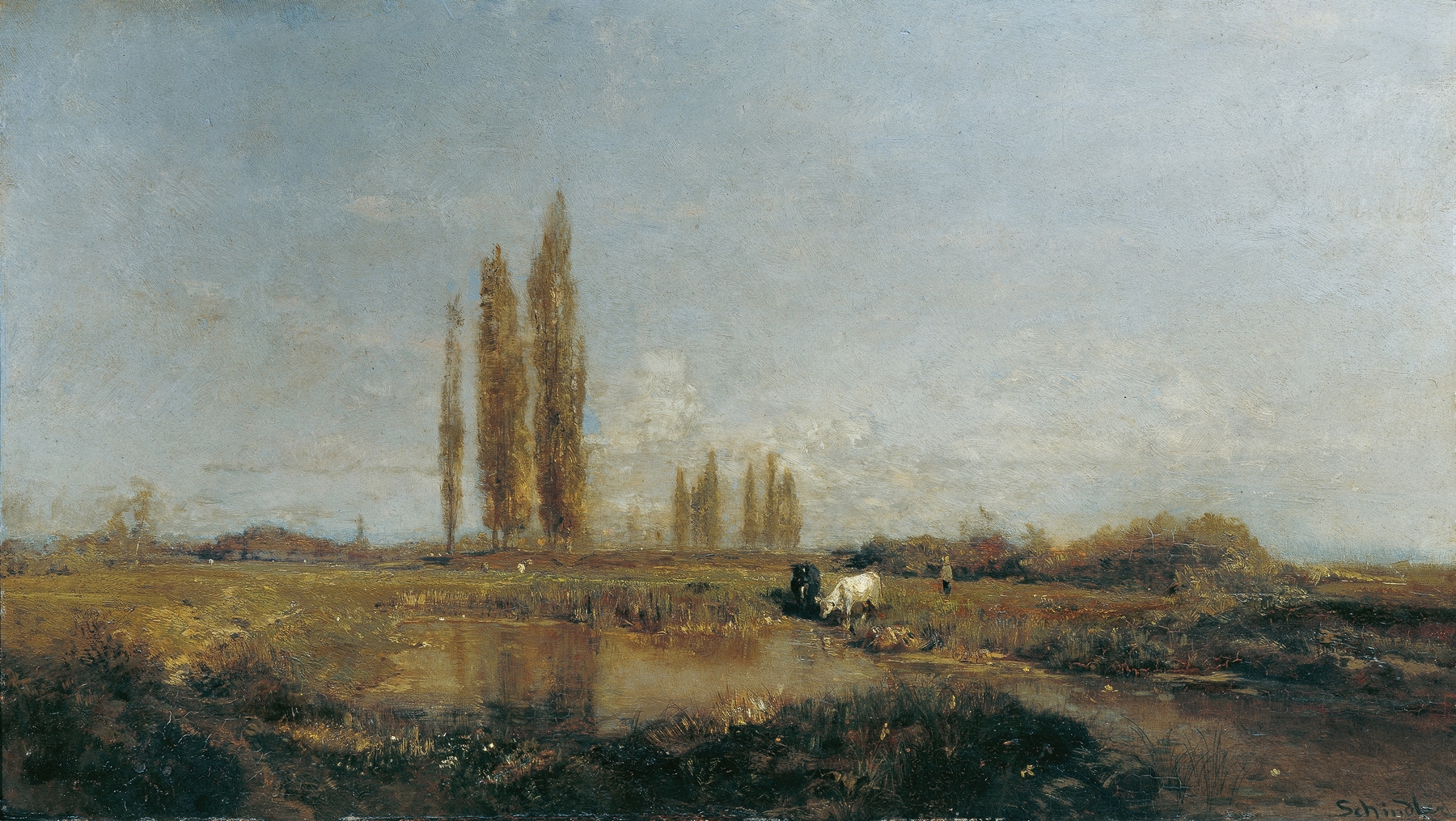
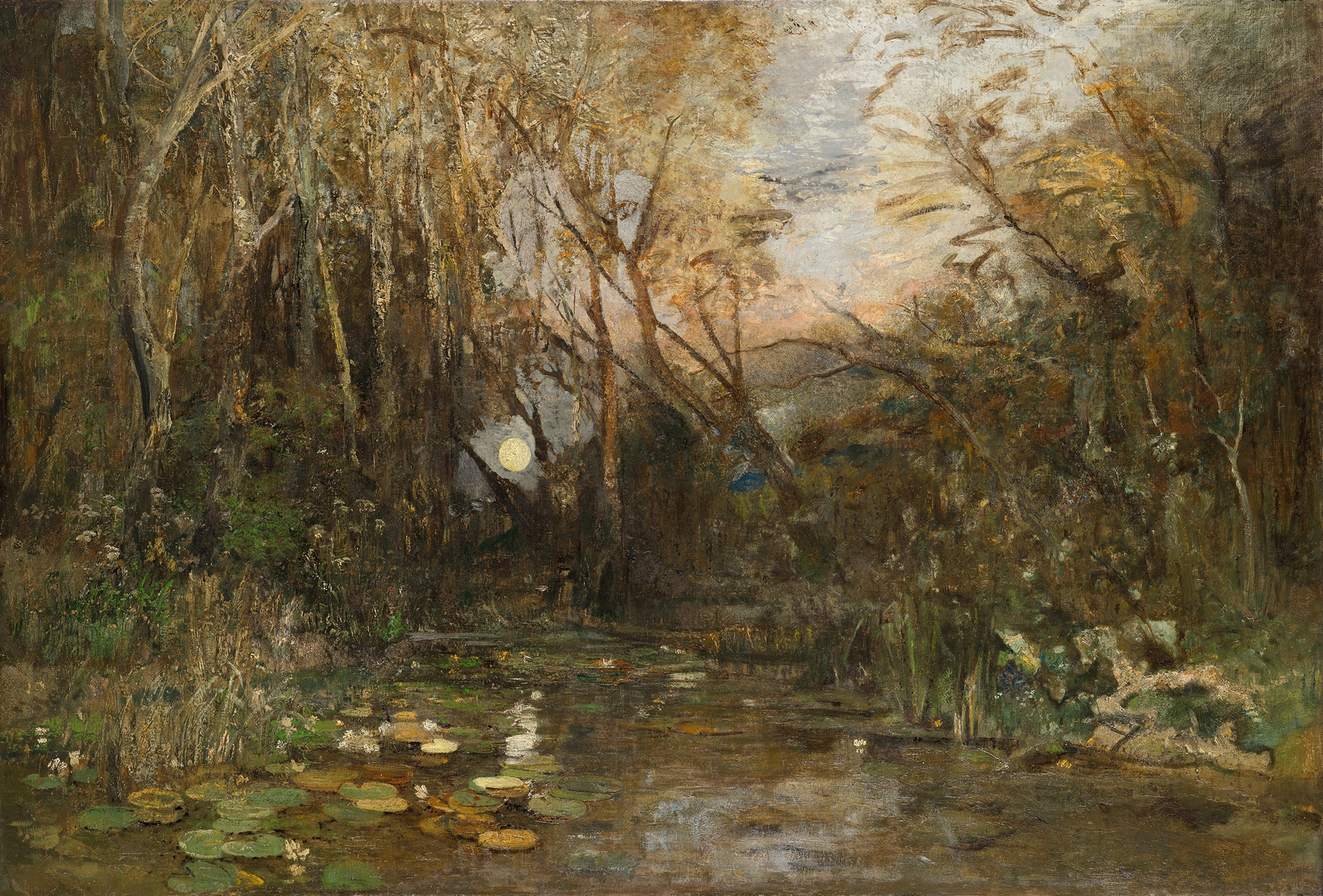
Can paint confess what words never could? In An der Thaya bei Lundenburg II, the quiet resonance of decay whispers truths that linger long after the viewer departs. Look closely at the foreground, where the somber hues of brown and ochre dominate the landscape. The withered trees, gnarled and bare, seem to reach out towards the sky, their silhouettes stark against a muted backdrop. Notice how the light, filtering through the branches, casts a dim glow, revealing patches of emerald grass beneath the fallen leaves.
The brushstrokes are delicate yet assertive, harmonizing a sense of fragility amidst the weight of decay. Yet, the painting pulses with hidden tensions. The juxtaposition of life and death emerges in the soft movement of the water, forever flowing yet eternally still—a metaphor for the passage of time. The overhead clouds, heavy and bruised, echo the emotional weight of lost seasons.
Schindler captures the essence of a once-vibrant landscape transitioning into silence, urging viewers to confront their own perceptions of beauty and melancholy. Between 1877 and 1880, Schindler painted this work during a period marked by personal loss and artistic exploration. Living in Vienna, he was influenced by the naturalistic trends in landscape painting while grappling with the philosophical implications of decay. As artists began to reflect on the transient nature of life and the world around them, Schindler embraced this theme—transforming a simple scene into a profound meditation on existence itself.