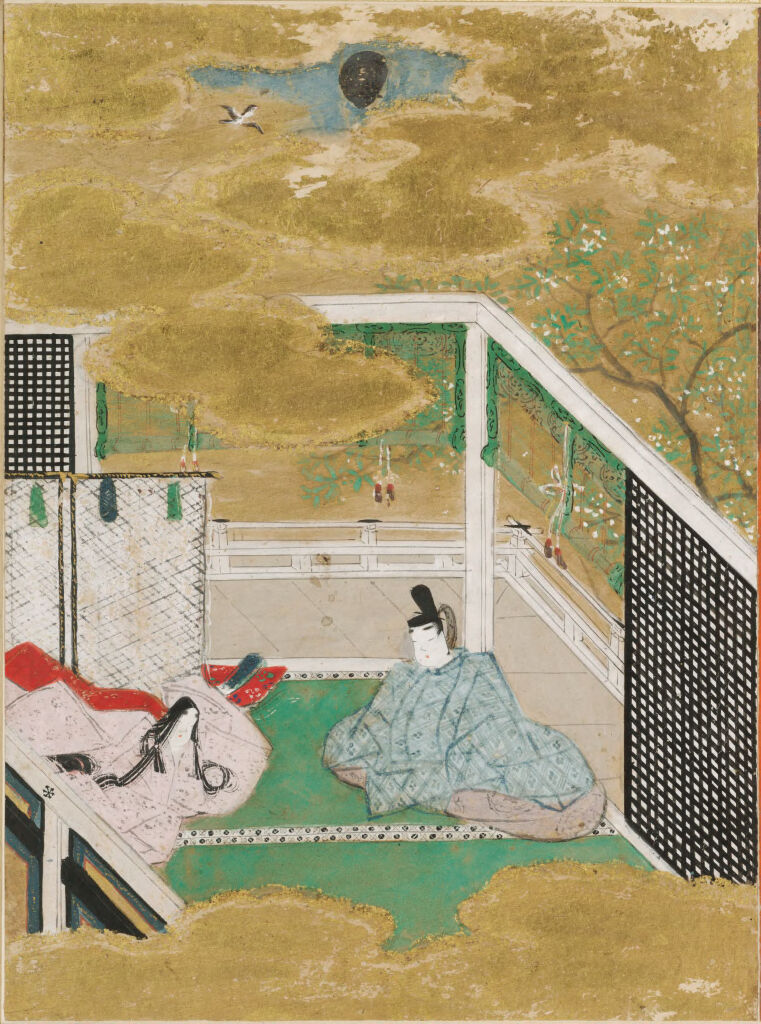
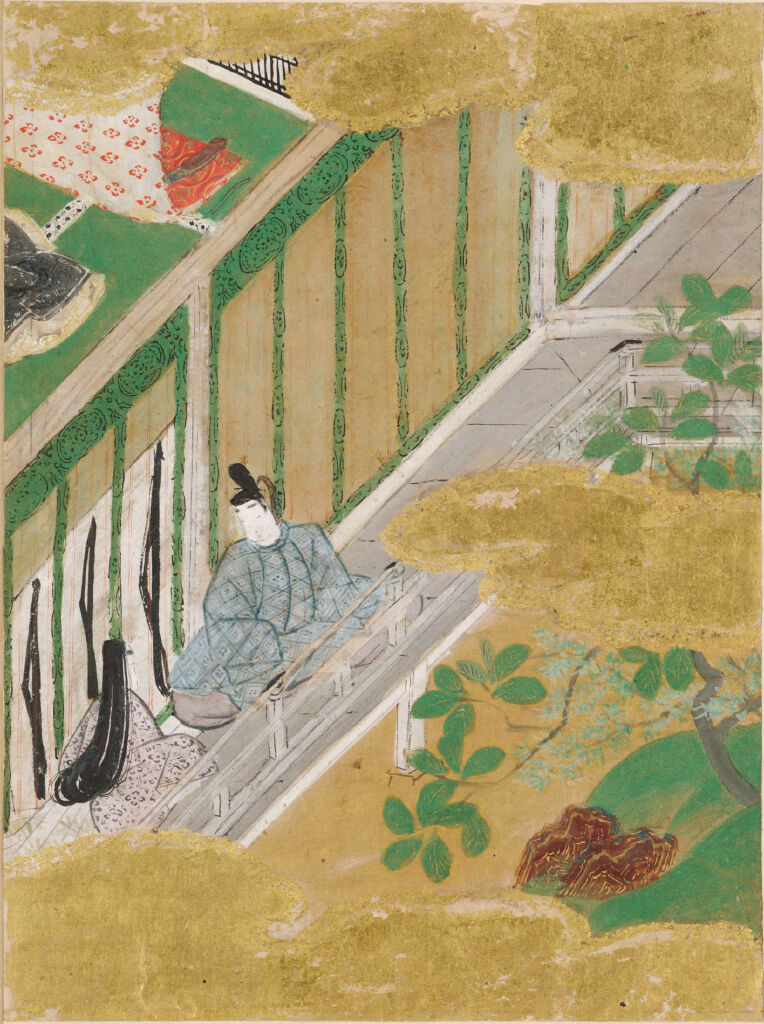
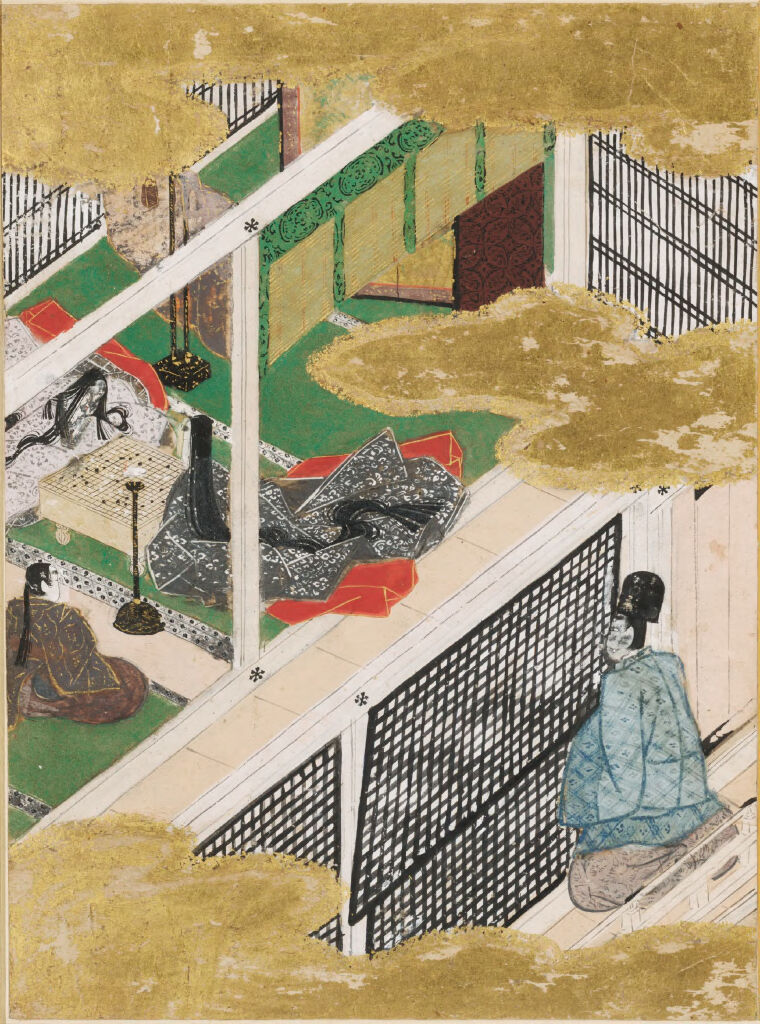
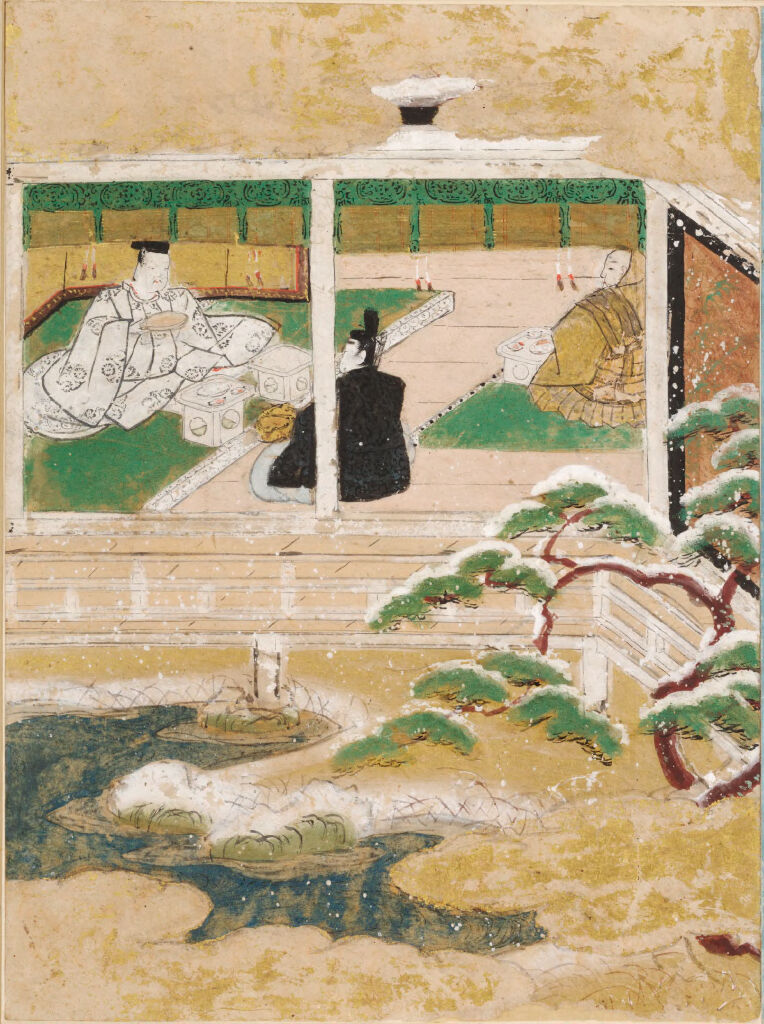
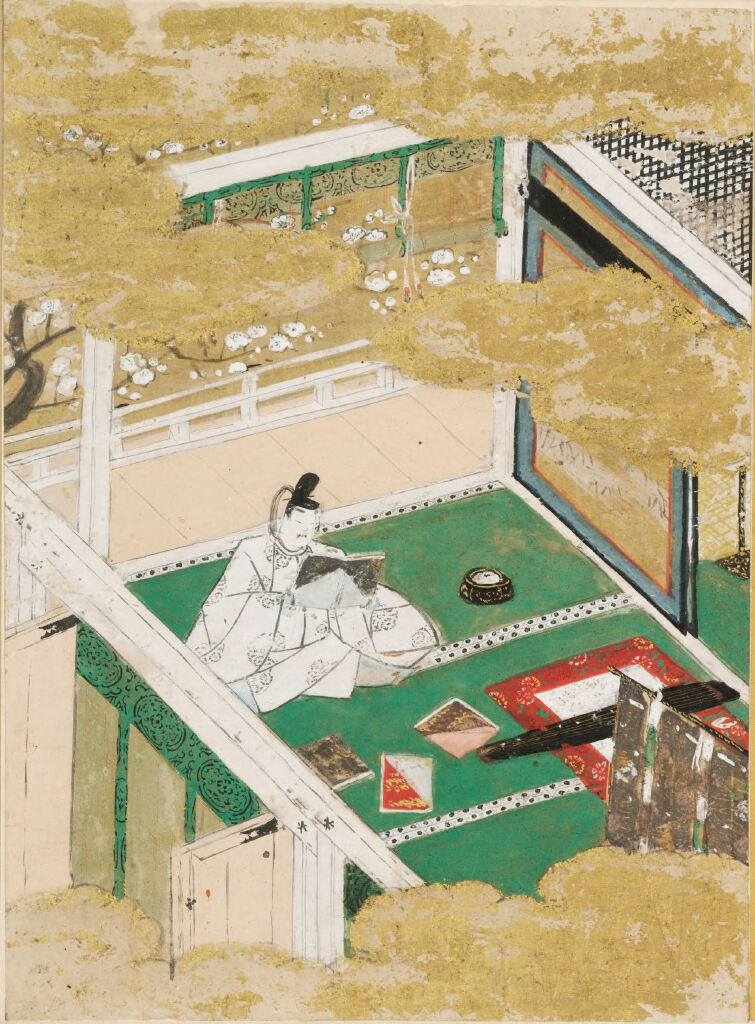
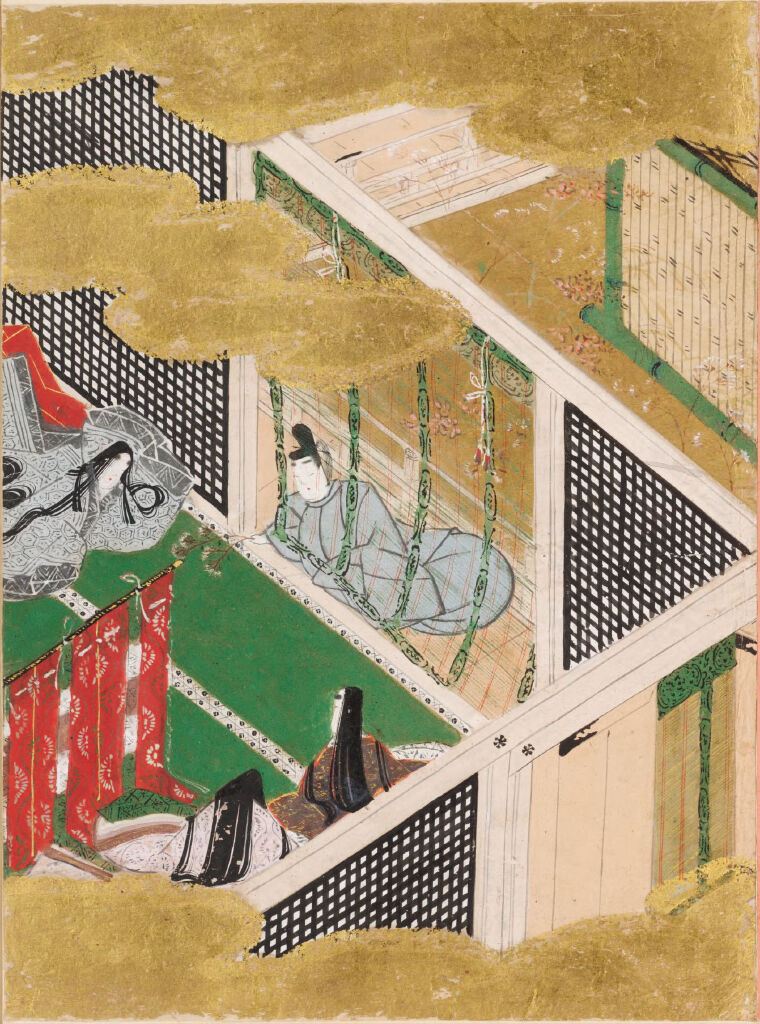
At the Pass (Sekiya), Illustration to Chapter 16 of the Tale of Genji (Genji monogatari) — History & Analysis
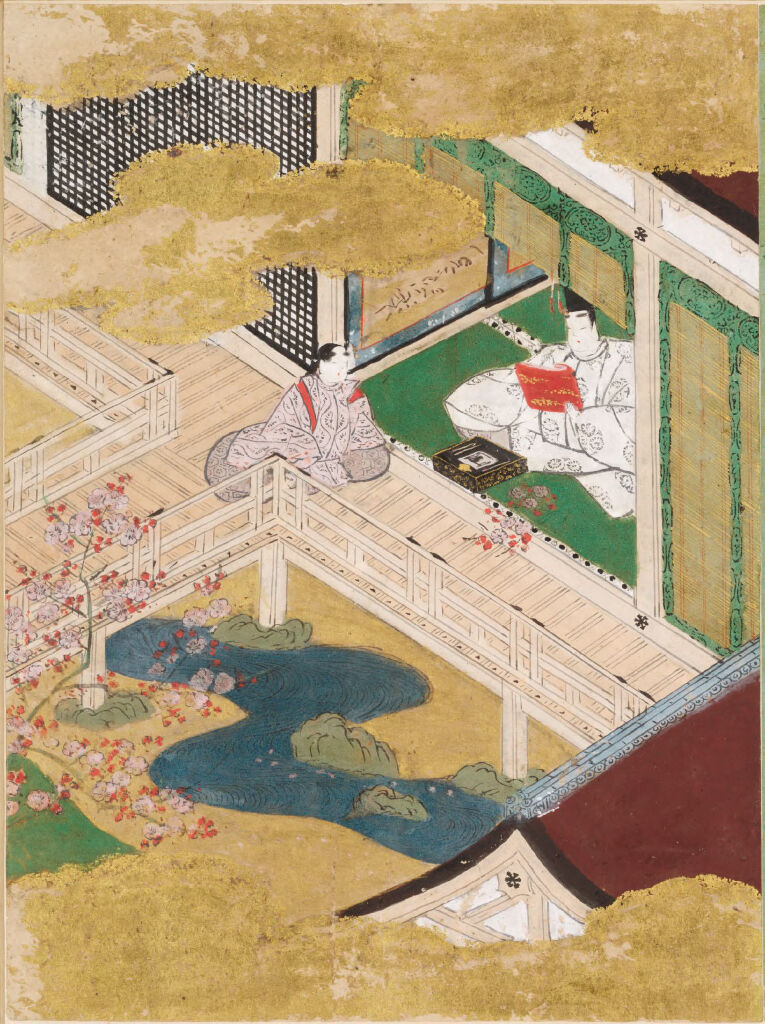
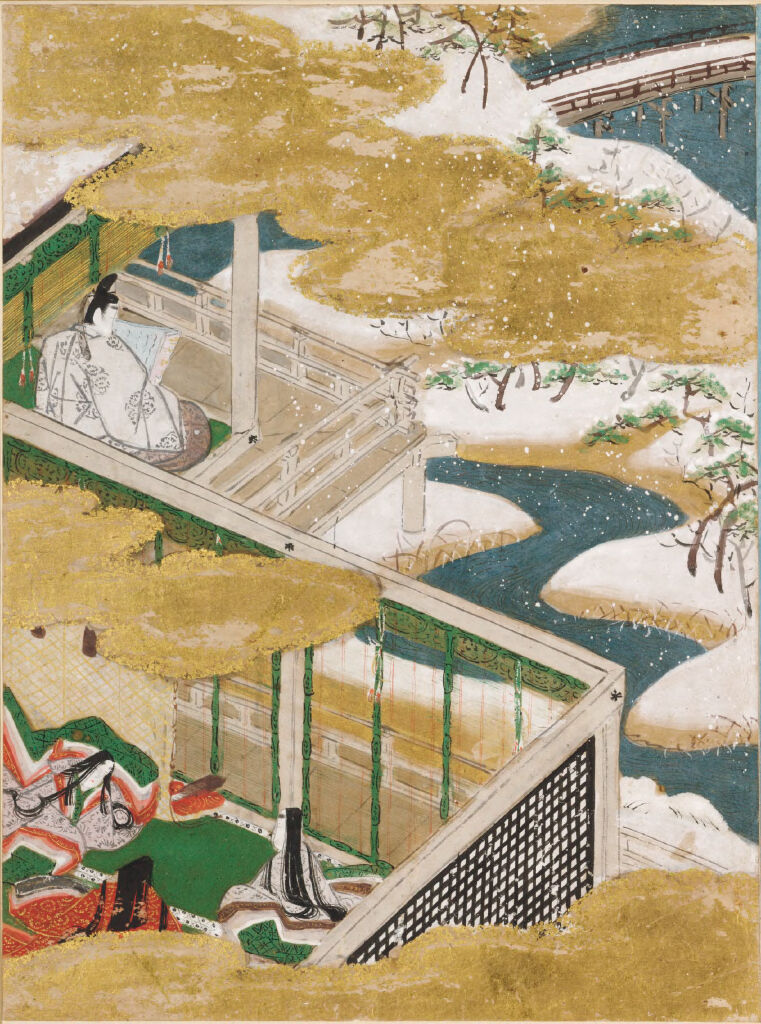
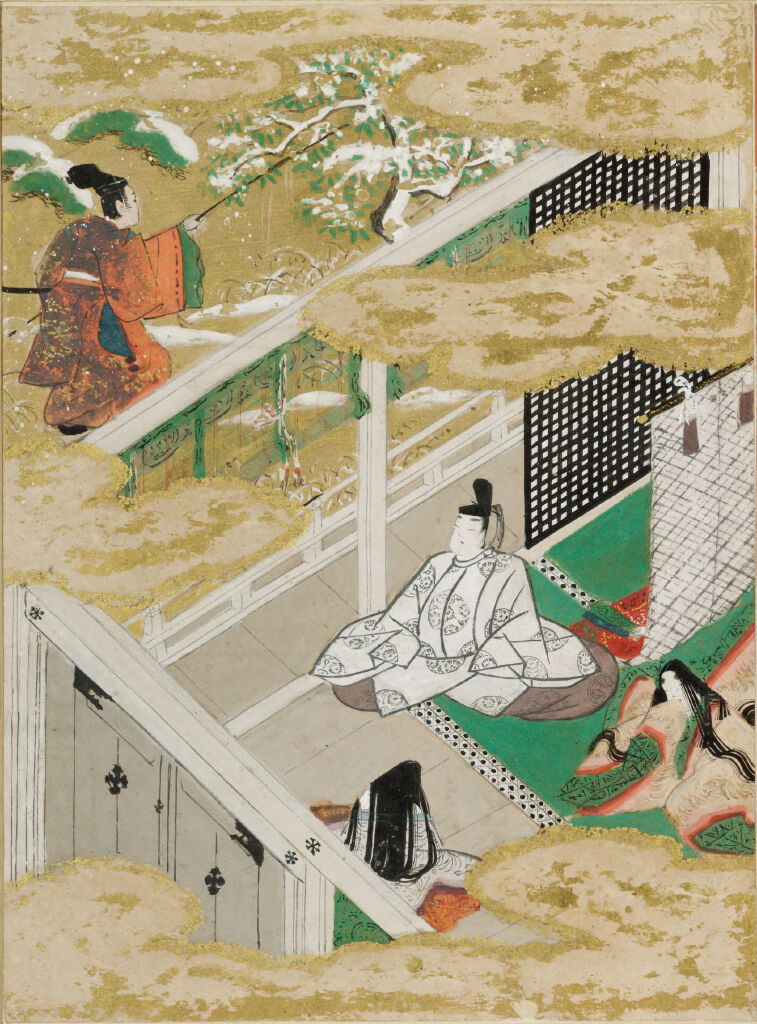
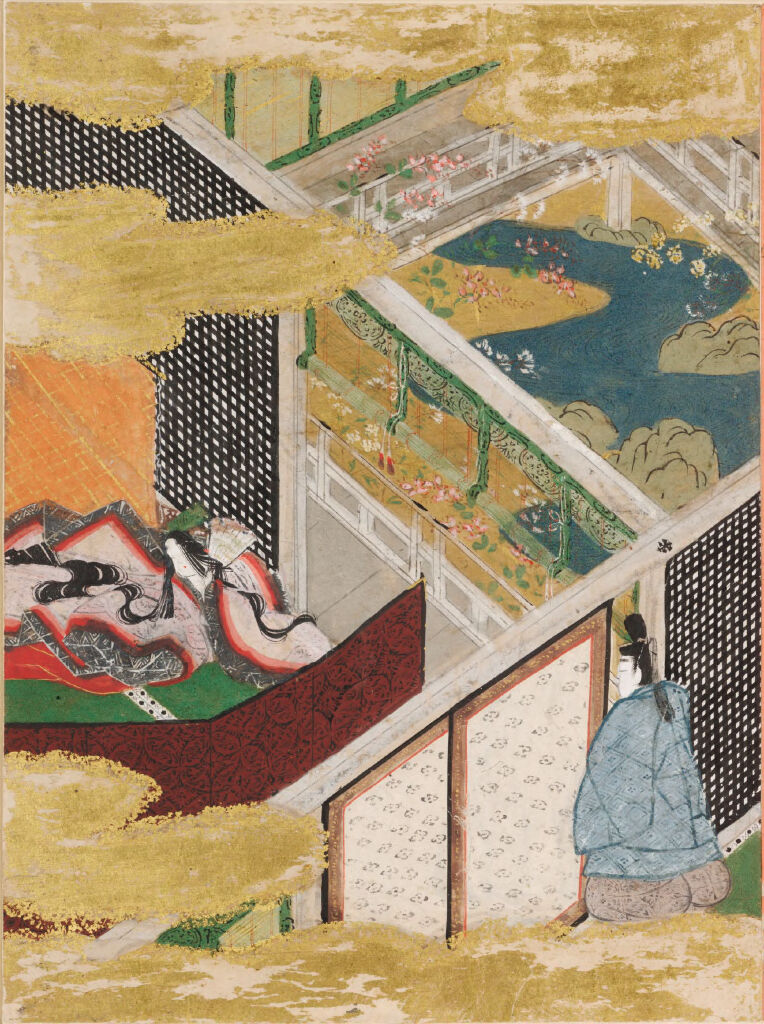
“Under the brush, chaos becomes grace.” In the delicate strokes of a master’s hand lies the story of destinies interwoven, each line a thread in the tapestry of human experience. The fleeting nature of time and connection, a poignant reminder of our intertwined fates, resonates through the canvas. Look to the center of the composition where figures emerge from a backdrop adorned with lush foliage and muted, ethereal hues. Notice how the artist employs a soft palette, blending greens and earth tones that evoke a serene yet melancholic atmosphere. The gentle curves of the figures’ garments and the soft contours of their faces draw the eye, inviting you to explore the subtleties of emotion etched into every expression.
The layering of color and texture reveals the depth of the narrative, capturing the essence of a moment suspended in time. Beneath the serene surface, there are whispers of longing and inevitability. The posture of the figures suggests an unspoken tension; their gazes seem to reach across the distance, hinting at a shared past filled with unfulfilled desires. The juxtaposition of the tranquil landscape and the subtle urgency in their stance serves as a reminder of love’s fleeting nature and the intersections of fate that define our journeys.
Each brushstroke carries with it the weight of their unvoiced stories, creating an emotional resonance that lingers in the heart. During the late Muromachi period, Tosa Mitsunobu, a pivotal figure in the evolution of Japanese painting, created At the Pass between 1509 and 1510. This era marked a shift towards a greater appreciation for narrative art, with Mitsunobu's work forging connections to literary tales, such as The Tale of Genji. Surrounded by a cultural renaissance, he sought to blend traditional techniques with a deeper exploration of emotion, forever influencing the trajectory of Japanese visual storytelling.