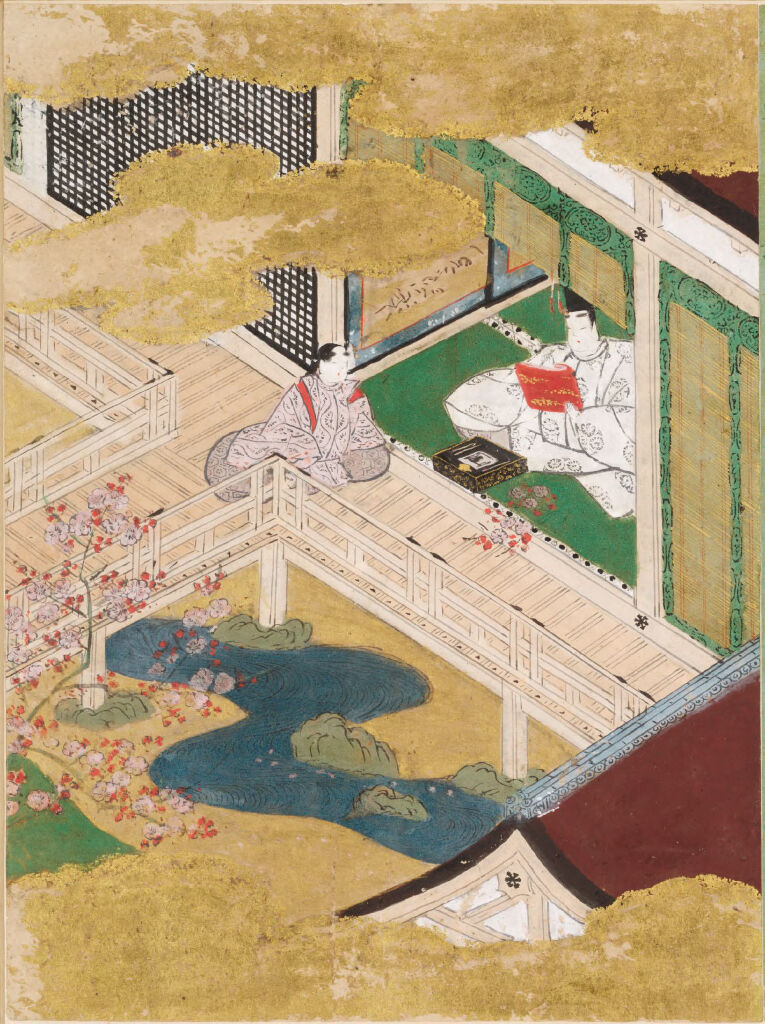
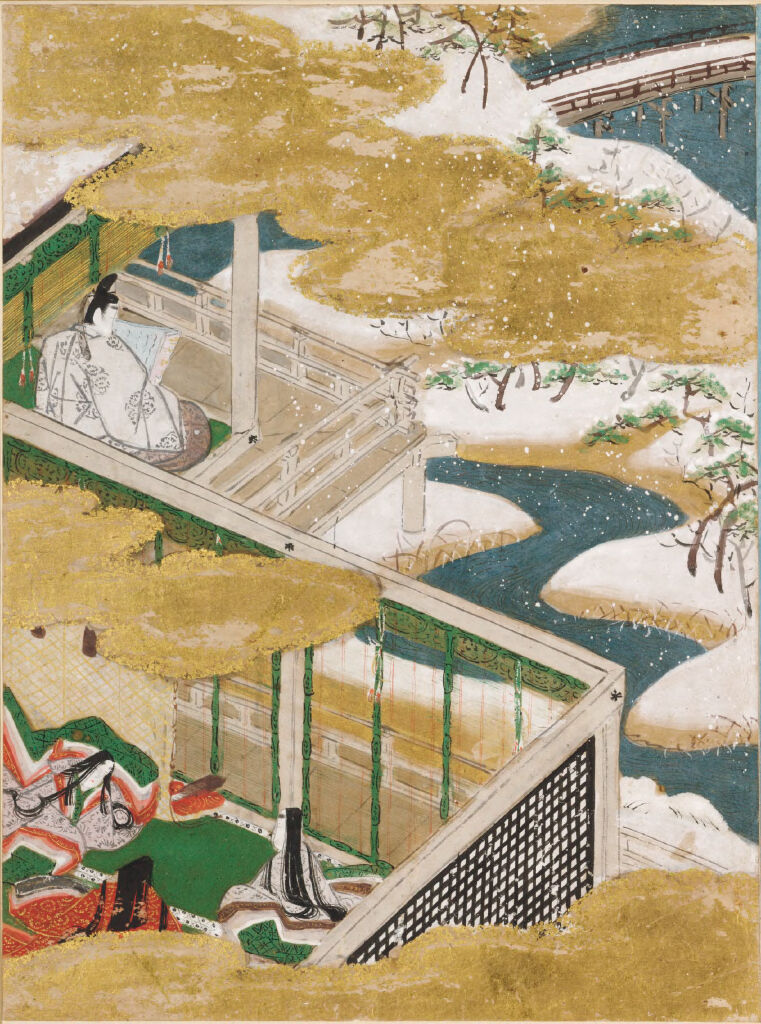
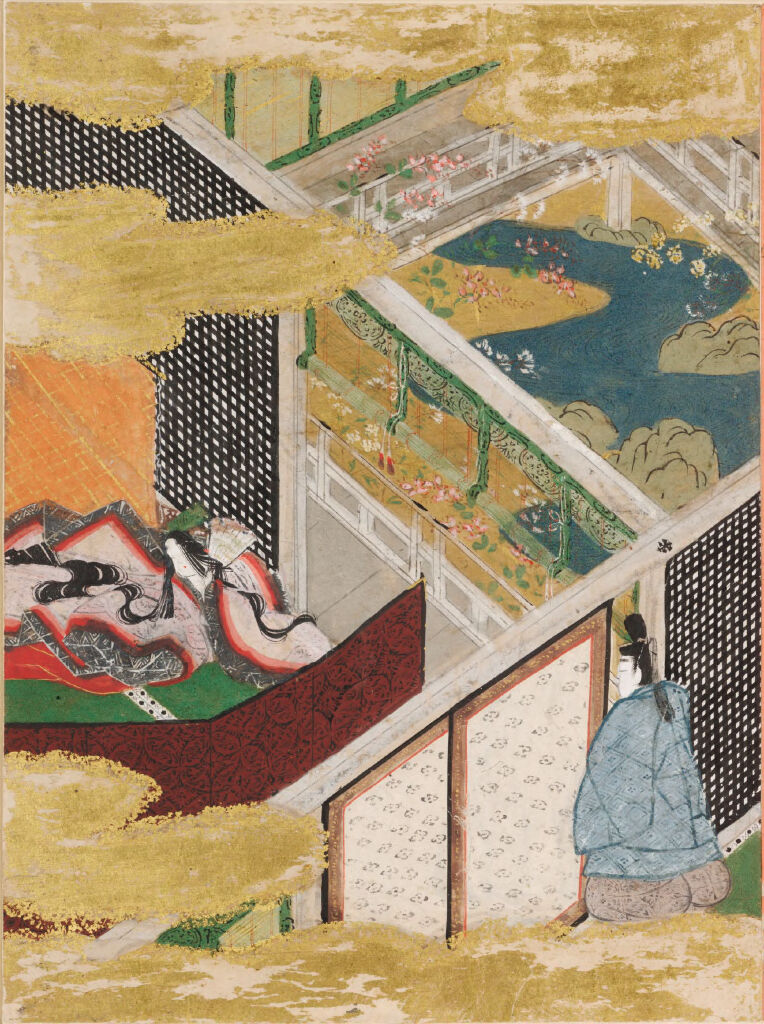
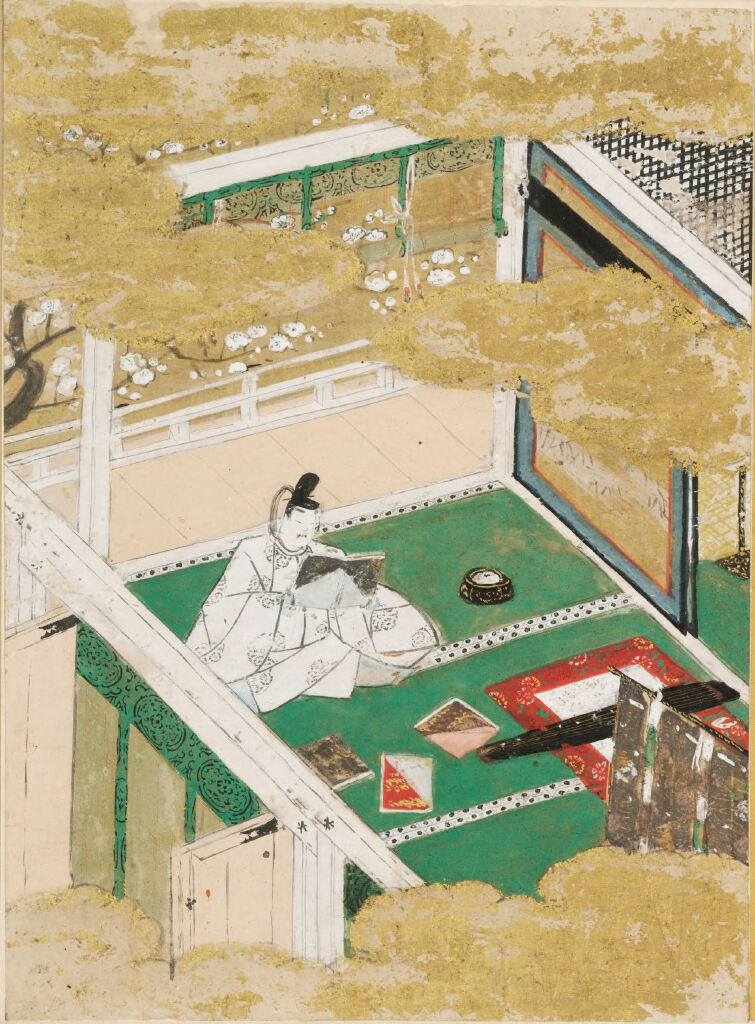
The Safflower (Suetsumuhana), Illustration to Chapter 6 of the Tale of Genji (Genji monogatari) — History & Analysis
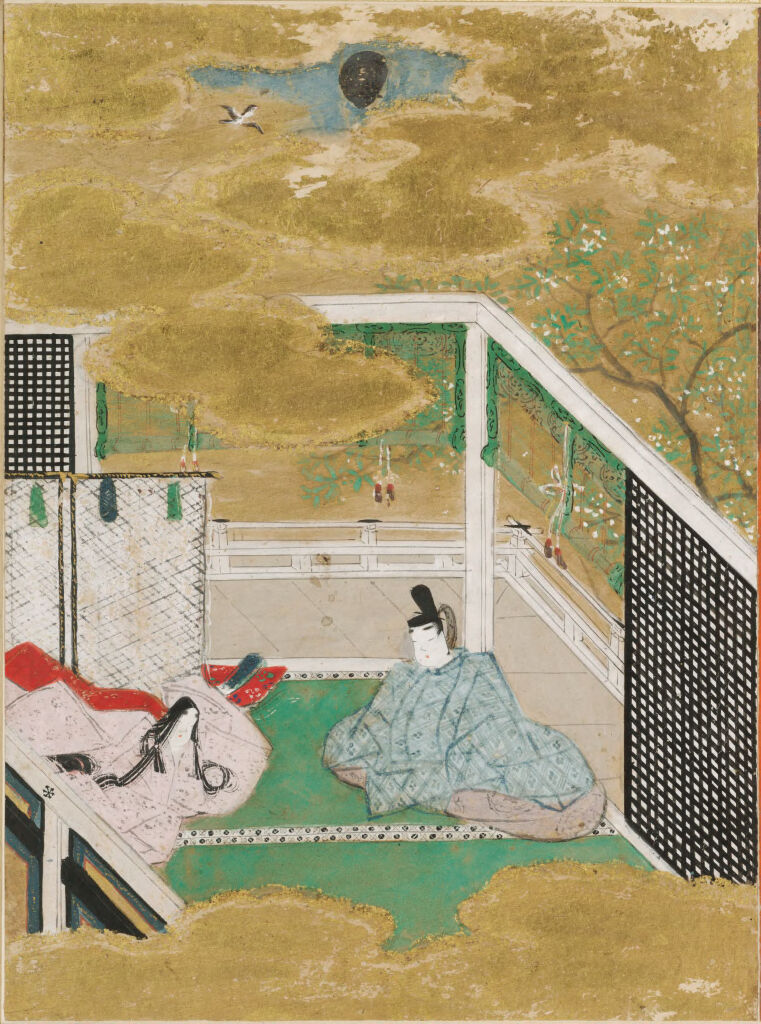
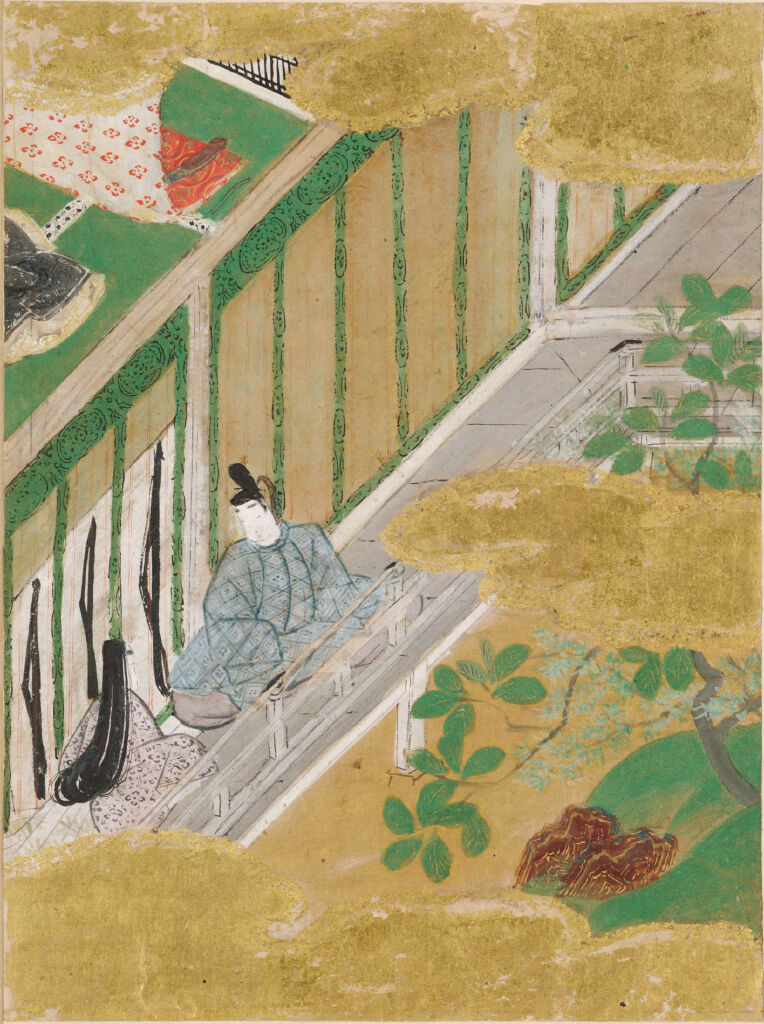
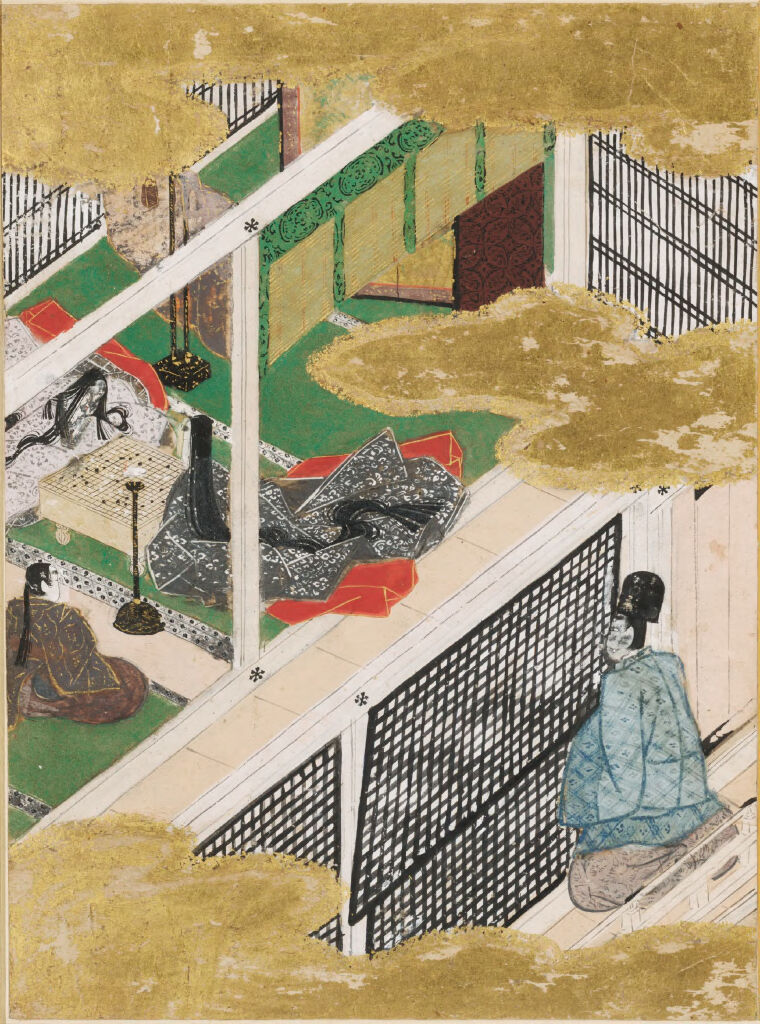
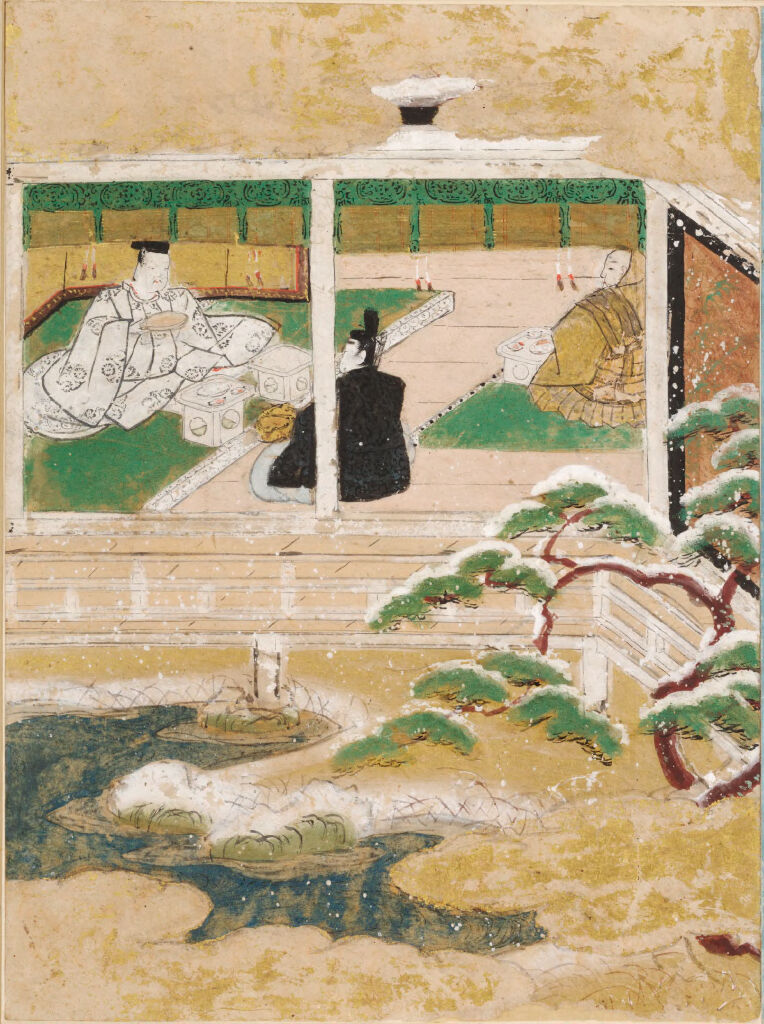
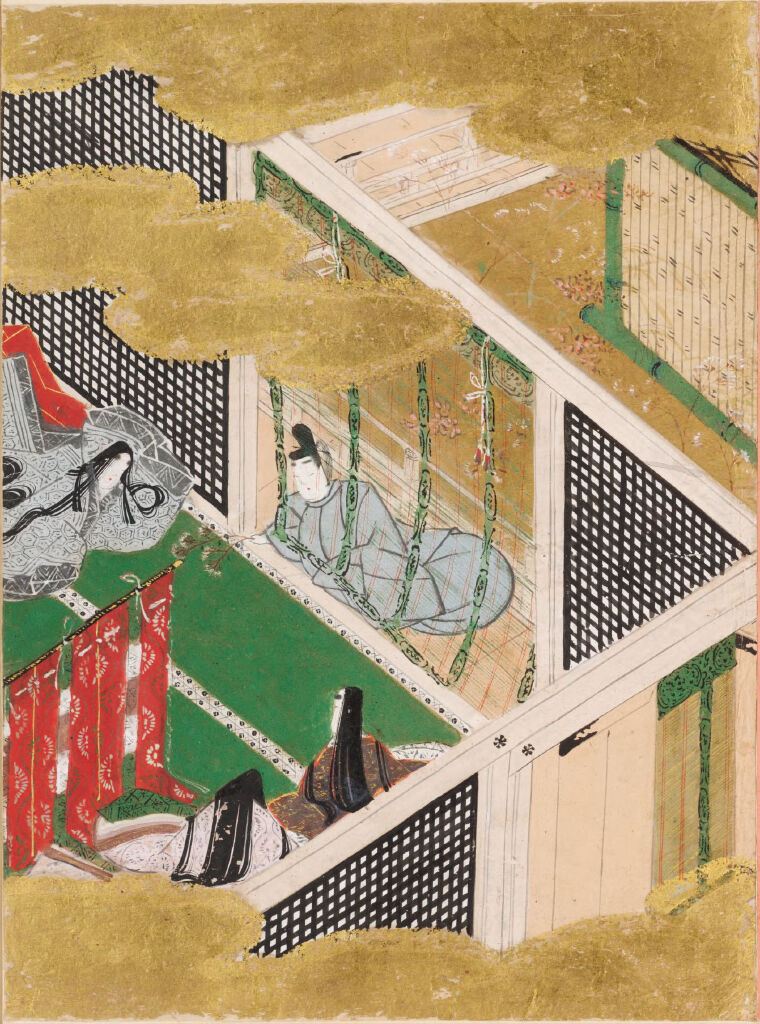
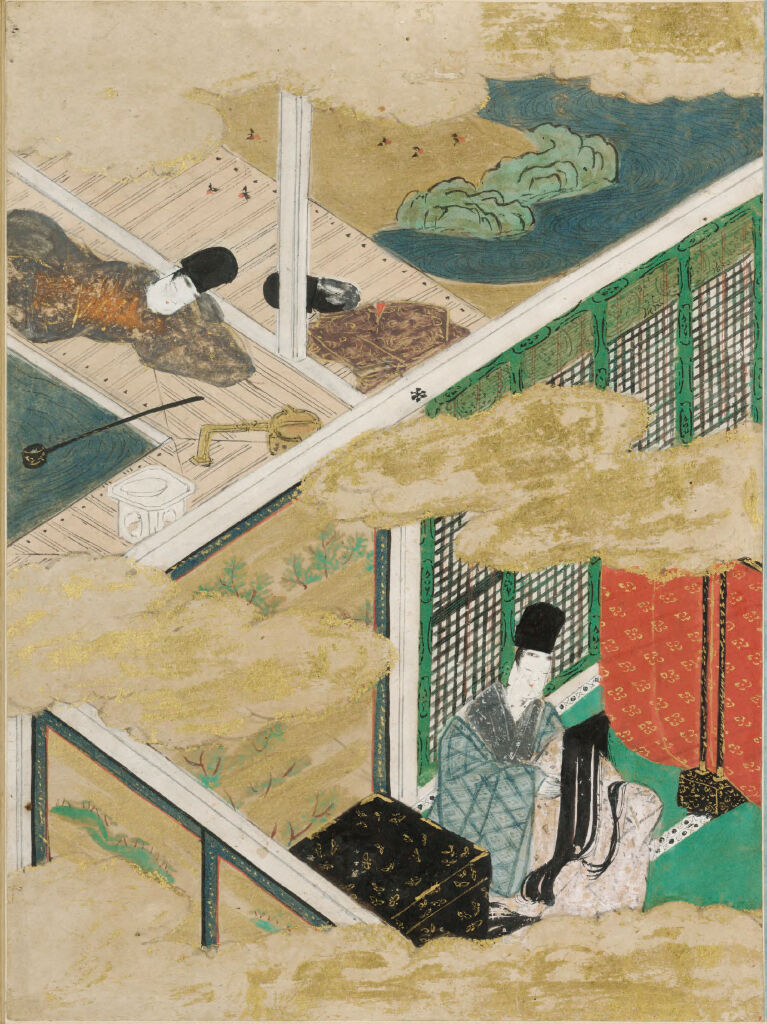
What secret hides in the quiet of the canvas? Within the delicate strokes of this illustration, a world teems with unspoken longing and fleeting beauty, inviting us to peer deeper into its melancholic heart. Look to the left at the finely rendered safflower, its petals unfurling like whispers of lost dreams against a muted background. Notice how the gentle interplay of color—a soft blend of rust and gold—contrasts with the starkness of the surrounding space, evoking a sense of isolation. The meticulous detailing in the flower’s center draws the eye, creating a focal point that encapsulates both vitality and transience.
Each brushstroke seems infused with the weight of the story it accompanies, pulling us into the narrative's emotive depths. Beneath the surface, this work reveals the melancholy of impermanence that flows through the Tale of Genji. The safflower, often associated with themes of love and longing, acts as a poignant symbol of the fleeting nature of beauty and relationships. The contrast between the vivid flower and the serene backdrop suggests not only the brilliance of life but also the shadow of loss, hinting at the characters’ struggles with desire and the passage of time.
Every element offers a reflection of the inevitable sorrow that colors human connections. Tosa Mitsunobu created this striking illustration during the Muromachi period, specifically between 1509 and 1510. At this time, he was entrenched in the noble tradition of courtly arts, responding to a cultural milieu that valued the interweaving of literature and visual expression. The Tale of Genji, an established classic, provided fertile ground for Mitsunobu’s artistry, allowing him to explore the emotional resonance of its characters through the lens of exquisite natural forms.