Beneath the Oak (Shiigamoto), Illustration to Chapter 46 of the Tale of Genji (Genji monogatari) — History & Analysis
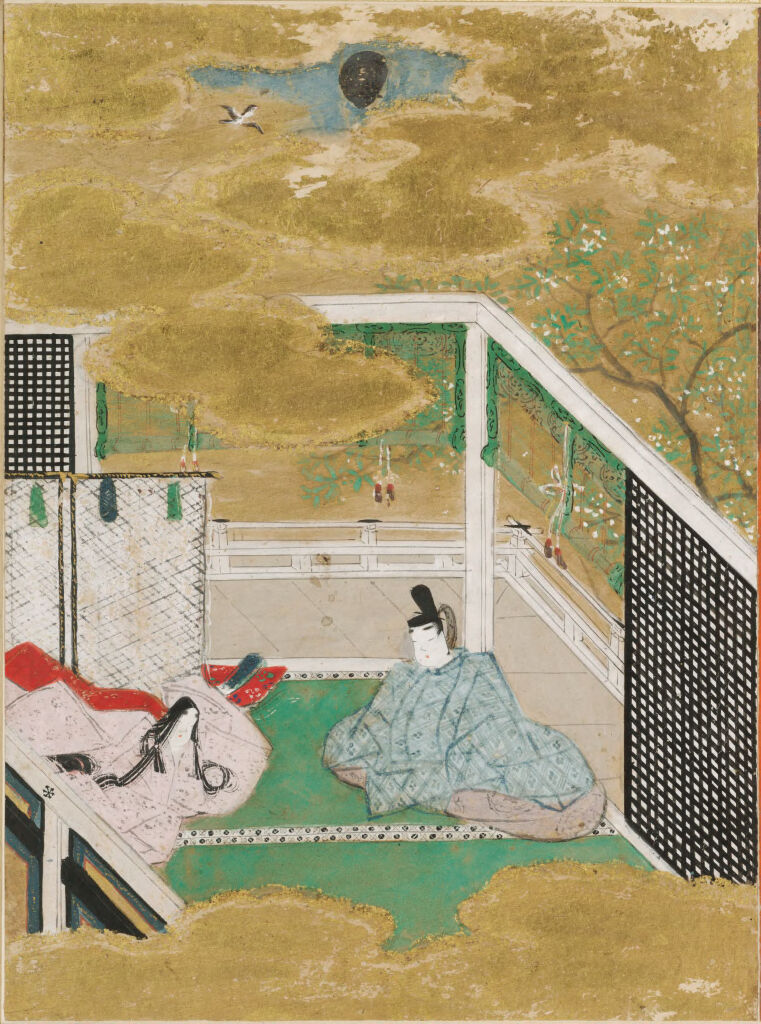
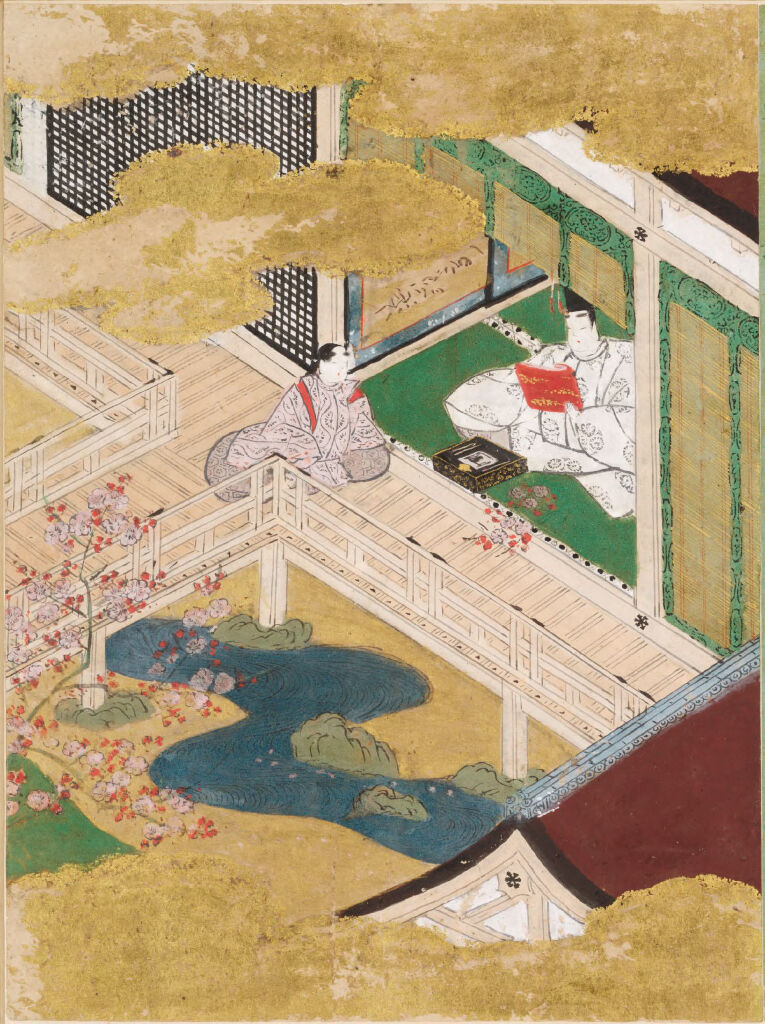
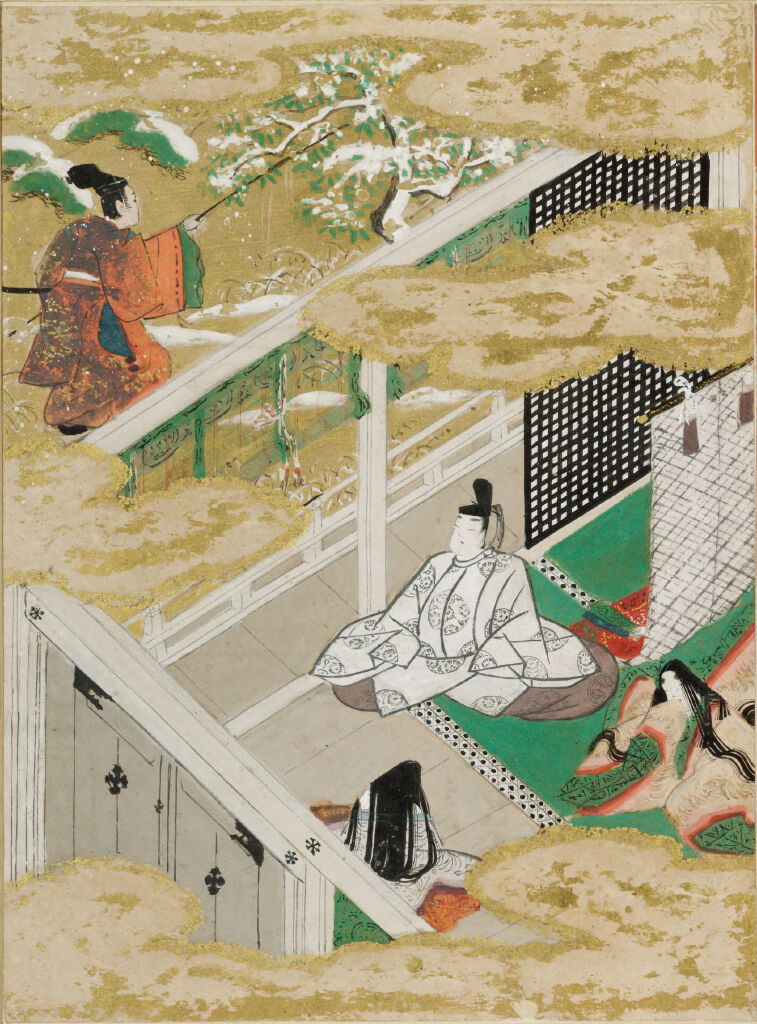
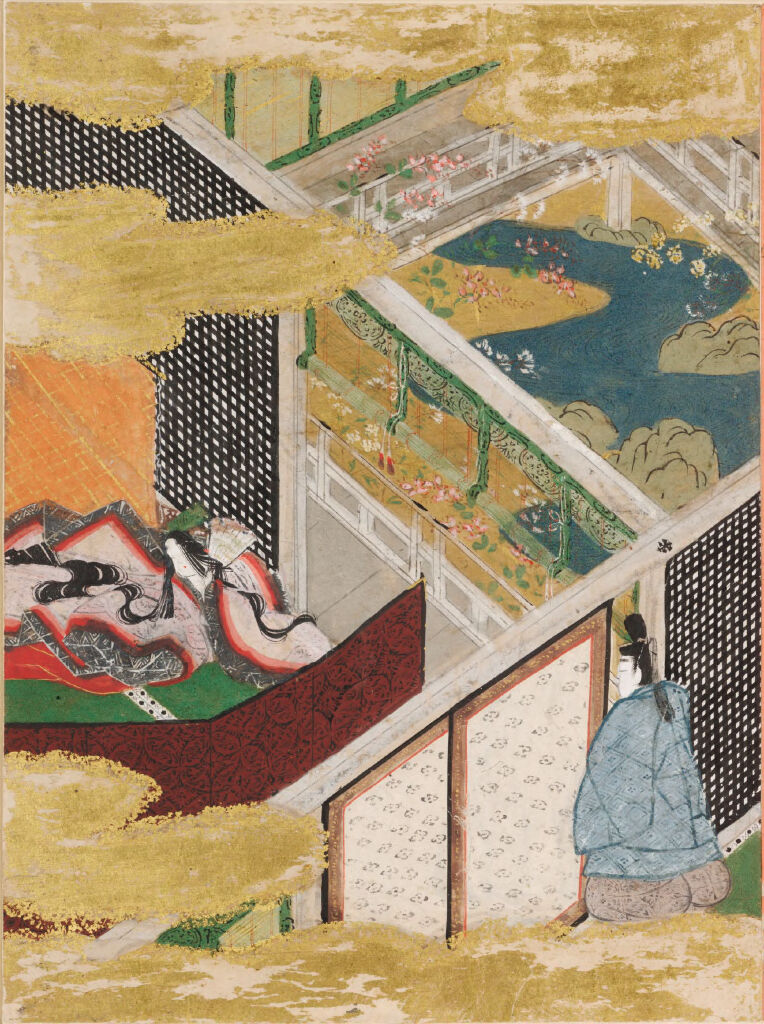
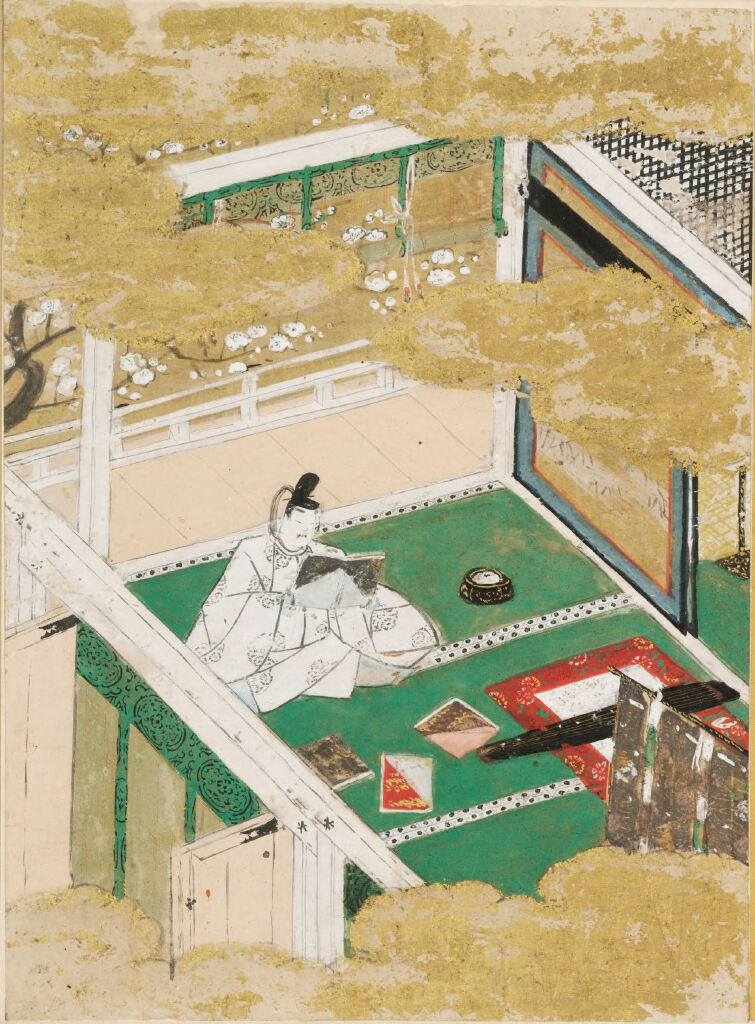
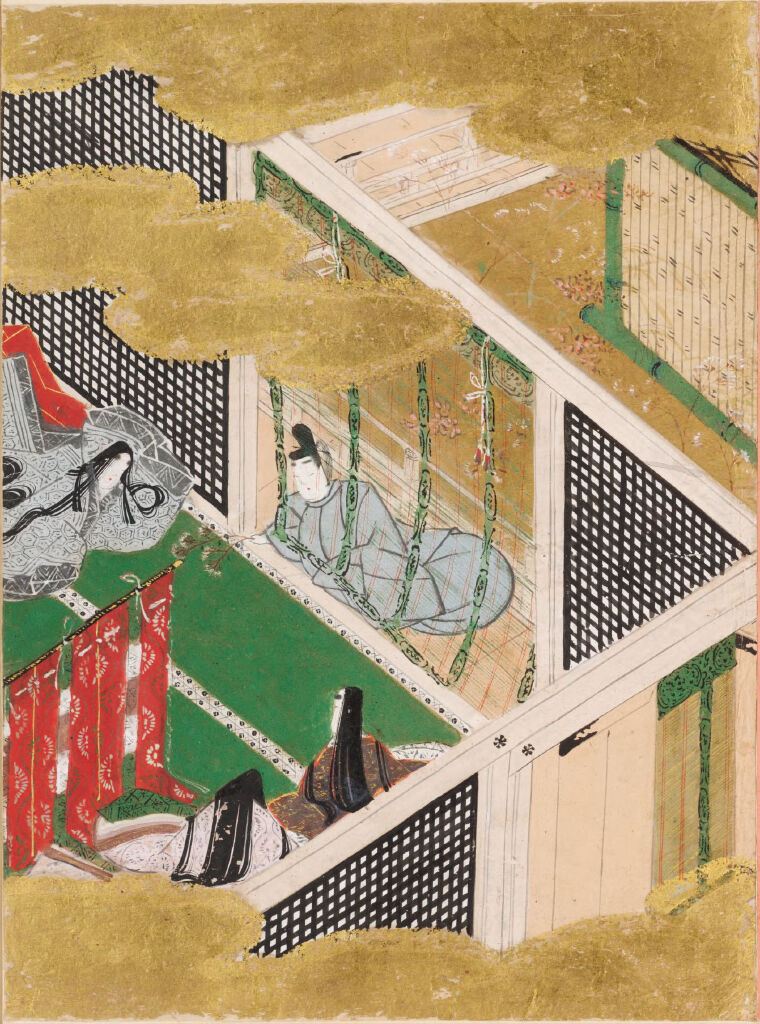
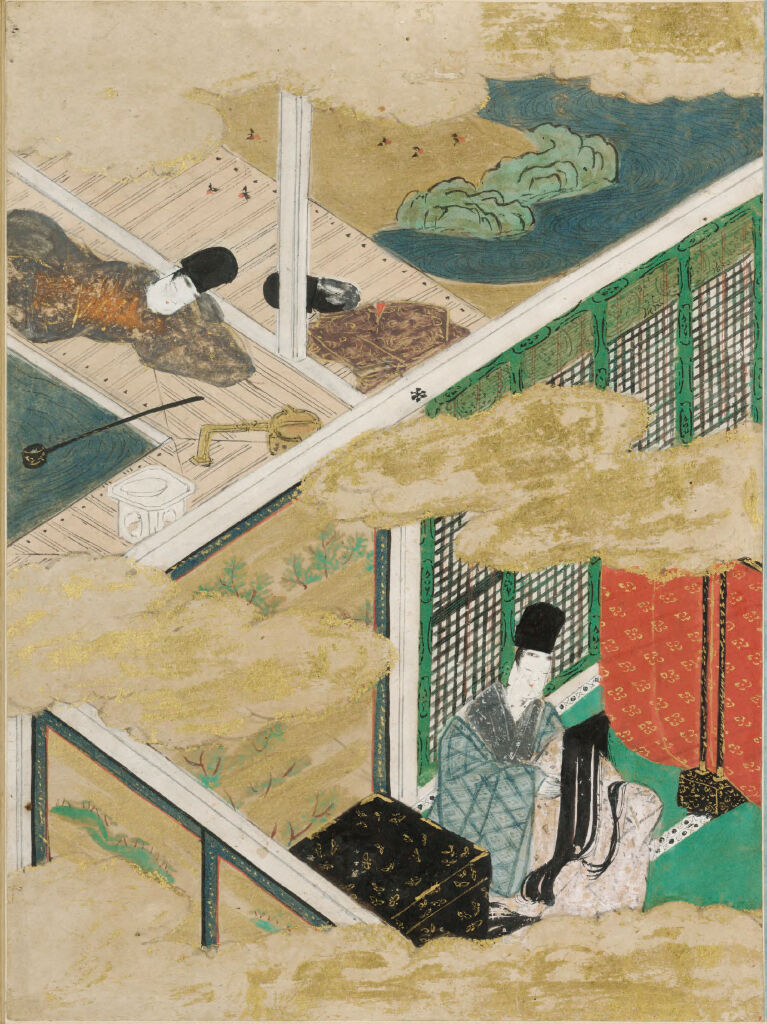
What if silence could speak through light? In Beneath the Oak, the stillness of the moment becomes a powerful language, whispering tales of longing and chaos hidden beneath serene exteriors. Look to the center of the composition, where a young woman sits beneath a grand oak tree, her delicate figure bathed in dappled sunlight. The meticulous detail of her flowing kimono draws the eye, as intricate patterns vibrate with the gentle sway of fabric, suggesting movement and life.
Surrounding her, the contrasting stillness of the shaded landscape evokes a sense of quiet introspection, while vibrant colors punctuate the scene, reflecting the emotional turmoil that lies just beneath the surface. The interplay of light and shadow captures a moment of tension—a serene exterior concealing the chaos of unspoken thoughts and emotions. Notice the slight tilt of the woman’s head, her gaze soft yet distant, hinting at an inner world of conflict and desire. The oak tree, ancient and strong, stands as a witness to her solitude, embodying the weight of tradition and the tumult of personal longing.
This tension between stability and chaos resonates throughout the work, drawing the viewer into a shared, silent narrative. Created between 1509 and 1510 during the Muromachi period, Beneath the Oak reflects the shifting dynamics of Japanese art at the time, where classical themes from the Tale of Genji were reinterpreted with a newfound sensitivity. Tosa Mitsunobu, a prominent figure in the Kano school, infused this illustration with personal emotion as he navigated the complexities of his era, blending the past and present into a timeless meditation on love and longing.