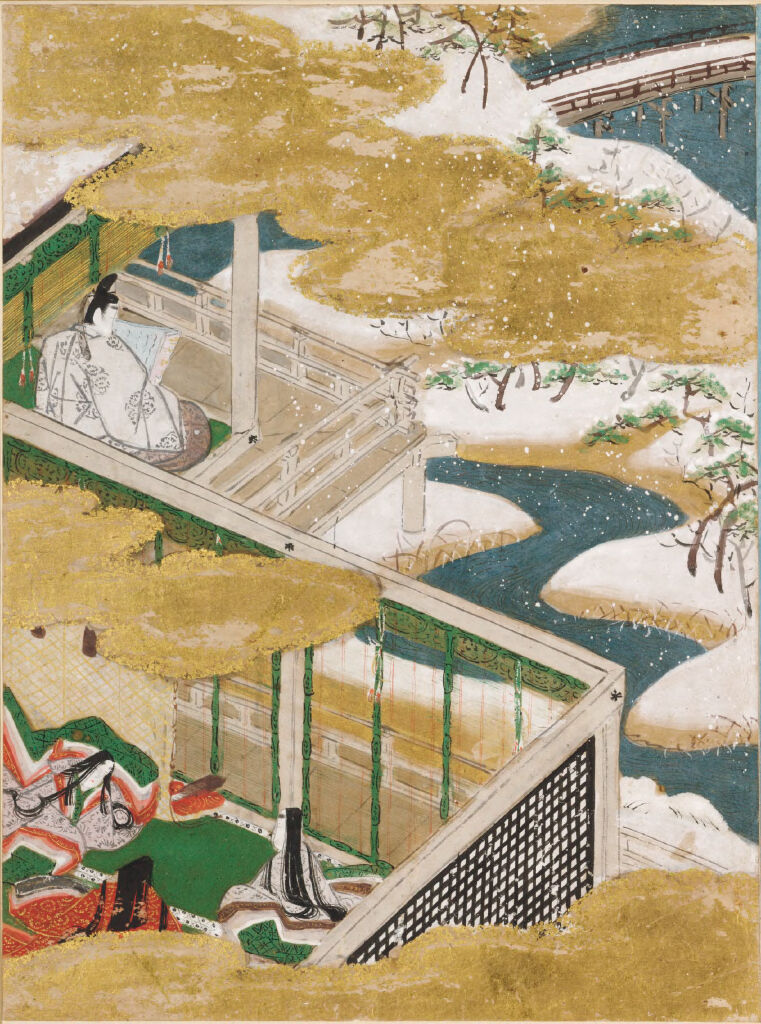
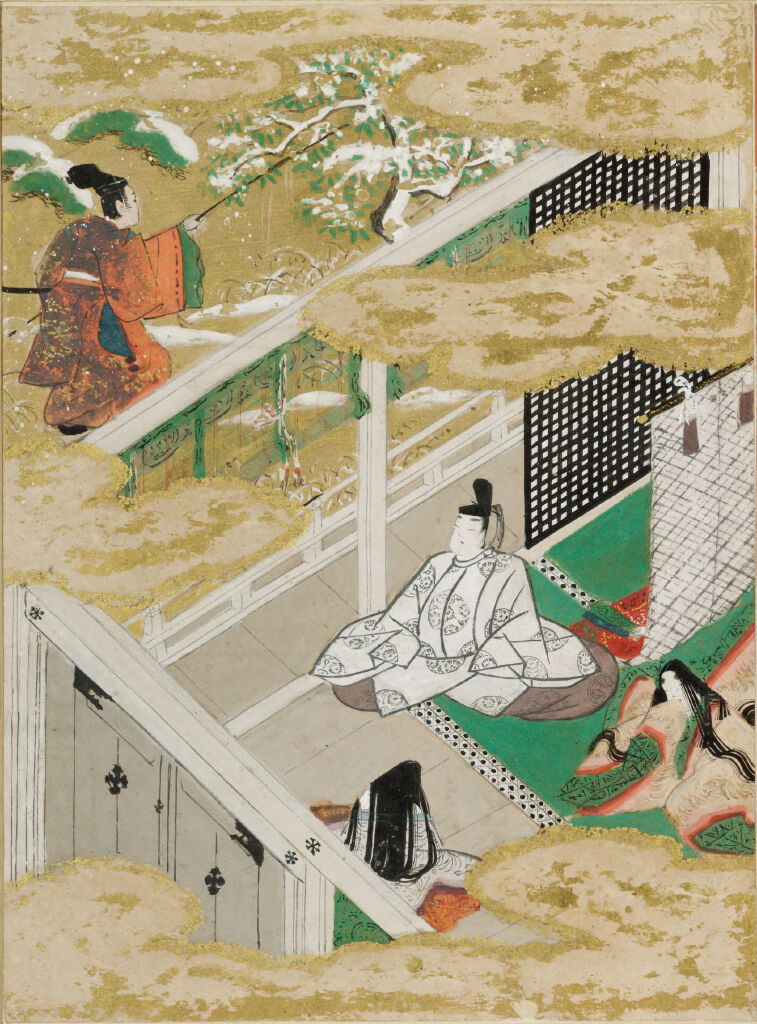
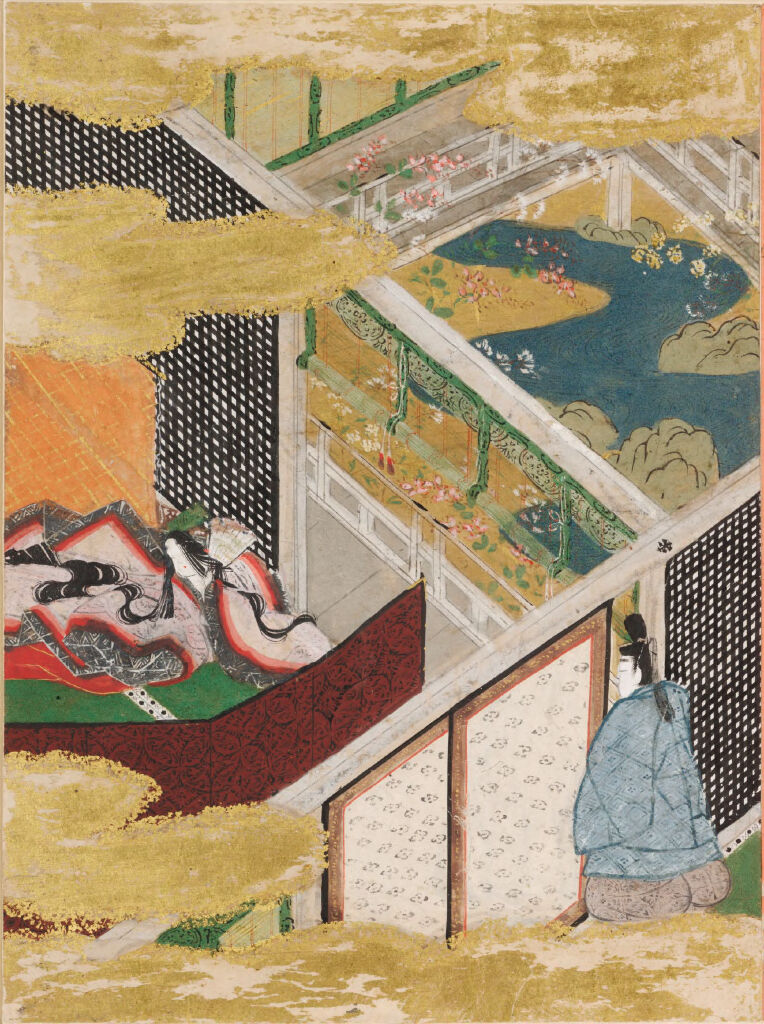
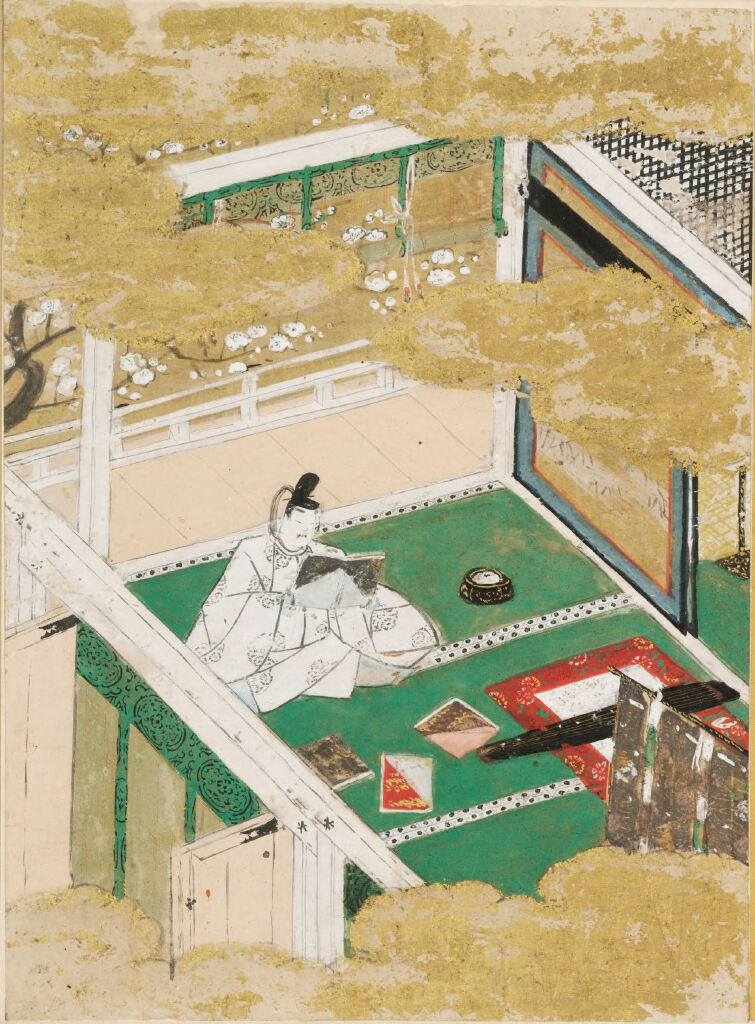
Falling Flowers (Hanachirusato), Illustration to Chapter 11 of the Tale of Genji (Genji monogatari) — History & Analysis
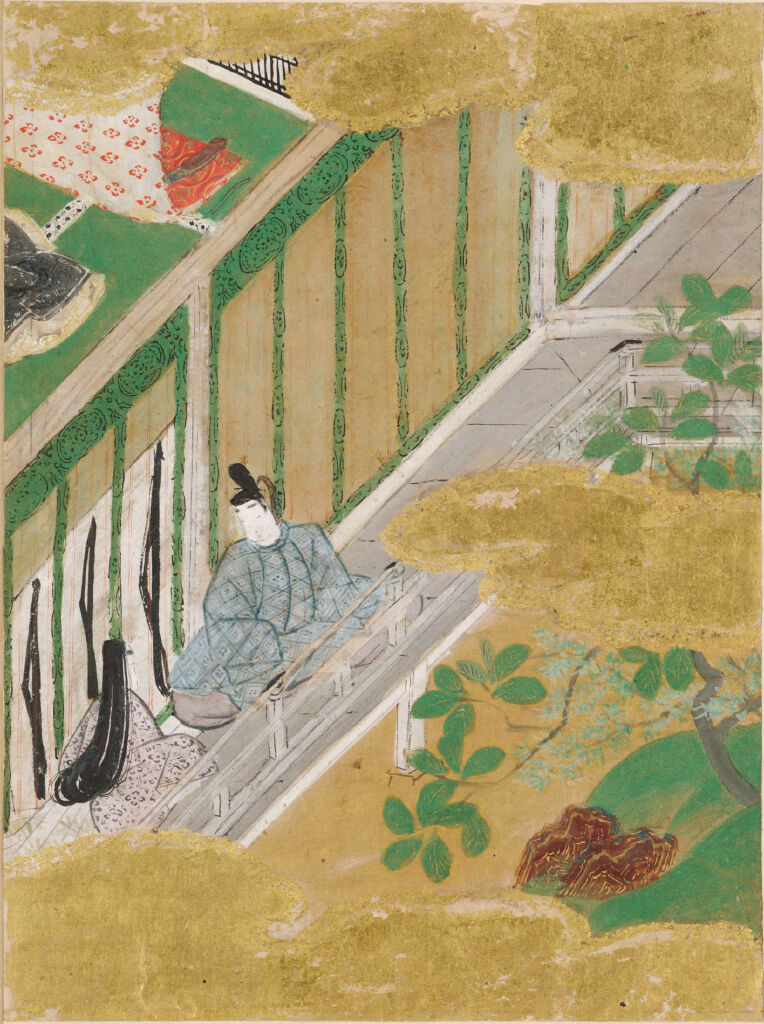
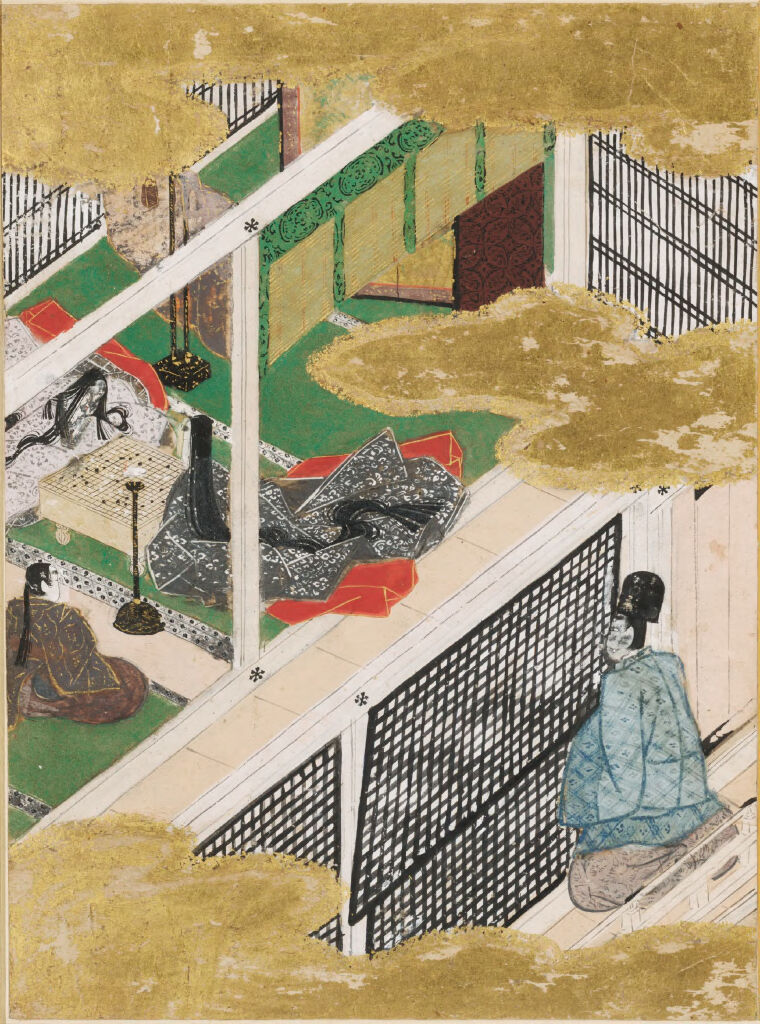
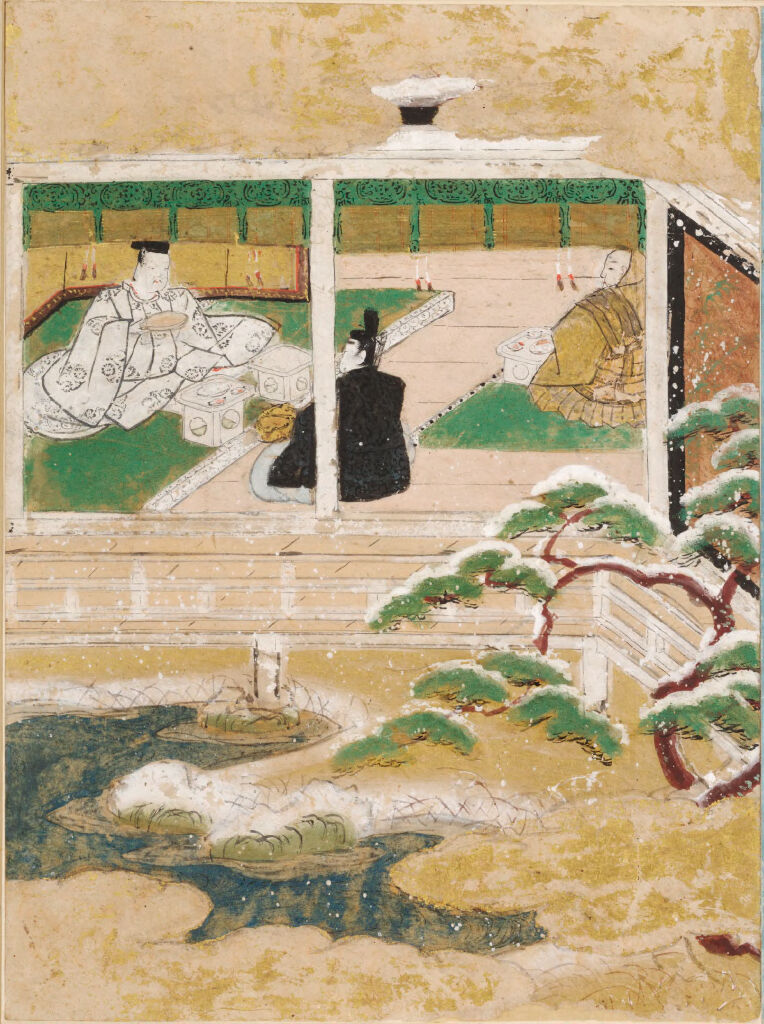
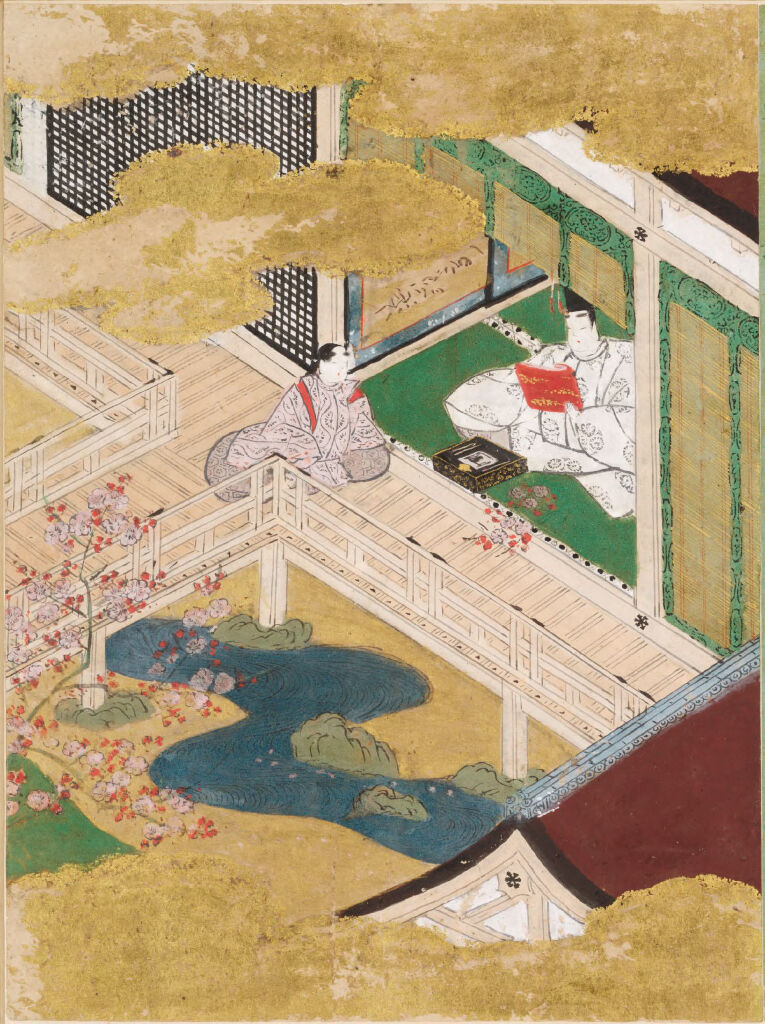
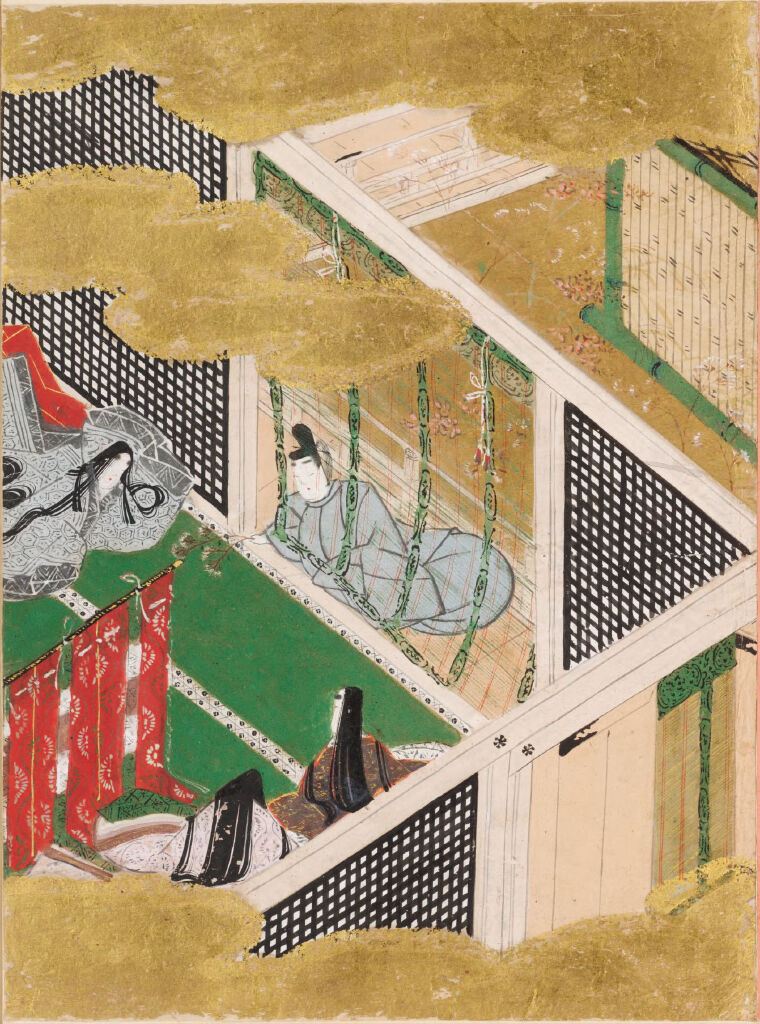
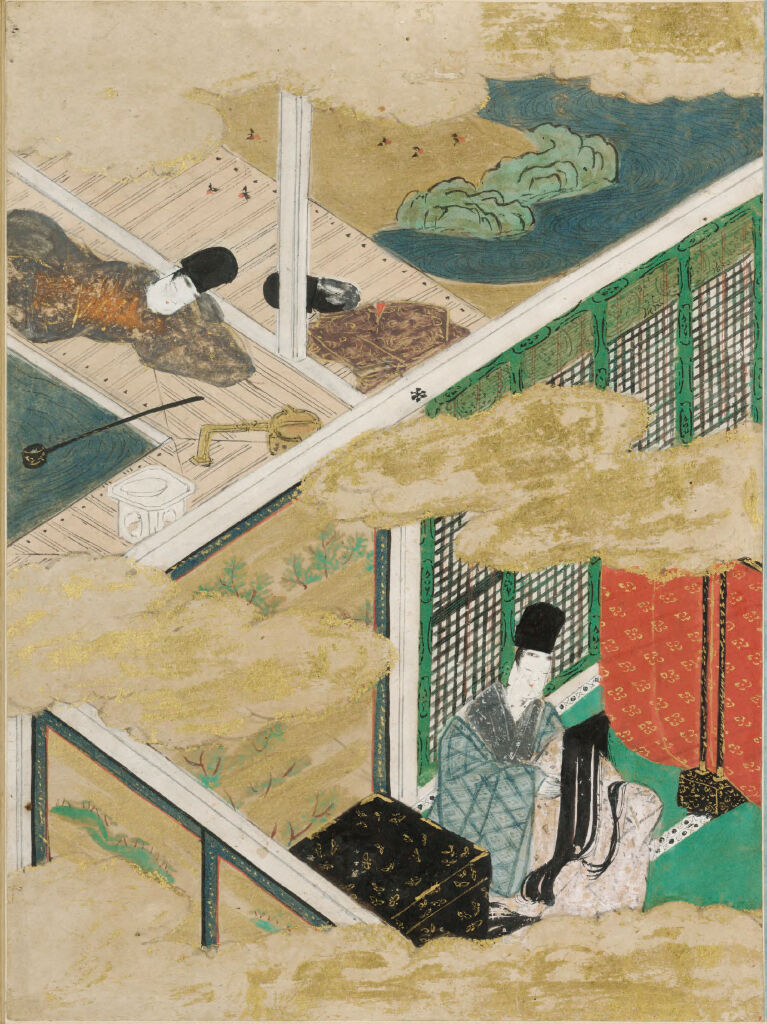
“Between color and silence, truth hides.” In the delicate interplay of hues and the whispers of nature, a world unfolds where every petal tells a story, and every glance reveals an emotion. To appreciate this artwork, first direct your gaze to the ethereal cascade of falling flowers, their soft pinks and whites juxtaposed against the subtle greens of the surrounding landscape. Notice how the gentle curves of the blossoms contrast with the sharp, angular lines of the foliage, creating a harmony that invites exploration. The artist’s meticulous brushwork brings life to each flower, while the calculated use of space allows the viewer’s eye to dance across the composition, capturing the fleeting beauty of nature in motion.
Hidden within the tranquility of this scene lies a deeper meditation on impermanence and the passage of time. Each flower, drifting toward the ground, symbolizes the fleeting nature of life, a theme deeply woven into the fabric of the Tale of Genji. The serene expressions of the figures, positioned gracefully amidst the floral cascade, evoke a sense of longing and nostalgia, hinting at the complexities of human emotion that often lie beneath calm exteriors.
Tosa Mitsunobu painted Falling Flowers during the Muromachi period, specifically around 1509-1510, a time when Japanese art was becoming increasingly influenced by Zen Buddhism and the aesthetics of nature. Working in Kyoto, he contributed to the revival of Yamato-e, a style that focused on narratives from Japanese literature. This piece reflects not only his technical prowess but also the cultural shifts occurring in art, where the intertwining of nature and human emotion began to take center stage.