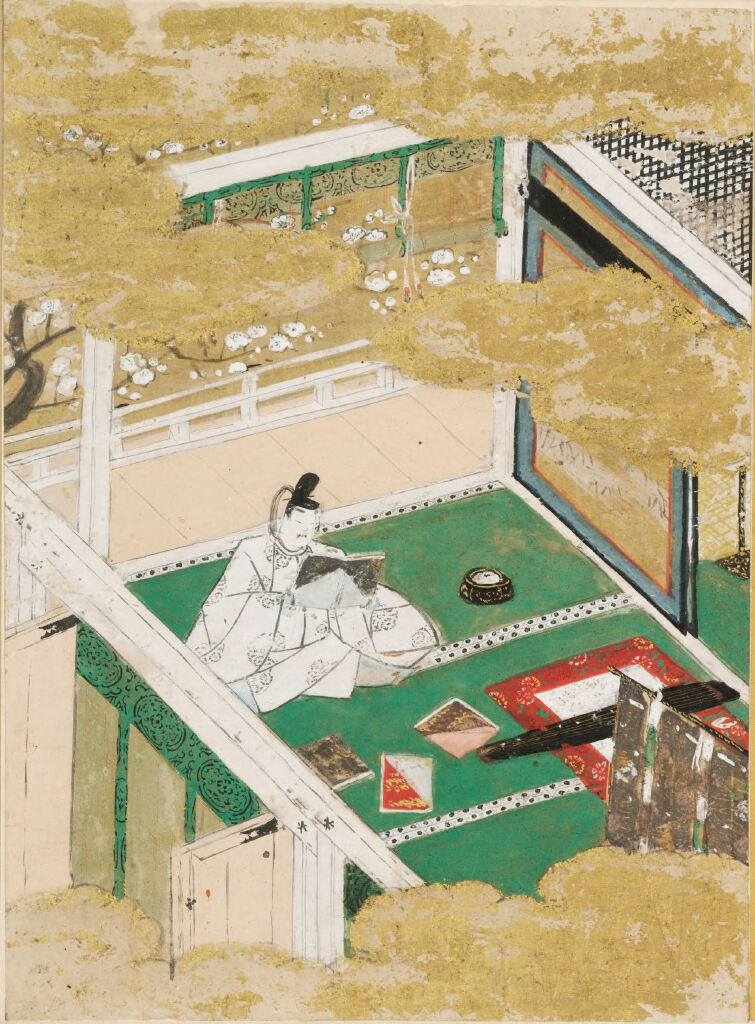
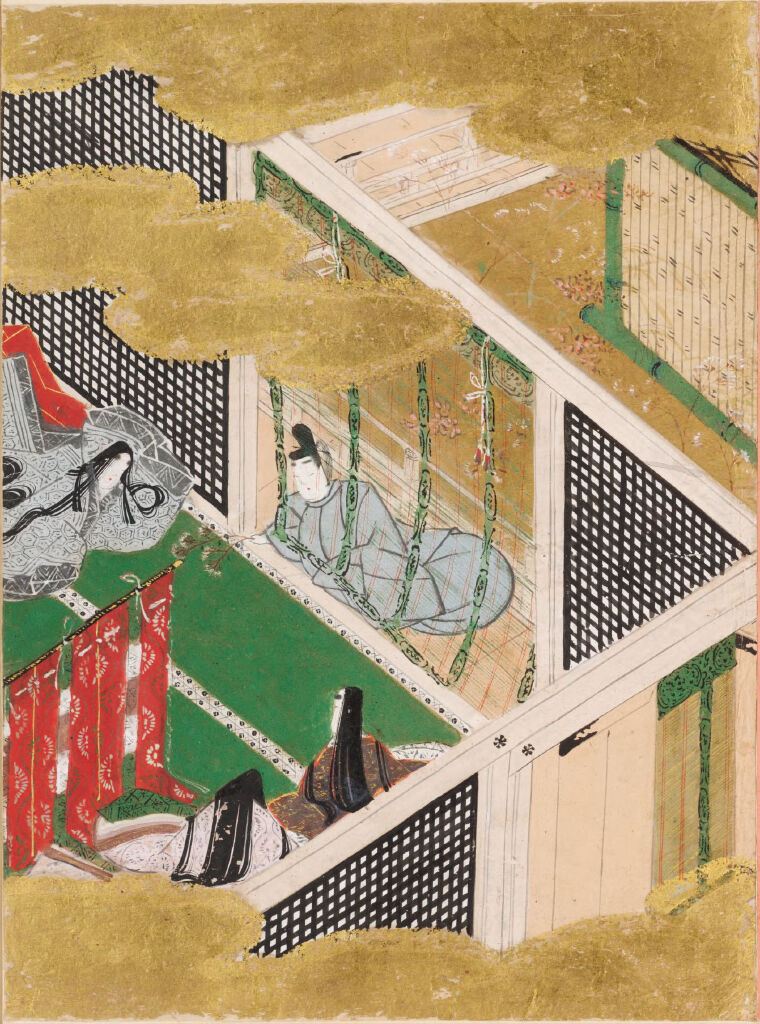
The Broom Tree (Hahakigi), Illustration to Chapter 2 of the Tale of Genji (Genji monogatari) — History & Analysis
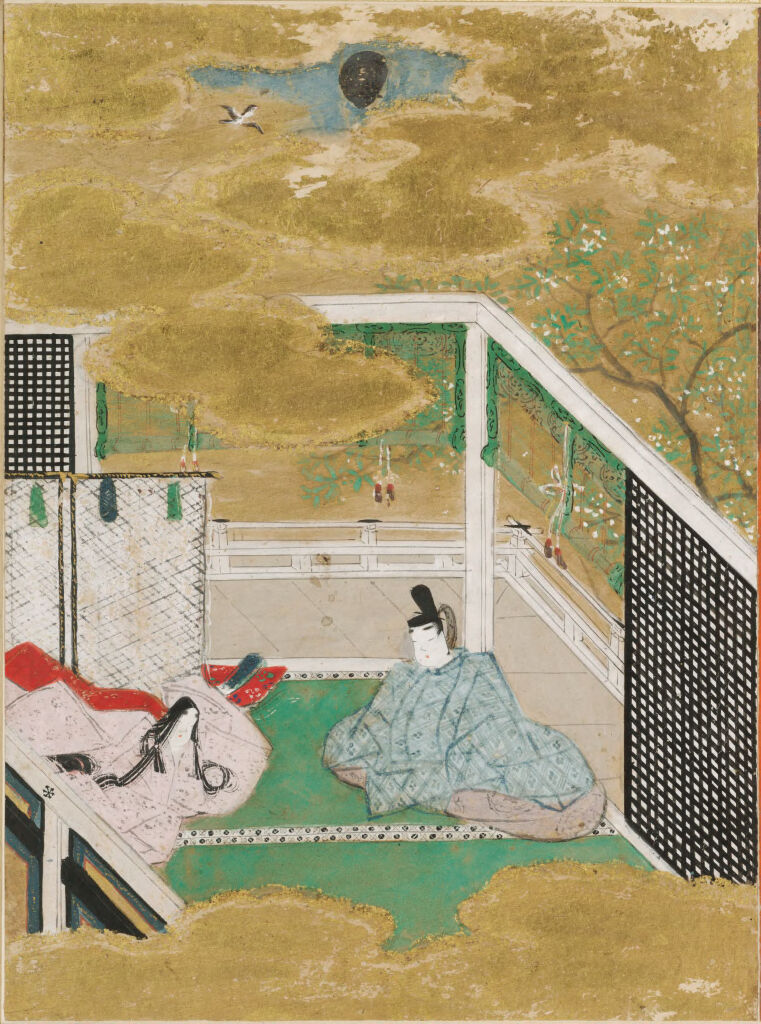
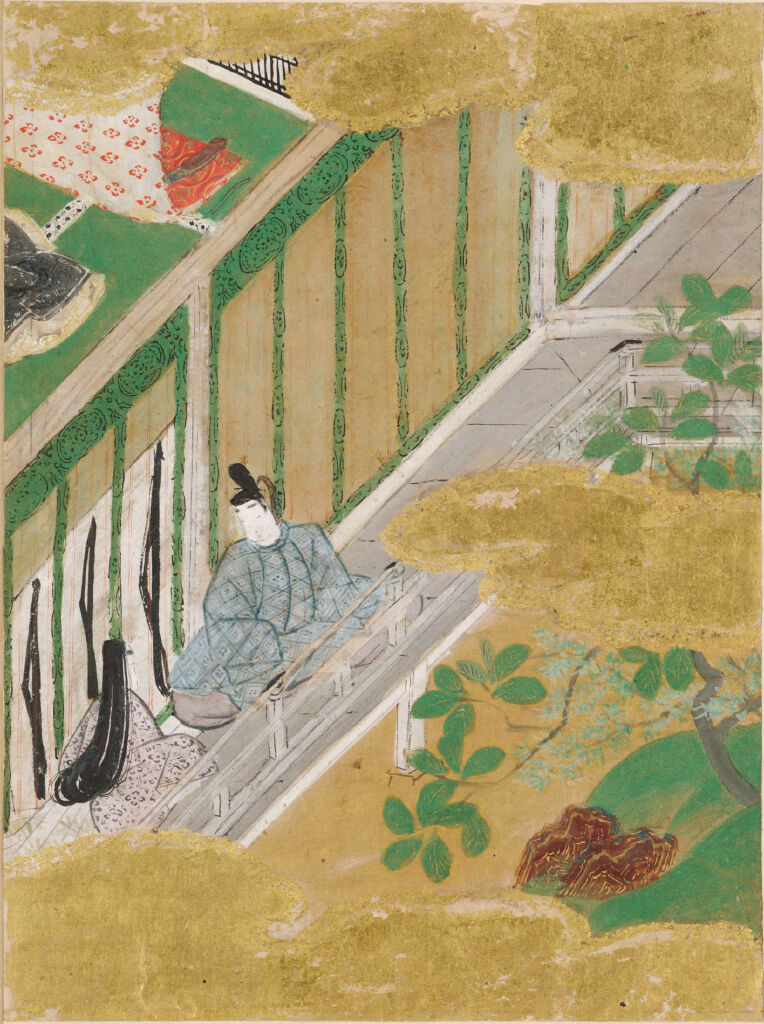
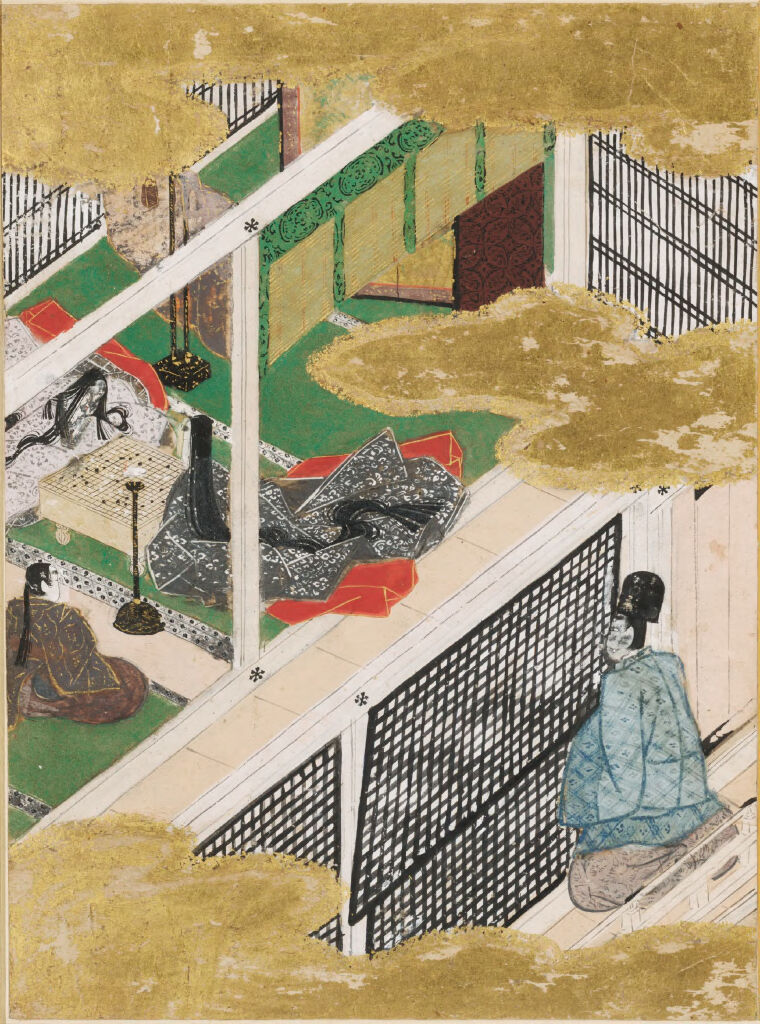
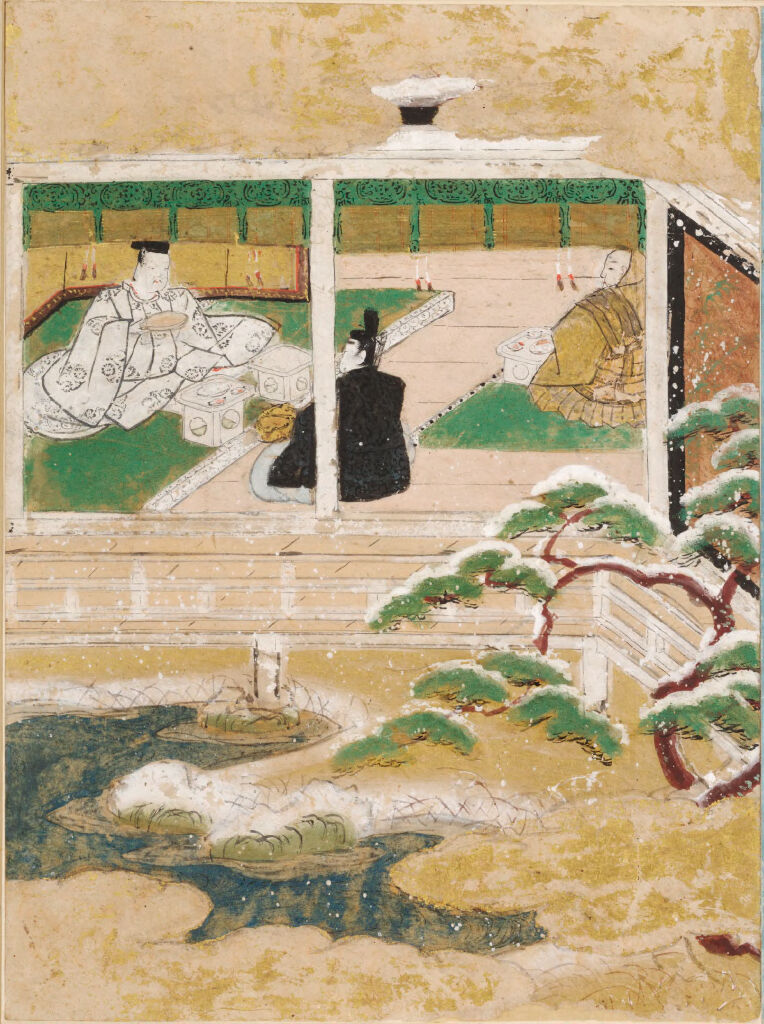
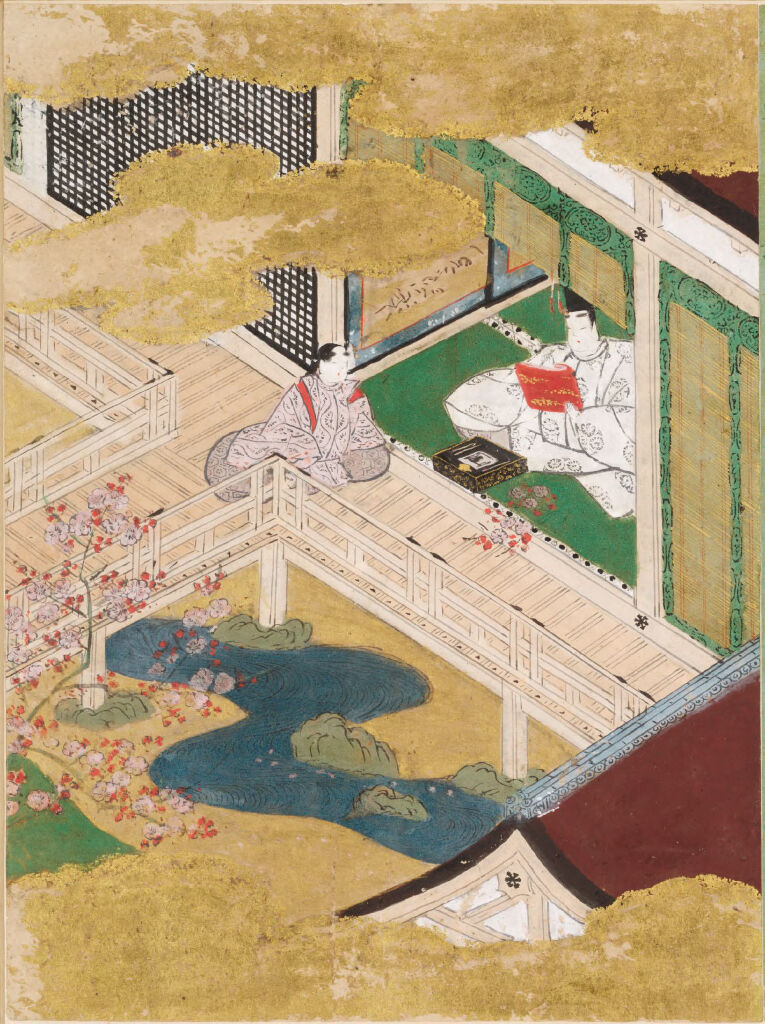
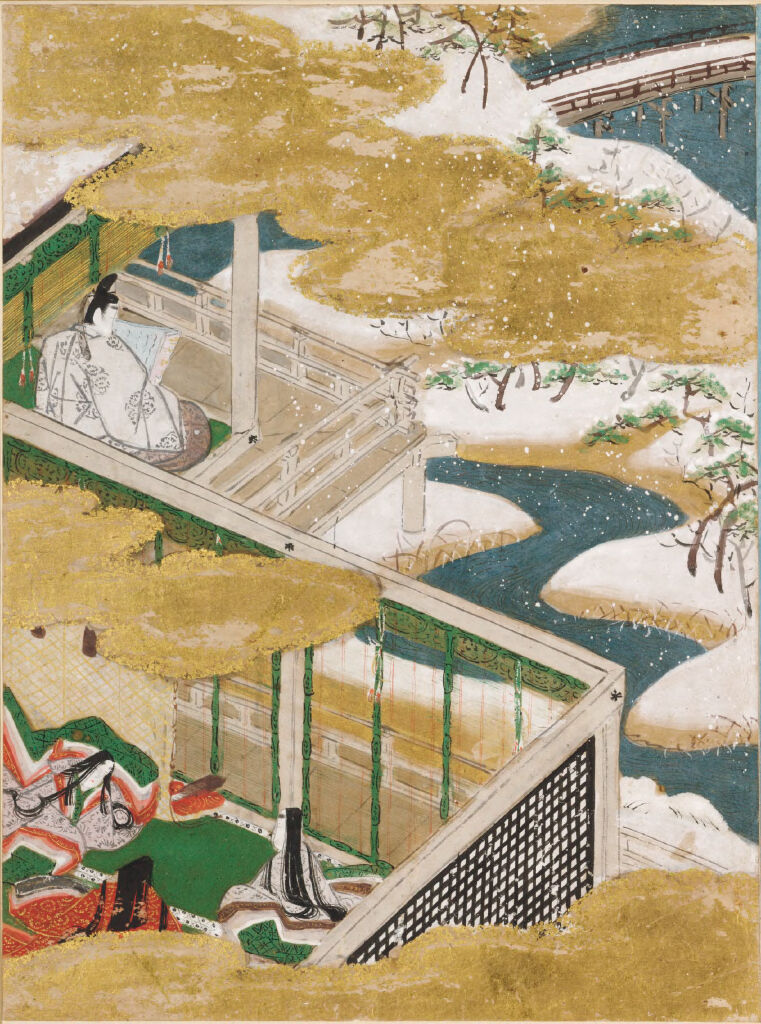
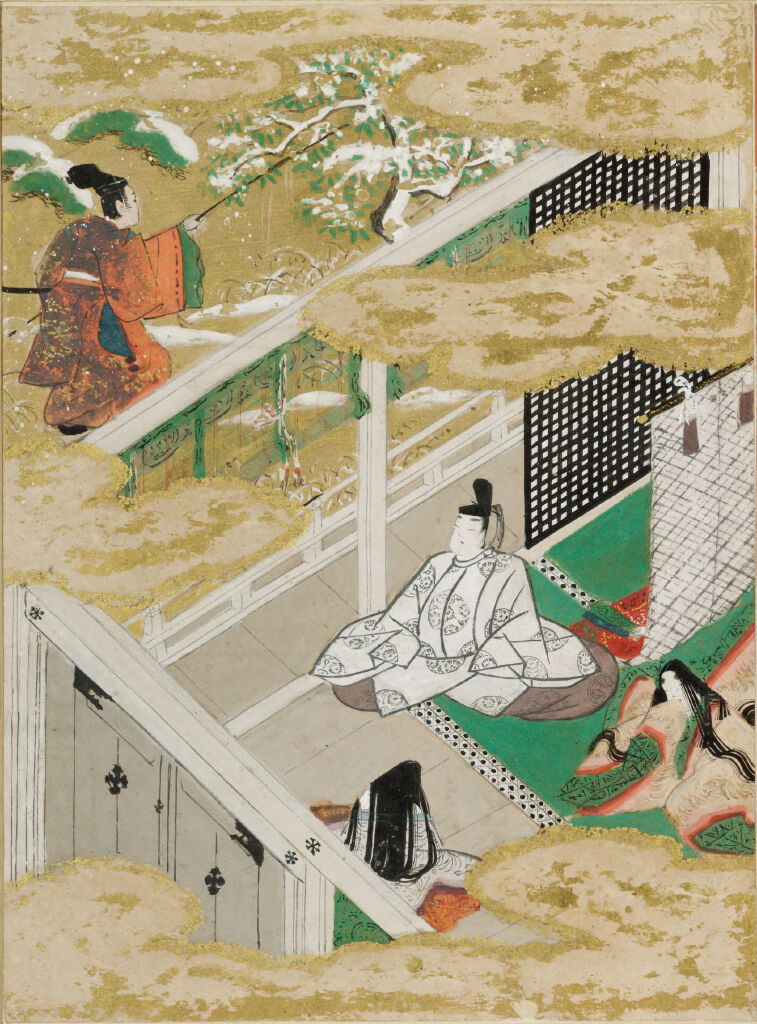
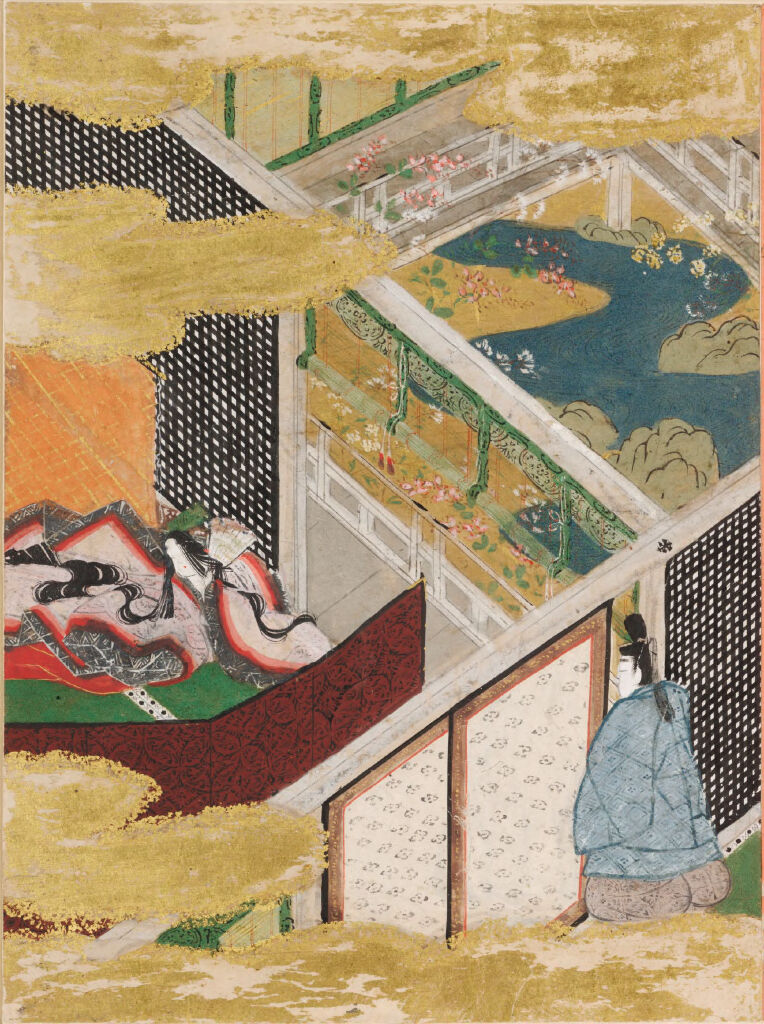
“Sometimes beauty is just pain, disguised in gold.” This profound notion embodies the delicate tension captured in the layers of innocence within the illustration. In the serene yet complex narrative of life, moments of purity often hide the weight of unspoken sorrow. Focus first on the exquisite detailing of the figures beneath the sweeping branches of the broom tree. Notice the gentle curves of their garments, painted with a soft, harmonious palette that ranges from muted earth tones to vibrant gold.
The composition invites your gaze to traverse the graceful forms, leading you from the elegant blossoms overhead to the subtle play of shadows that dance on the ground. Each stroke is not merely decorative but carries the weight of deep emotion, enveloping the viewer in a world where innocence and fleeting beauty intertwine. As you delve deeper, consider the symbolism inherent in the broom tree itself—it stands as a guardian of ephemeral beauty and the fragility of youth. The figures, poised in contemplative silence, suggest unexpressed emotions; their innocence may mask an impending loss or heartache.
This contrast enriches the scene, inviting reflection on the bittersweet nature of existence—a dance between joy and sorrow that defines the human experience. Tosa Mitsunobu created this illustration during a pivotal time in Japanese art history, around 1509-1510, within the Muromachi period. At this juncture, the refinement of Yamato-e painting flourished, characterized by its lyrical storytelling and graceful aesthetics. Mitsunobu was a master of this style, and his works often reflect the intricate interplay between nature and human sentiment, embodying both the cultural richness of his time and the enduring essence of the Tale of Genji.