Bewening en graflegging van Christus — History & Analysis
“Every brushstroke is a heartbeat remembered.” In the quietude of loss, we confront the weight of grief as it settles into the bones of history, evoking a profound melancholy that transcends time and space. Look to the center of the canvas, where the lifeless form of Christ lies cradled in a tender embrace. The figures surrounding Him appear almost ethereal, their expressions a mix of sorrow and reverence, rendered in muted earth tones that create a somber atmosphere. Notice the subtle interplay of light and shadow, particularly how it highlights the soft contours of Christ’s face, bringing a haunting serenity to an otherwise tragic scene.
The drapery of the garments flows gracefully, guiding your gaze and emphasizing the emotional gravity of the moment. The juxtaposition of the serene faces of the mourners against the stark reality of death reveals the deep emotional tension present in this work. Each figure embodies a different facet of grief, from despair to quiet acceptance, yet they are united in their shared loss. The careful attention to detail—like the lifelike textures of skin and fabric—invites viewers to meditate on the fleeting nature of life, encapsulating a collective sorrow that is both personal and universal.
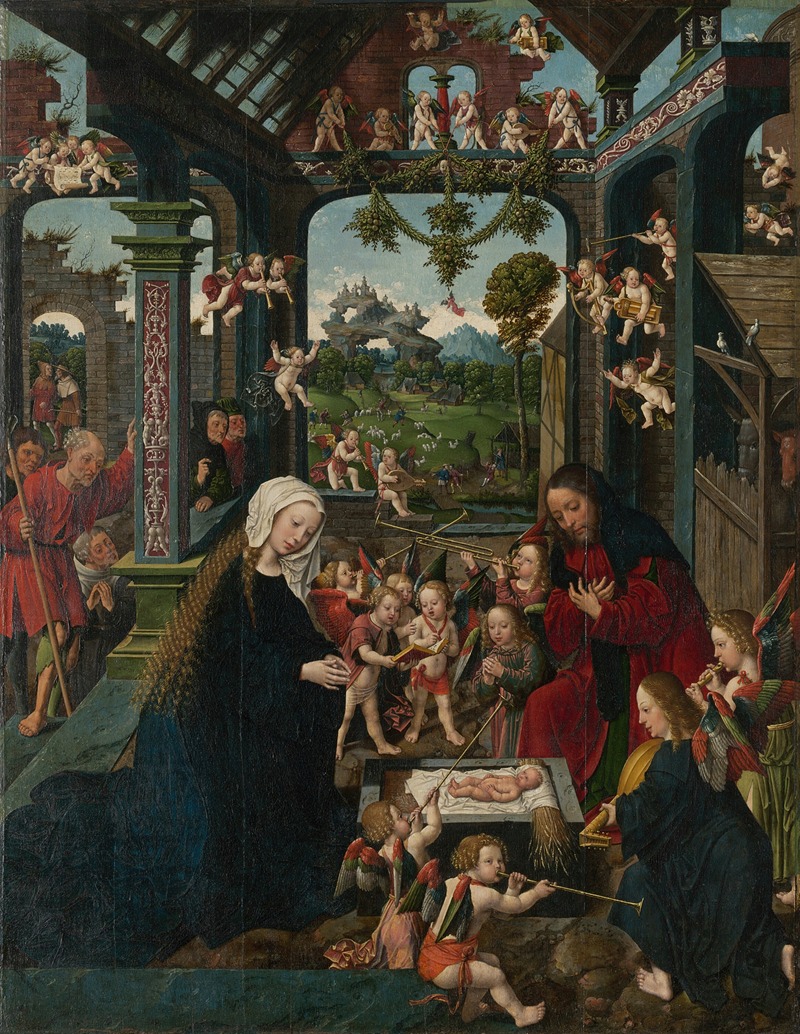
Created between 1517 and 1533, this piece emerged during a time of religious upheaval and transformation in Europe. Art was evolving, moving towards the emotive and the personal, reflecting the shifting landscape of faith and humanity. Jacob Cornelisz van Oostsanen, working in the Netherlands, was part of this transformative moment, bridging the late medieval traditions with the emerging Renaissance ideals, capturing the raw human experience in a manner that resonated deeply with the viewers of his time.