De heiligen Christoffel en Sebastiaan — History & Analysis
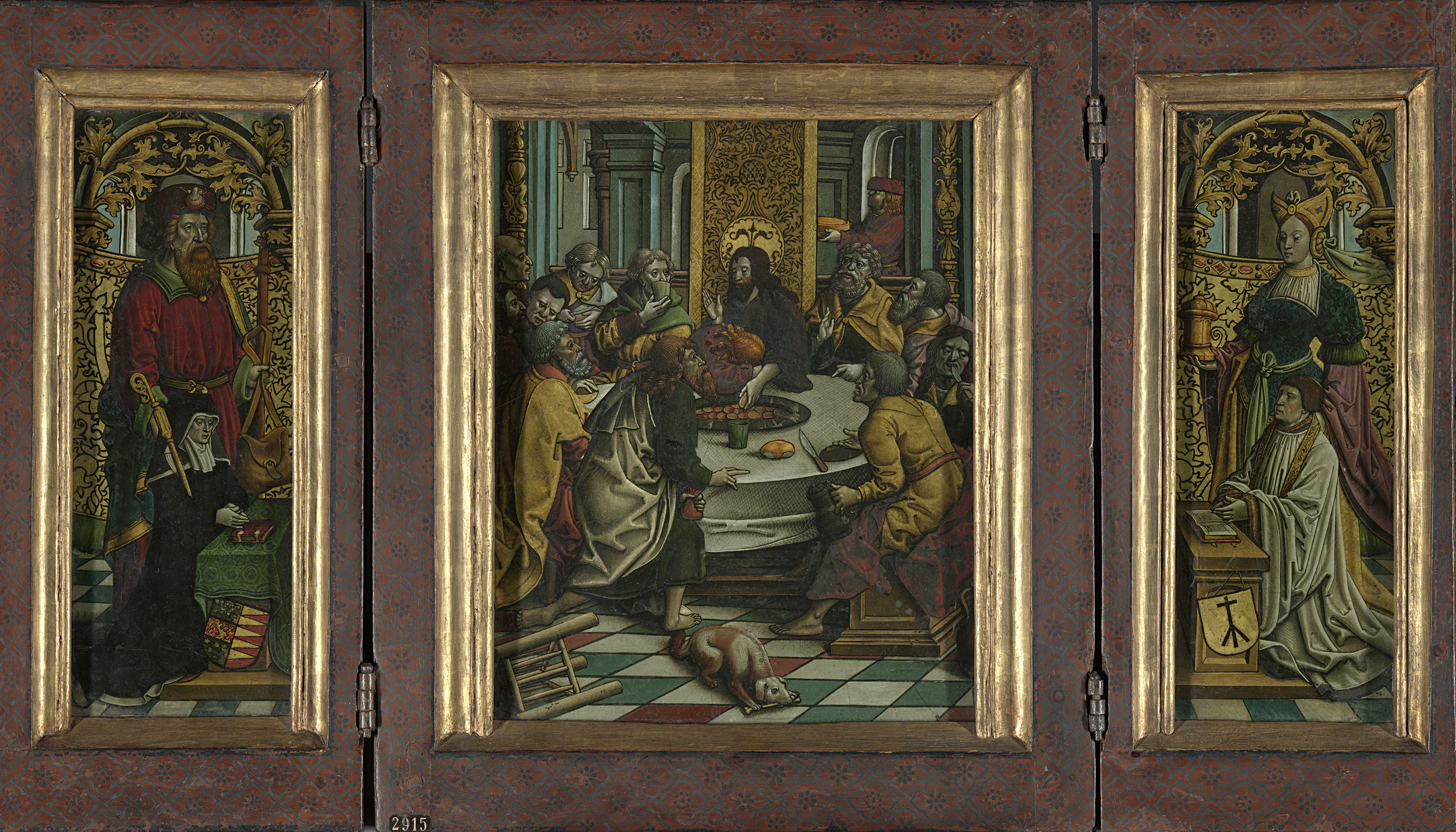
“Between color and silence, truth hides.” In the interplay of vibrant pigments and stillness, we find a yearning that transcends time. Look to the center of the canvas, where the figures of Christoffel and Sebastiaan stand resolute, halos glowing softly around their heads. The rich reds and deep blues of their robes draw the eye, creating a striking contrast against the muted background. Observe the meticulous detailing in their expressions—there's a palpable tension between devotion and vulnerability, capturing the essence of their saintly sacrifice.
Each figure holds symbolic elements: Christoffel with a staff, representing guidance, while Sebastiaan bears the marks of suffering, arrows piercing his skin. These details evoke a profound emotional weight, suggesting a complex relationship between faith, pain, and the human experience. The juxtaposition of their serene postures against the violence implied by Sebastiaan’s wounds deepens the viewer's connection, revealing a narrative of hope within despair.
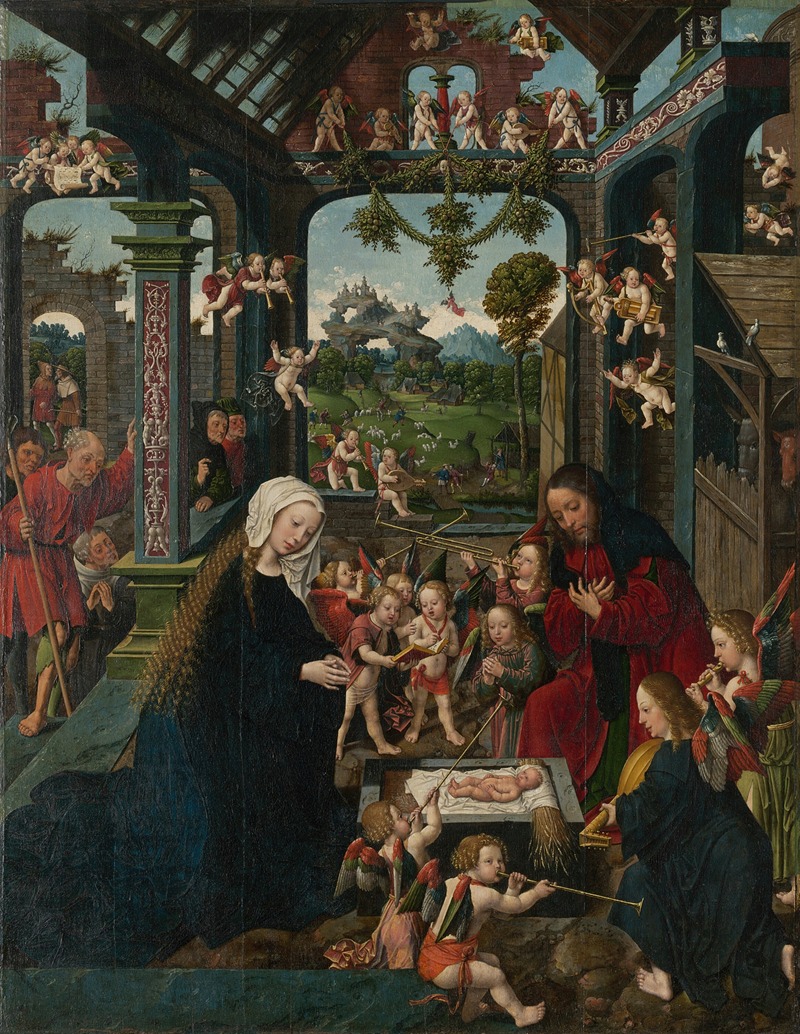
In the early 16th century, during its creation, the artist worked in Amsterdam, a center of Renaissance innovation. Van Oostsanen was a pivotal figure in the transition from medieval to modern artistic ideals, navigating the tensions of religious transformation in Europe. This painting reflects not only his mastery of composition and color but also the spiritual climate of his time, where the quest for understanding faith blended with the longing for personal revelation.