Flachlandschaft im Vorgebirge — History & Analysis
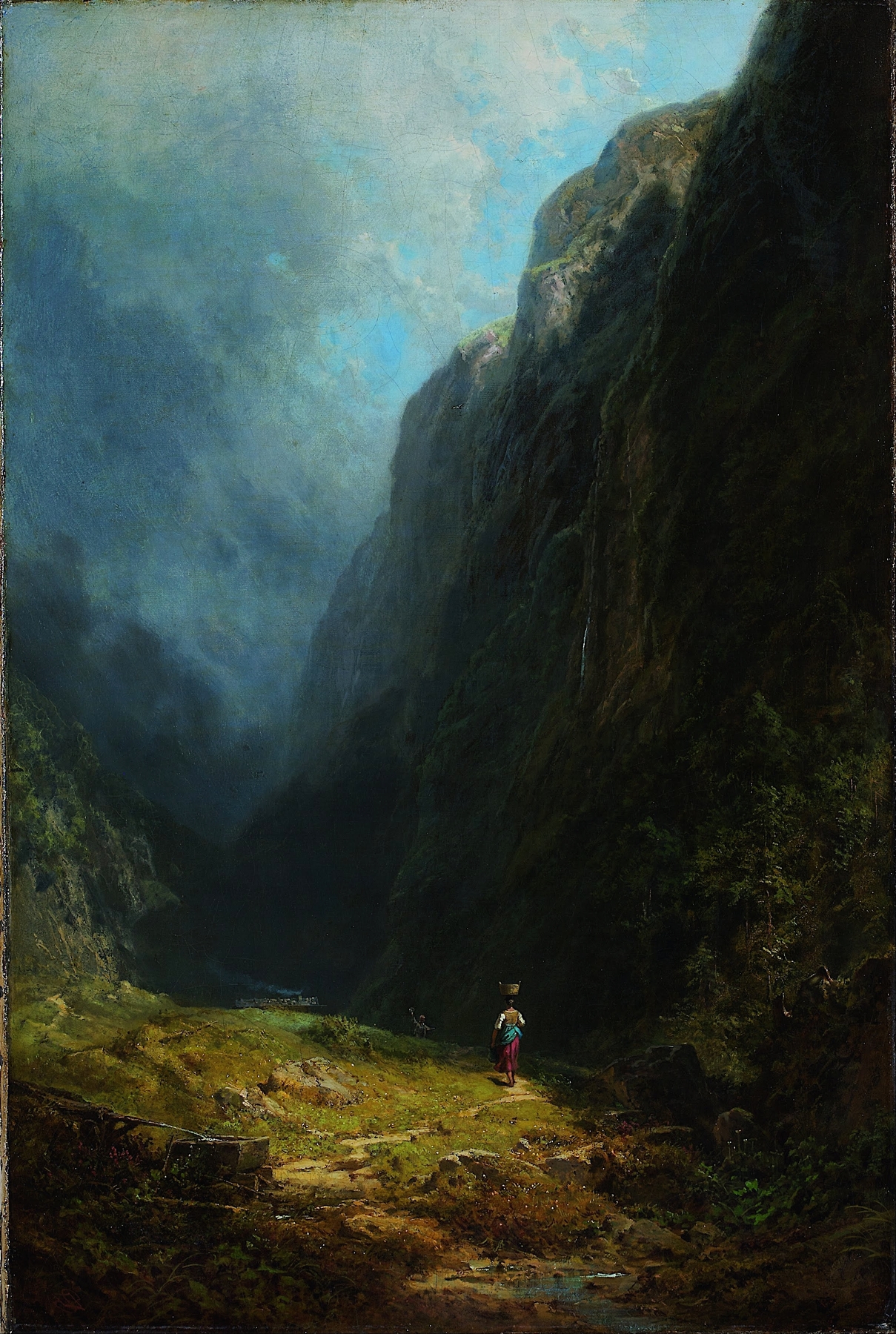
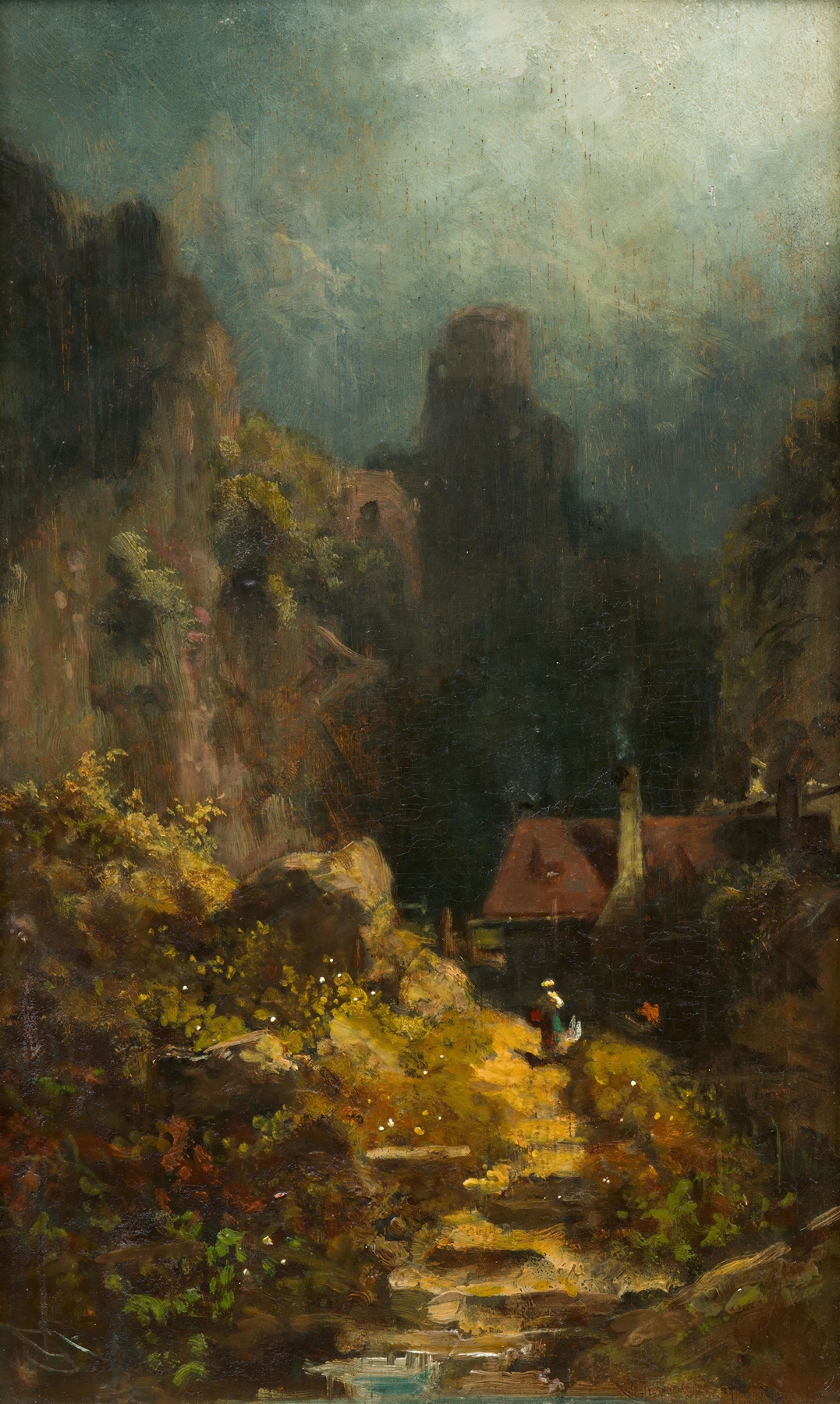
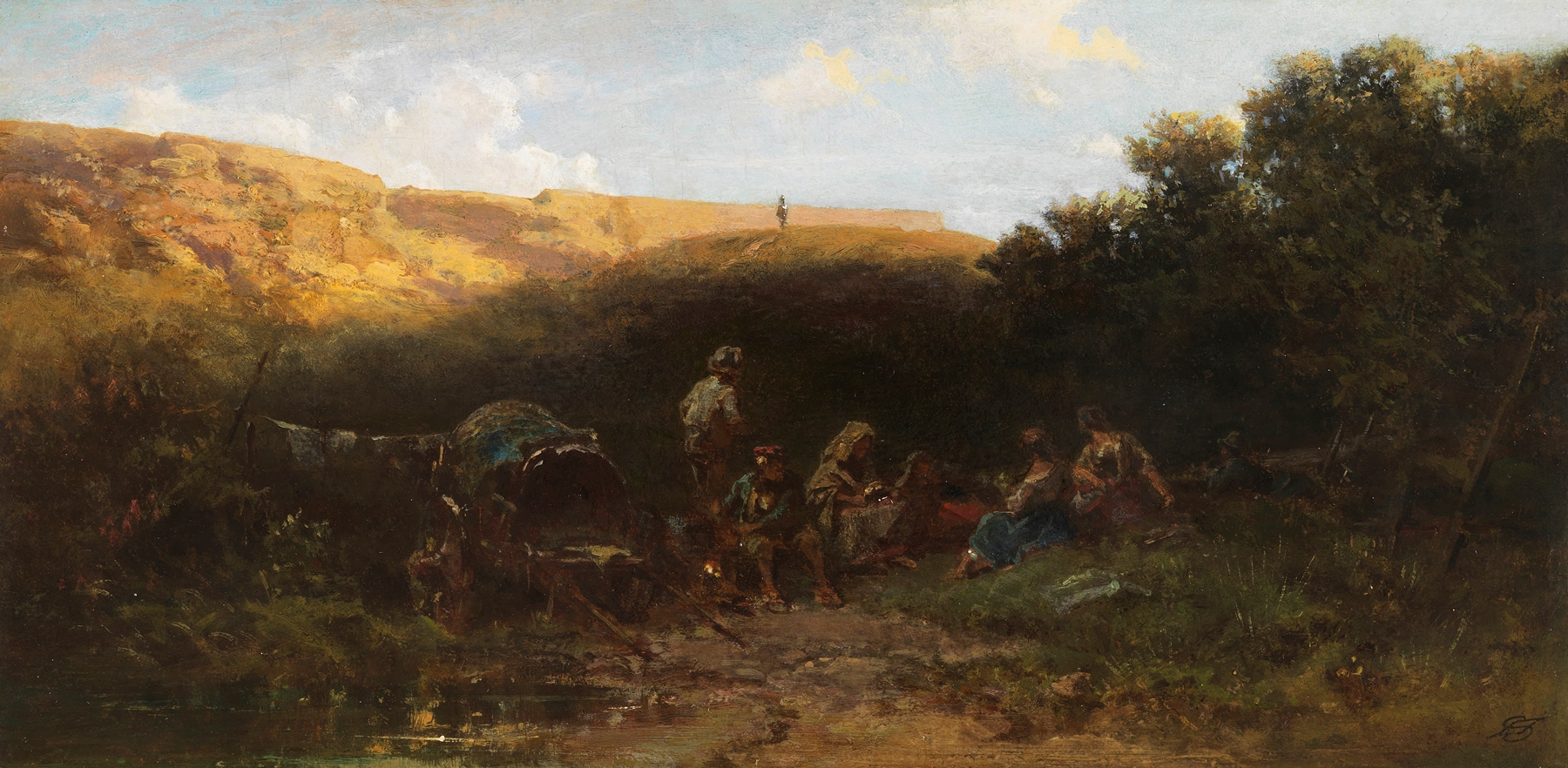
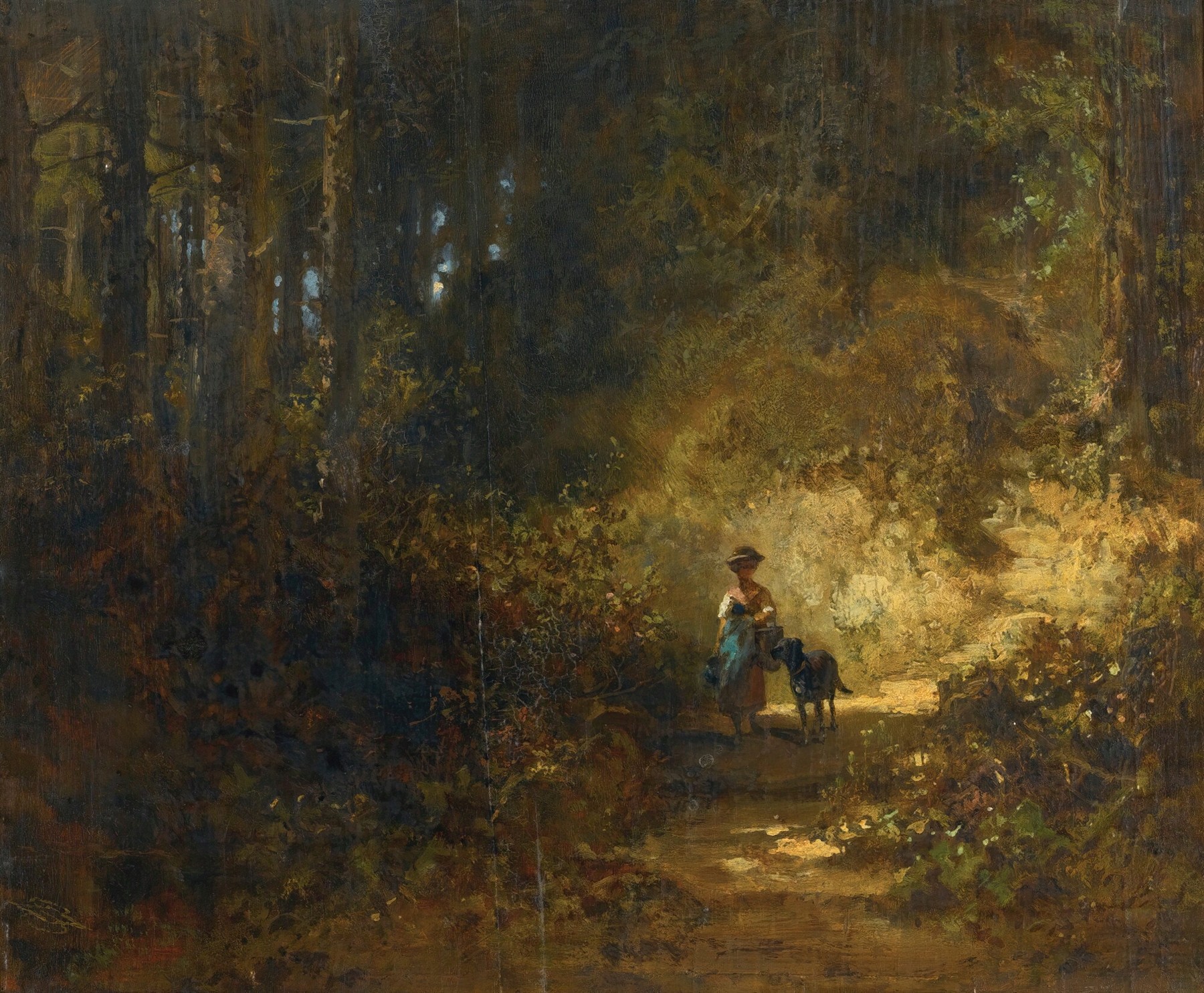
When did color learn to lie? The interplay between light and shadow reveals more than mere landscapes; it unveils the hidden narratives of the human experience. Look to the foreground, where gentle hills undulate beneath a soft sky, the colors a delicate blend of greens and blues. Notice how the light falls upon the grassy knolls, casting elongated shadows that stretch like whispering fingers across the ground. In the distance, a small cluster of trees punctuates the horizon, their silhouettes dark and firm against the ethereal backdrop.
The brushwork is meticulous, creating a sense of depth that invites the viewer to step into this tranquil world. Yet, as serene as it appears, the landscape holds an undercurrent of tension. The shadows are not merely absence of light; they evoke a sense of isolation and longing. The solitude of the scene contrasts sharply with the vibrancy of the colors, suggesting that beauty can mask deeper emotional truths.
The way the trees stand in stark contrast to the open fields speaks of barriers and boundaries, while the expansive sky overhead hints at possibilities that remain just out of reach. Carl Spitzweg painted this work in 1870, a period marked by shifting artistic movements and growing industrialization across Europe. Working primarily in Munich, he sought to capture the idyllic essence of rural life amid the tumult of modernity. The piece reflects not only his personal philosophy of simplicity and beauty but also the broader romantic sentiments of an era grappling with change, where the pastoral landscape became an escape from the encroaching challenges of urbanization.