Gezicht op de omgeving van Malang — History & Analysis
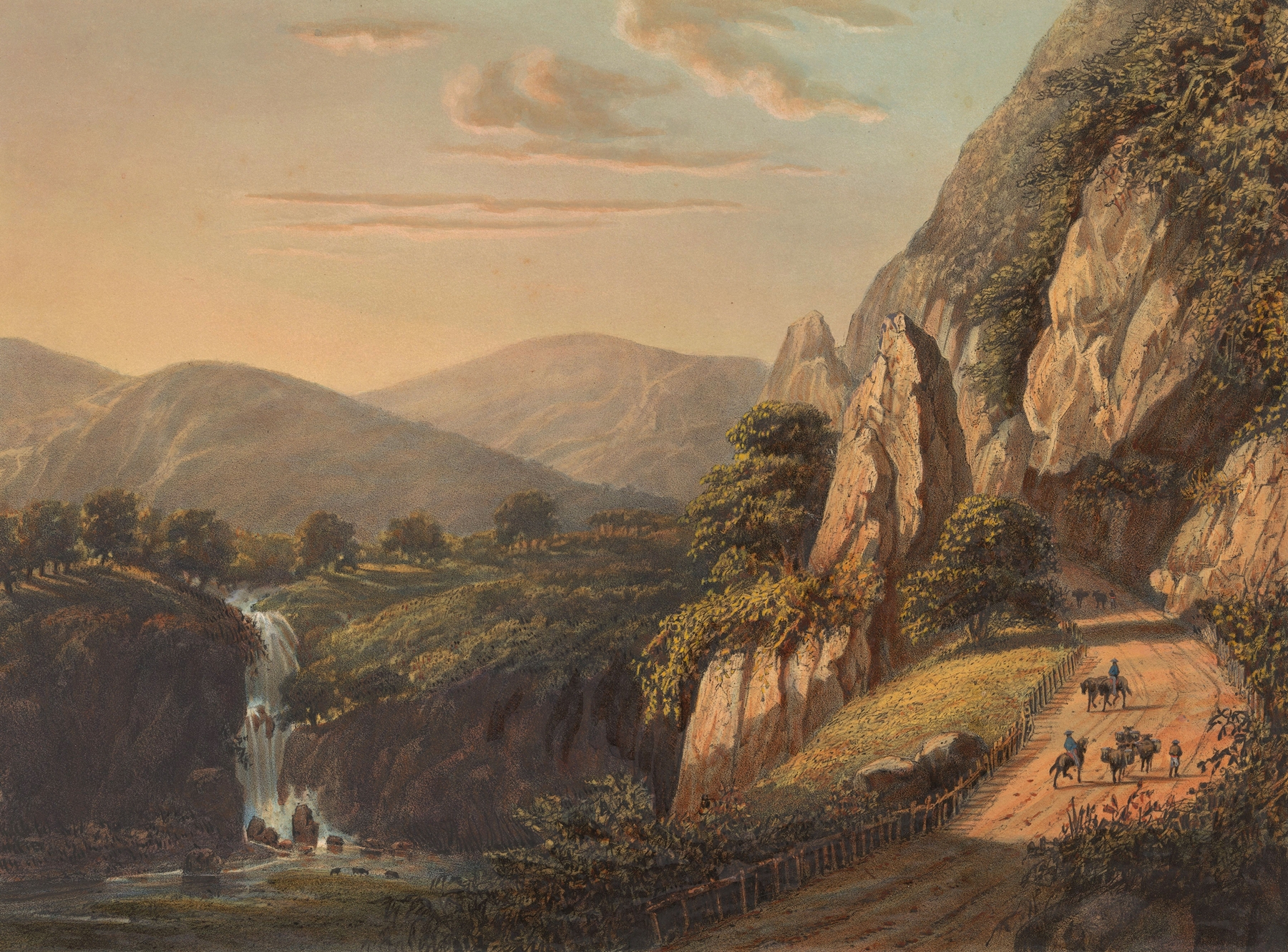
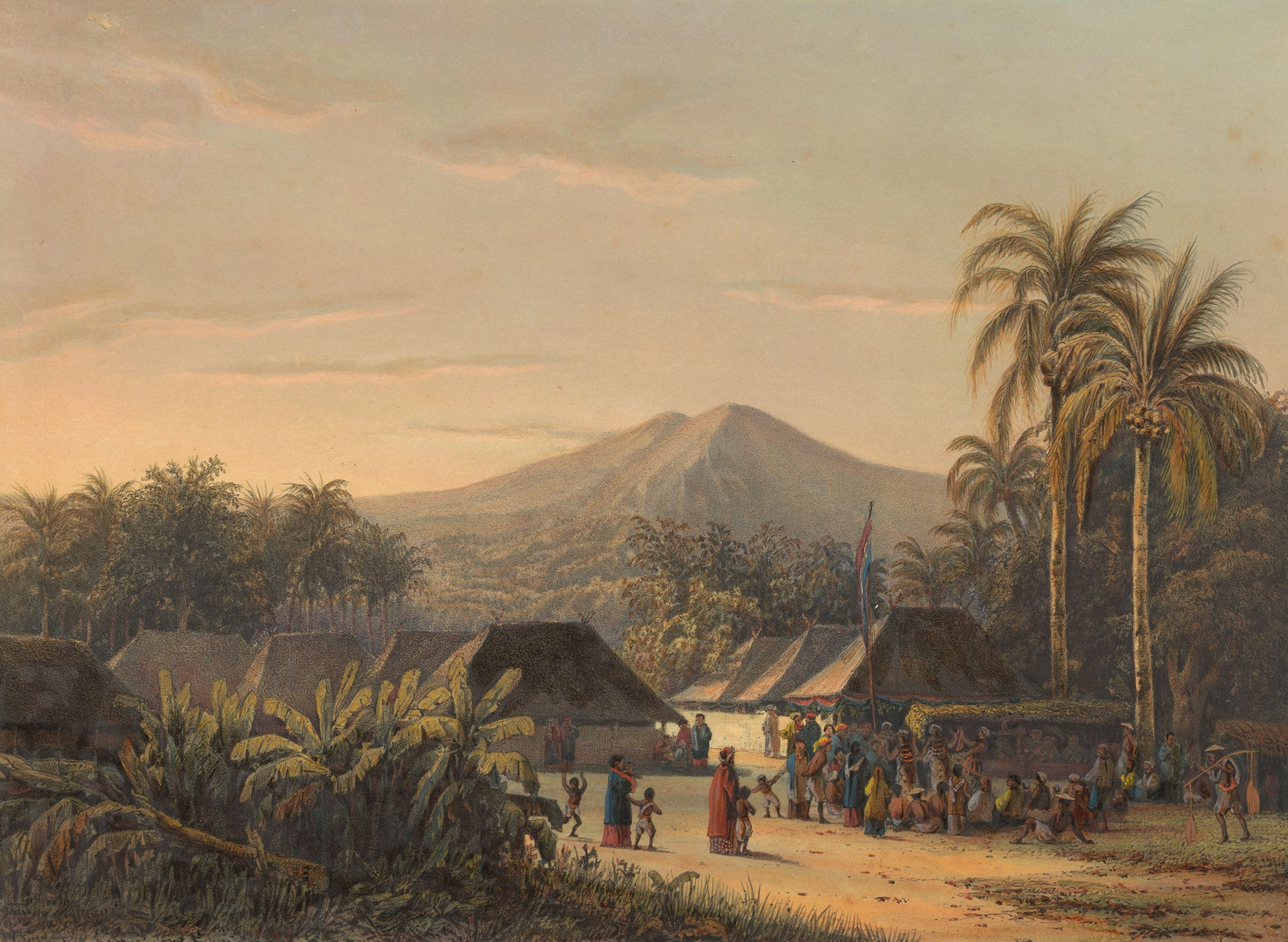
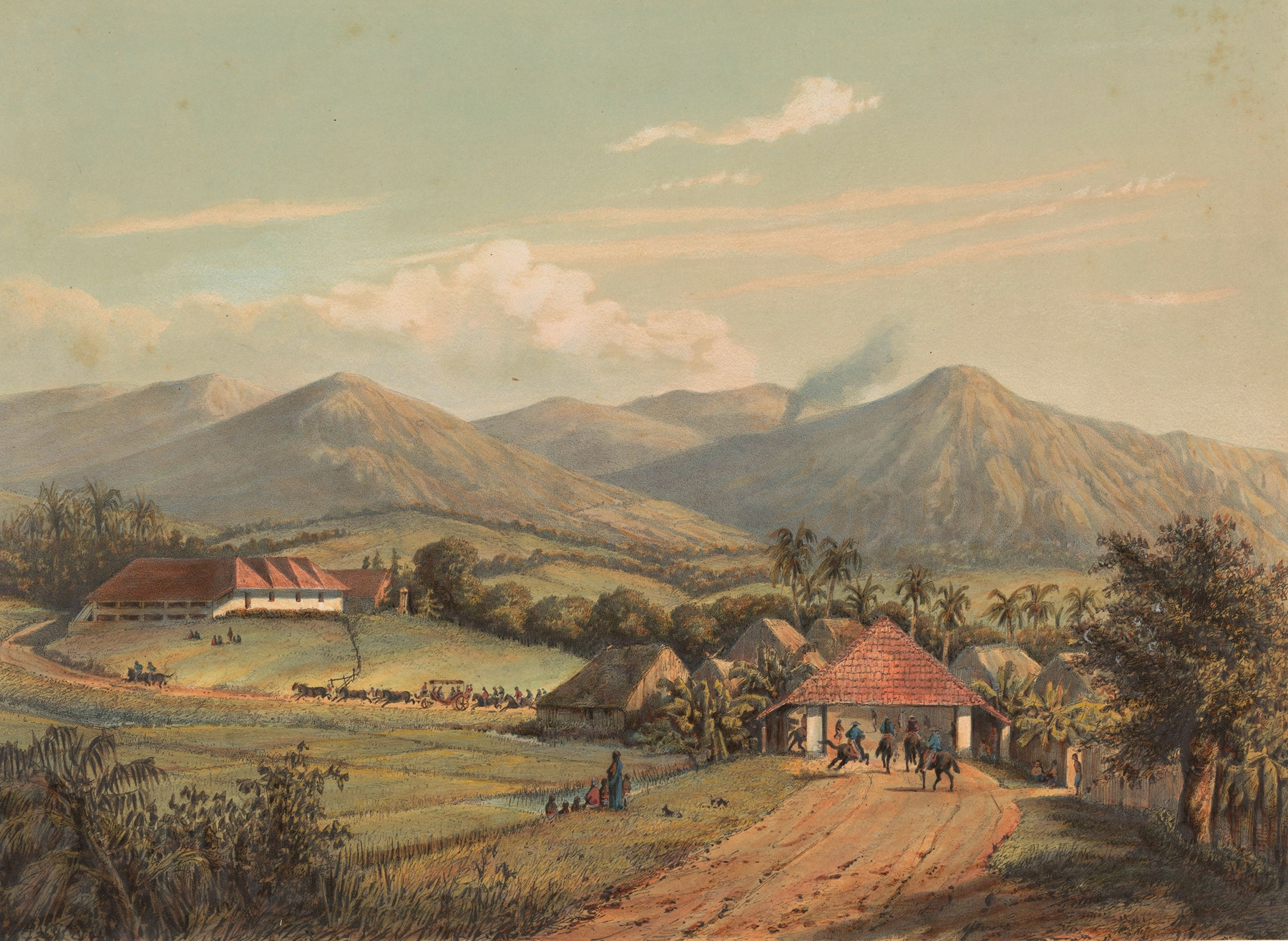
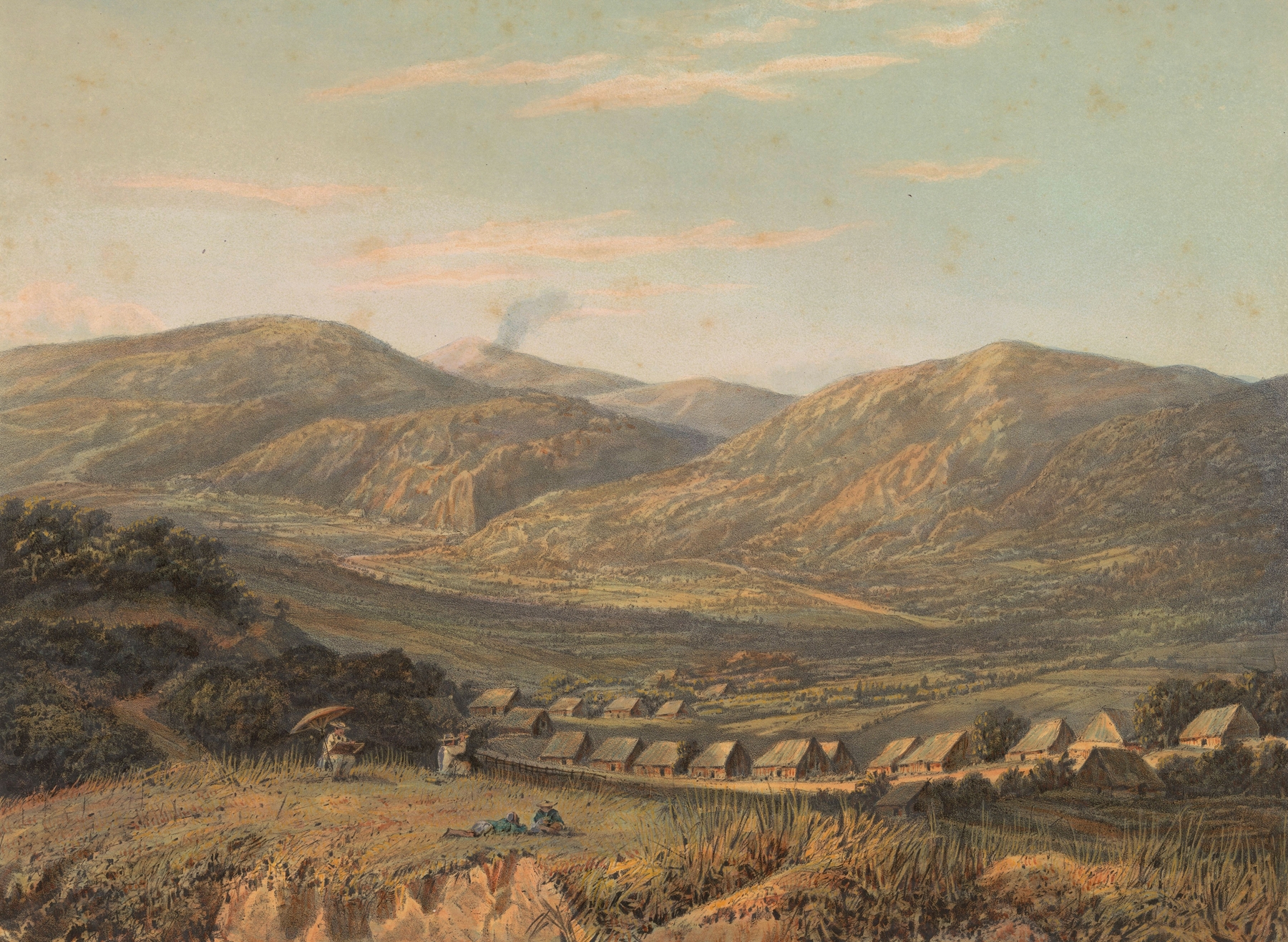
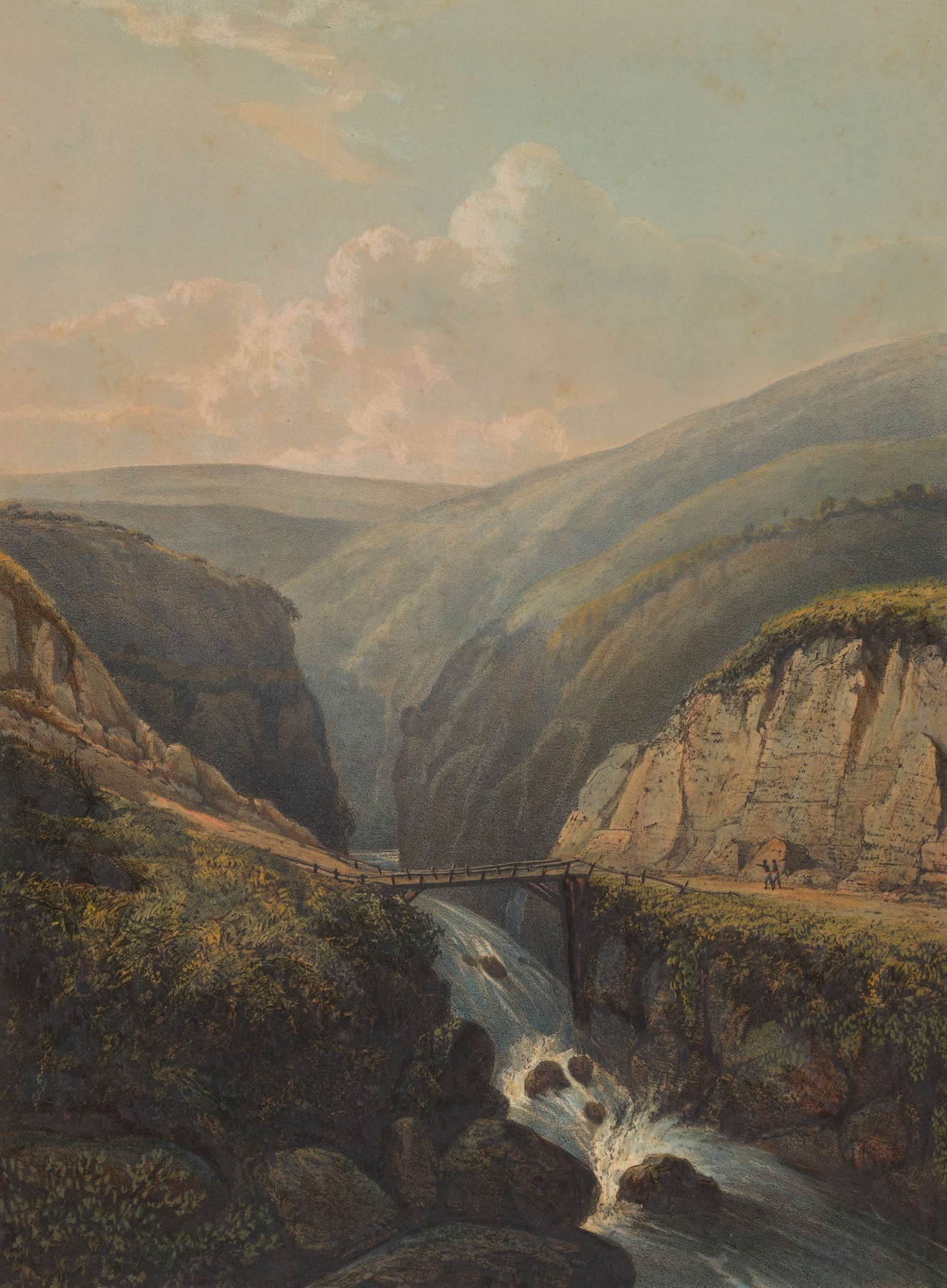
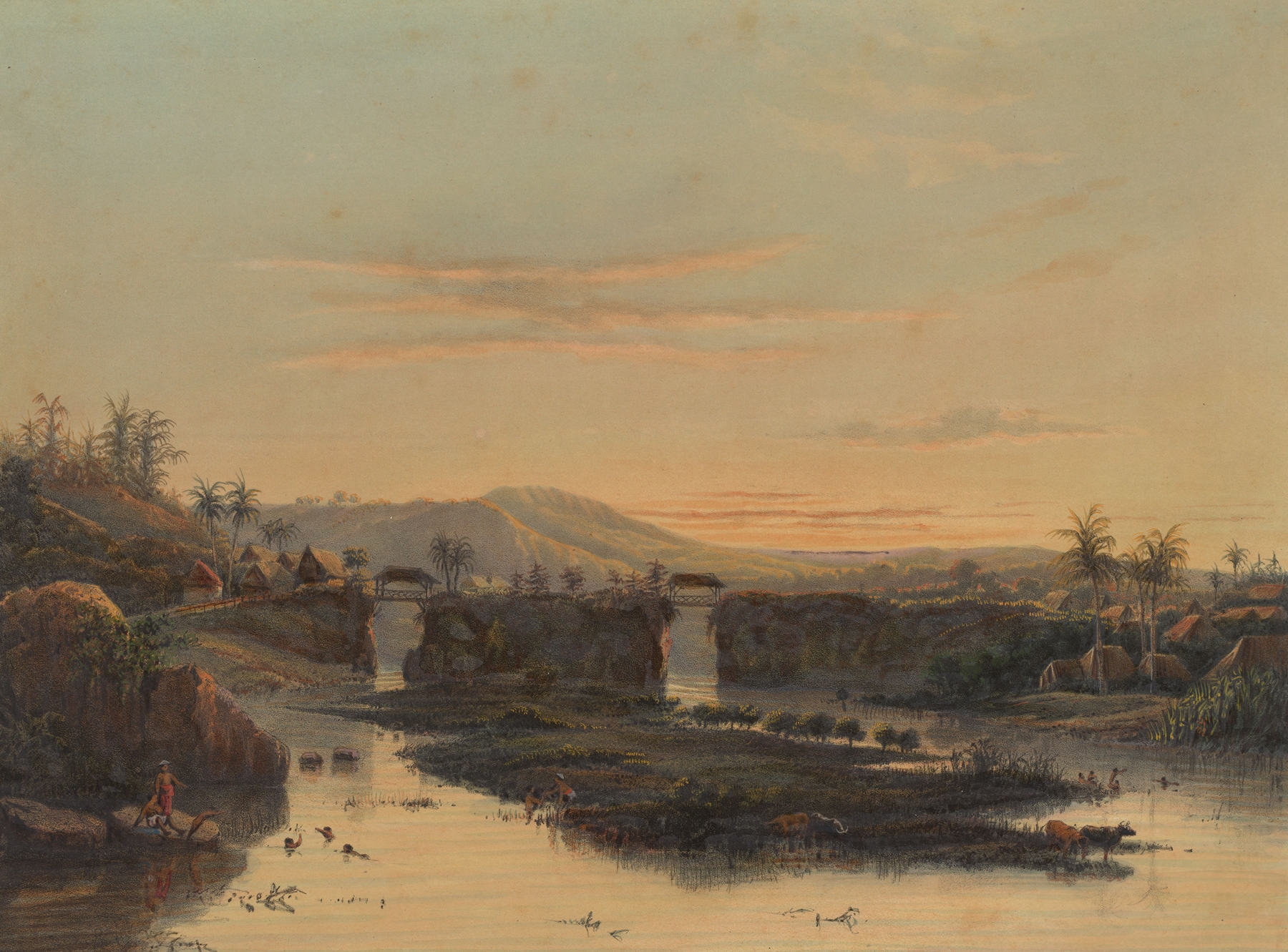
When did color learn to lie? It is a question that lingers in the air as one gazes upon the lush landscape depicted in this vibrant 1869 painting. The hues of greens and blues blend seamlessly, whispering tales of a world both real and imagined, where hope dances between the strokes. Look closely at the foreground, where the deep emerald foliage unfurls like a living tapestry.
The artist employs a delicate touch, layering pigments to create depth and texture that almost invites the viewer to reach out and feel the life within the leaves. Notice how the light filters through the trees, casting soft shadows that play on the rich soil, suggesting a serene moment frozen in time. Yet, amid this idyllic scene lies a juxtaposition of growth and decay. The vibrant flora stands resilient against a backdrop of distant mountains that loom like silent guardians, their muted tones hinting at a narrative of challenges faced.
The interplay of light and shadow underscores the fragility of hope, emphasizing that beauty often exists alongside struggle, a reminder that even in paradise, the specter of adversity remains. In 1869, Johan Conrad Greive painted this landscape during a time of exploration and discovery in the realm of nature. Living in the Netherlands, he was part of a broader movement that sought to capture the essence of the world around them through impressionistic techniques. This yearning for connection with the landscape reflects the artist's personal quest for meaning amid the turbulent changes of the era, both in his life and the broader context of art.