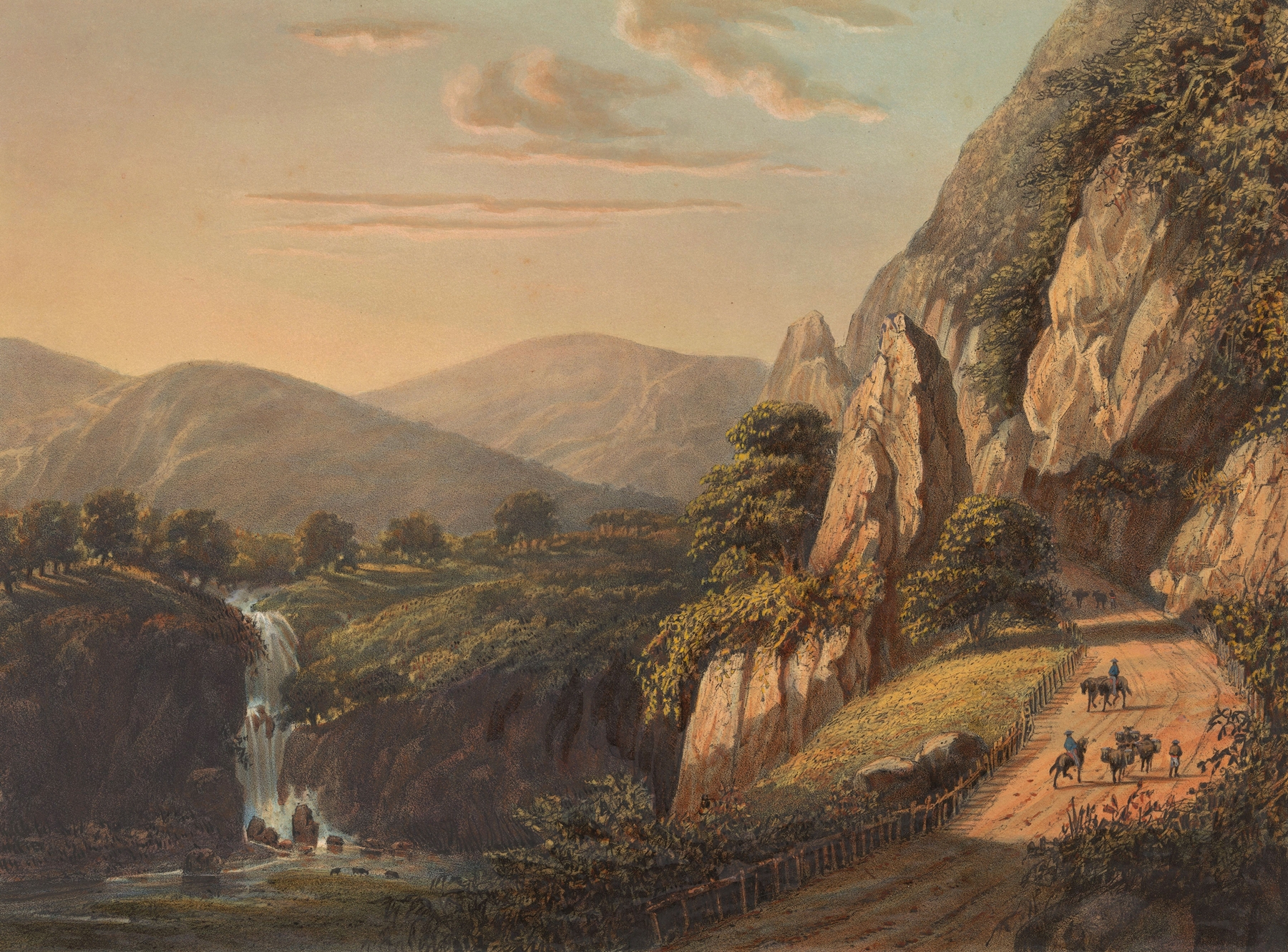
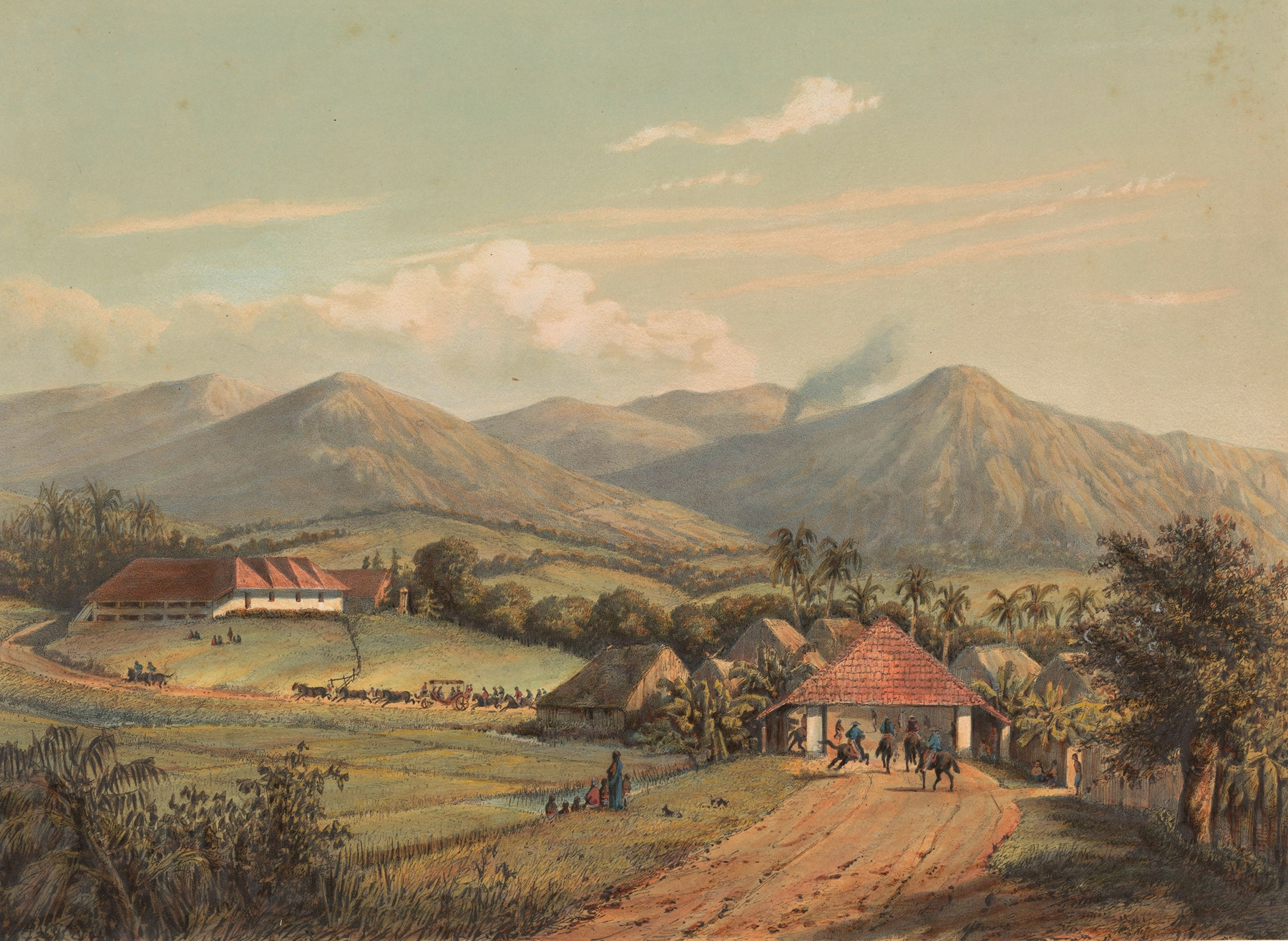
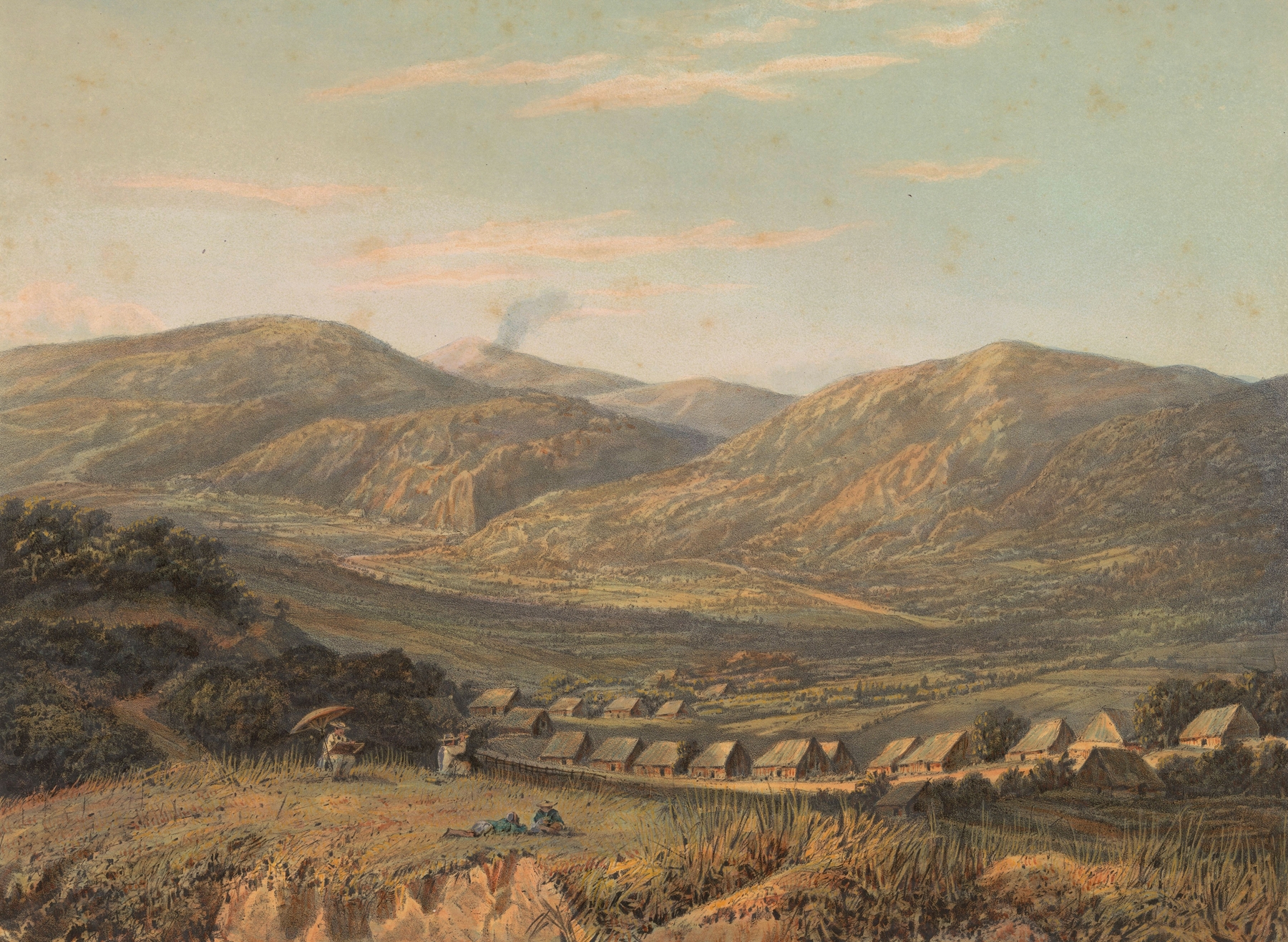
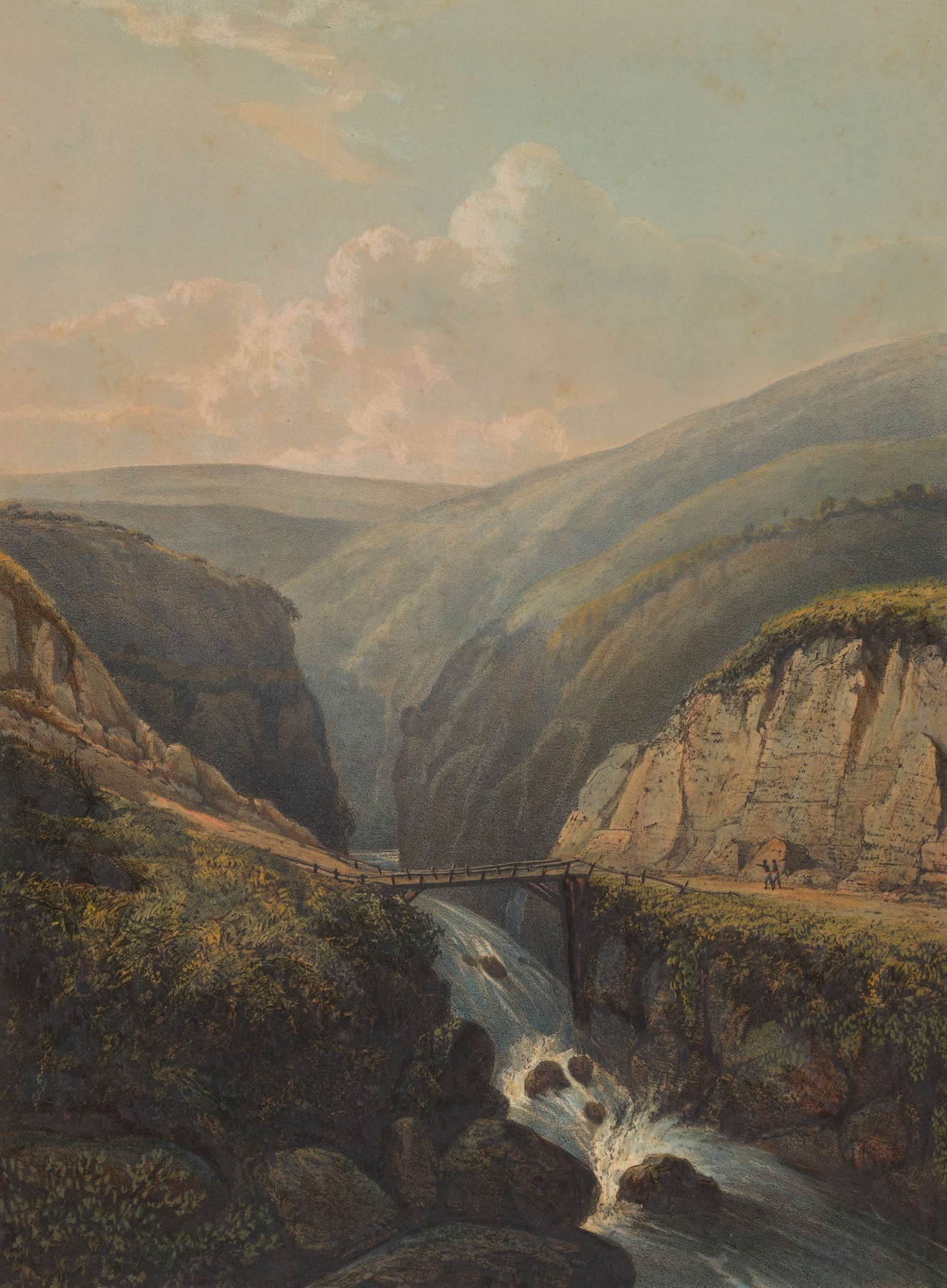
Gezicht op een weg naar de vallei van Salak op Java Weg van buitenzorg naar de vallei van de Salak — History & Analysis
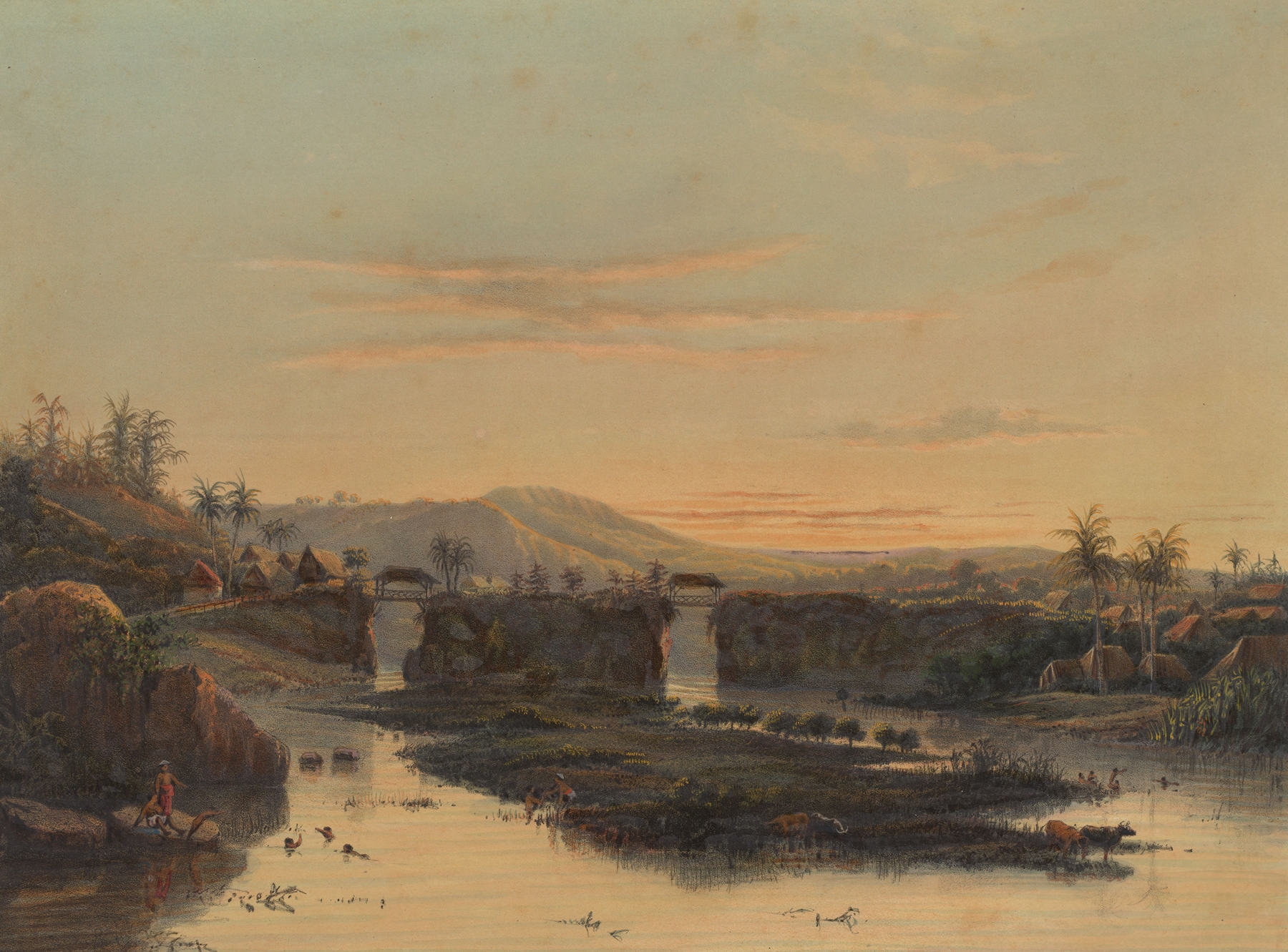
“Under the brush, chaos becomes grace.” In the heart of nature, divinity whispers through every stroke, transforming the mundane into the sublime. Look to the foreground where the winding path cuts through dense foliage, inviting the eye to journey deeper into the lush landscape. The artist employs a harmonious palette of greens and browns, reminiscent of the Earth’s embrace, while soft, dappled sunlight filters through the trees. Notice how the highlights catch the leaves, creating a luminescent quality that breathes life into the scene.
The gentle curves of the road lead us to the distant valley, a promise of exploration and serenity. Yet, hidden within this picturesque tranquility lies the tension between nature’s untouched beauty and the encroaching presence of civilization. The path suggests human ambition, a desire to conquer the wild, while the towering trees stand resolute, embodying the divine patience of nature. Amidst this contrast, the delicate balance of light and shadow reflects the duality of existence: the harmony of life and the inevitability of change.
In 1869, Johan Conrad Greive painted this landscape during a time marked by the colonial allure of the East Indies. Living in a period when artists sought to capture the exotic beauty of foreign lands, Greive was influenced by Romantic ideals that celebrated nature’s grandeur. The piece reflects not only his personal journey through Java but also the broader artistic quest for understanding the relationship between humanity and the divine essence of the natural world.