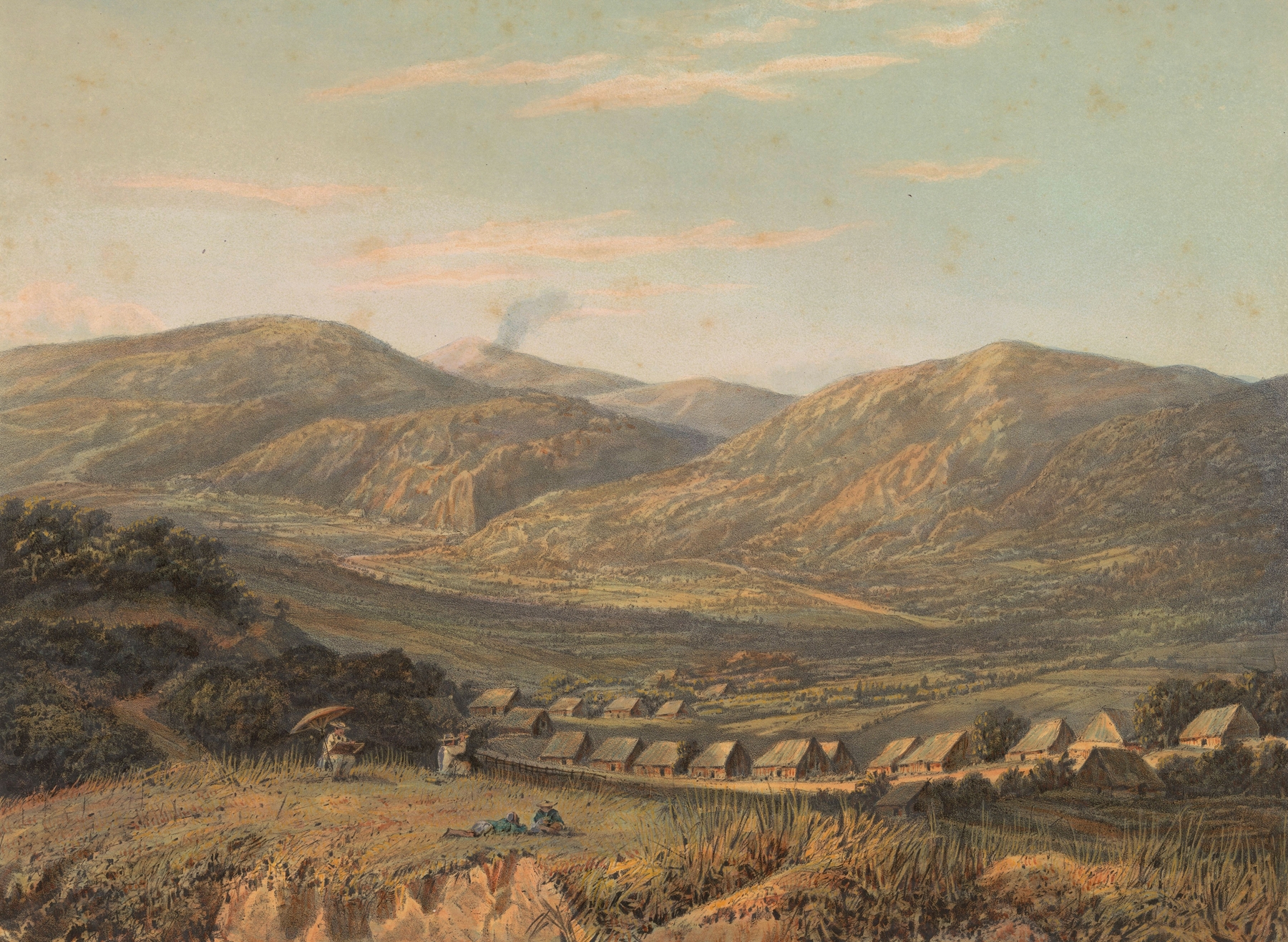
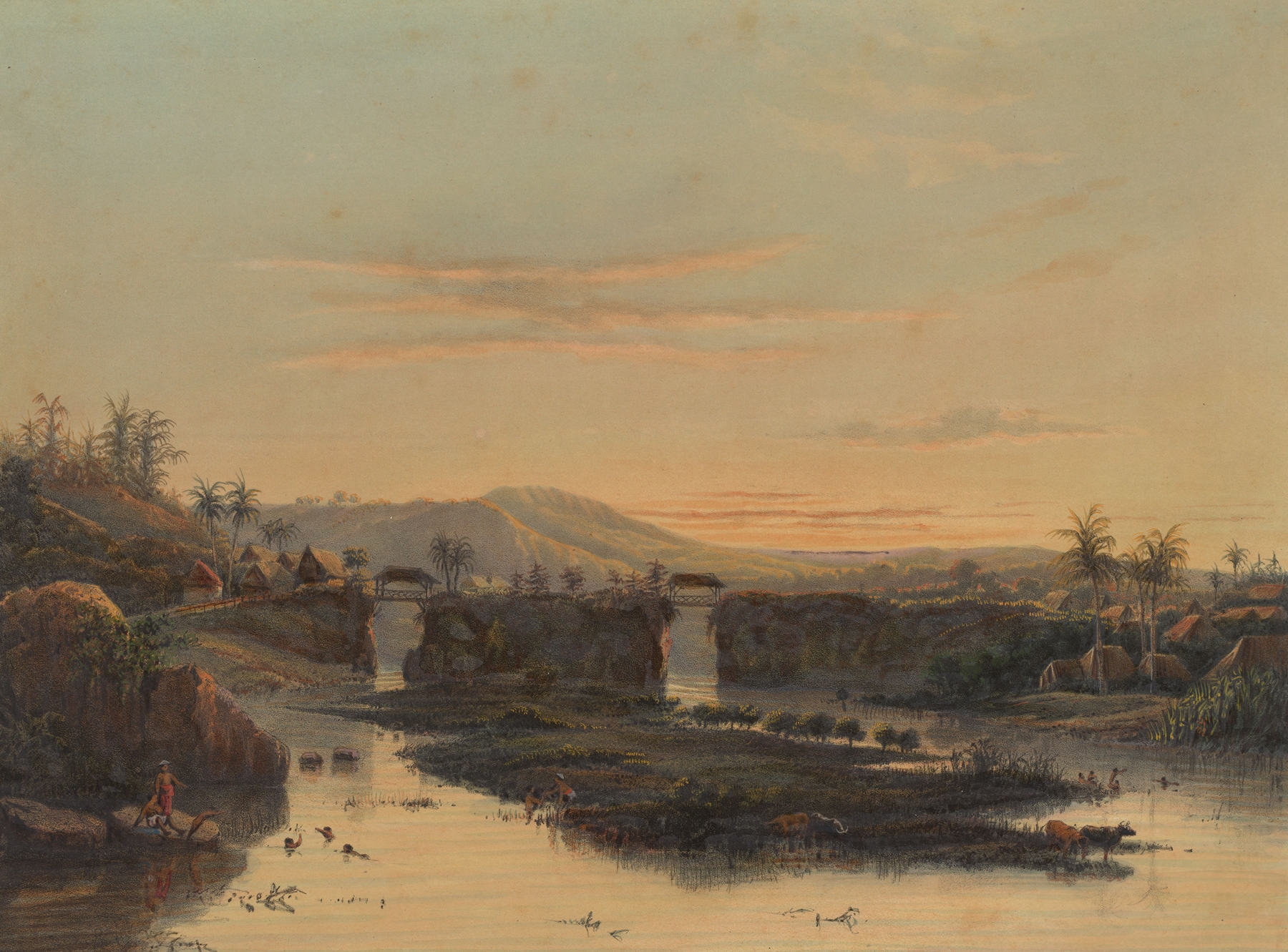
Gezicht op gebergte op Java Gezicht op het Kawische gebergte en op de tabaks onderneming — History & Analysis
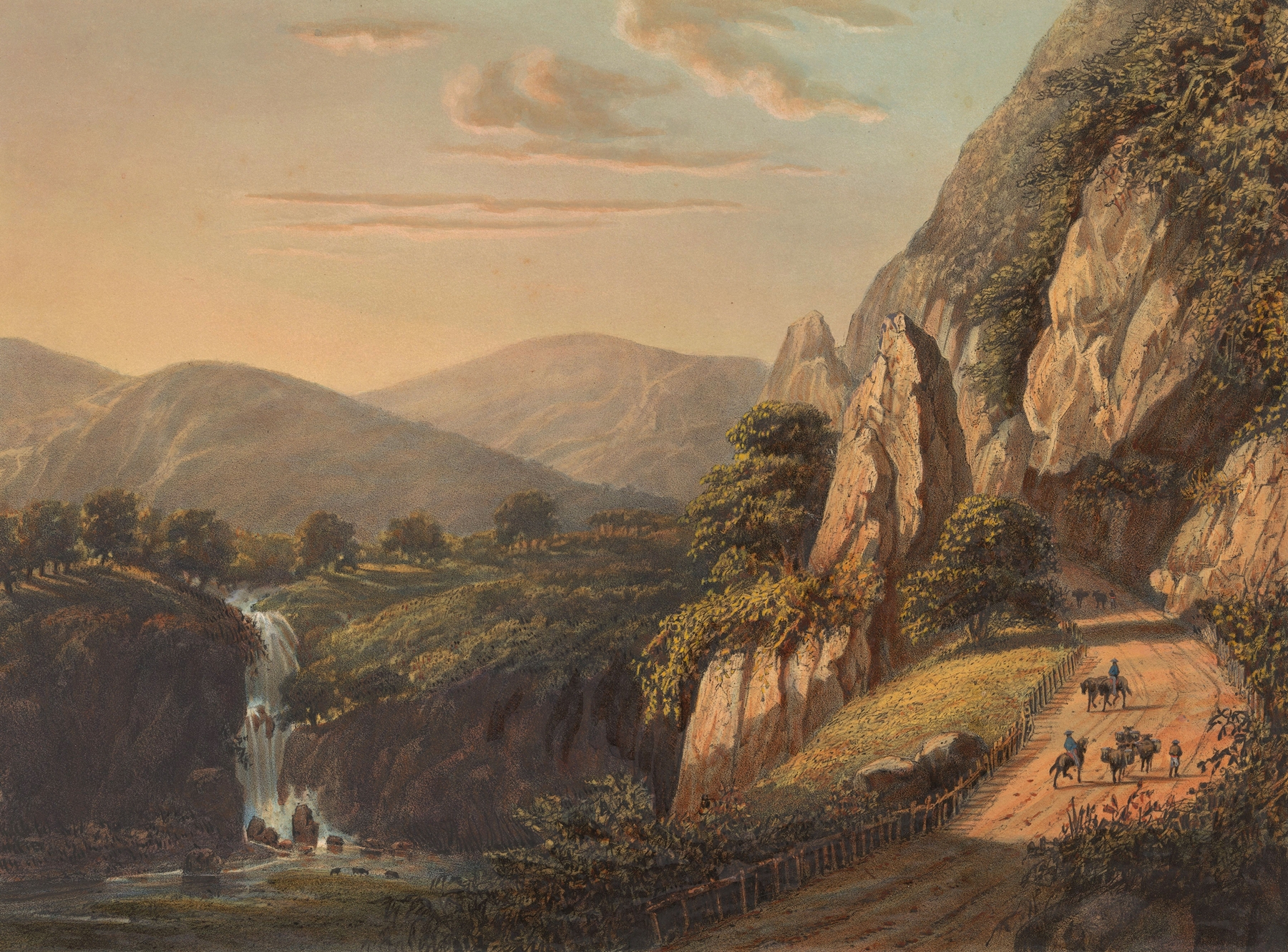
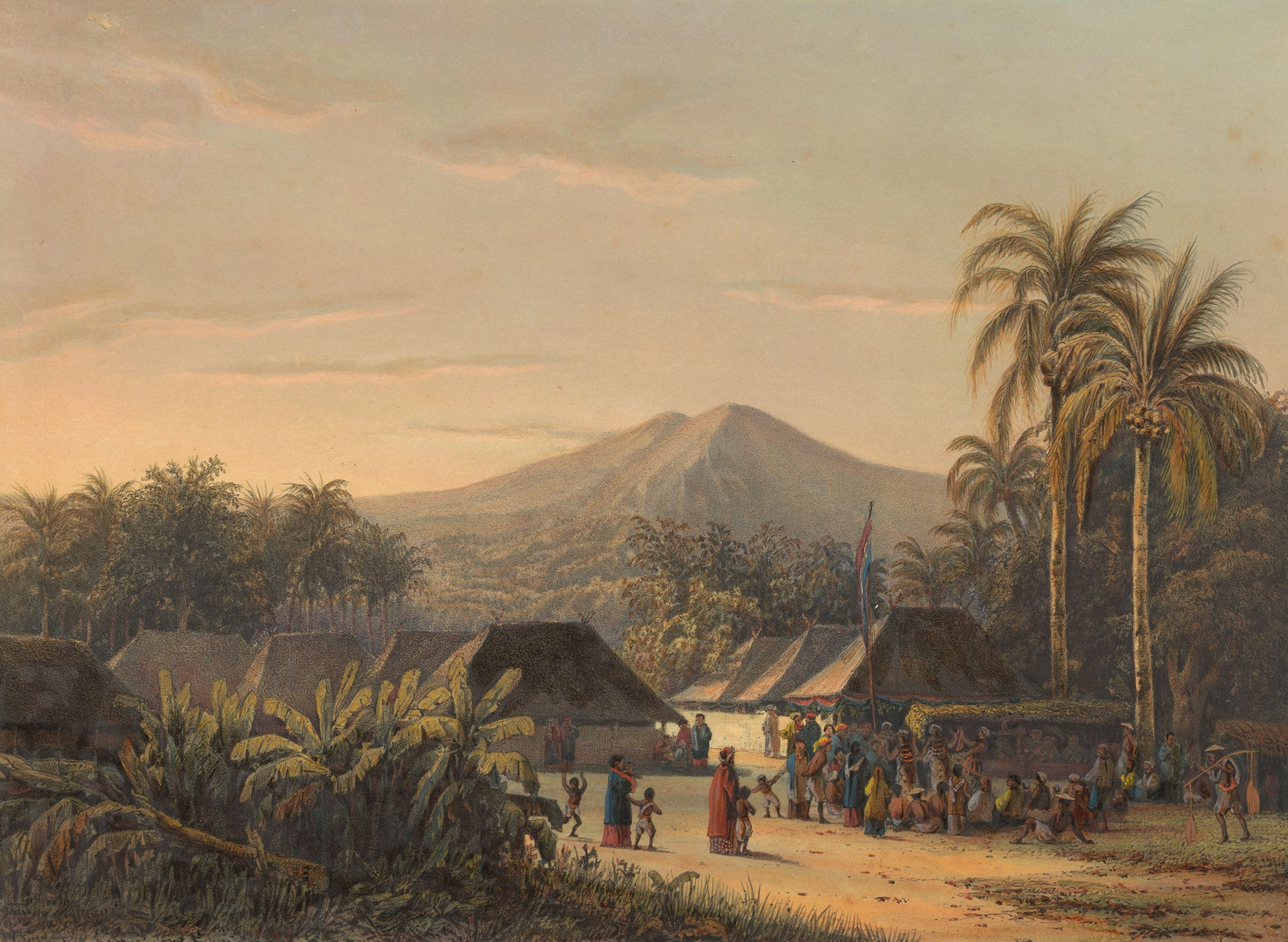
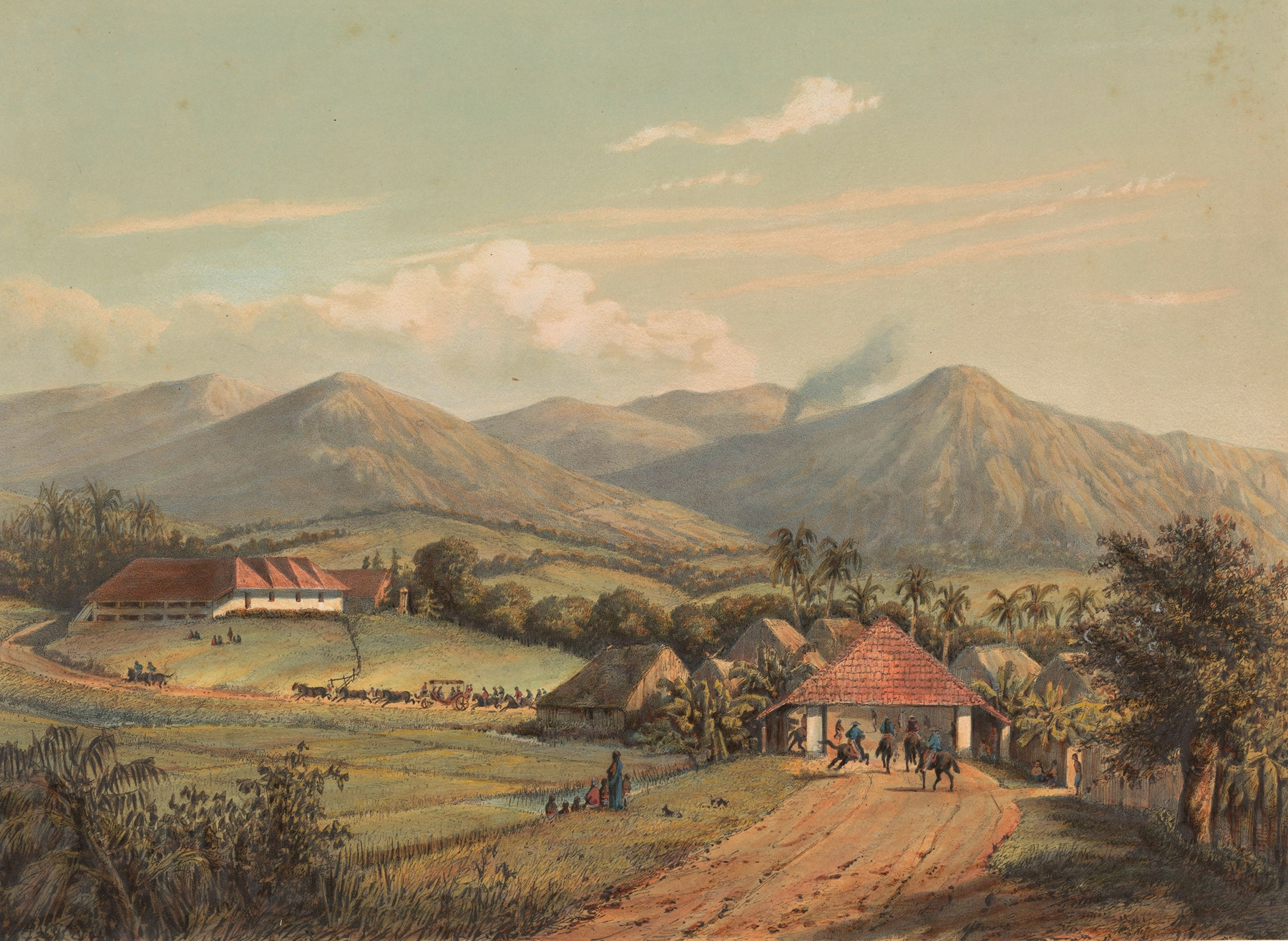
What secret hides in the quiet of the canvas? Beneath the serene beauty of nature, whispers of change linger in the air, evoking a tension between tranquility and the impending revolution. Focus on the soft hues of ochre and green that rise from the base to the peaks in Gezicht op gebergte op Java. The eye is drawn first to the majestic Kawische mountains, their rugged forms softly illuminated by a gentle light that hints at the dawn of a new era. Notice how the foreground is punctuated by the delicate details of the tobacco plantation, its rows meticulously arranged, contrasting sharply with the wild, untamed beauty of the mountains beyond.
This careful composition speaks to the relationship between cultivation and nature—a tension that reflects the socio-political landscape of the time. Within the layers of paint lies a narrative of duality: the peacefulness of the mountainous horizon juxtaposed with the structured lines of human enterprise below. Greive's choice to depict this harmonious coexistence subtly suggests an underlying tension—the quiet before a storm that speaks to the broader context of colonialism. The plantation represents both prosperity and exploitation, hinting at the struggles that accompany such growth and prosperity.
The contrasts in light and shadow echo the complexities of life, delineating moments of peace intertwined with the potential for upheaval. In 1869, Johan Conrad Greive was immersed in the beauty of the Indonesian landscape while grappling with the broader implications of colonial rule. Living in Java, he captured this particular moment when European influence was deeply entwined with the natural world, as well as with the lives of those who worked the land. His work reflects not only the aesthetic values of the period but also the deeper currents of change that would soon reshape the region and the art world.