Hudson River Valley — History & Analysis
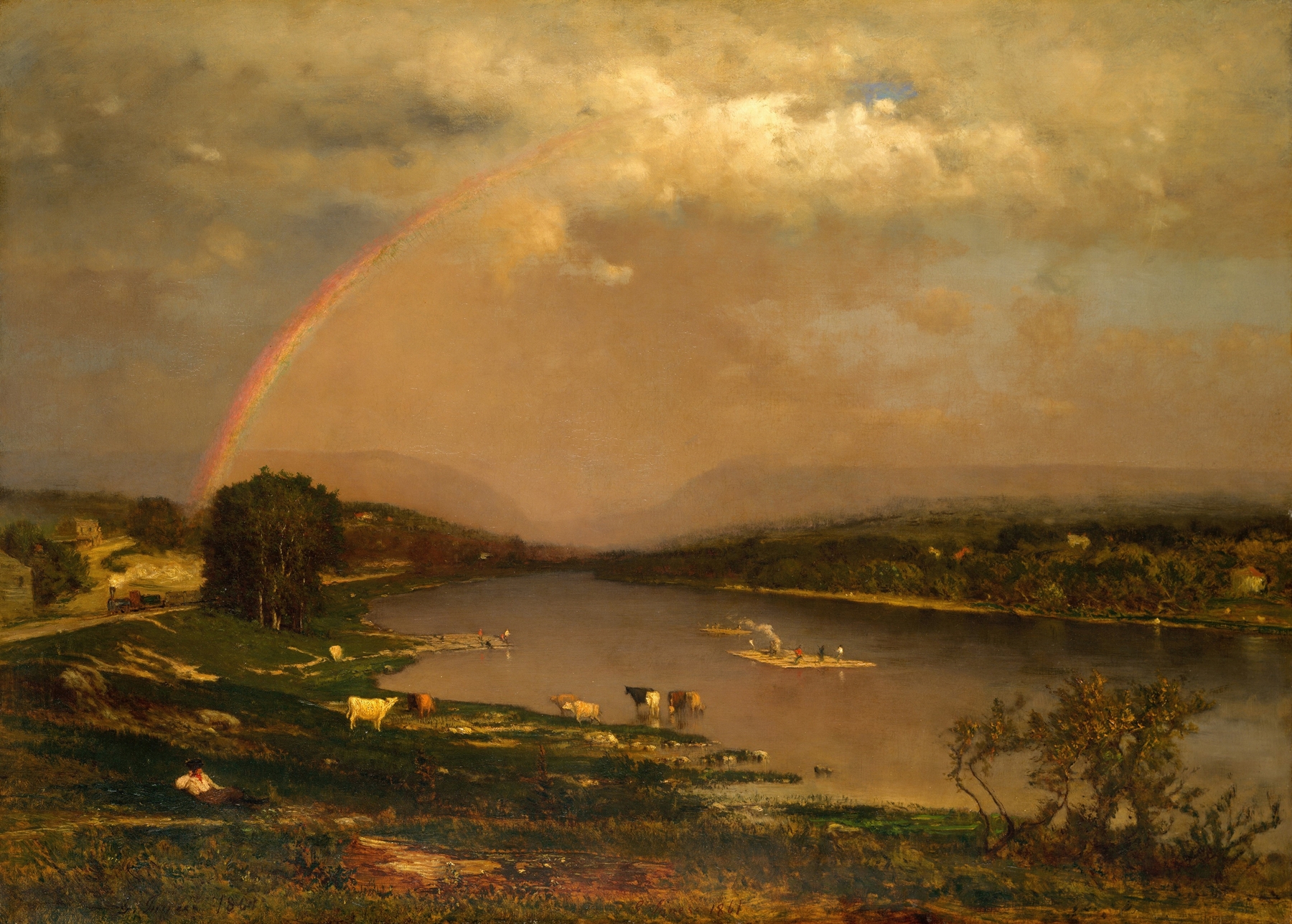
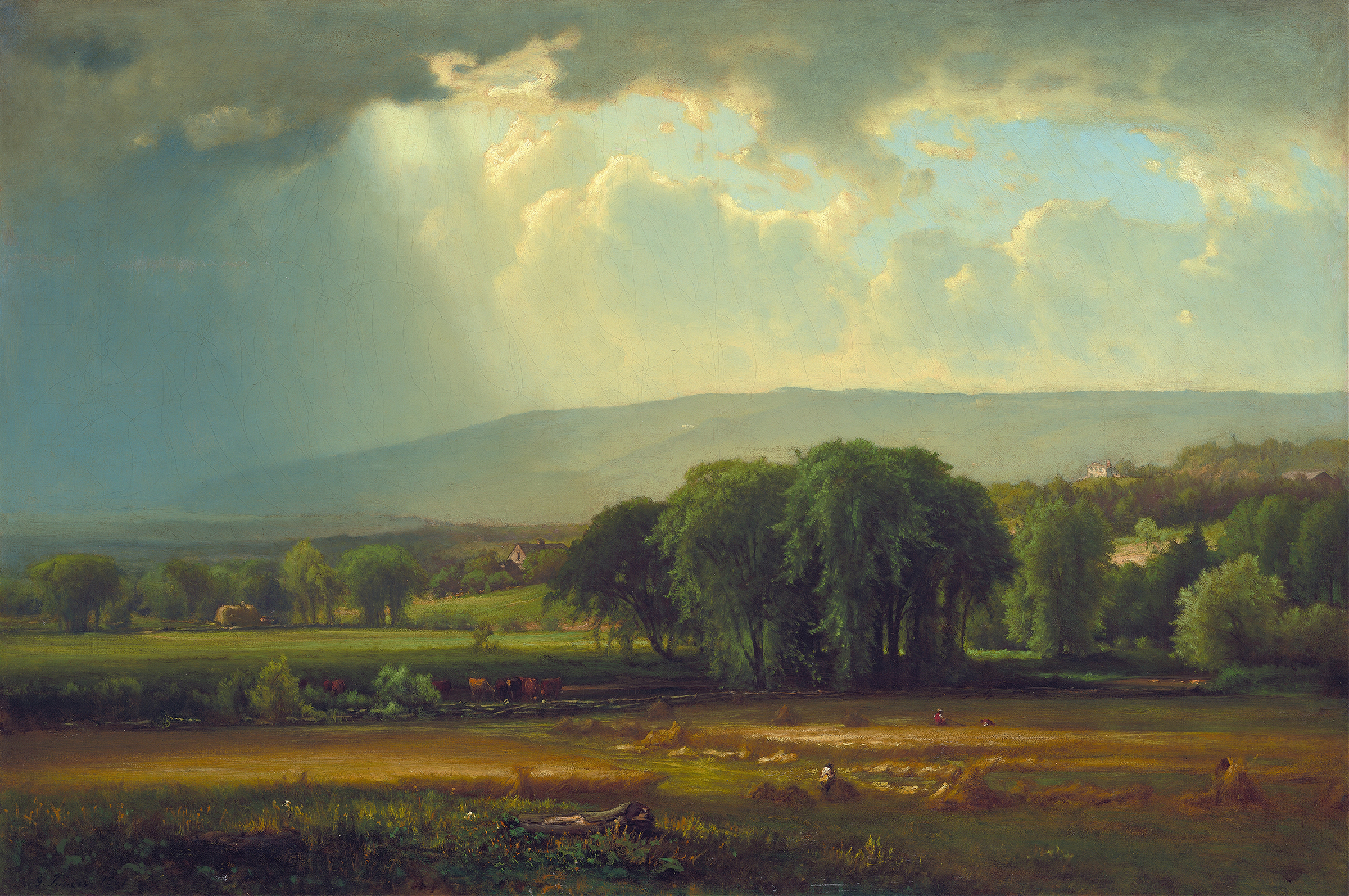
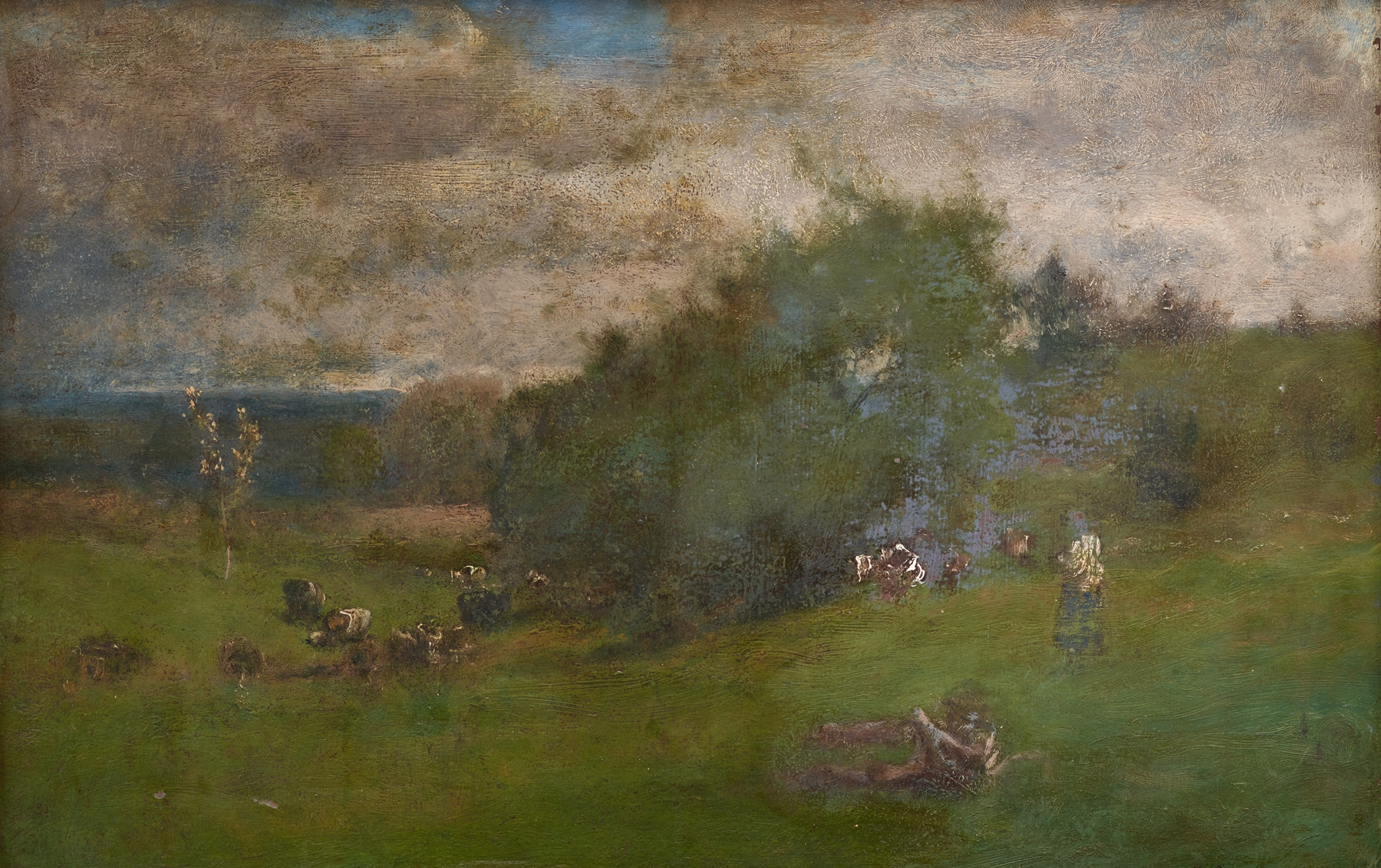
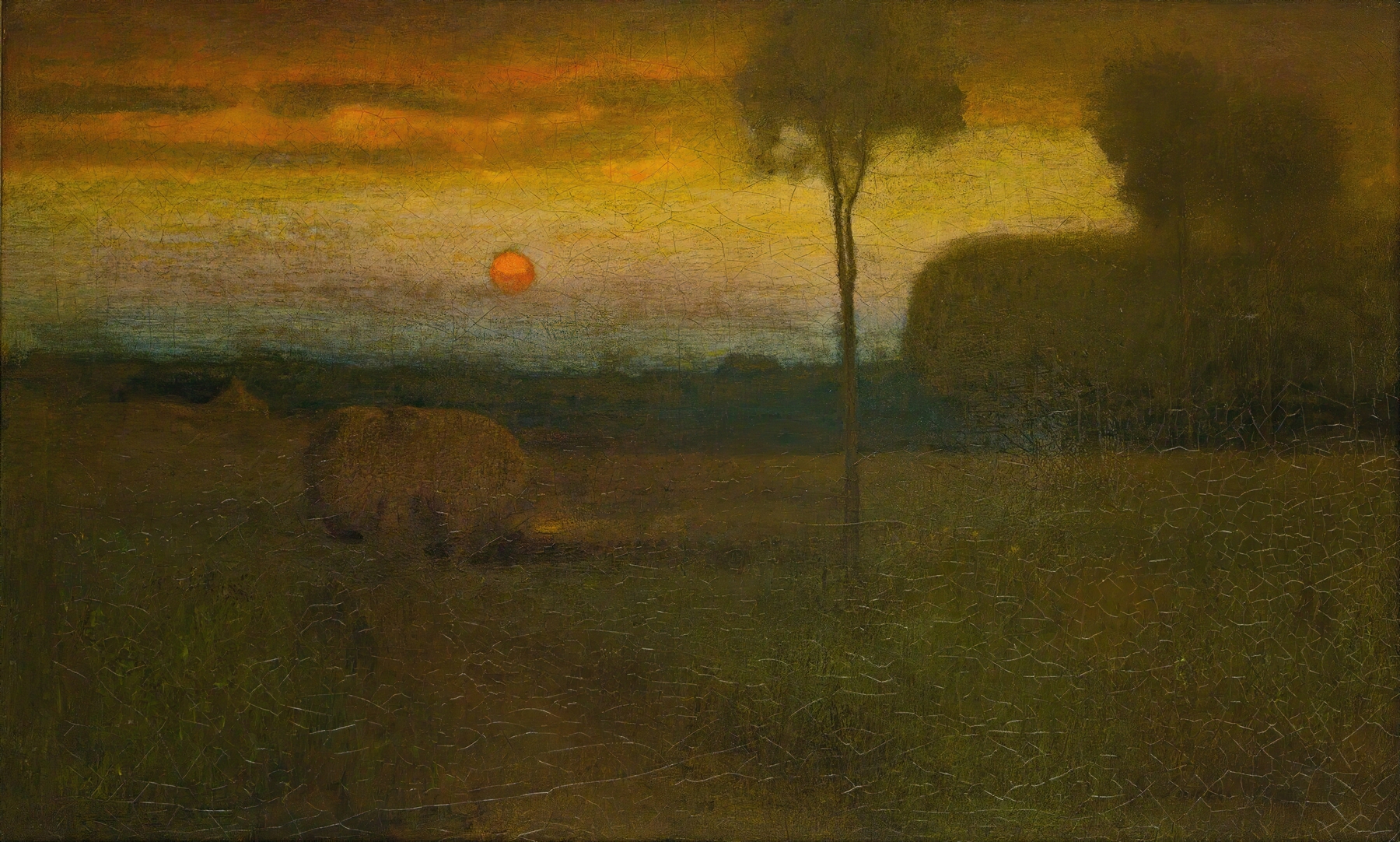
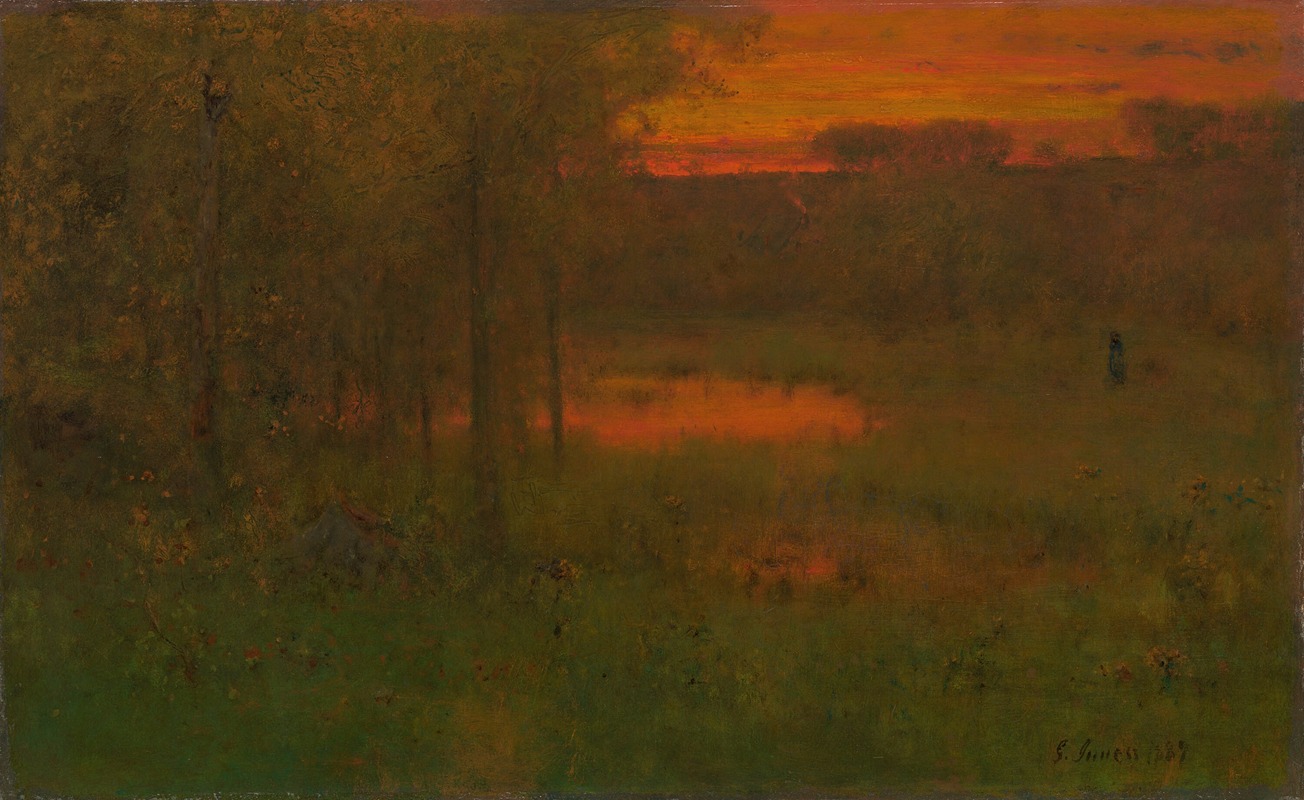
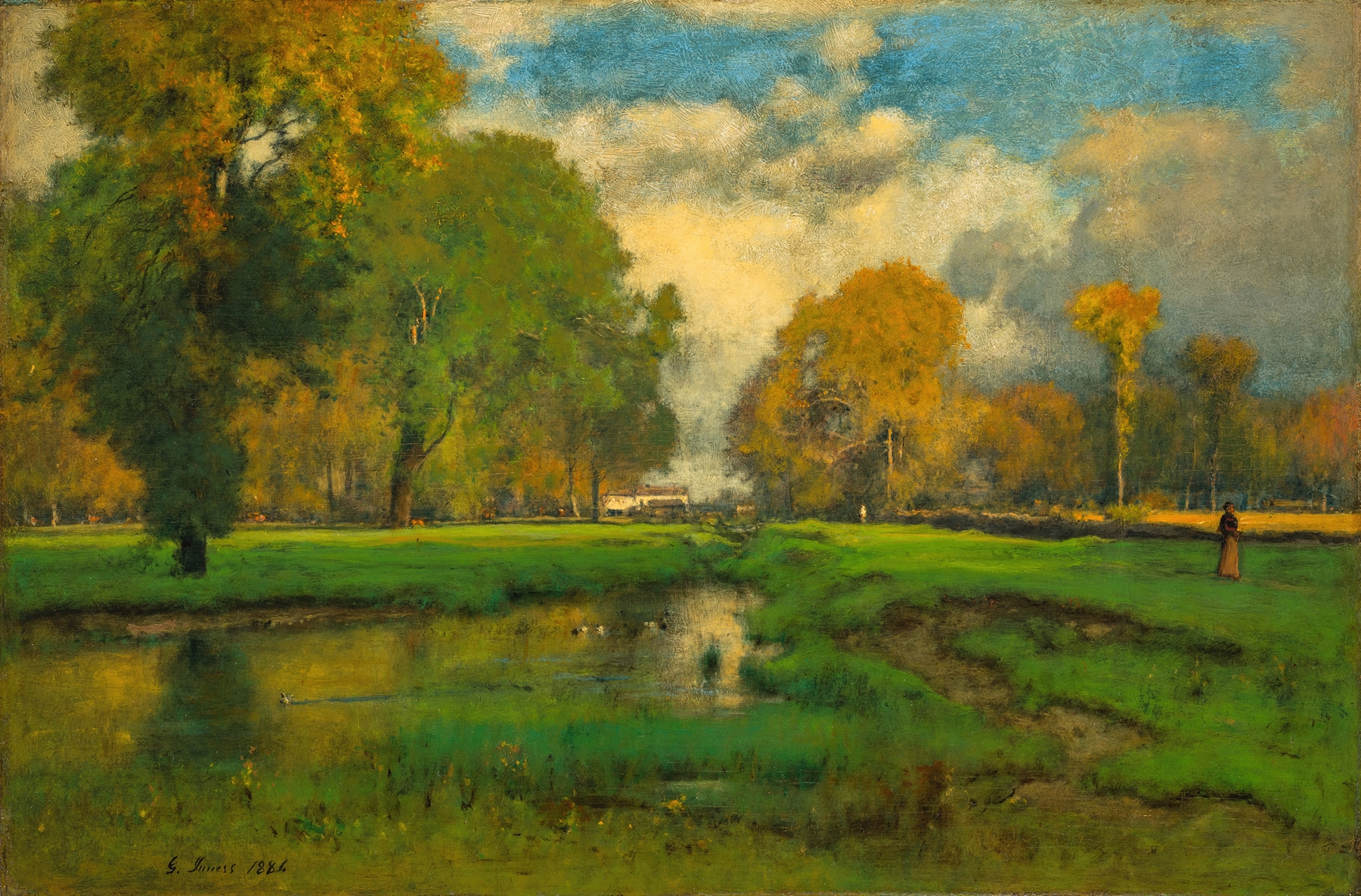
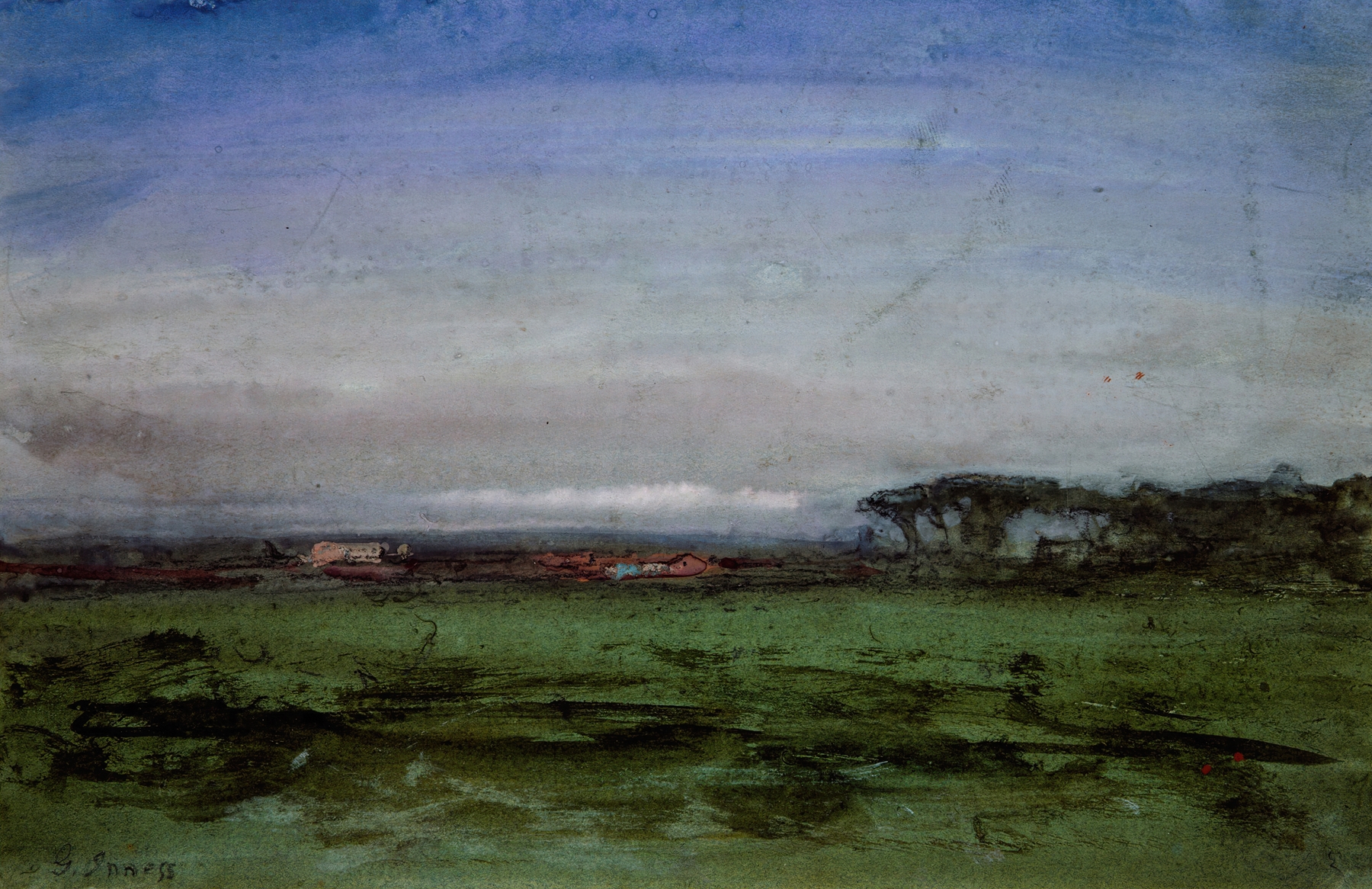
Can paint confess what words never could? In the serene expanse of Hudson River Valley, the artist captures a moment where nature's whispers speak louder than any dialogue. Look to the left at the soft undulations of green hills, rolling gently under a dusk-kissed sky. The hues dance from deep emerald to soft pastels, leading the eye across the canvas and inviting a deep breath of fresh air. Notice how the warm light spills across the water, creating a shimmering reflection that mirrors not just the landscape but the emotional tranquility that envelops it.
The careful blending of colors and the brushwork reveal Inness’s mastery in conveying the sublime nuances of light and atmosphere. Delve deeper into the contrasts of this piece, where serenity meets a subtle restlessness. The calm water reflects the sky's beauty, yet the clouds, thick and looming, hint at a tempest lying just beyond the horizon. This duality whispers of life’s transient moments—beauty intertwined with uncertainty, a reminder of nature’s fleeting power.
It is in these details that the painting transcends mere scene-making and becomes an intimacy with the viewer’s own reflections on existence. Inness painted this masterpiece in 1867, a period of significant transformation in America and the art world. Based in New Jersey, he was deeply influenced by the changing landscape and burgeoning national identity. The Hudson River School, of which he was a key figure, sought to capture the essence of American nature, and in this work, he embodies both the tranquil allure and the underlying tensions of the world around him.