Kąpiąca się — History & Analysis
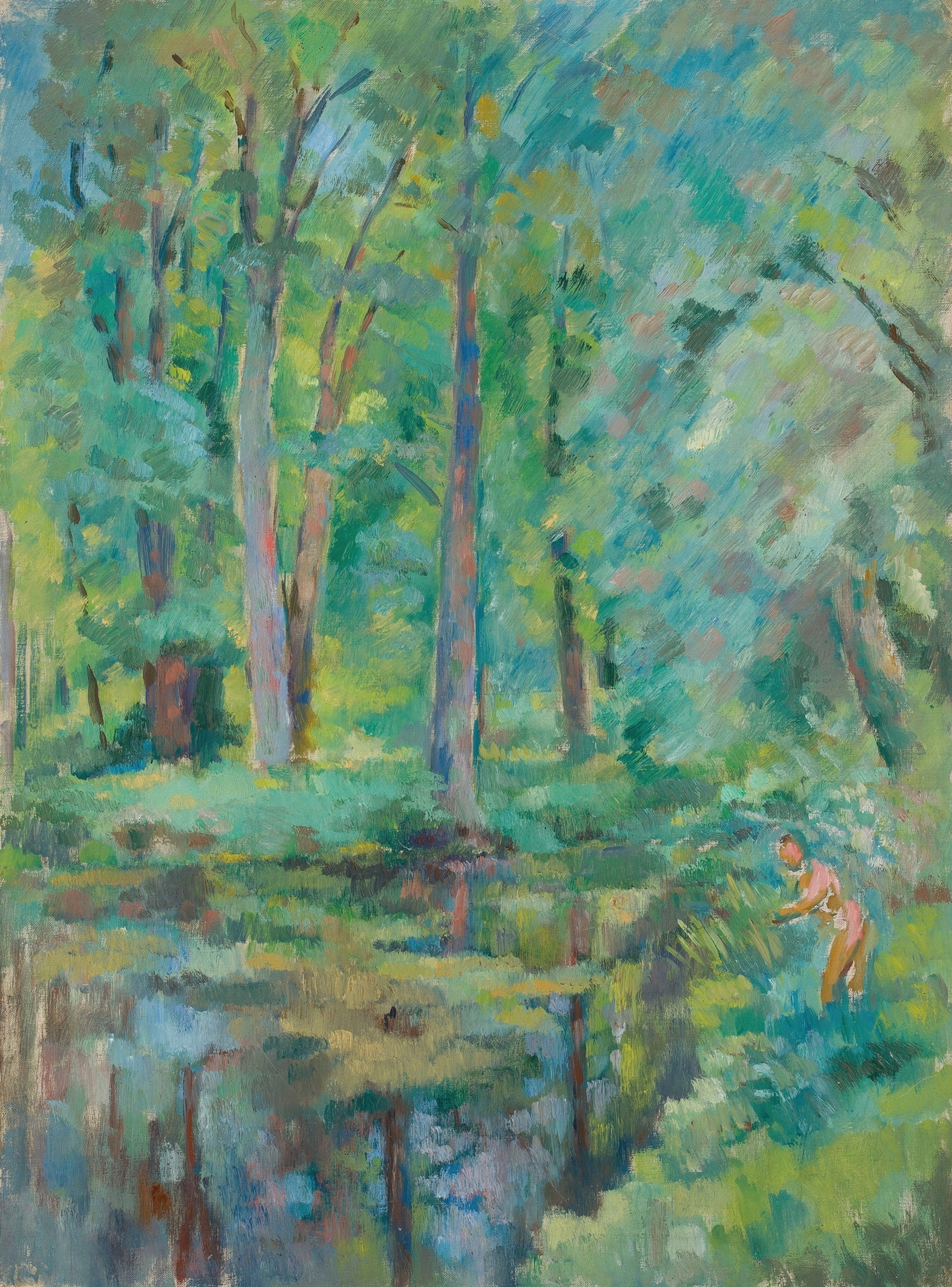
“Sometimes beauty is just pain, disguised in gold.” In Kąpiąca się, Wacław Wąsowicz captures the essence of tranquility intertwined with an undercurrent of melancholy. The delicate interplay of light evokes a sense of serenity that belies the deeper emotions lurking beneath the surface. Look closely at the figure in the water, her body glistening as sunlight dances across her skin. The soft, muted palette of greens and blues complements the warmth of her golden hue, creating a harmonious atmosphere.
Notice how the strokes vary in intensity, from the gentle brushwork surrounding the figure to the more dynamic ripples that vibrate with energy, drawing your eye towards the focal point of this intimate scene. There is an enticing contrast between the idyllic setting and the solitude of the female figure. The surrounding landscape seems to cradle her, yet her distant gaze hints at an inner struggle, perhaps a longing for connection or reflection on past sorrows. This duality of beauty and pain permeates the work, reminding us that even peaceful moments can carry hidden depths, evoking a sense of empathy from the viewer.
In 1938, Wąsowicz painted Kąpiąca się during a period of political tension and societal change in Poland. The artist was exploring themes of intimacy and self-reflection, capturing the lingering remnants of beauty amidst the encroaching shadows of uncertainty. This piece reflects the painter's mastery in balancing emotional complexity with visual allure, paving the way for his future explorations in art.