Obóz cygański pod drzewem — History & Analysis
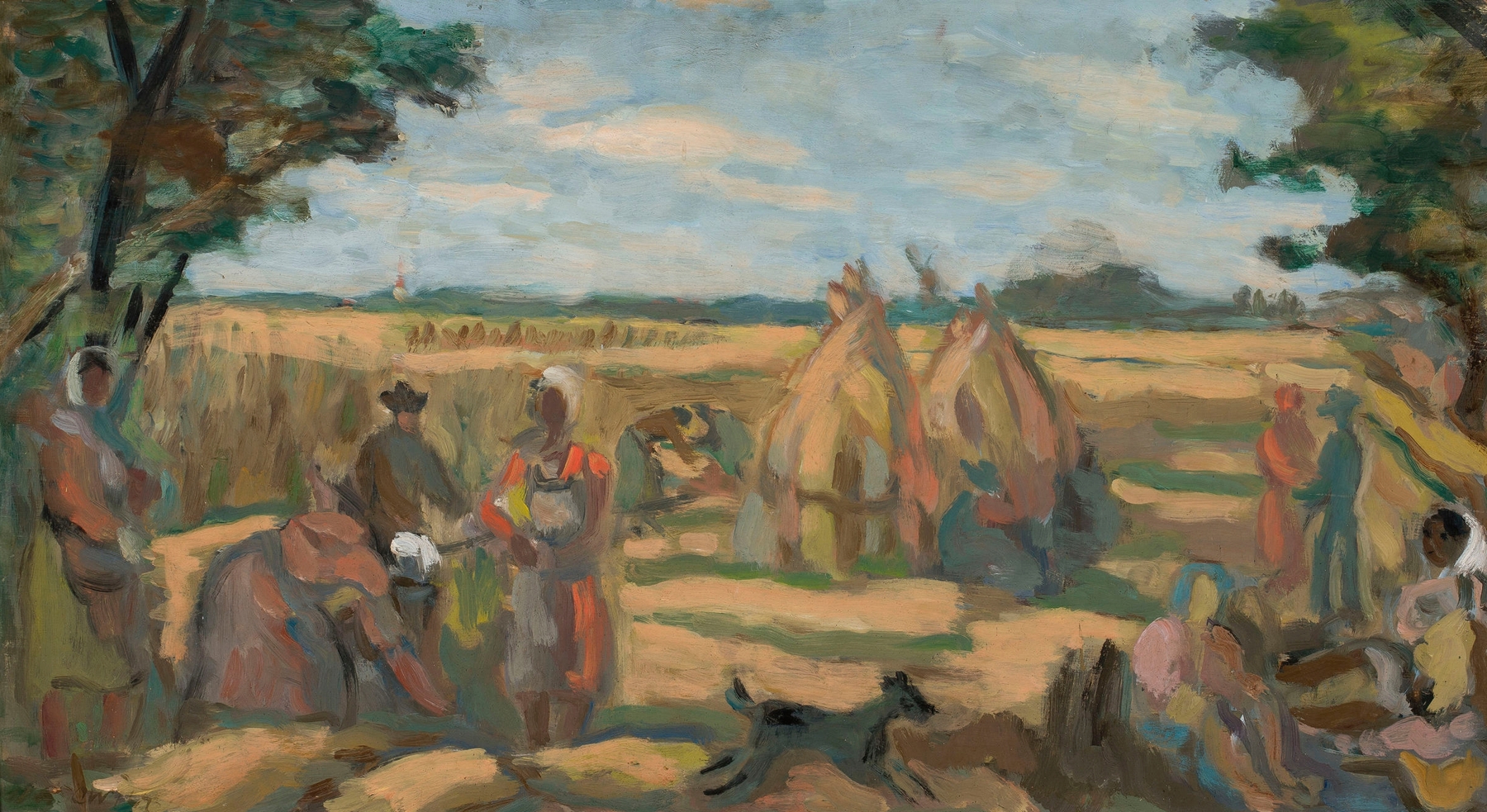
“Sometimes beauty is just pain, disguised in gold.” In the quiet shadows of existence, hope often emerges from the most unexpected places. It is this duality that Wacław Wąsowicz masterfully captures in Obóz cygański pod drzewem, a poignant reminder of resilience amidst despair. Look closely at the way the sunlight filters through the leaves, casting dappled patterns on the ground where a group of figures gathers. Notice the warm tones of earth and sky, enveloping the scene with a sense of nostalgia. The careful placement of the tree, looming yet protective, frames the figures huddled beneath it, evoking a sense of refuge.
Each brushstroke reveals an emotional depth, from the soft hues on their faces to the vibrant colors of their clothing, suggesting a celebration of culture even in adversity. Beneath the surface lies a contrast between joy and melancholy. The tree symbolizes stability, sheltering the vulnerable yet spirited community, while the weariness evident in their expressions hints at the struggles they face. Each individual appears engaged in their own world, yet the shared space highlights a collective hope, an unspoken understanding that bonds them.
The vibrant patterns of their garments contrast sharply with the muted tones of the surrounding landscape, representing the persistence of spirit amid hardship. Wąsowicz created Obóz cygański pod drzewem in 1938, during a time of immense social upheaval and transformation in Europe. As he navigated the complexities of life during this turbulent period, his work reflected both his personal insights and the broader cultural dynamics at play. This artwork emerged as a testament to the human spirit's resilience, a beacon of hope amidst the shadows of uncertainty.