Żniwa — History & Analysis
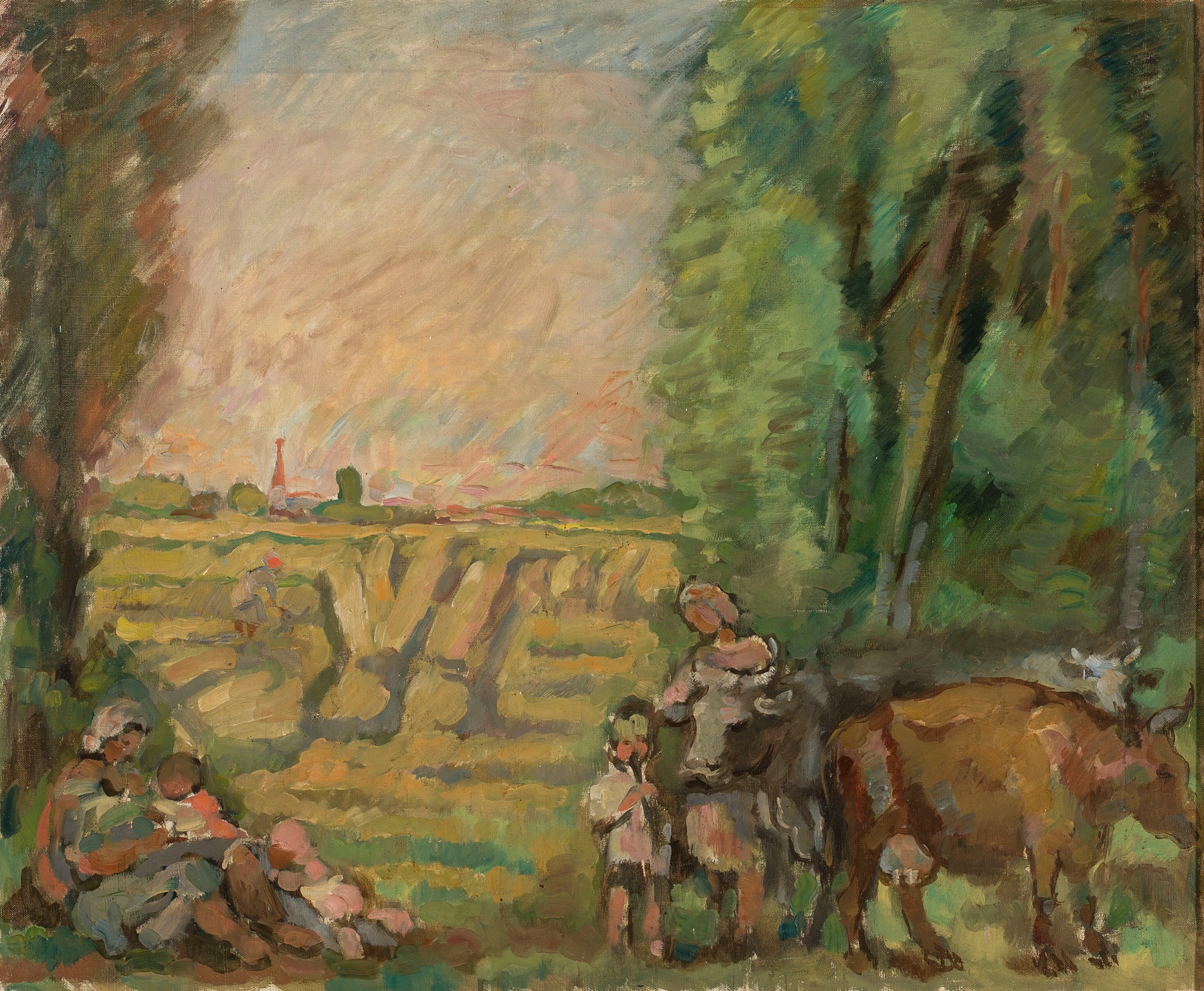
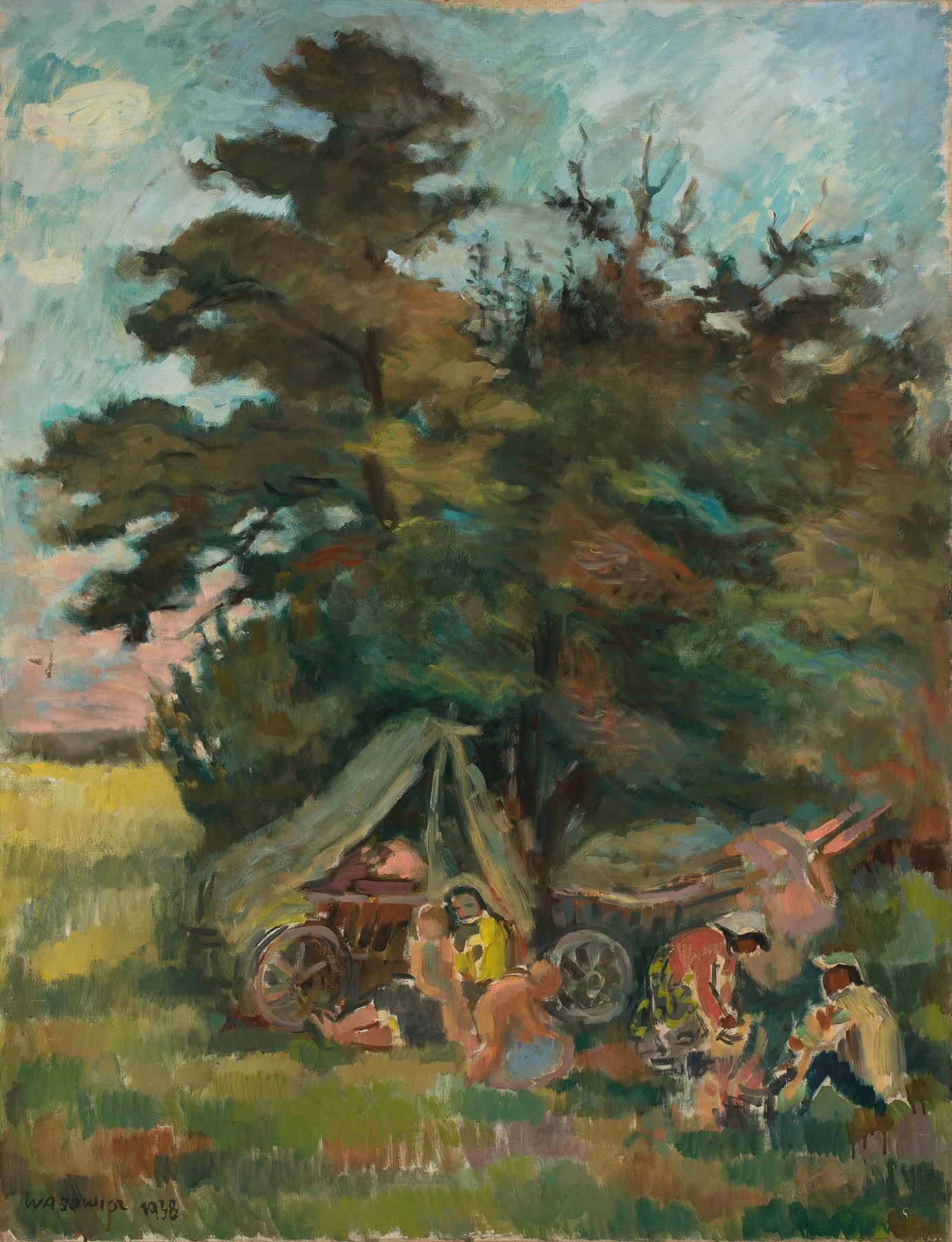
Can beauty exist without sorrow? In Żniwa, Wacław Wąsowicz captures the duality of life’s richest moments enveloped in the weight of labor and loss. Look to the center of the canvas, where a group of farmers bends beneath the sun, their bodies etched with fatigue yet animated by purpose. The warm hues of golden wheat contrast sharply with the muted earth tones of their attire, illustrating a blend of harmony and struggle. Notice how the light cascades down, illuminating their hands as they harvest, emphasizing the tactile connection to the earth that both sustains and demands from them.
Each stroke of the brush narrates a story of toil, as the figures convey a sense of camaraderie, yet their weary postures hint at the price of creation. The composition evokes a poignant tension—while the harvest signifies abundance, the farmers' expressions suggest an underlying melancholy. The juxtaposition of the flourishing crops against the tired faces speaks to the relentless cycle of life and death, where beauty is inseparable from hardship. Through their labor, they breathe life into the land, yet their toil reflects the sacrifices inherent in creation.
This invites viewers to ponder the bittersweet nature of existence, where joy often coexists with sorrow. Wąsowicz painted Żniwa in 1938 during a time of escalating political tension in Europe, on the brink of World War II. Residing in Poland, he was influenced by the socio-economic struggles of his countrymen, as art began to reflect the realities of life rather than romantic ideals. This period marked a significant shift in his artistic style, where the rawness of human experience became a focal point, forging a connection that resonates with viewers even today.