Pejzaż ze snopkami — History & Analysis
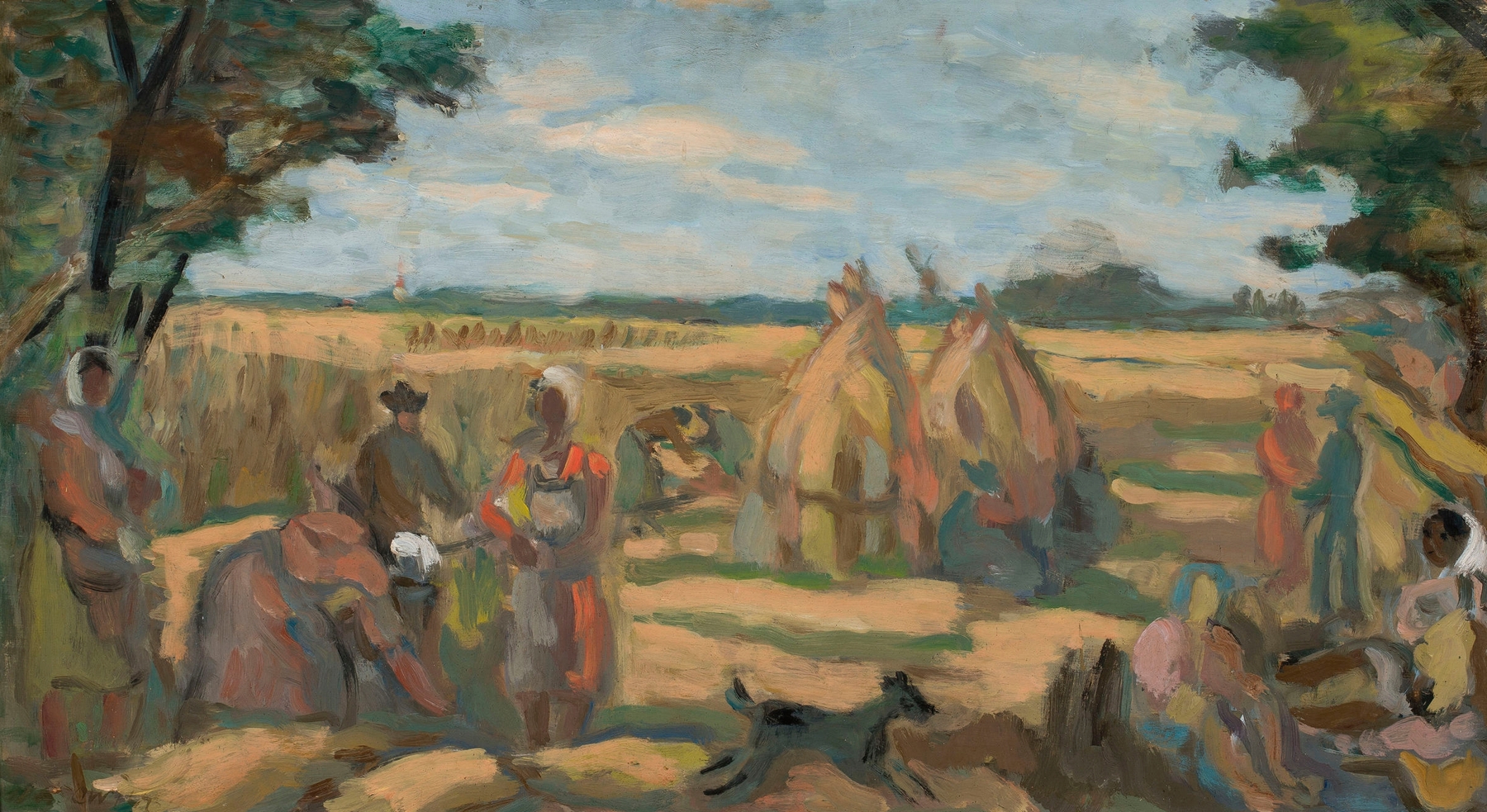
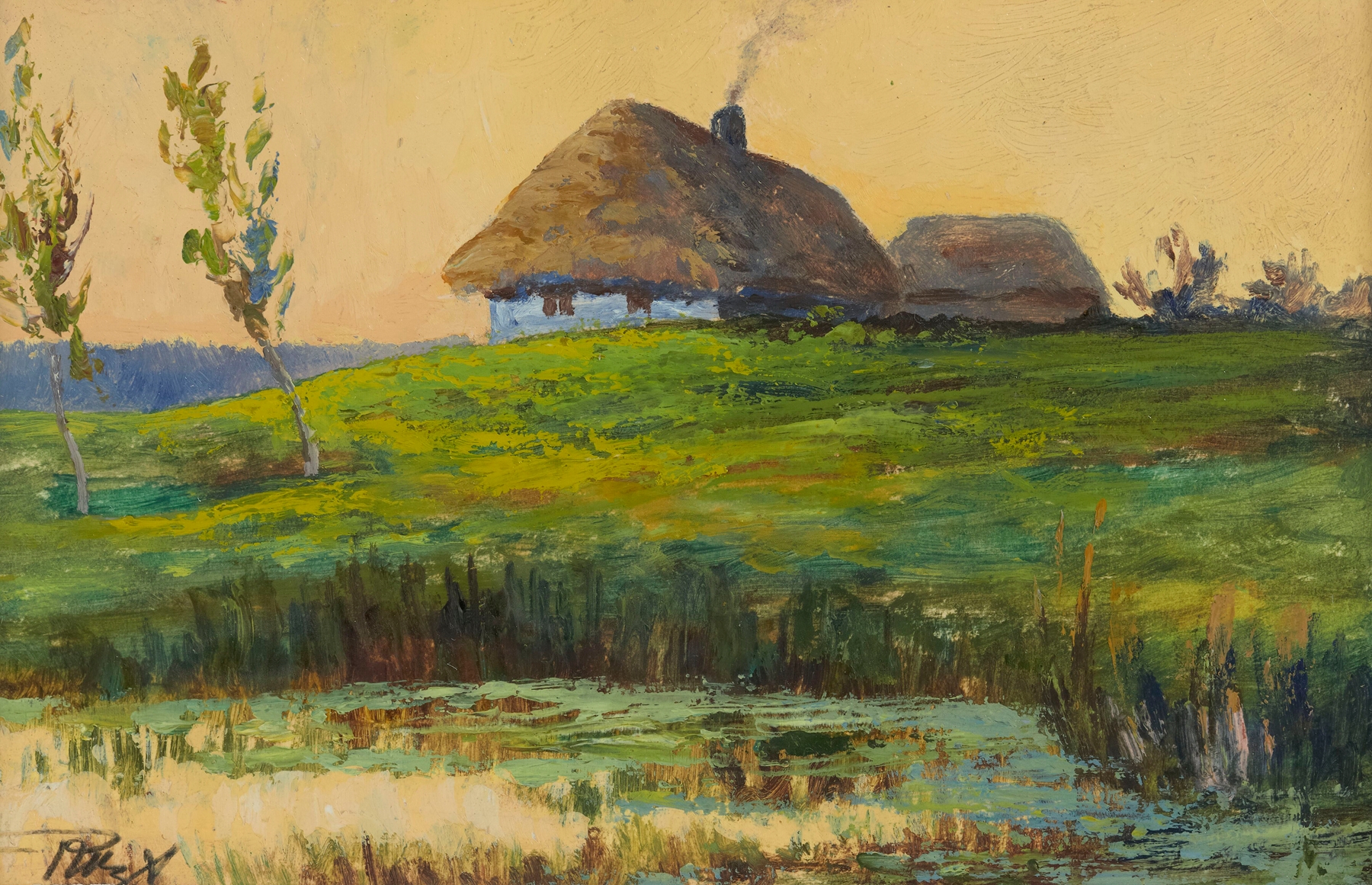
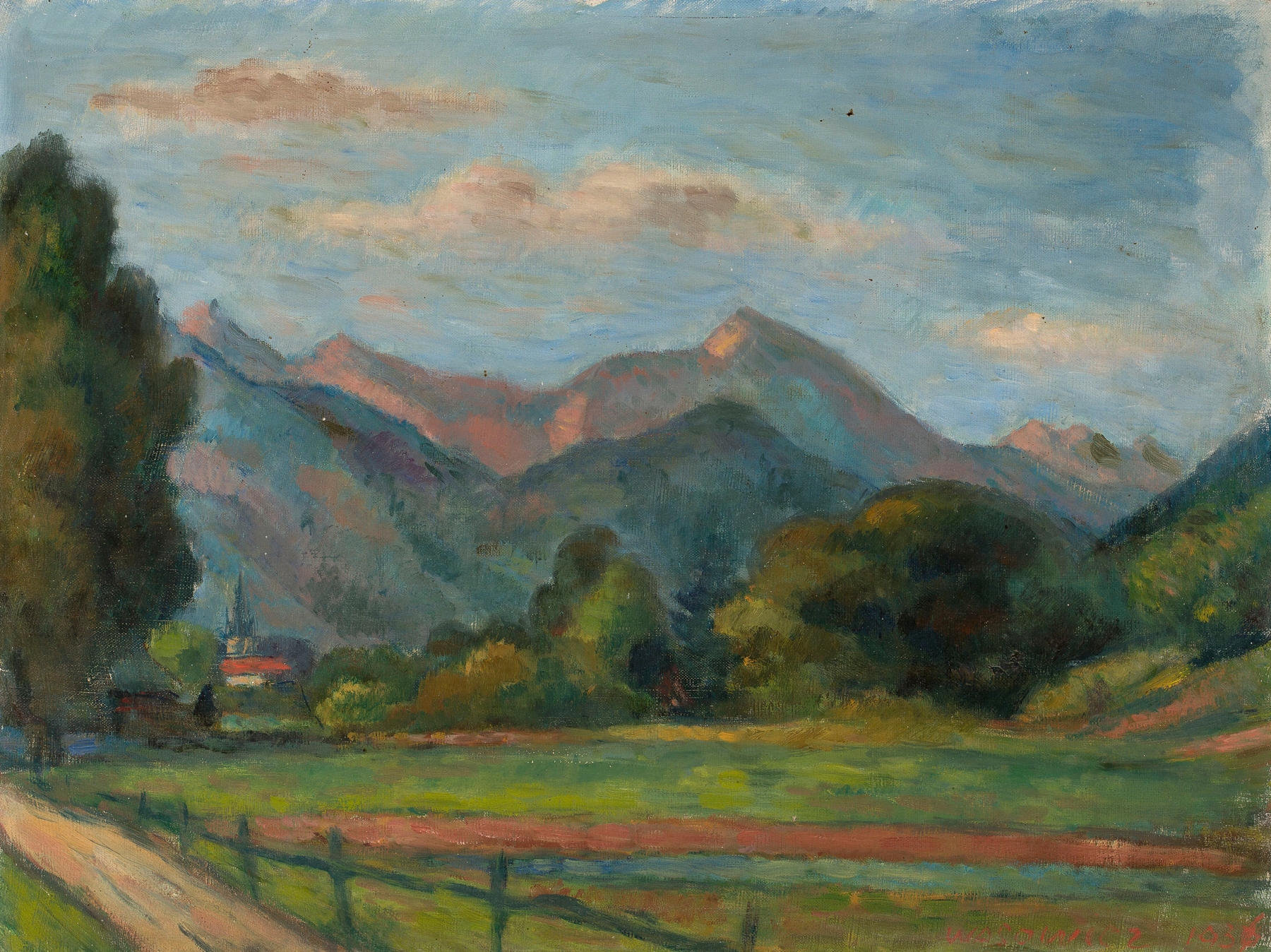
“Every silence here is a confession.” In the stillness of a landscape, where whispers of nature intertwine with the weight of unspoken thoughts, the essence of rebirth breathes life into the canvas. It invites us to reflect upon the quiet moments that often hold the most profound revelations. Look to the horizon where muted greens and warm yellows unfurl, creating a serene tapestry of fields. The soft brushstrokes coalesce into the distant silhouettes of haystacks, standing proud yet vulnerable against the expansive sky. Notice how the light bathes the scene in a gentle glow, illuminating the details that reveal the artist's delicate hand and thoughtful composition.
There’s a rhythm to the placement of each element, guiding the viewer's gaze across the canvas, inviting them to linger in a moment that feels perpetually suspended in time. Beneath the tranquil surface lies an exploration of contrasts: the harmony of nature set against the fragility of human existence. The haystacks symbolize hard work and the passage of seasons, while the serene landscape whispers of renewal. Each layer of color reflects a story of labor and reward, of nature's cyclical dance through time and memory.
In this visual metaphor, silence transforms into a poignant reminder that rebirth often emerges from the quietest of places. Wacław Wąsowicz painted Pejzaż ze snopkami in 1938, during a time when Europe teetered on the brink of seismic change. Living in Poland, Wąsowicz found himself immersed in a rich cultural milieu, even as the clouds of conflict gathered. His works often reflect a deep connection to the land, embodying the resilience of the human spirit amidst uncertainty and turmoil, capturing a fleeting moment of peace that resonates with themes of continuity and hope.