Landscape with a church — History & Analysis
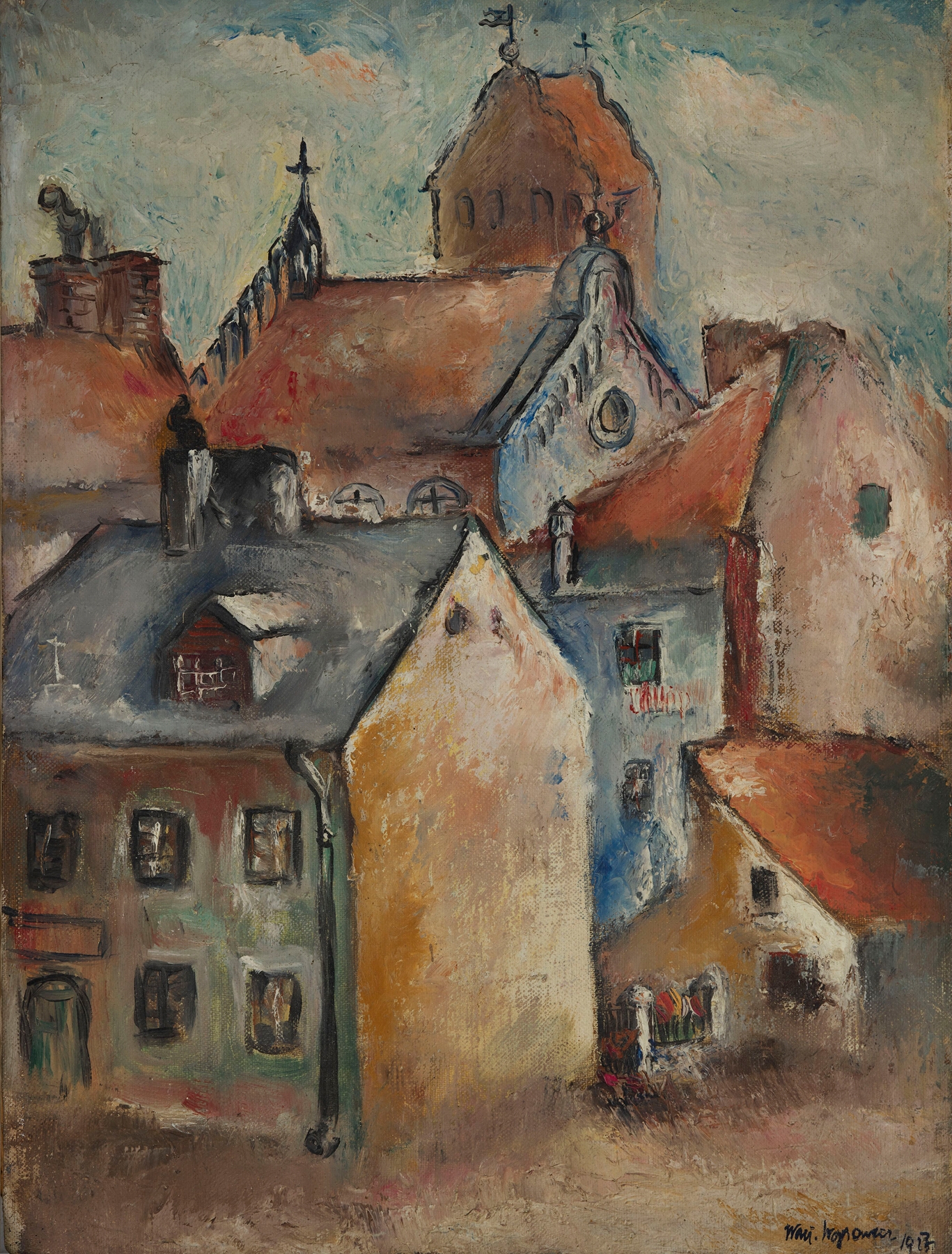
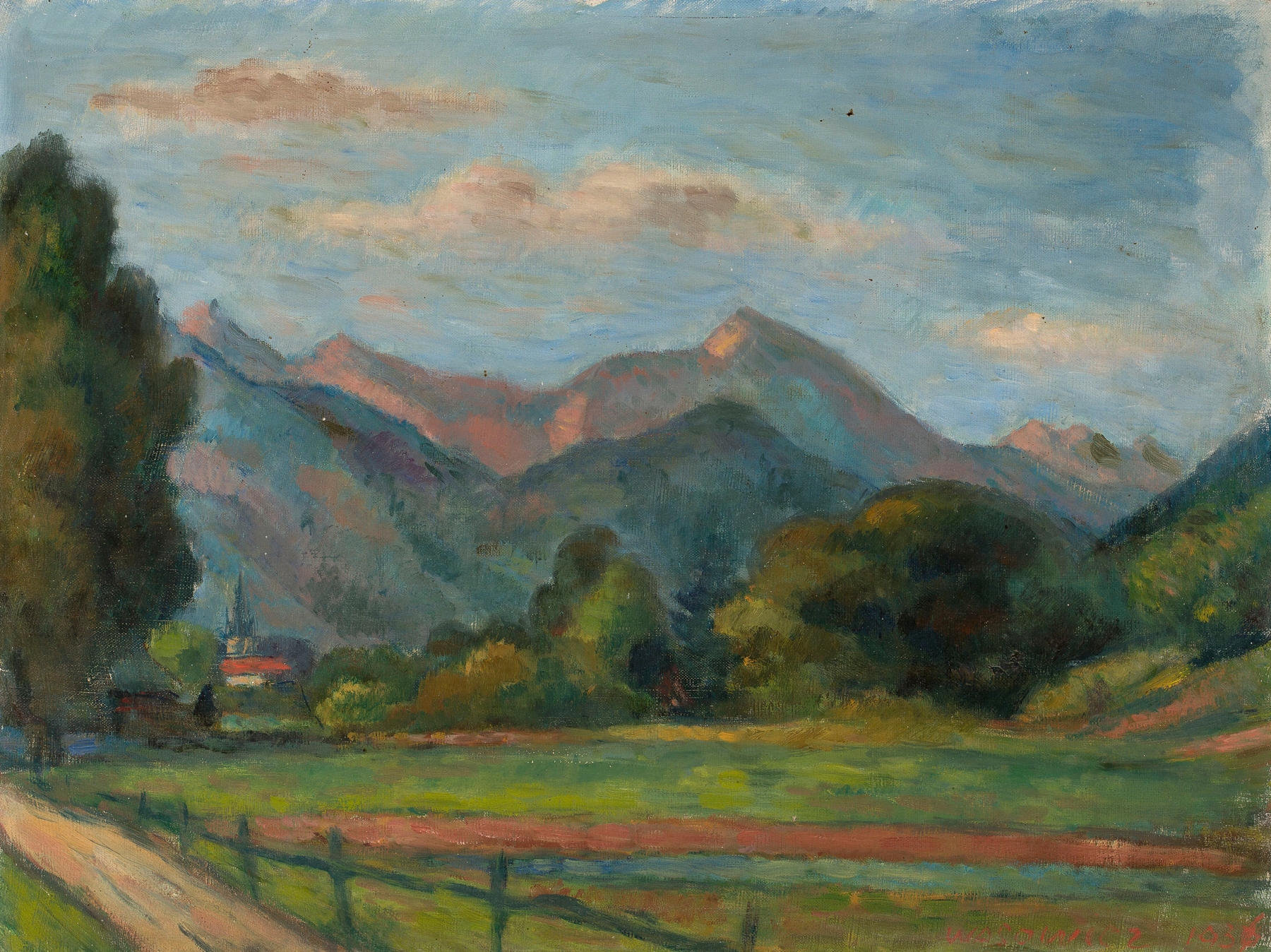
Could beauty survive in a century of chaos? In Wacław Wąsowicz's Landscape with a Church, the answer resonates within the stillness of a desolate scene, where tranquility meets an echo of emptiness. Look to the left at the small, weathered church standing solitary amidst a vast expanse of muted greens and browns. The brush strokes create a textured sky, a swirl of somber grays and soft whites that suggests both an impending storm and the quietude of a fading day. Notice how the light delicately caresses the church's steeple, a beacon of hope in a landscape stripped of vibrancy.
The composition draws your eye towards this focal point, inviting contemplation of the balance between man-made structures and the natural world. Delve deeper into the emotional undertones at play. The contrast between the sturdy church and the barren surroundings evokes feelings of isolation and fragility, underscoring the tension between faith and the vast, indifferent universe. The empty fields, devoid of life, speak to the scars of a world recovering from turmoil.
This duality invites viewers to ponder the resilience of beauty amid desolation, a reflection of human experience in a post-war landscape. Wąsowicz painted Landscape with a Church in 1919, a time when Europe was grappling with the aftershocks of World War I. Living in Poland, he was influenced by the nationalistic fervor for reclaiming cultural identity amidst political upheaval. This work emerged as part of his exploration of the delicate interplay between nature and spirituality, resonating deeply with the era's quest for meaning and restoration in a tumultuous world.