Le Palais de Justice après l’incendie de 1871 — History & Analysis
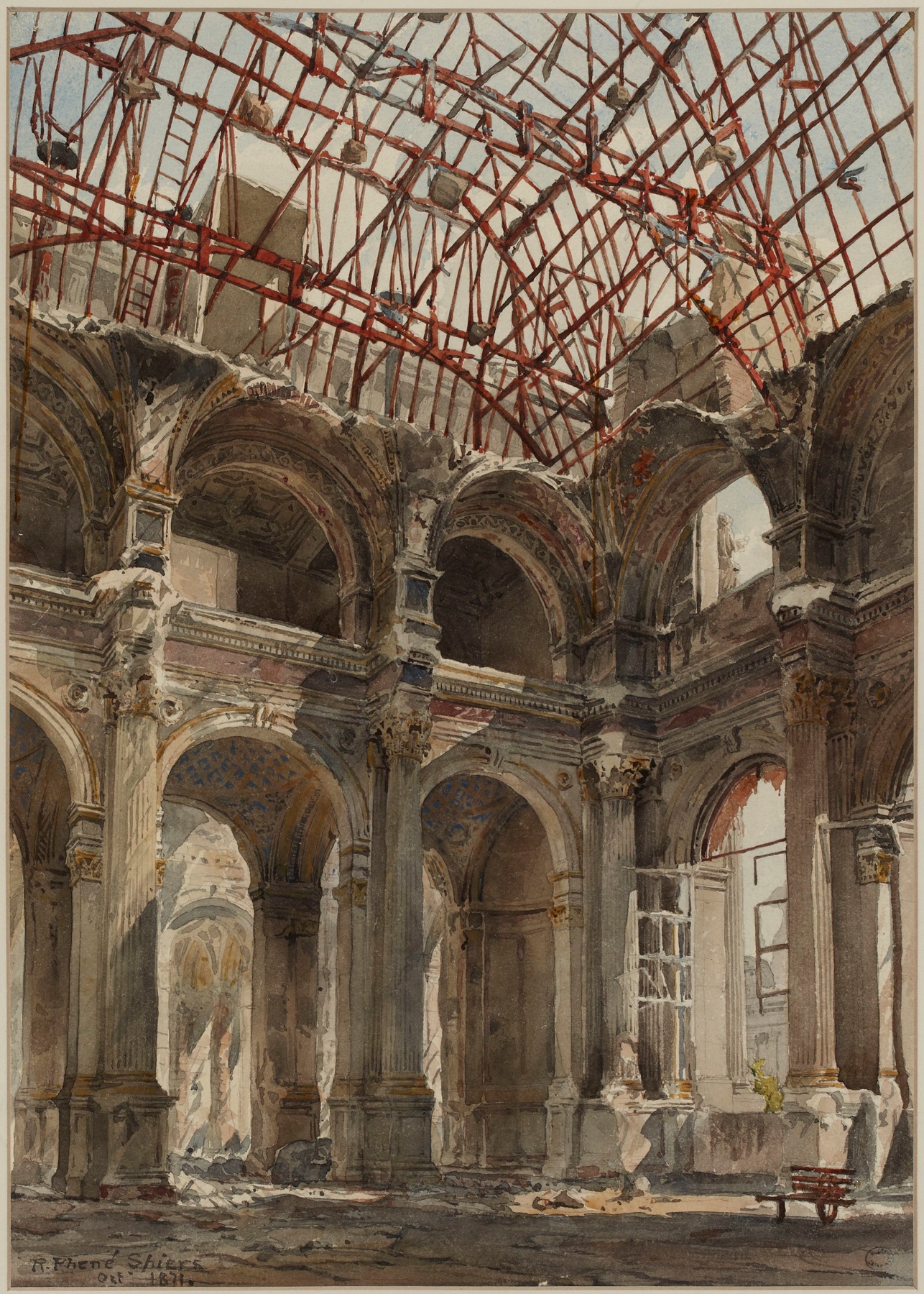
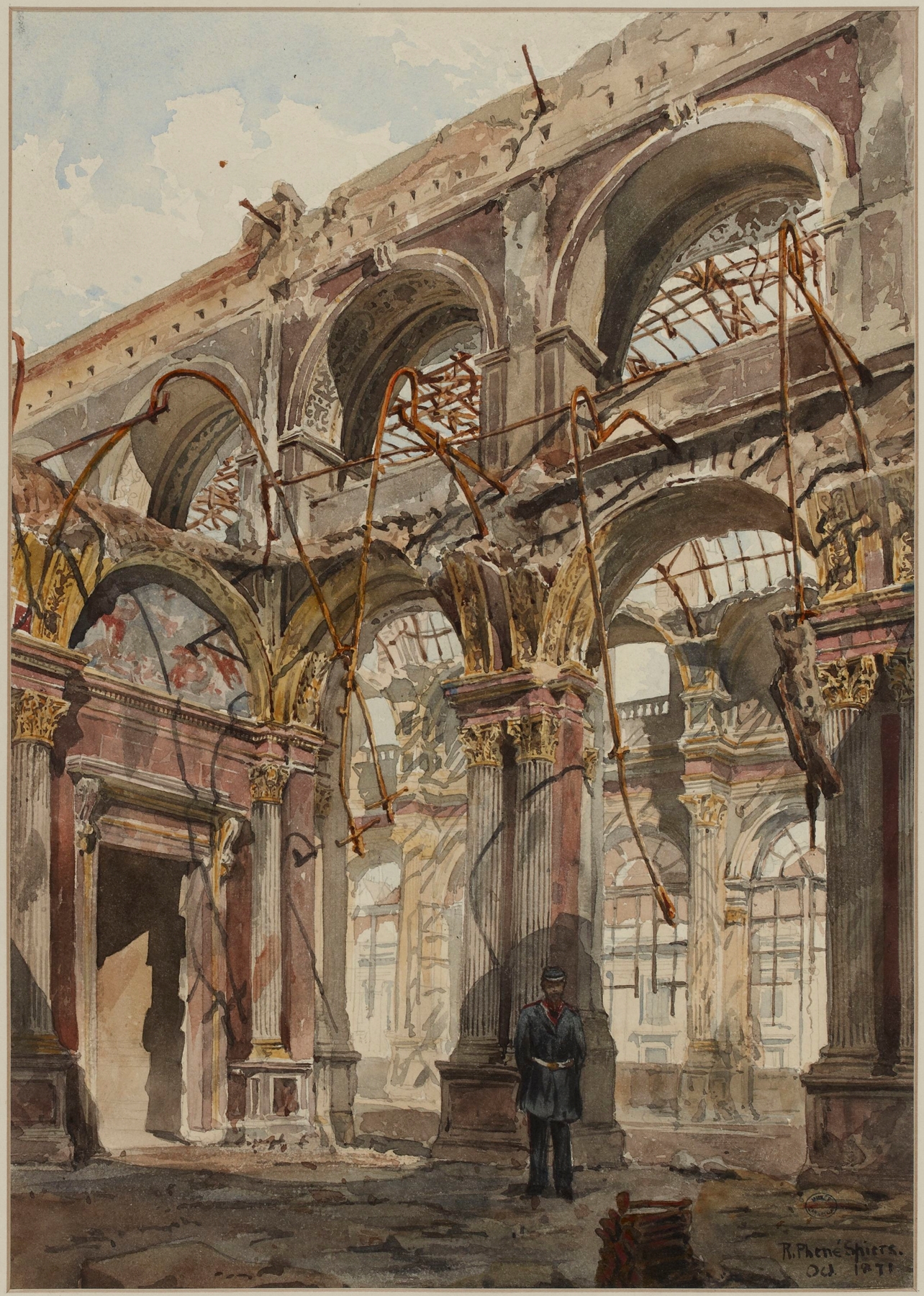
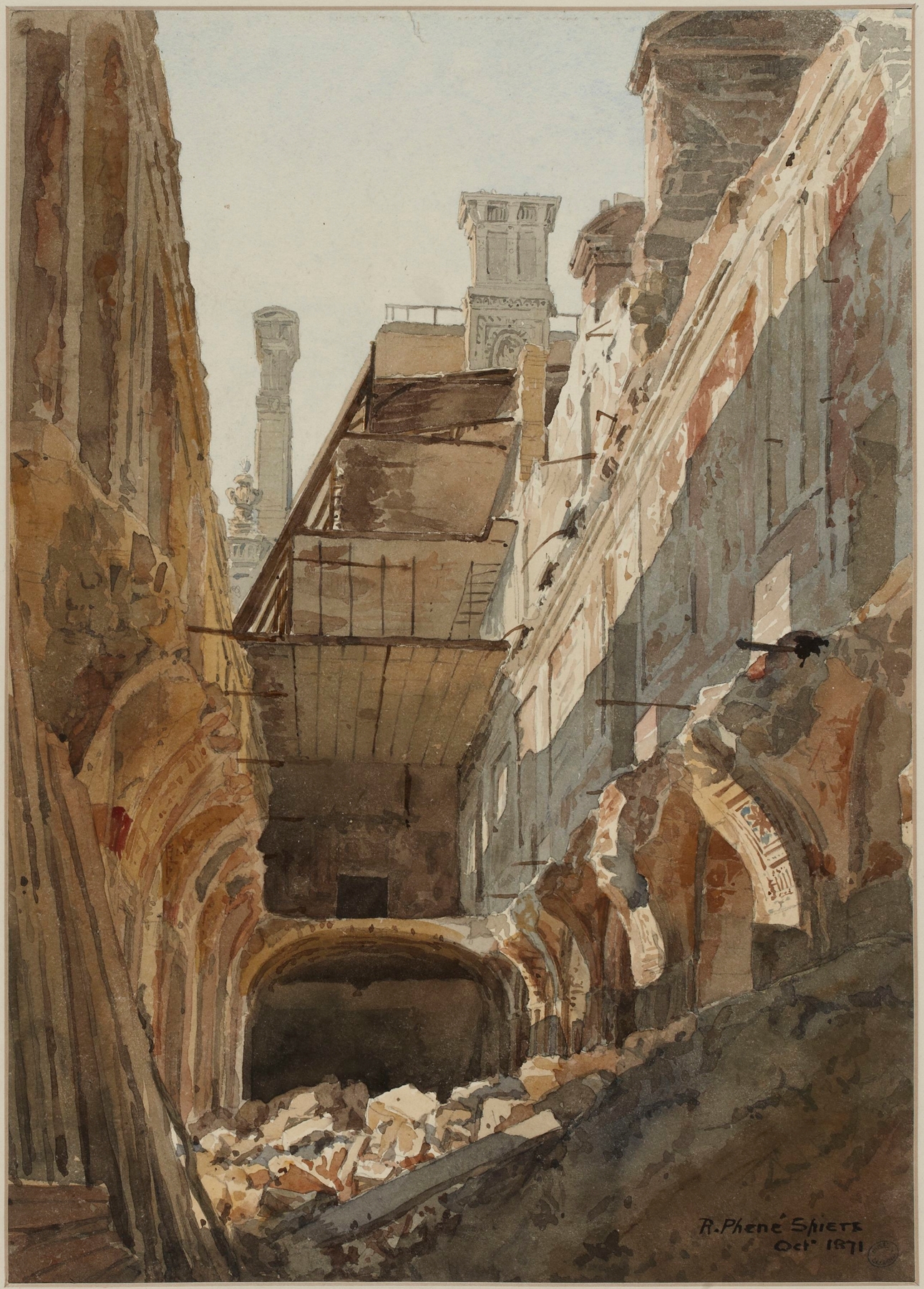
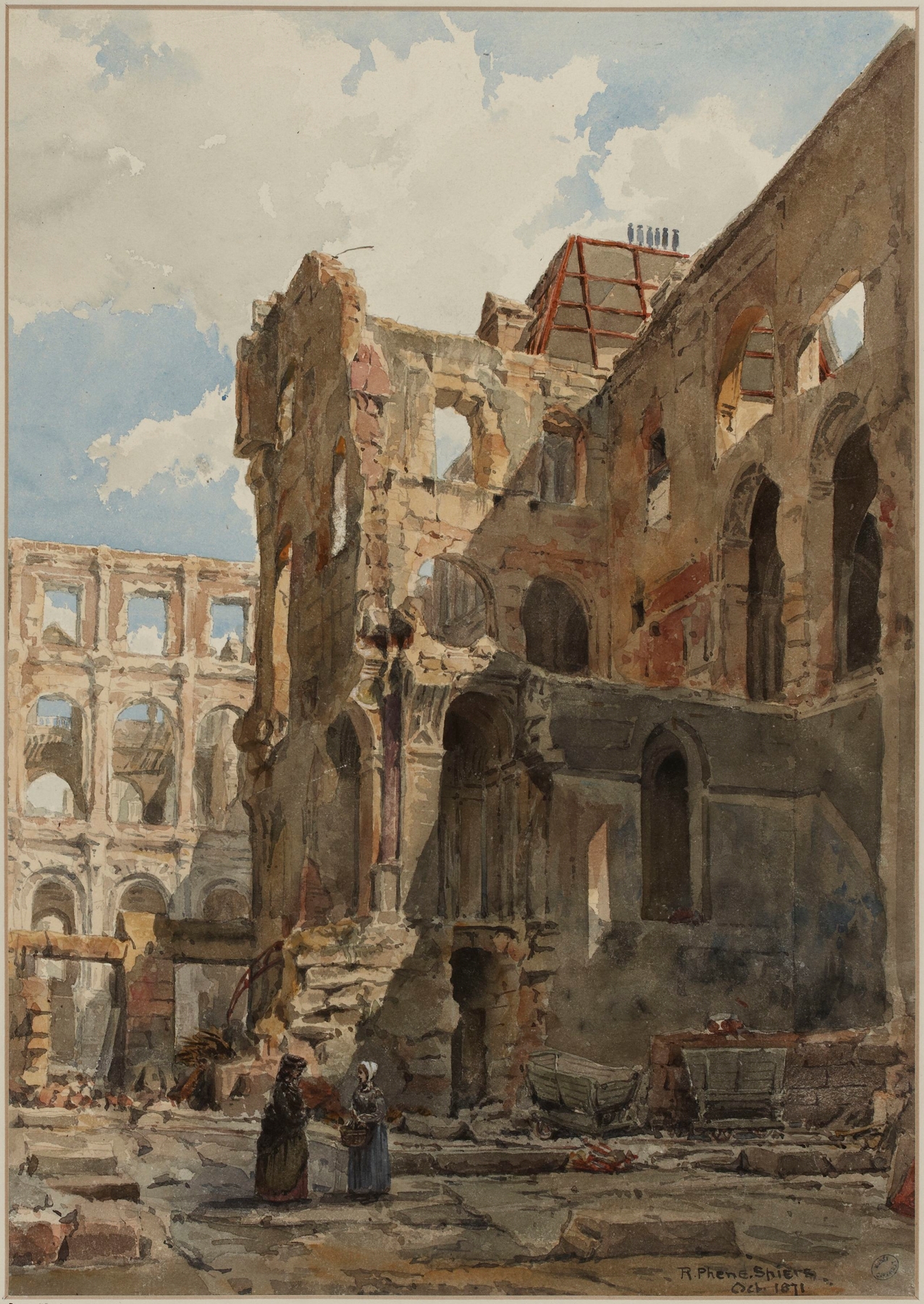
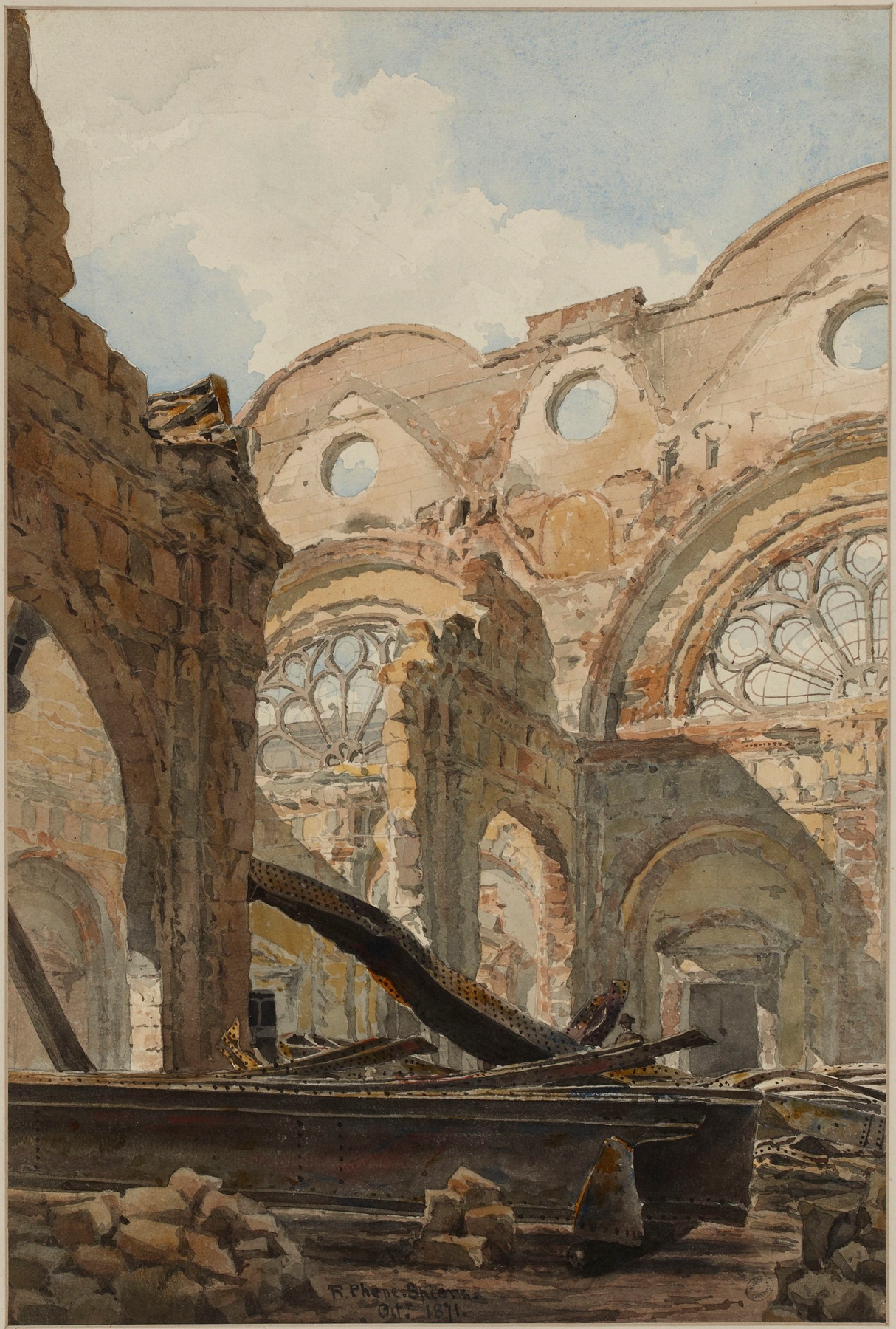
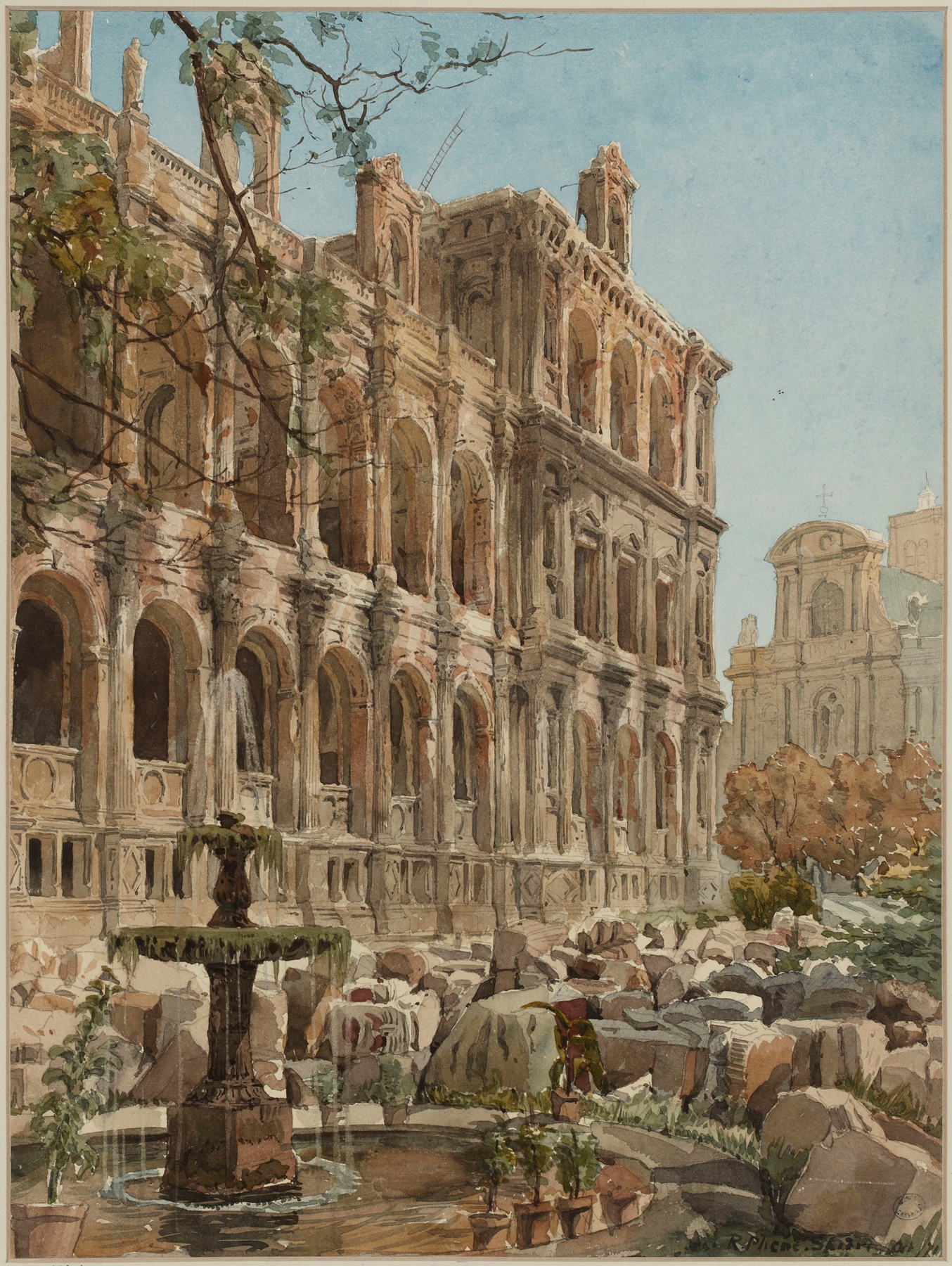
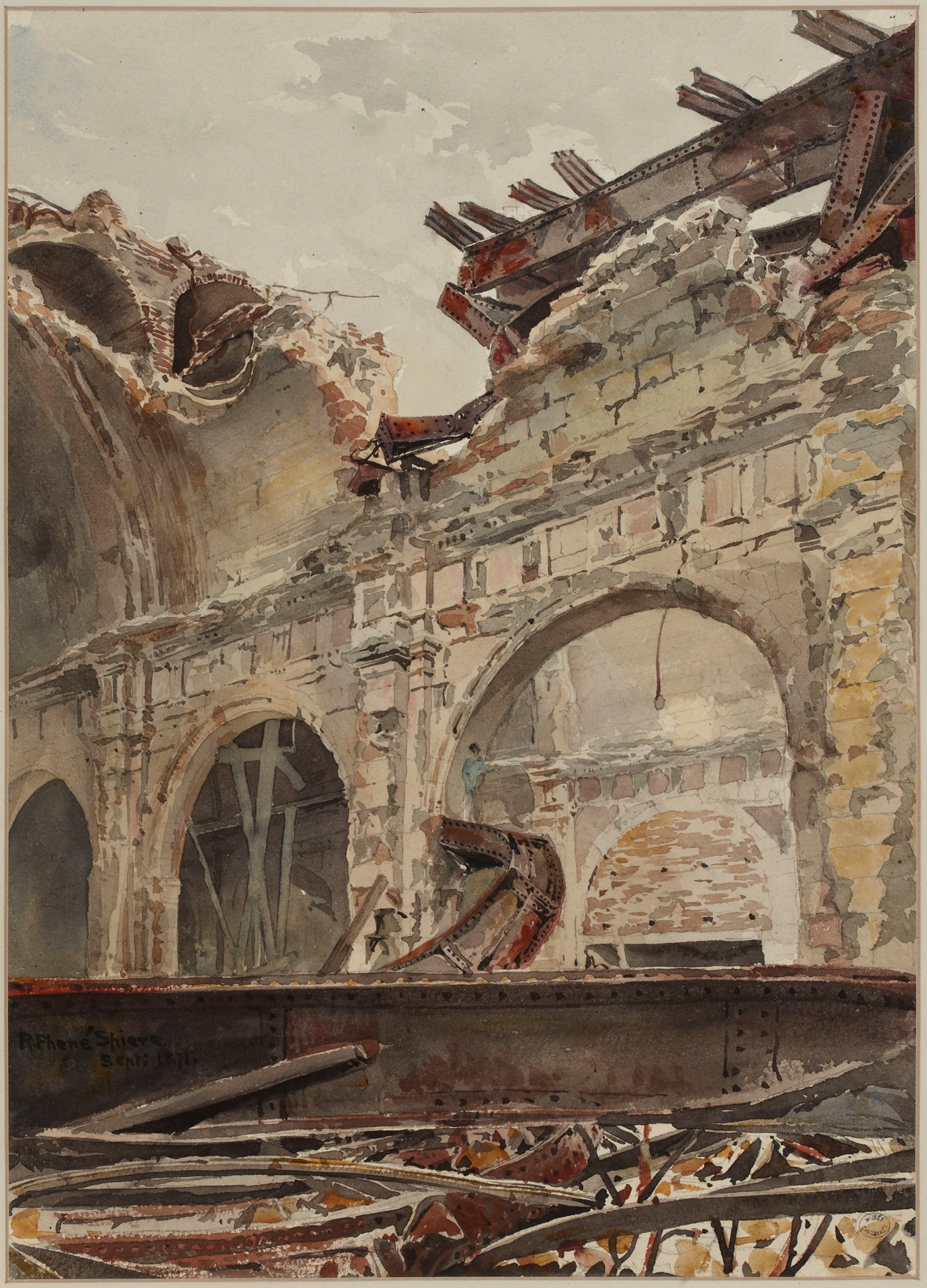
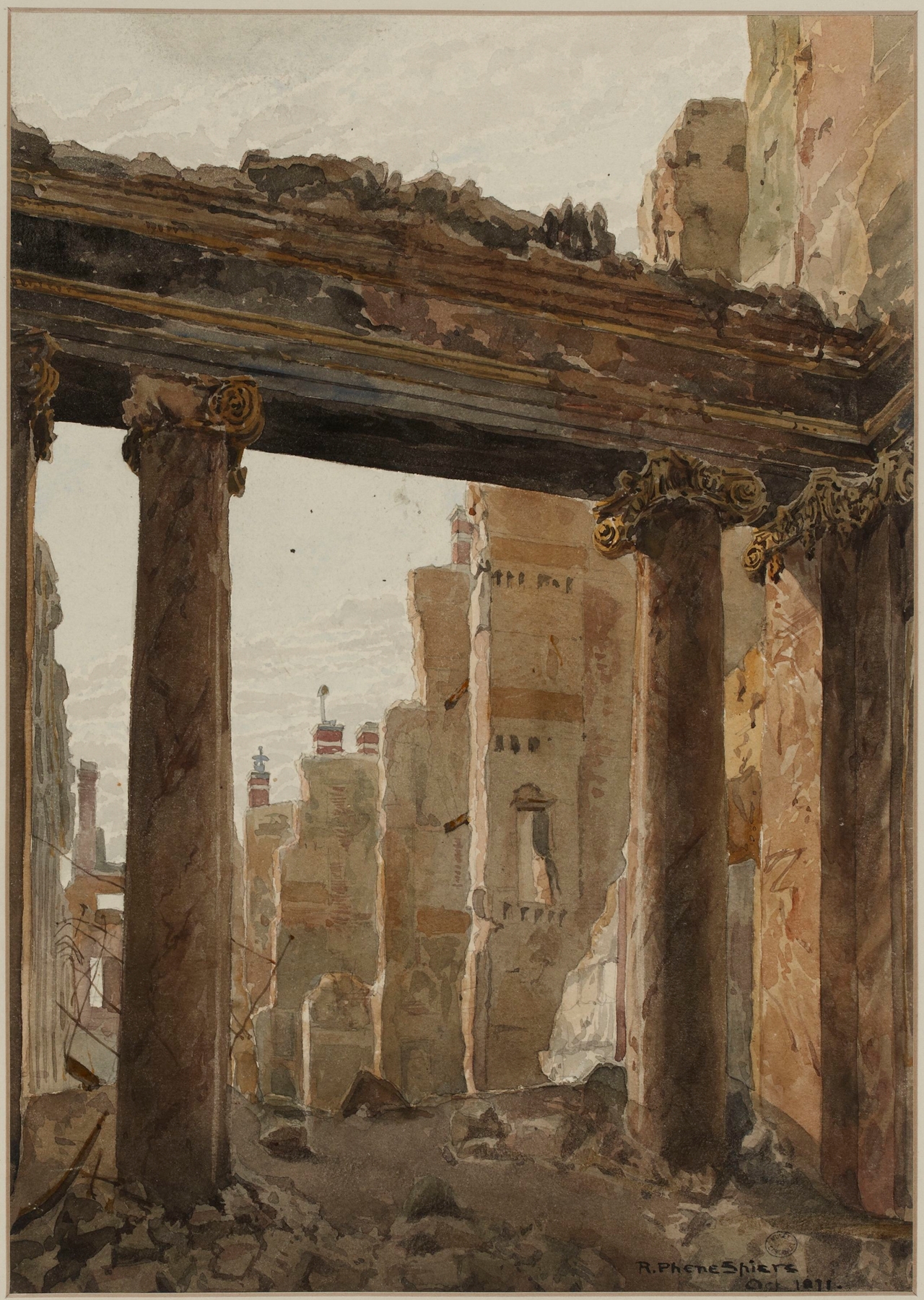
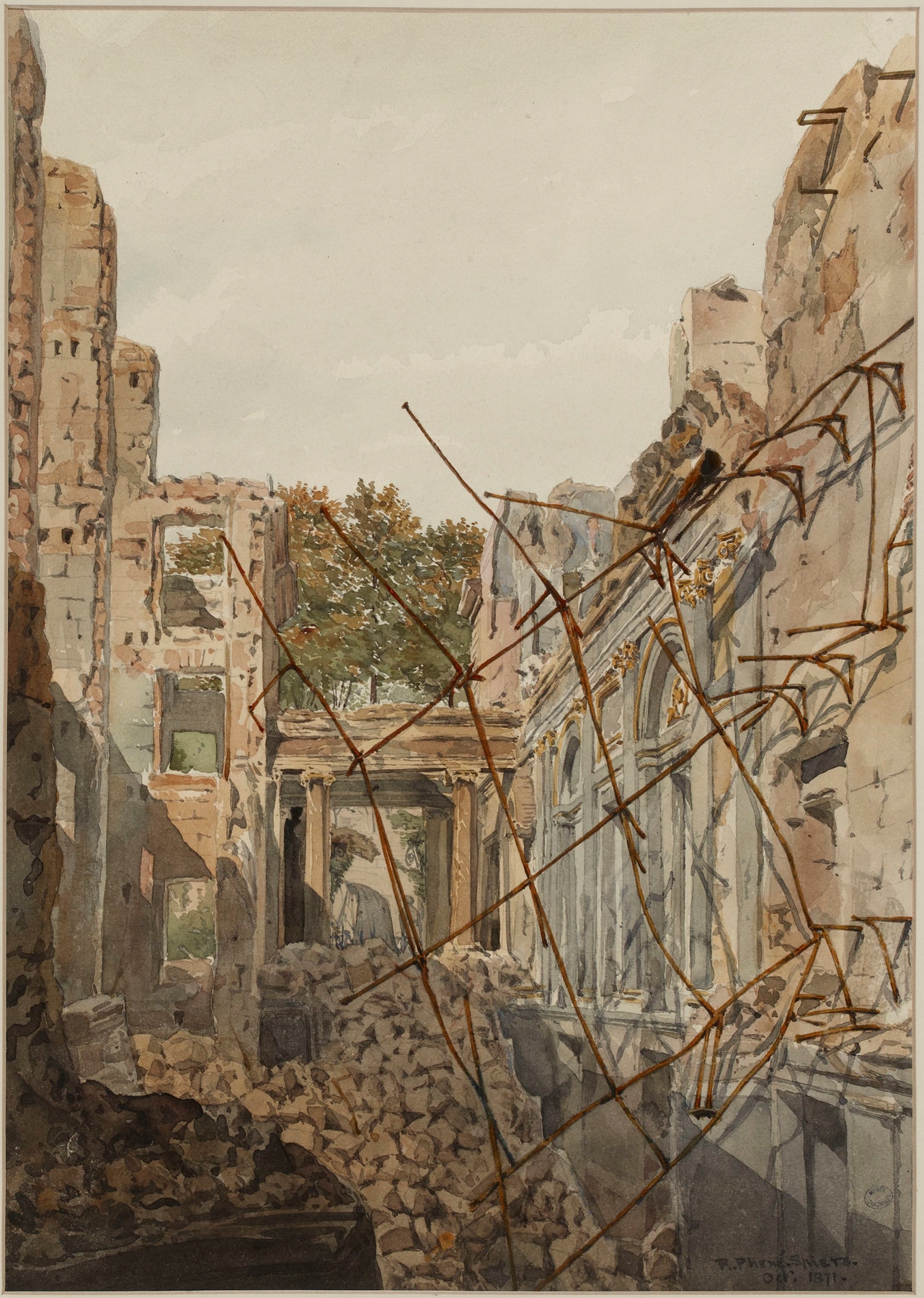
When did color learn to lie? In the aftermath of destruction, the hues of a once-magnificent edifice whisper tales of loss and resilience, a dance of light and shadow that seems to pulse with the very heart of history. Look to the center of the canvas where the charred remains of the Palais de Justice rise defiantly against the smoky backdrop. Notice how the ashen tones meld with muted blues and earthiness, capturing the chaos of its recent devastation.
The strokes, both swift and deliberate, create a dynamic sense of movement, as if the building itself is attempting to reclaim its past glory. Surrounding details, like the fragmented architecture and scattered debris, draw the eye outward, inviting viewers to consider the broader implications of this loss. Yet, within this portrayal lies a tension between destruction and rebirth. The vibrant patches of color intermingling with the somber palette suggest hope amid despair; the structure, though ruined, still commands respect.
The brushwork embodies not just the physical devastation but also the emotional weight of a city grappling with its identity, marking the fleeting nature of beauty and permanence as it wrestles with the consequences of conflict. Richard Phené Spiers painted this work during a tumultuous period post-1871, shortly after the Paris Commune. The fires that ravaged the Palais de Justice symbolized not only a physical ruin but also the upheaval in French society. At that time, Spiers was immersed in the Parisian art scene, reflecting the sentiments of a community in mourning while also looking forward to renewal, positioning his work within a rich dialogue about resilience and transformation in the face of hardship.