Ruines du Palais de Saint-Cloud en 1871 — History & Analysis
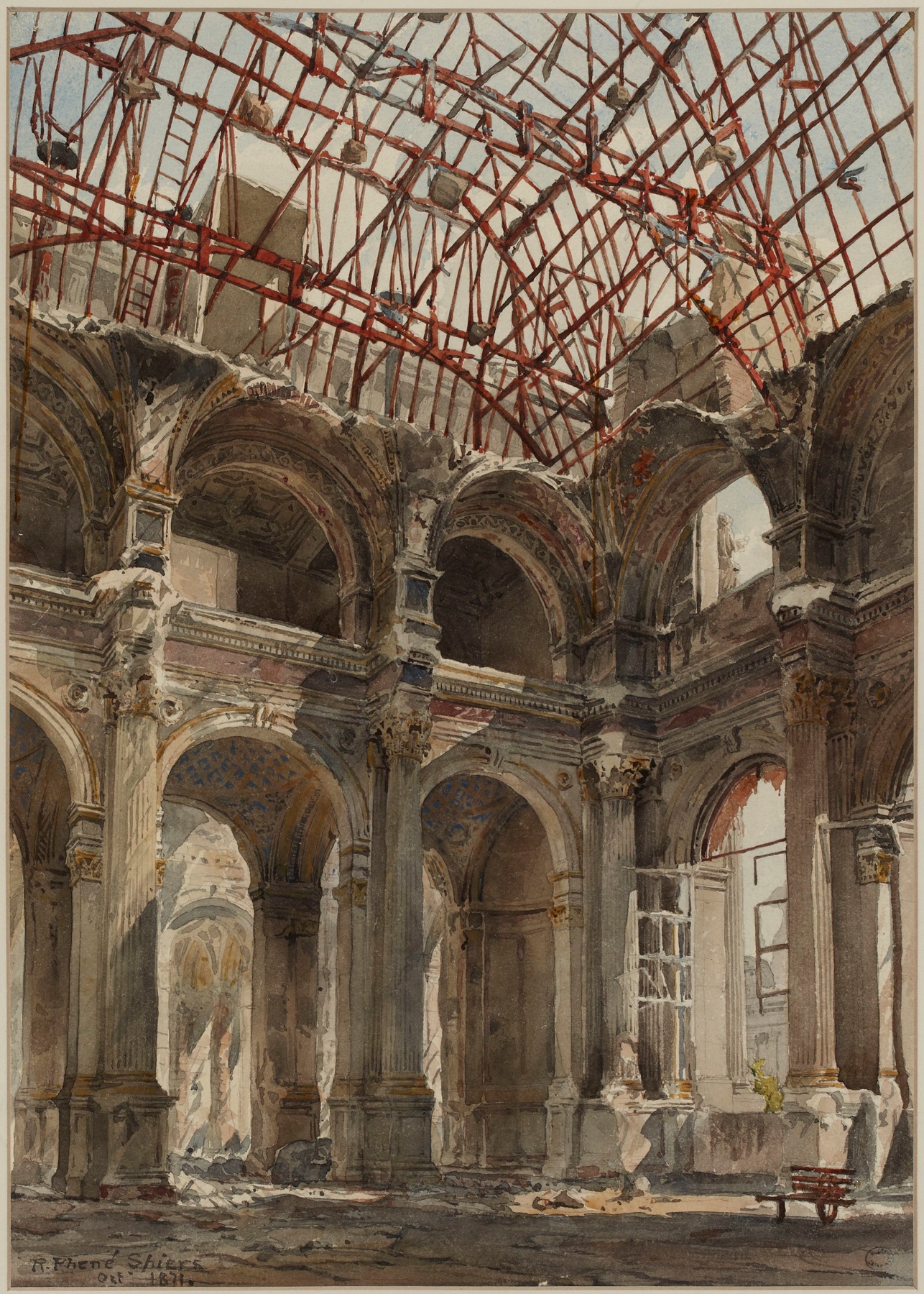
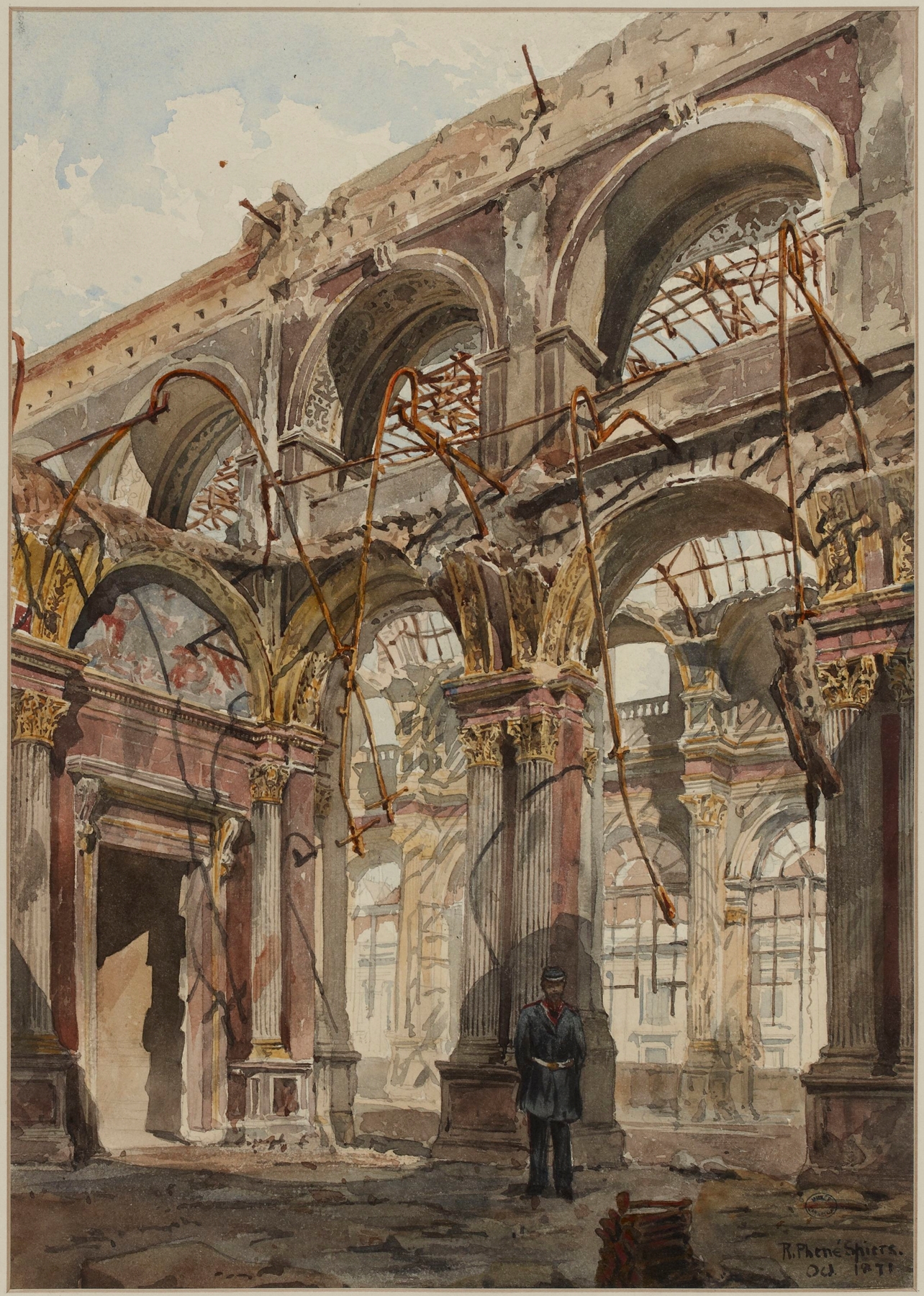
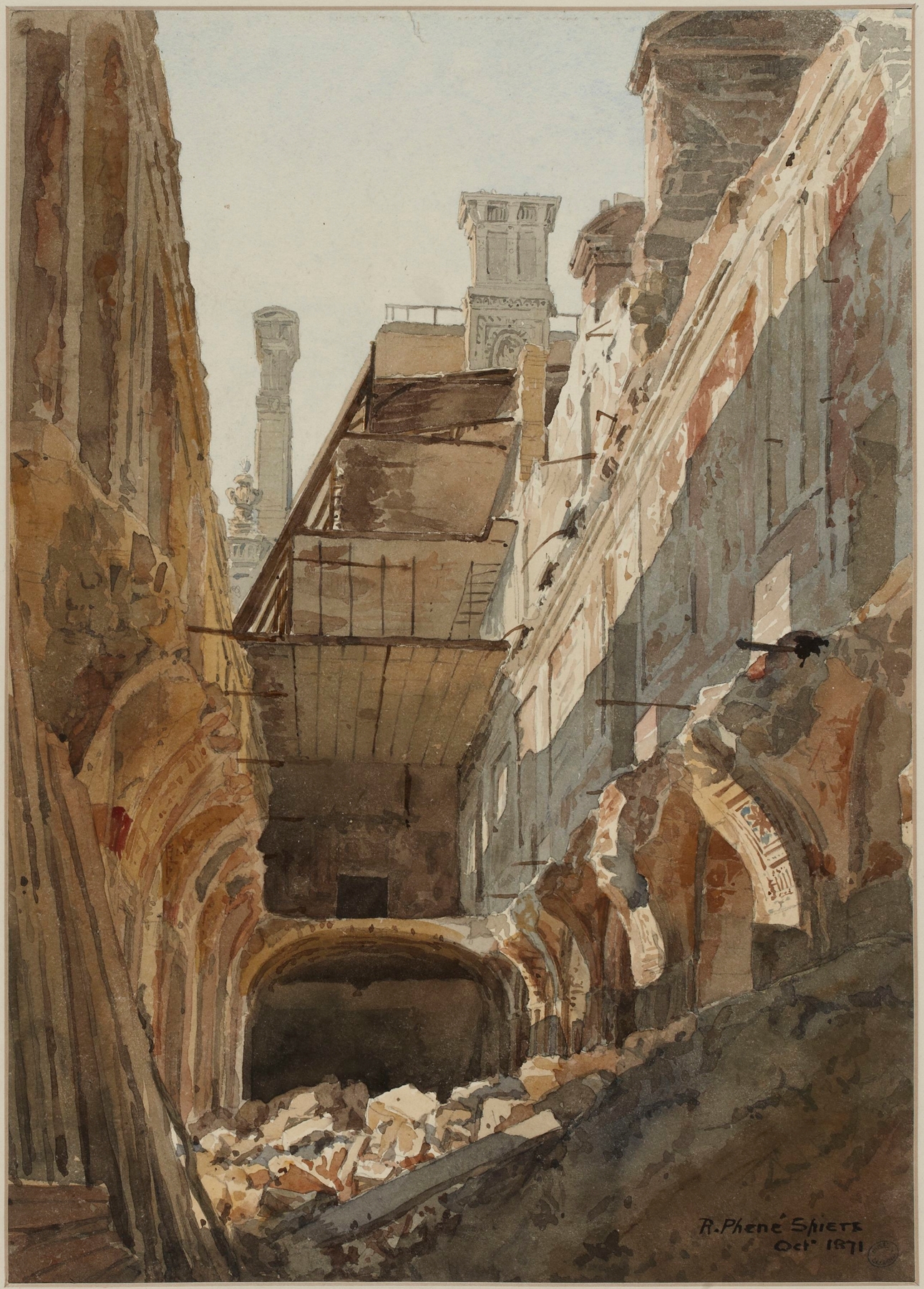
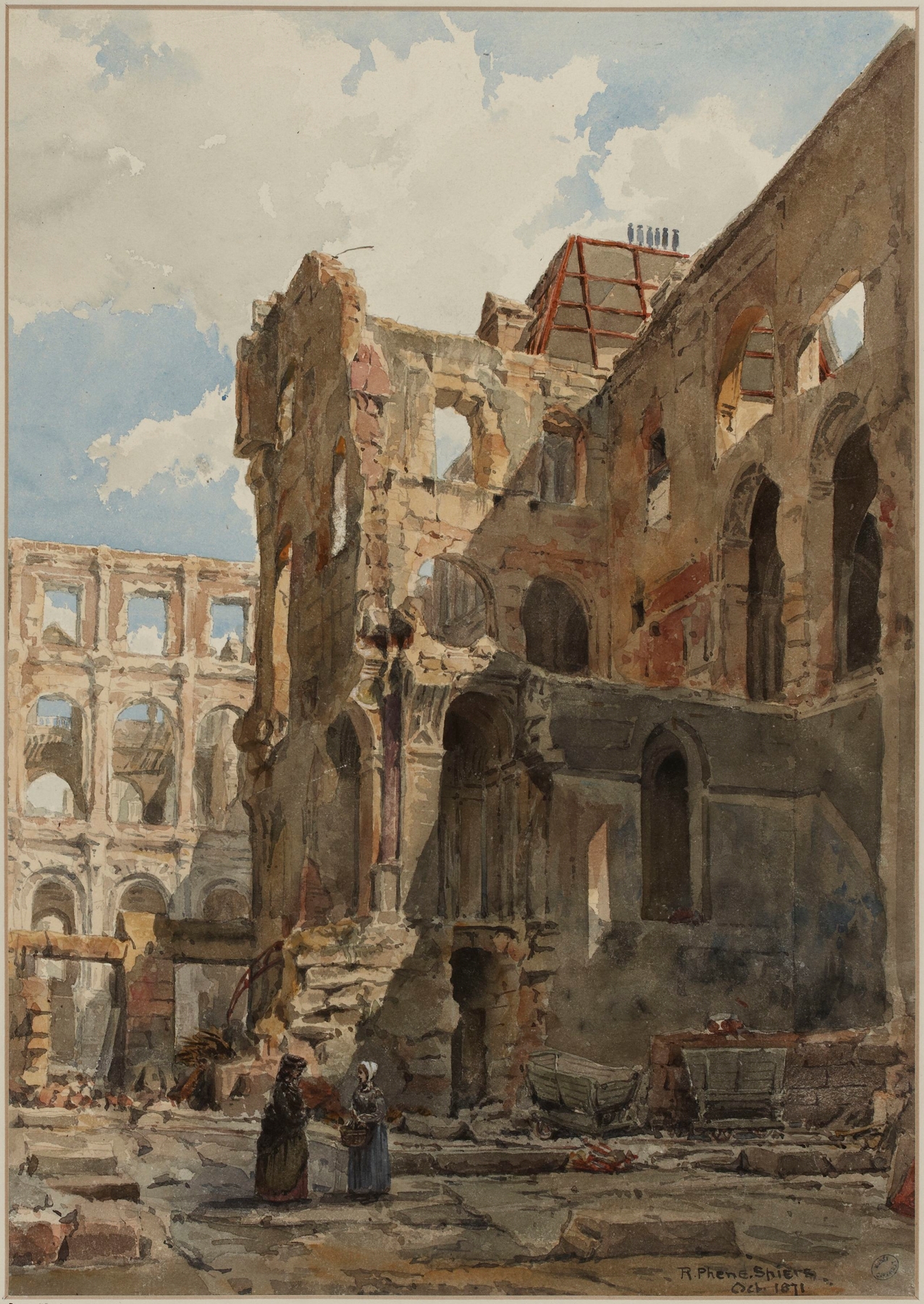
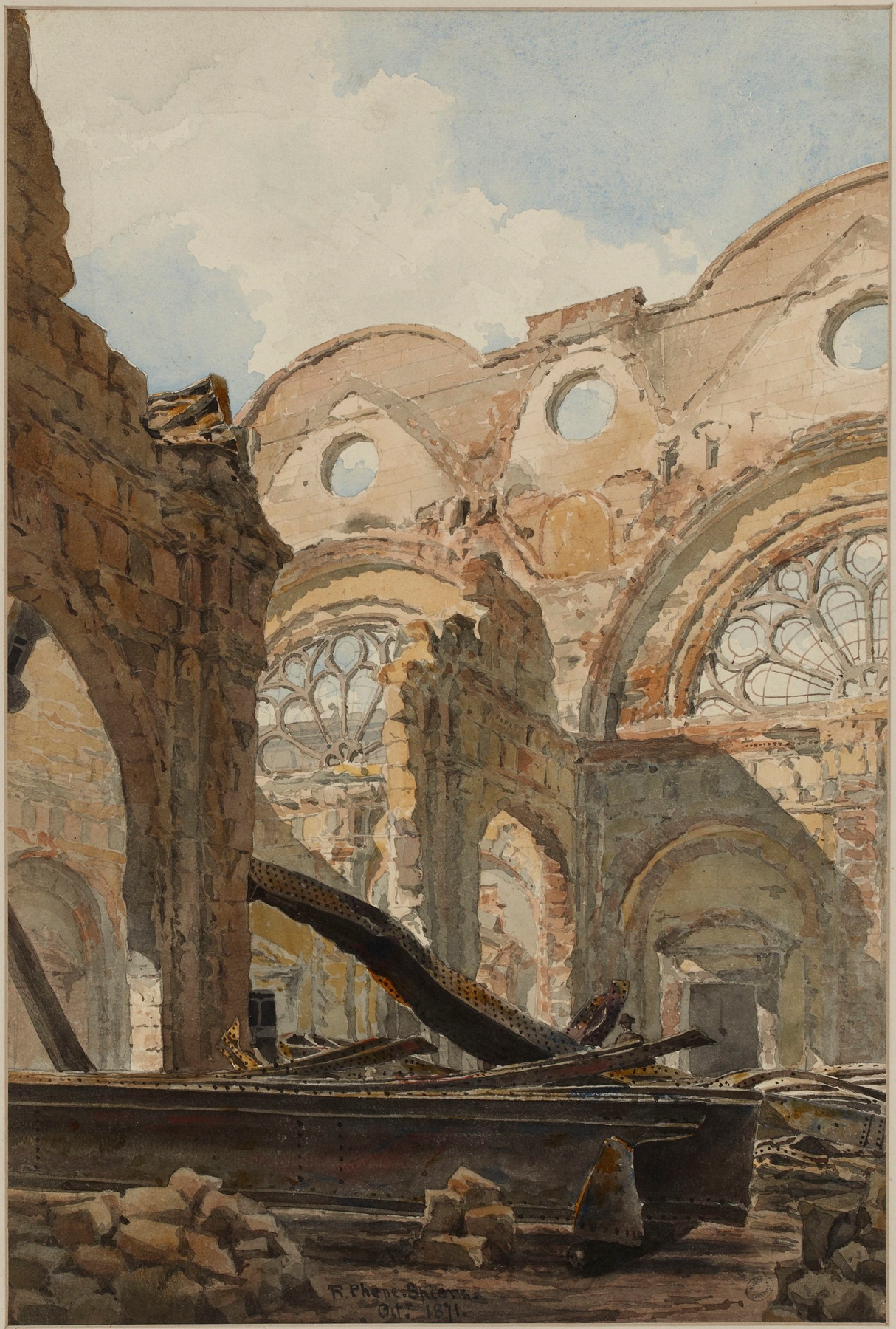
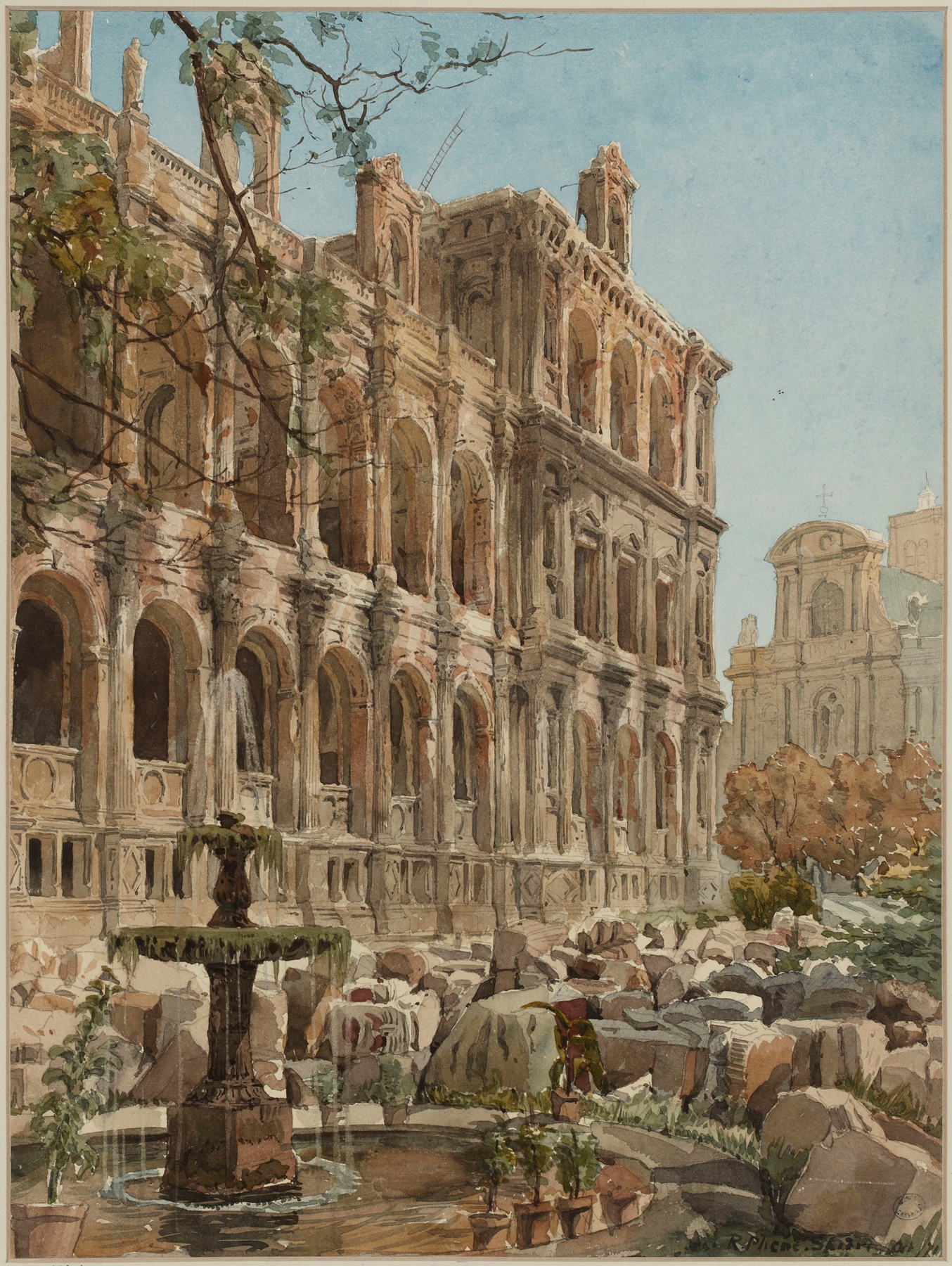
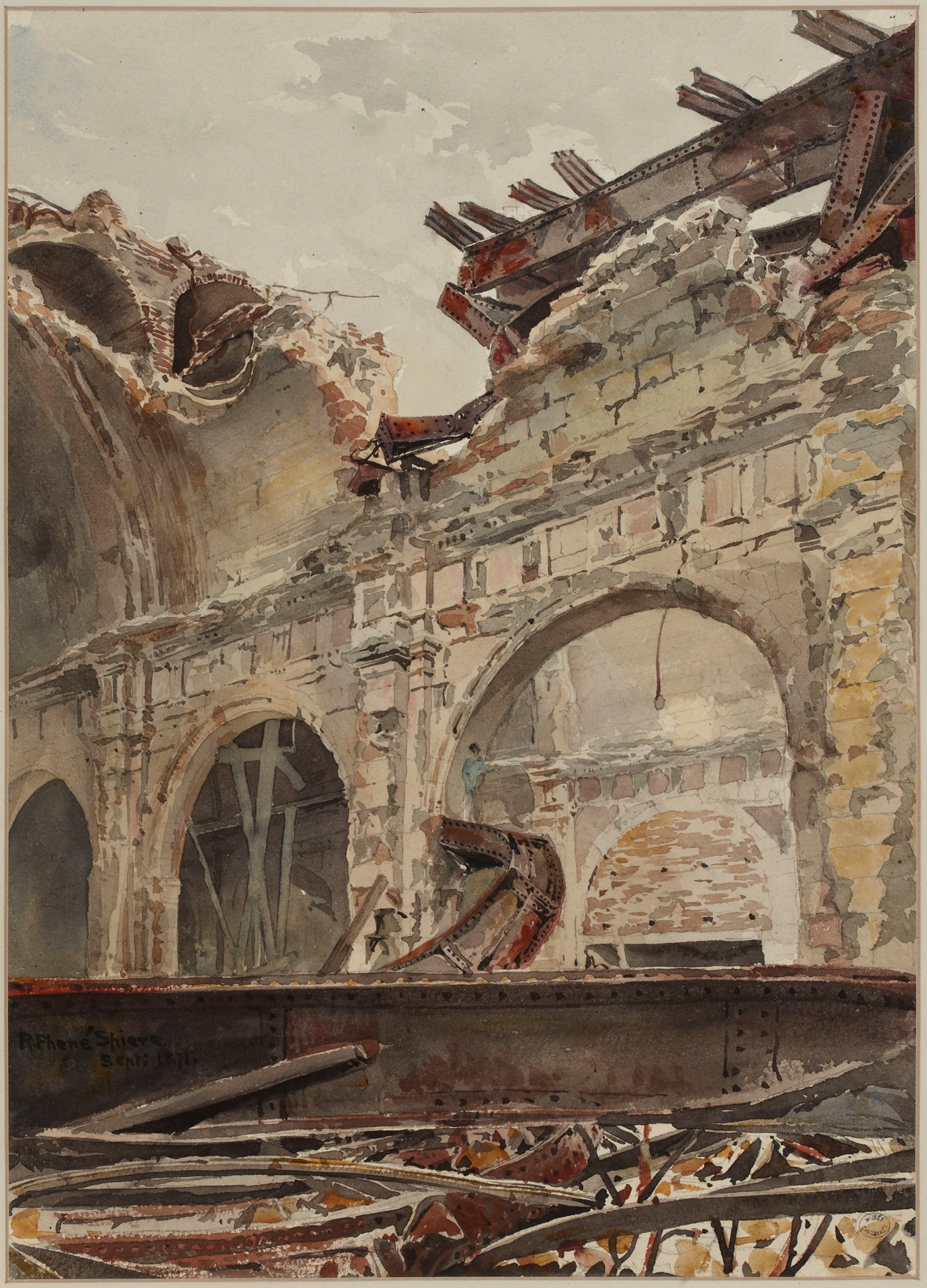
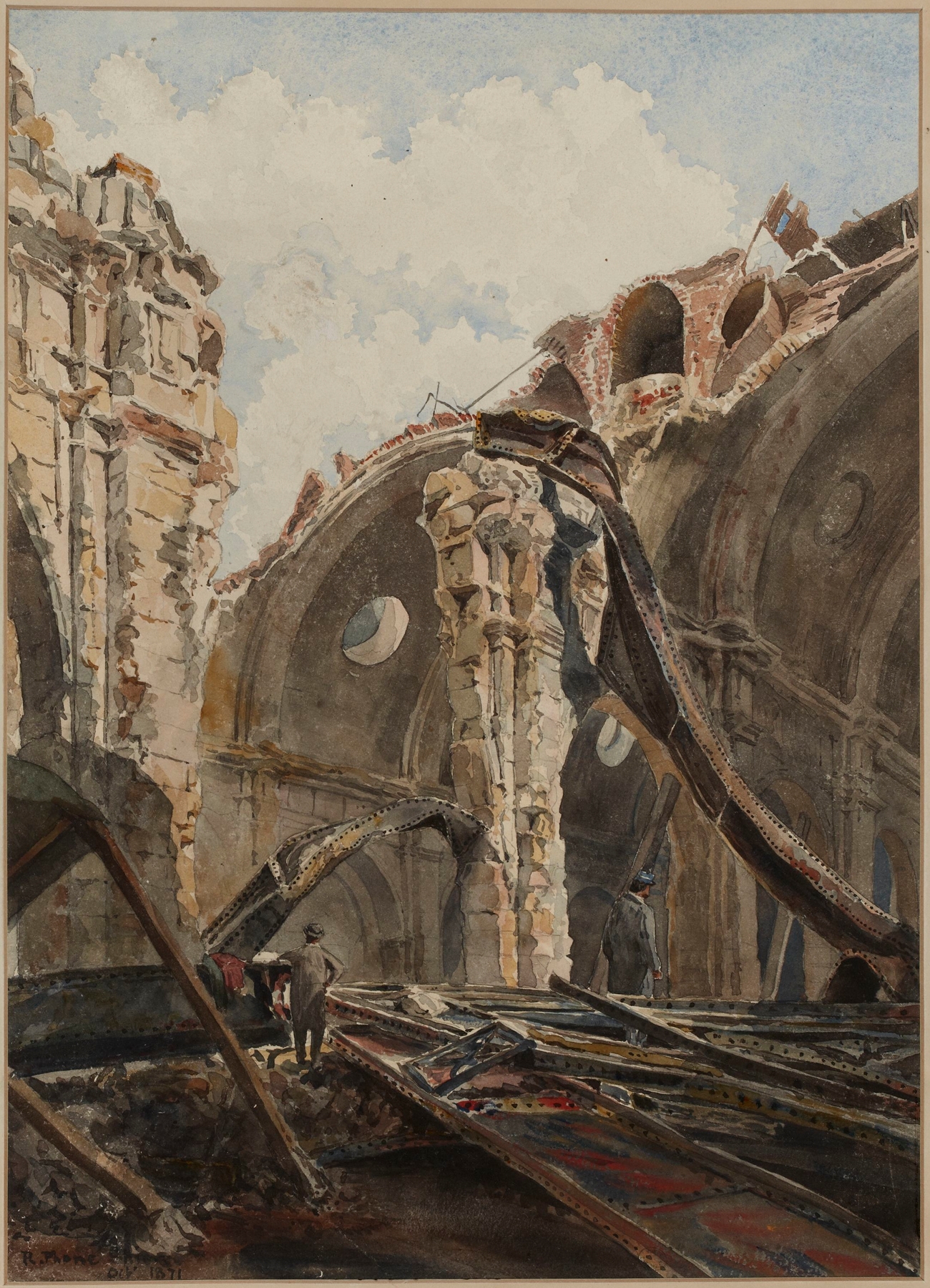
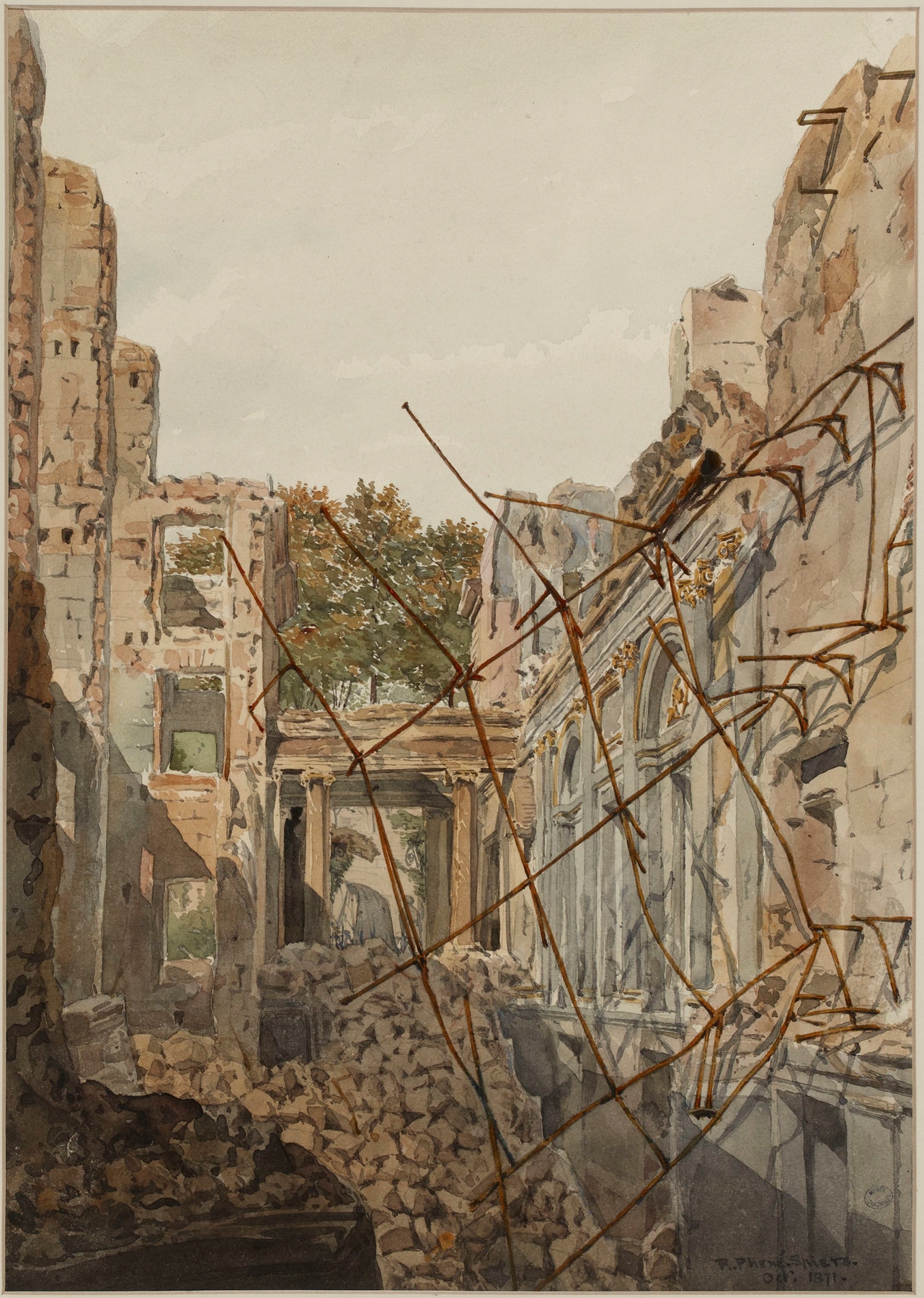
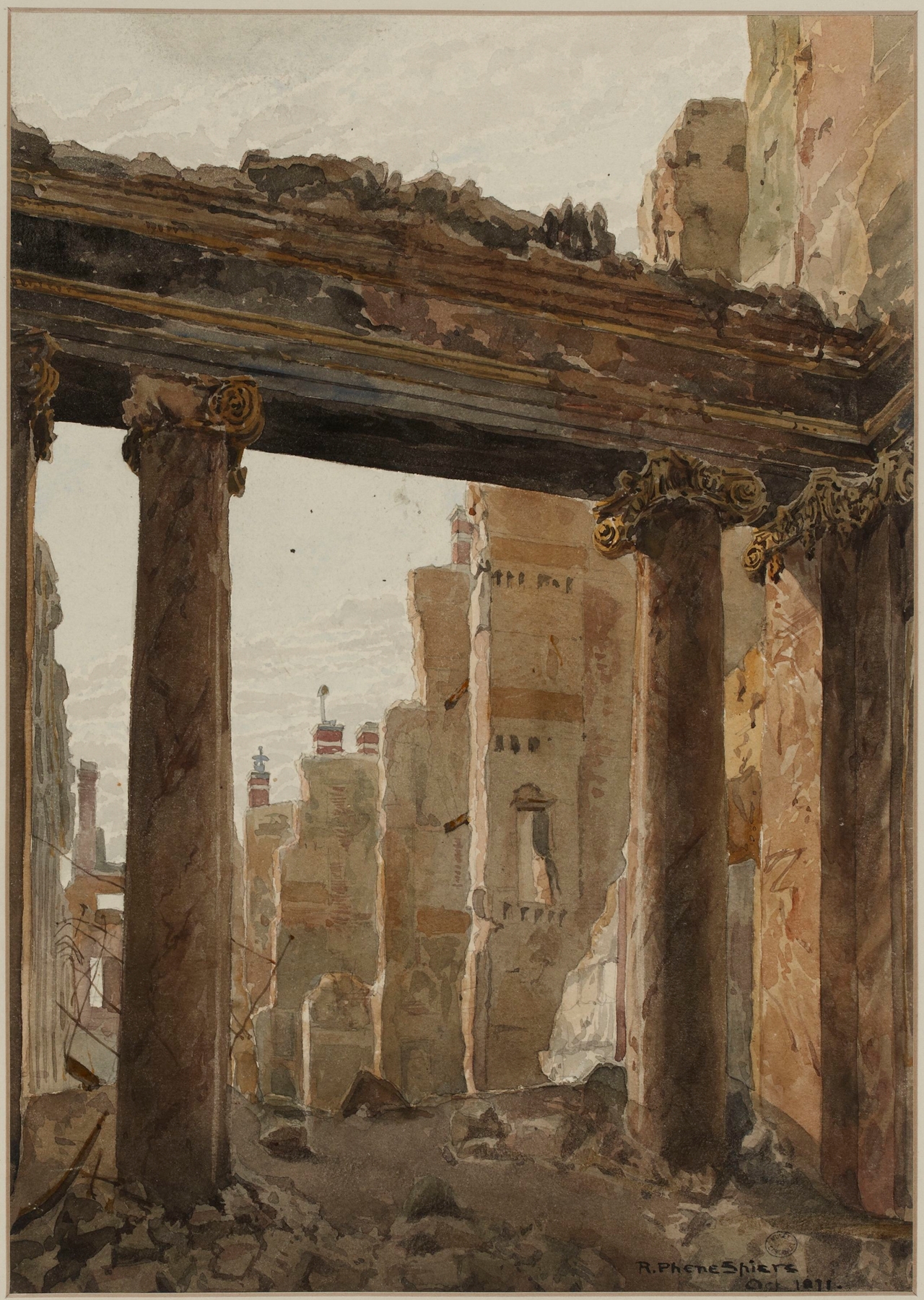
Where does light end, and longing begin? In the aftermath of ruin, the hope for rebirth flickers like a candle in the dark. Look closely at the delicate brushstrokes that define the crumbling columns and shattered façades of the once-majestic structure. The artist masterfully balances light and shadow, drawing the eye to the remnants of grandeur amid the encroaching greenery. Notice how the soft glow of the sky seems to cradle the ruins, imbuing them with a sense of melancholic beauty.
The muted palette evokes both decay and the promise of nature reclaiming its space, an eloquent testament to time’s relentless passage. Within this scene lies a poignant exploration of resilience. The juxtaposition of the serene sky and the desolation of the palace invites contemplation on loss and renewal. Each cracked stone whispers a story of the past, while the verdant growth surrounding them hints at a future yet unwritten.
The tension between abandonment and the persistent embrace of nature embodies a quiet but powerful hope, suggesting that from devastation, life can still emerge. In 1871, the artist painted this work amidst the backdrop of the Franco-Prussian War, a time of profound upheaval and loss in France. Spiers, known for his architectural subjects, sought to capture both the physical destruction and the emotional landscape of a nation in mourning. Working in Paris, he reflected on the beauty that remains even in the face of despair, marking a significant moment in the evolution of his artistic vision.