Ruines de l’Hôtel de Ville en 1871 — History & Analysis
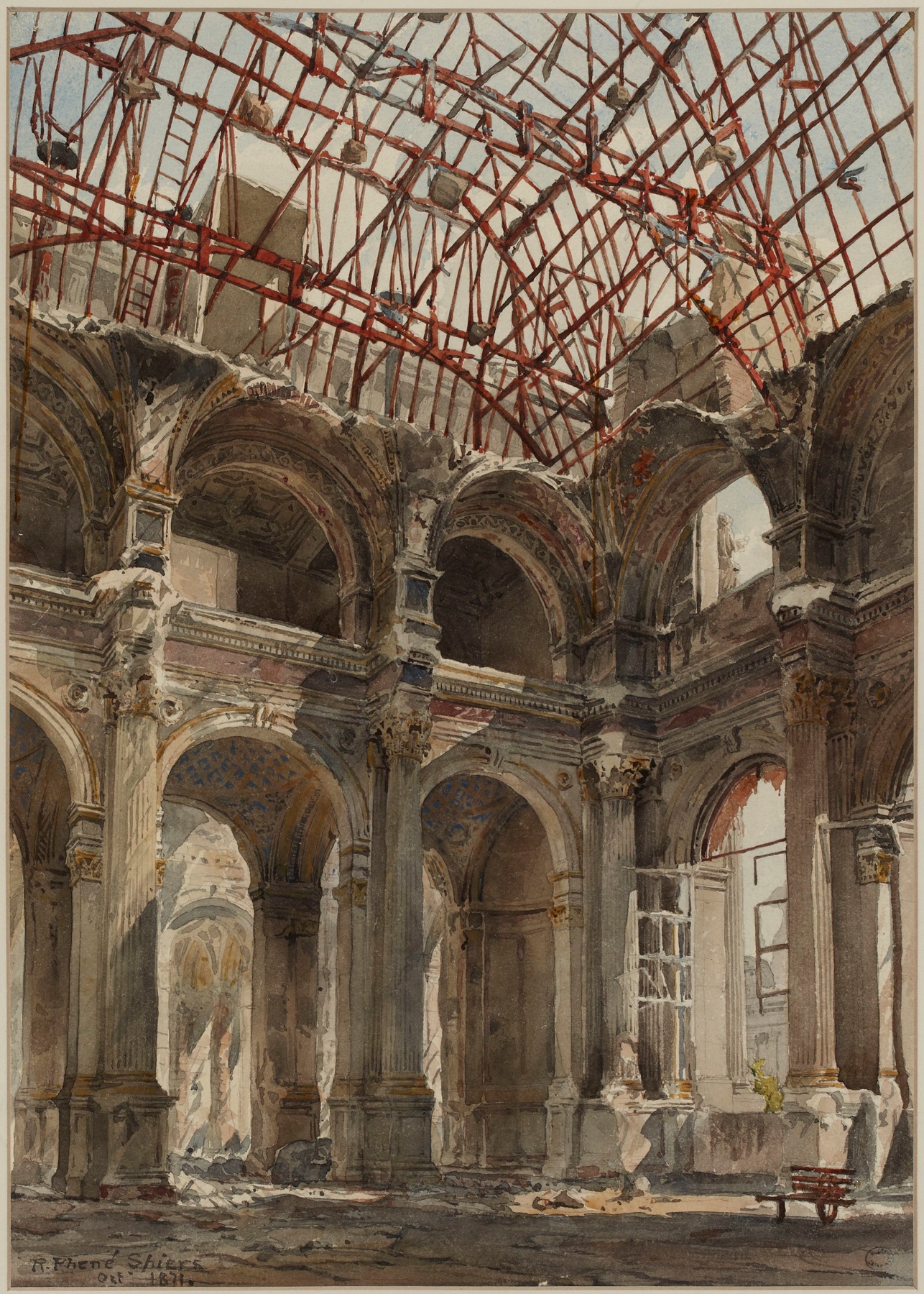
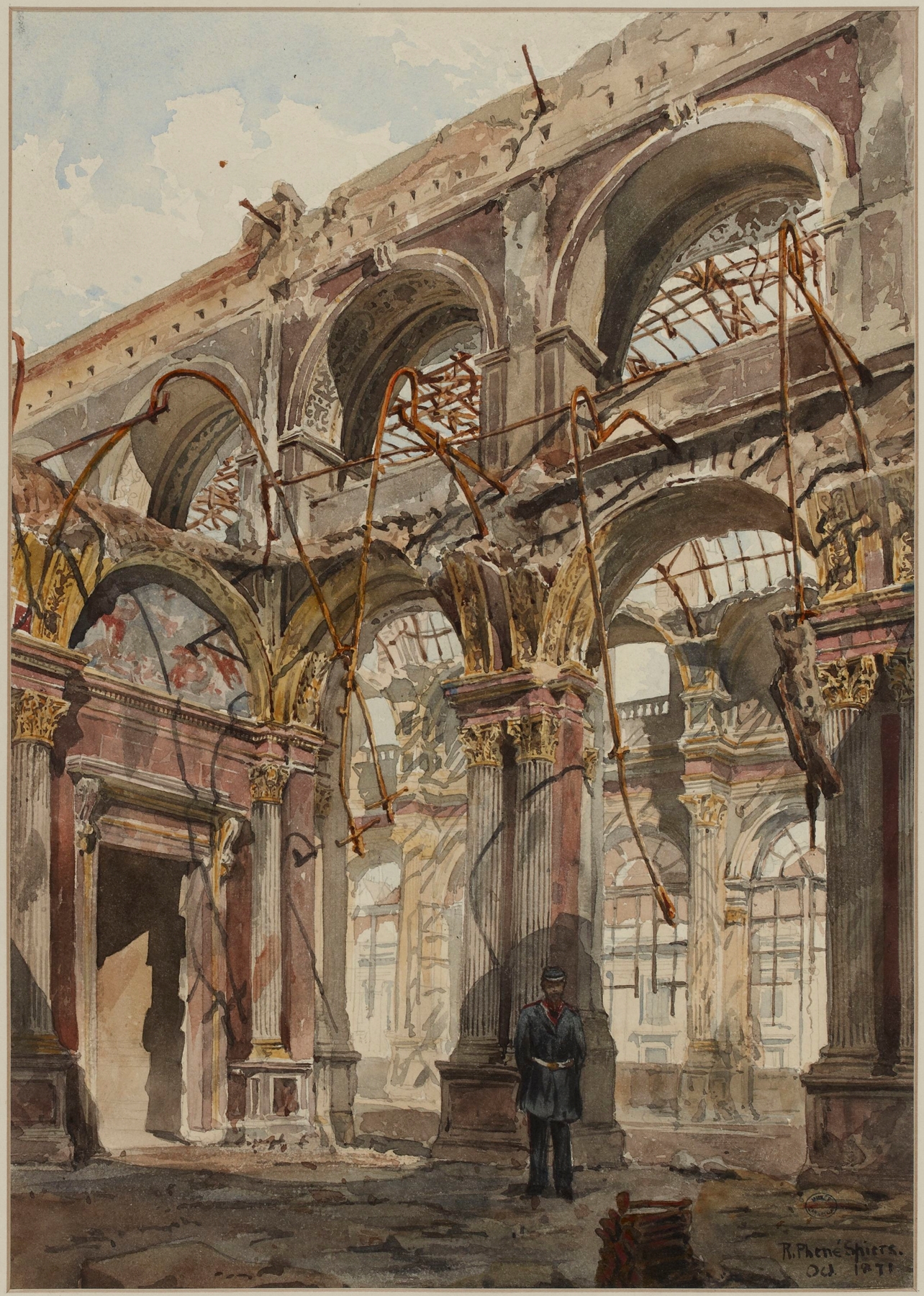
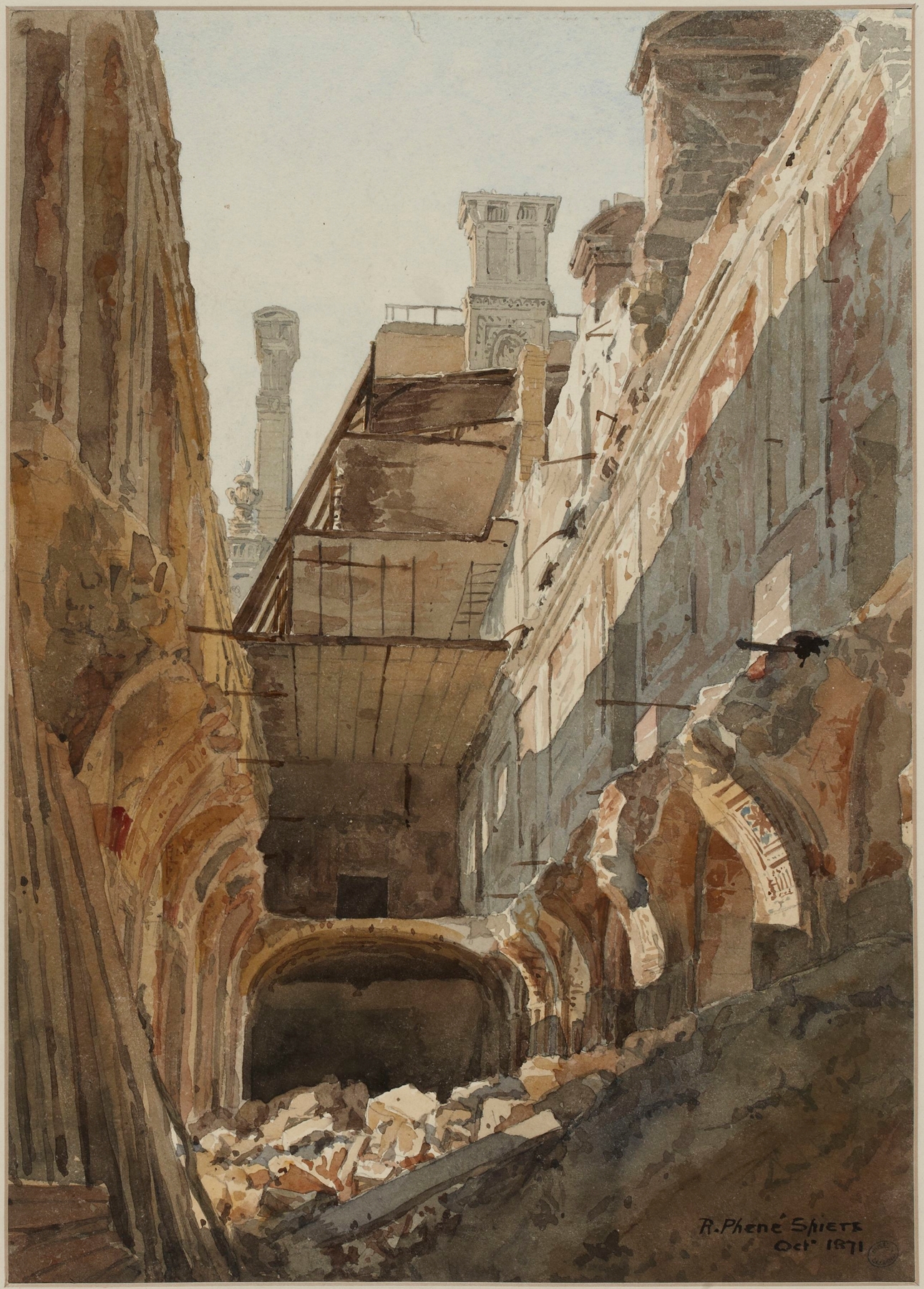
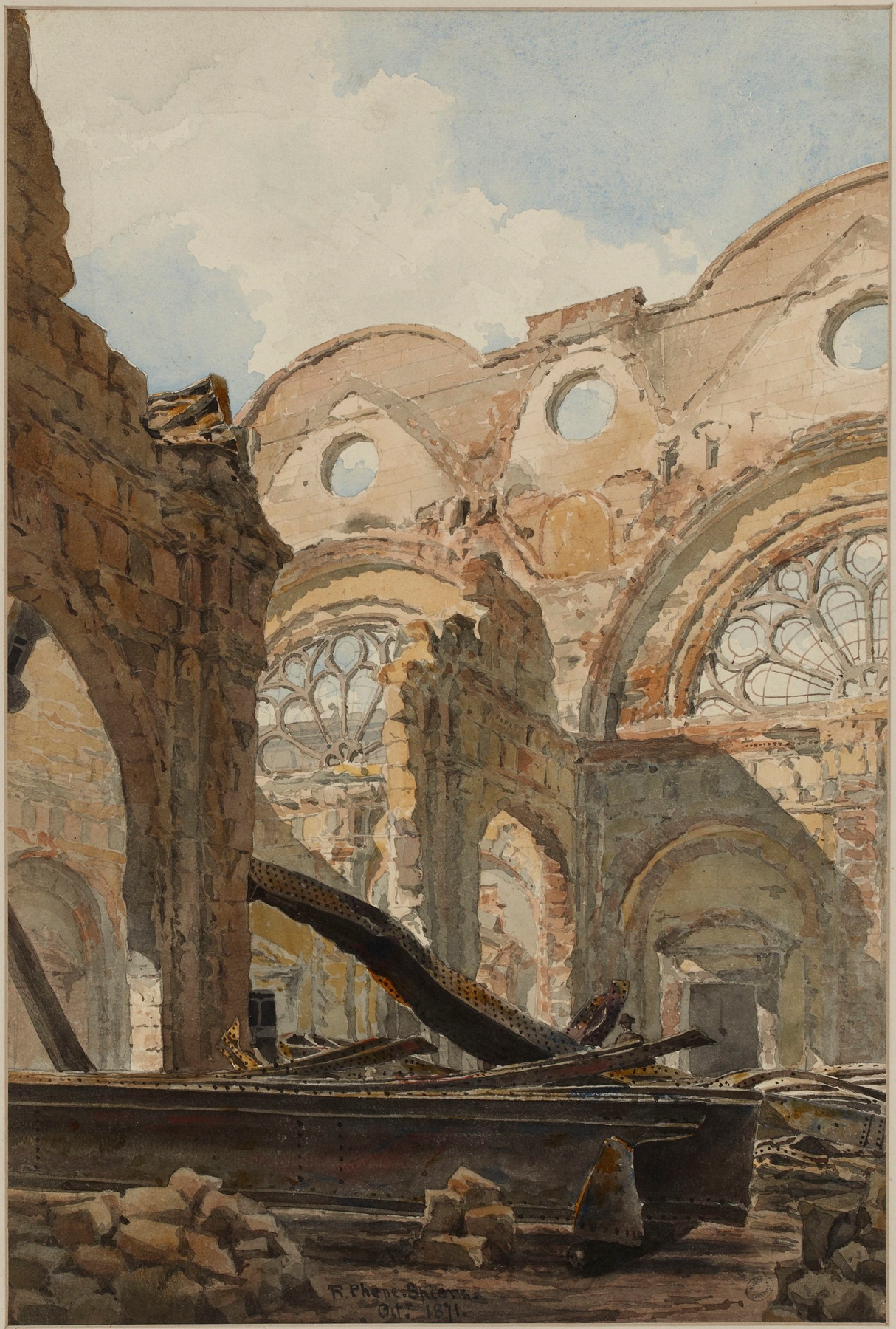
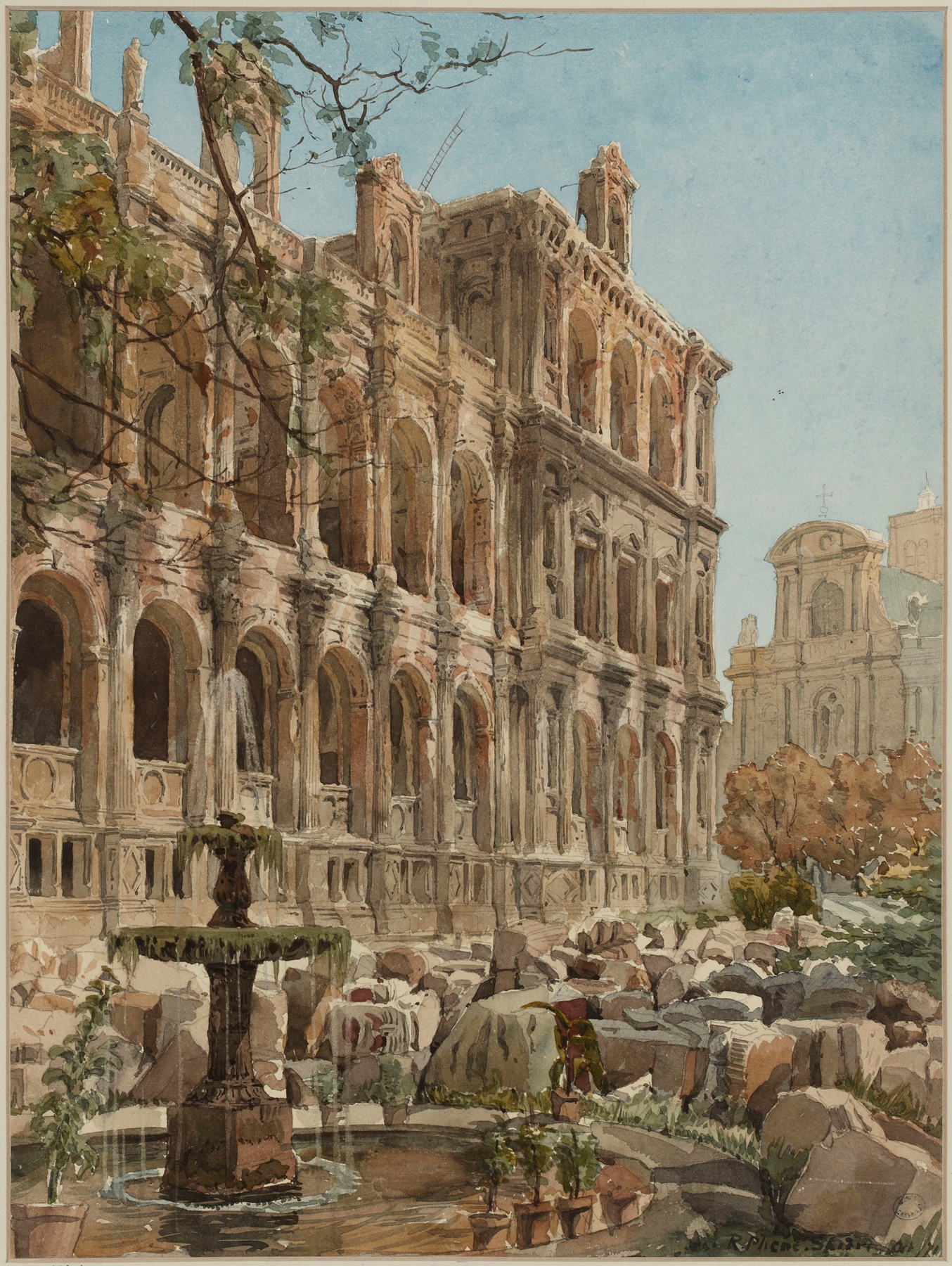
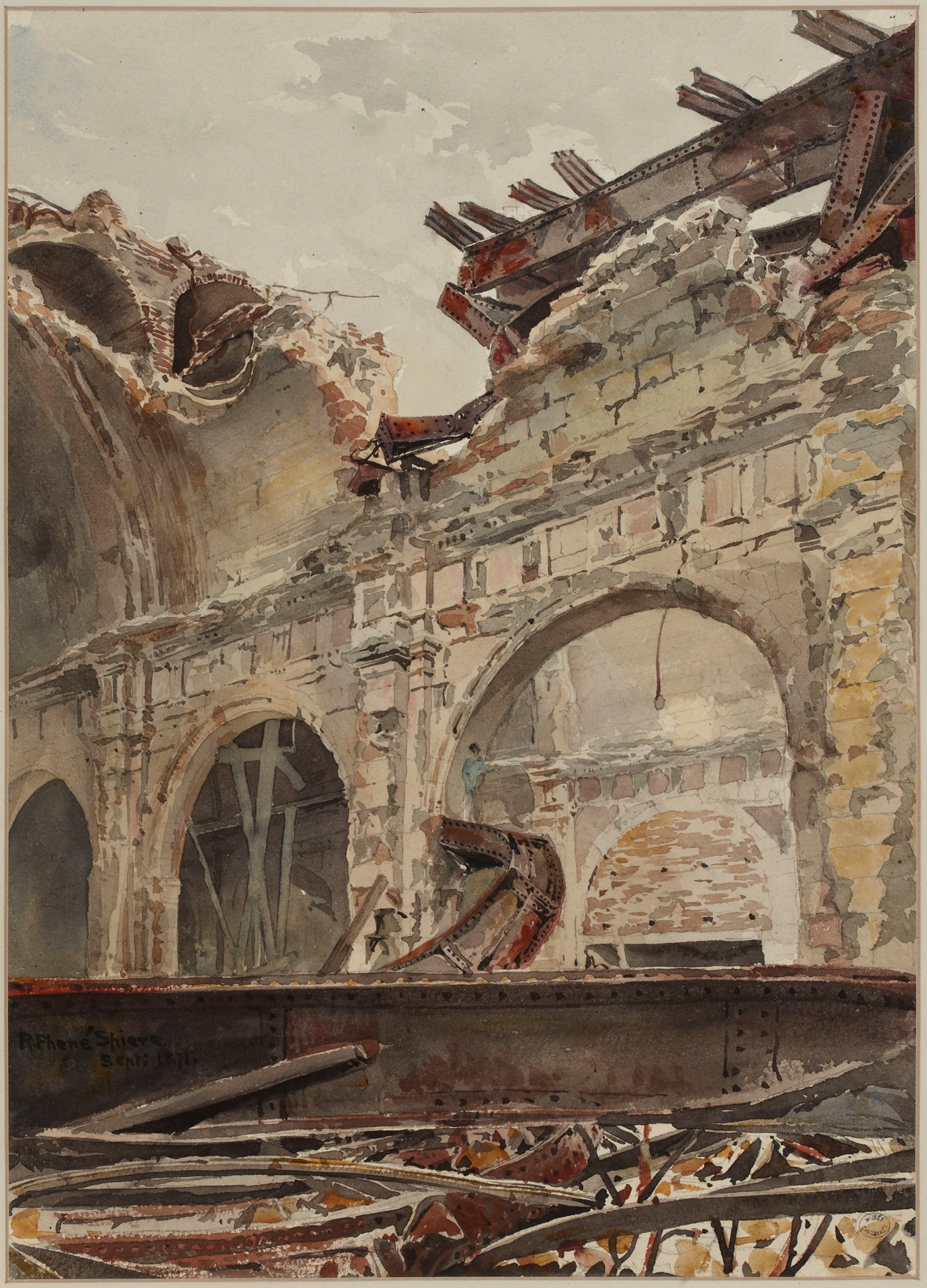
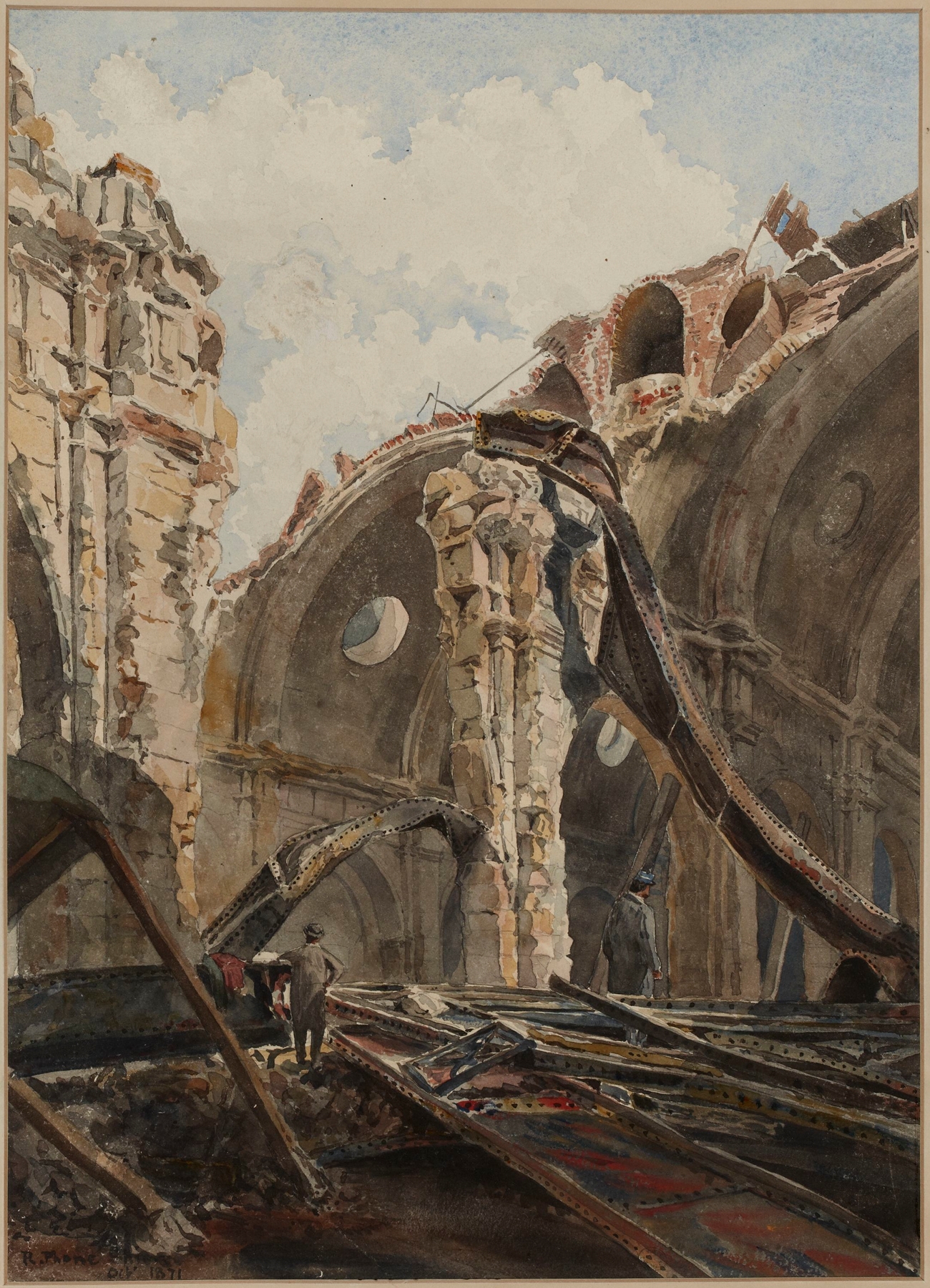
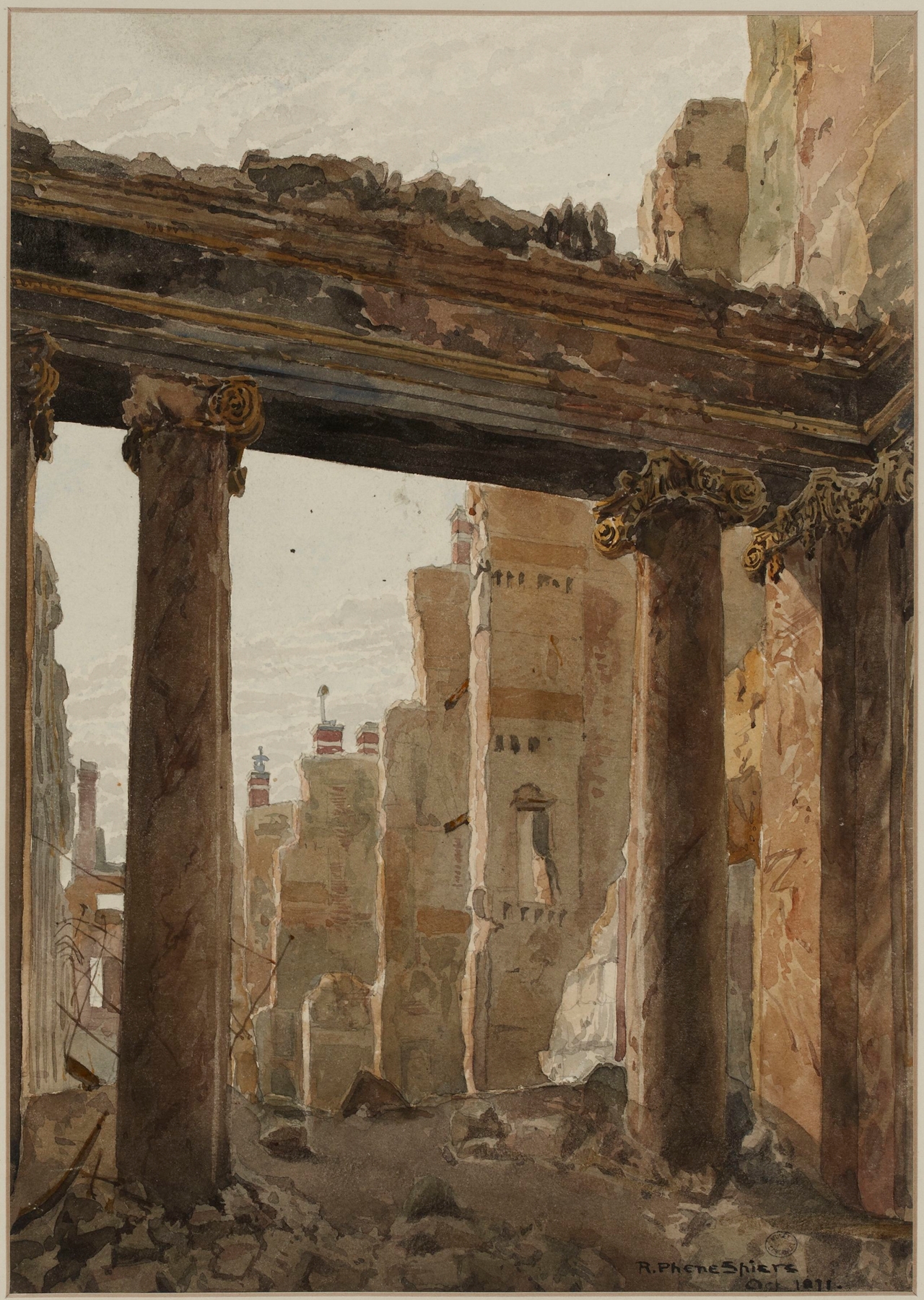
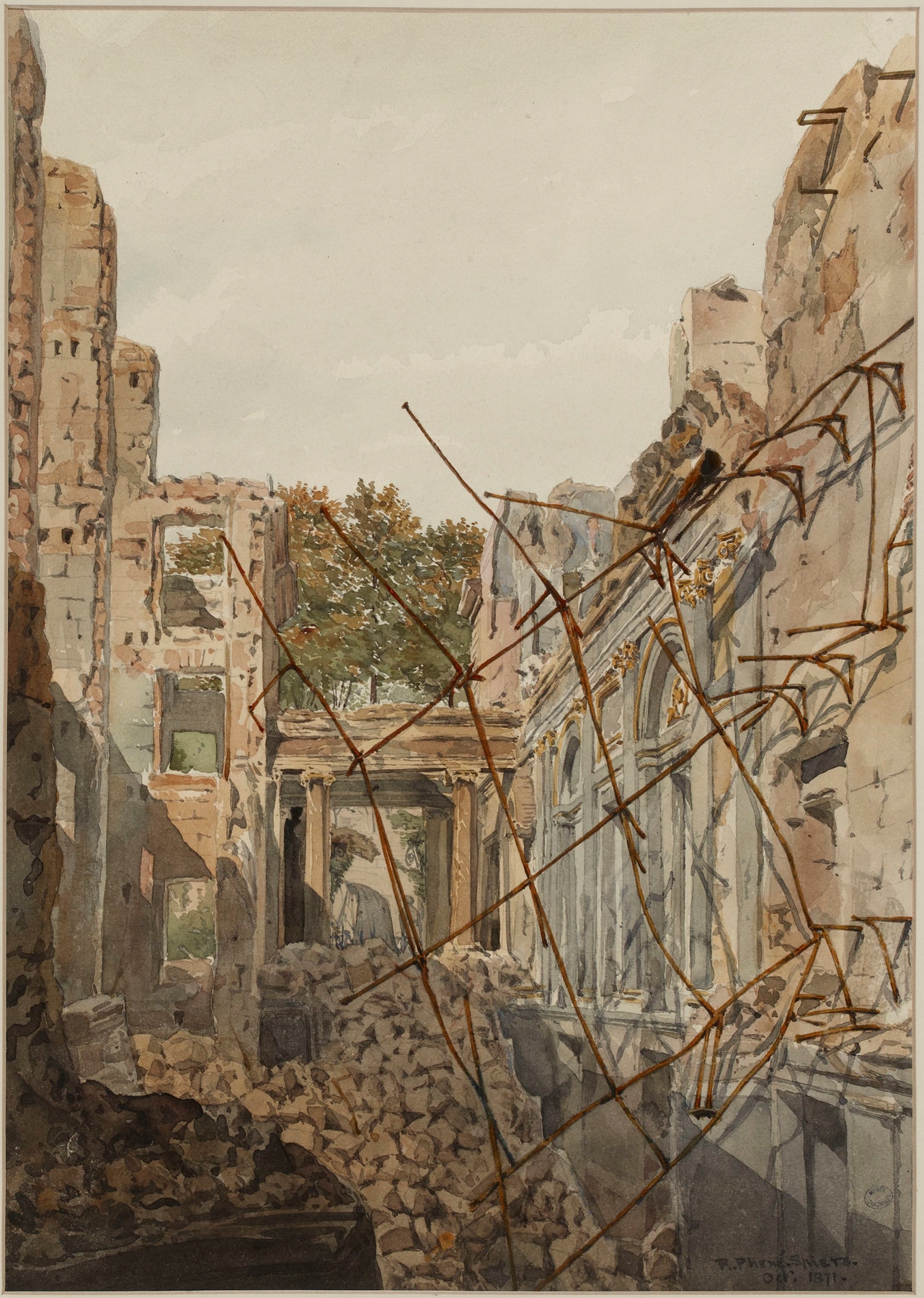
Can paint confess what words never could? In Ruines de l’Hôtel de Ville en 1871, chaos transforms into poignant beauty, revealing the silent aftermath of destruction and loss. Look to the foreground, where the rubble of the Hôtel de Ville sprawls across the canvas, a testament to the tumultuous events of its time. Notice how the muted grays and browns dominate the scene, expertly softened by the delicate handling of light that filters through the debris.
This contrasting light subtly guides your gaze upwards, where the remnants of the building rise, almost defiantly, against the pale sky, evoking a sense of hope amid despair. Hidden within this chaos are layers of emotional tension and historical resonance. The scattered stones and tattered remnants symbolize not just physical ruin but the disillusionment of a society grappling with change. The absence of people draws attention to the silence that now fills the space, amplifying the weight of what once stood proud.
Each brushstroke encapsulates a story of loss, urging the viewer to confront the fragility of civilization itself. Richard Phené Spiers created this work in the wake of the Paris Commune, a tumultuous chapter in history marked by violence and upheaval. Painted in 1871, his focus on the ravaged city reflects the artistic movement of the time, which sought to document and respond to societal change. As Spiers navigated the complexities of urban ruin, he captured not only the physical landscape but also the shifting tides of human emotion that accompanied such chaos.