Ruines du Palais des Tuileries, salon de Diane, en 1871 — History & Analysis
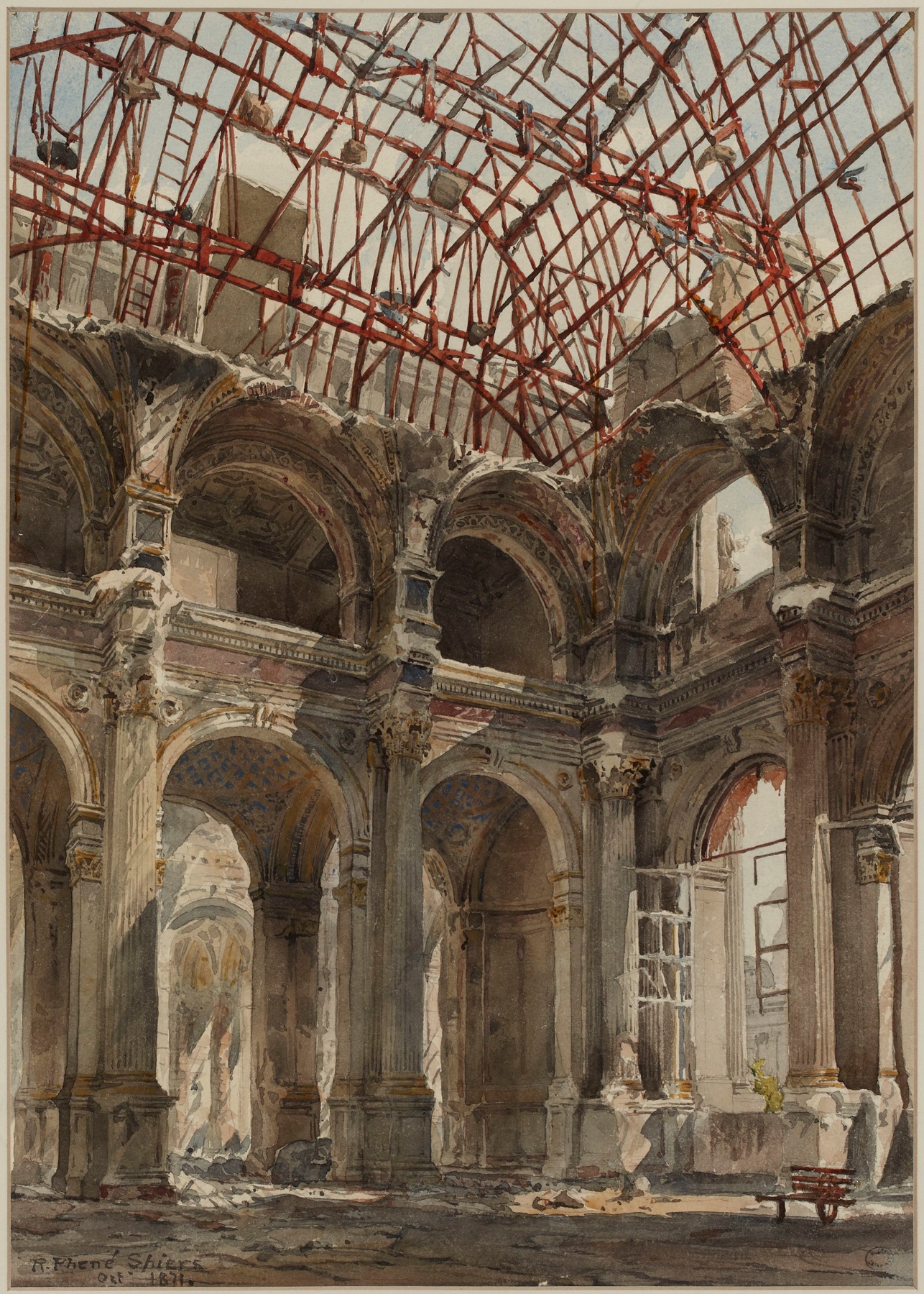
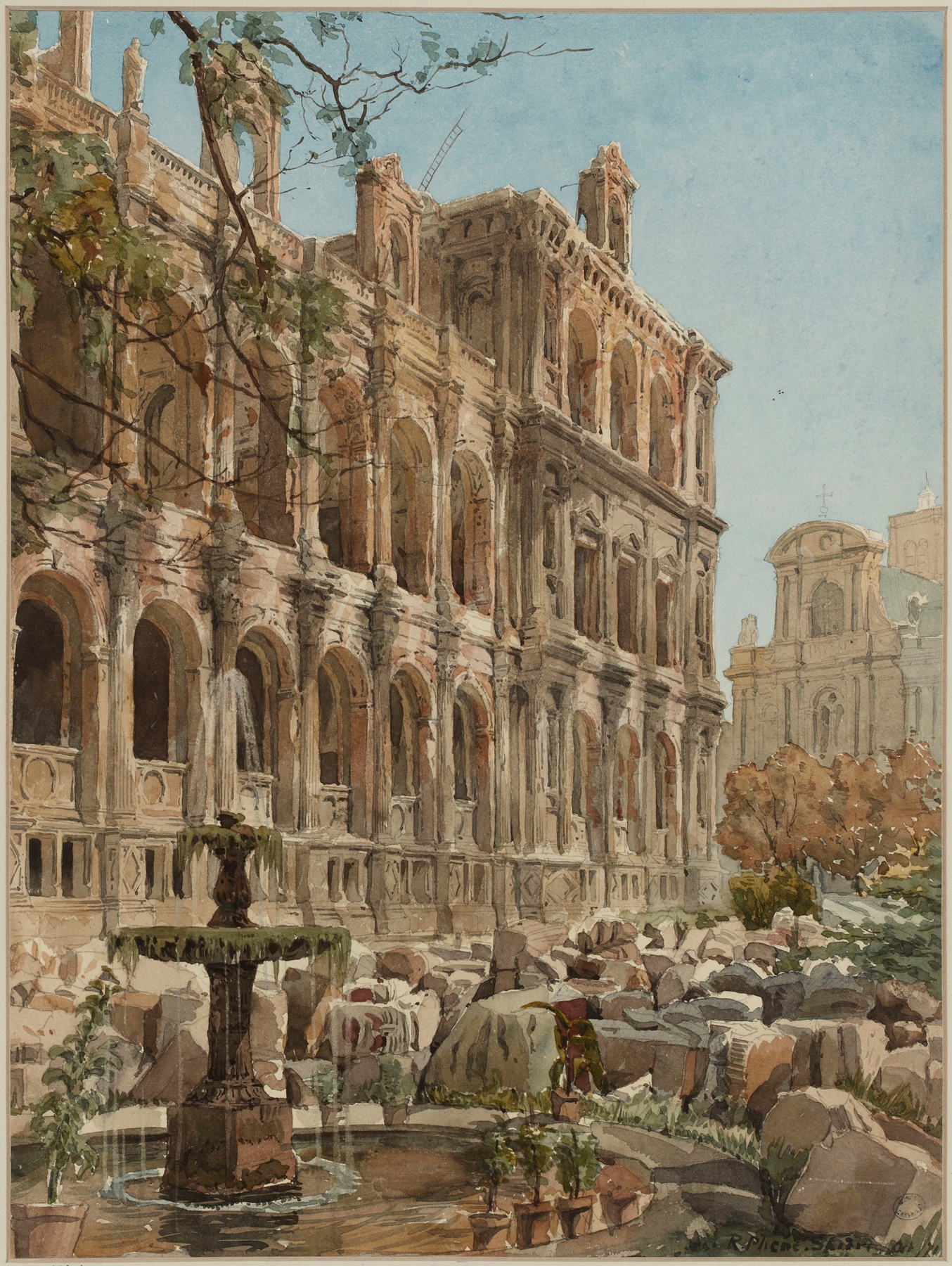
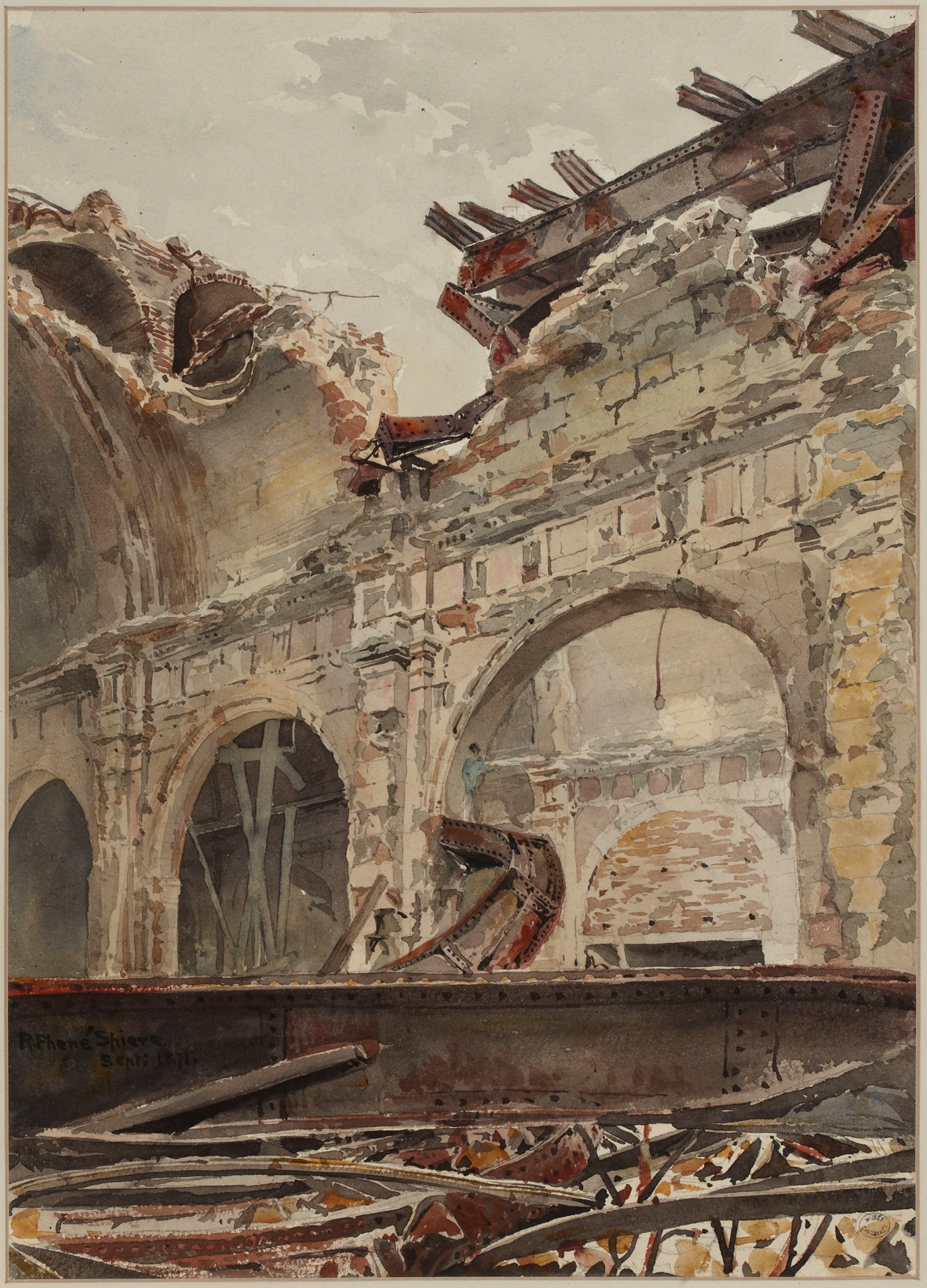
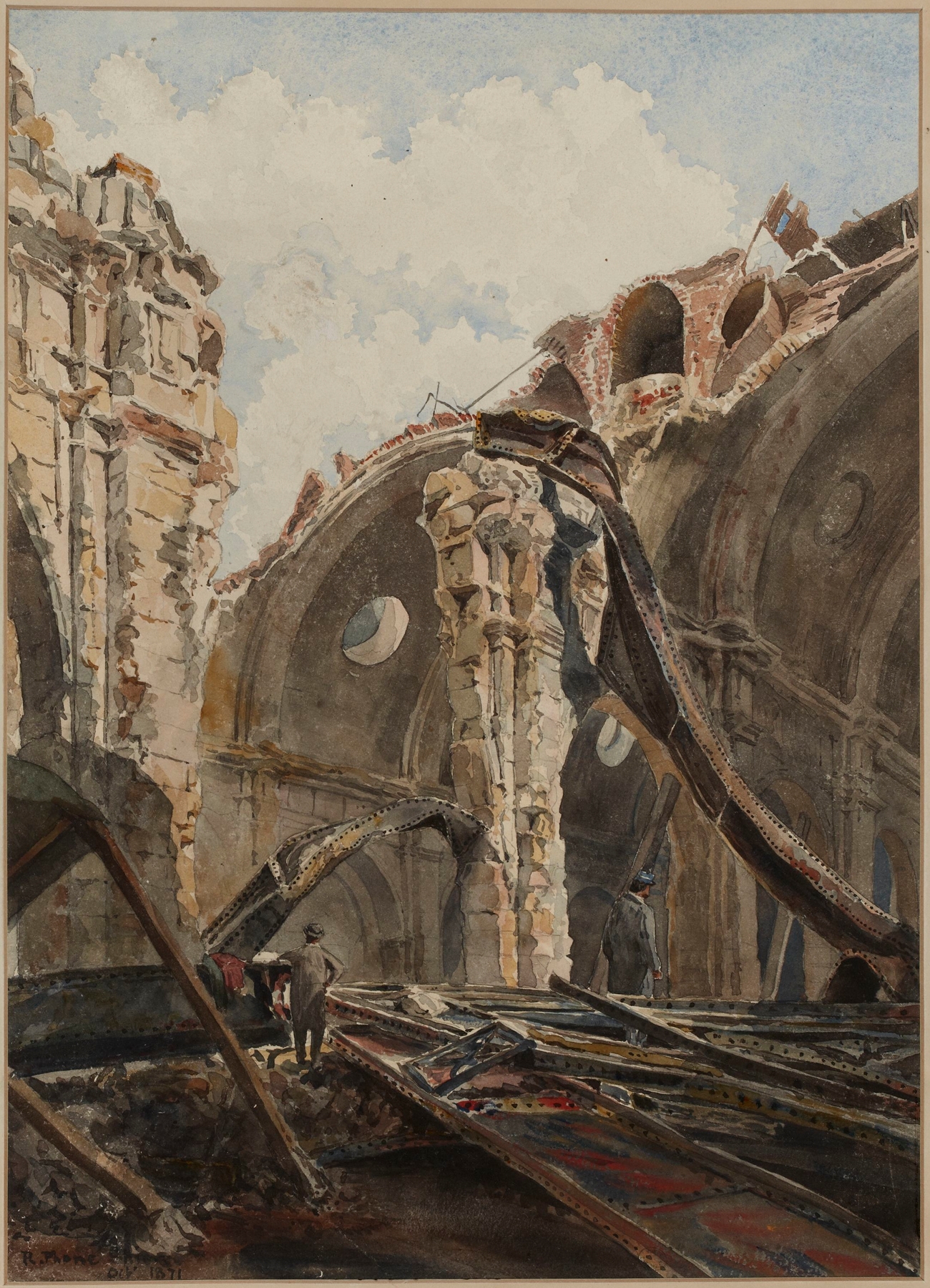
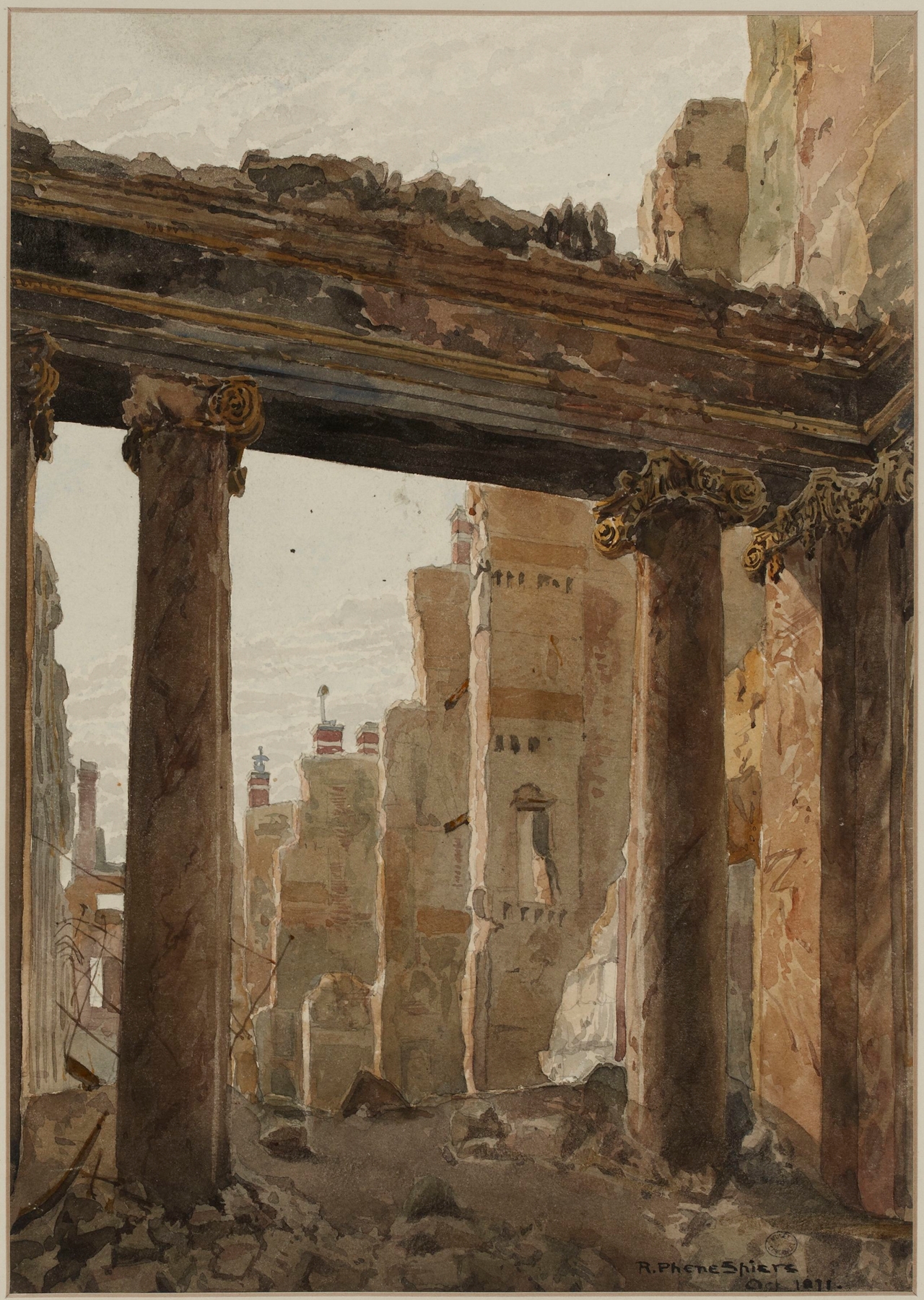
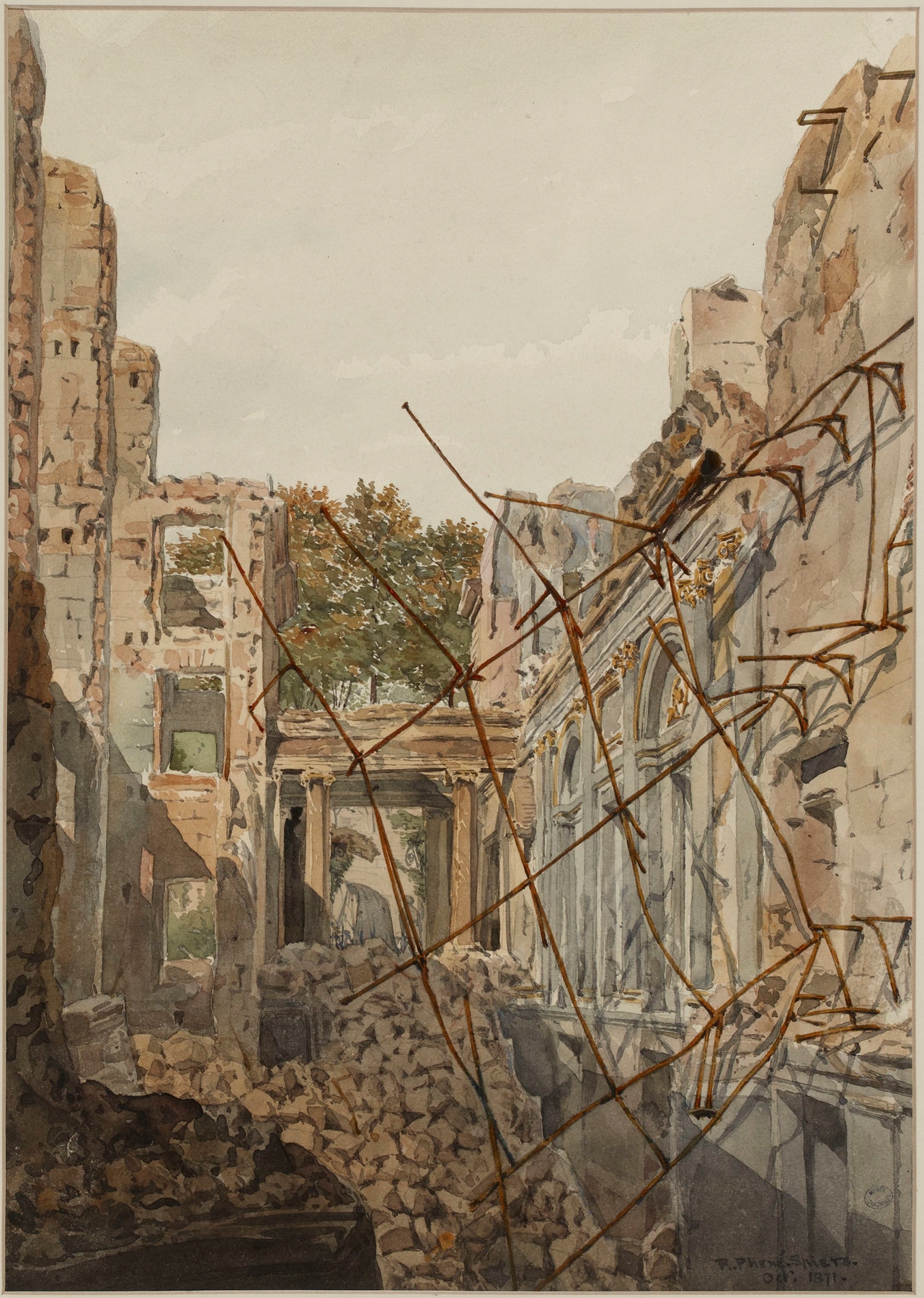
Where does light end, and longing begin? In a moment suspended between memory and reality, the essence of faith emerges quietly within the ruins of a once-majestic palace, speaking volumes of what was lost. Look to the center of the canvas, where the crumbling walls seem to breathe with history. The delicate interplay of light and shadow reveals intricate architectural details, remnants of a grandeur now shadowed by decay.
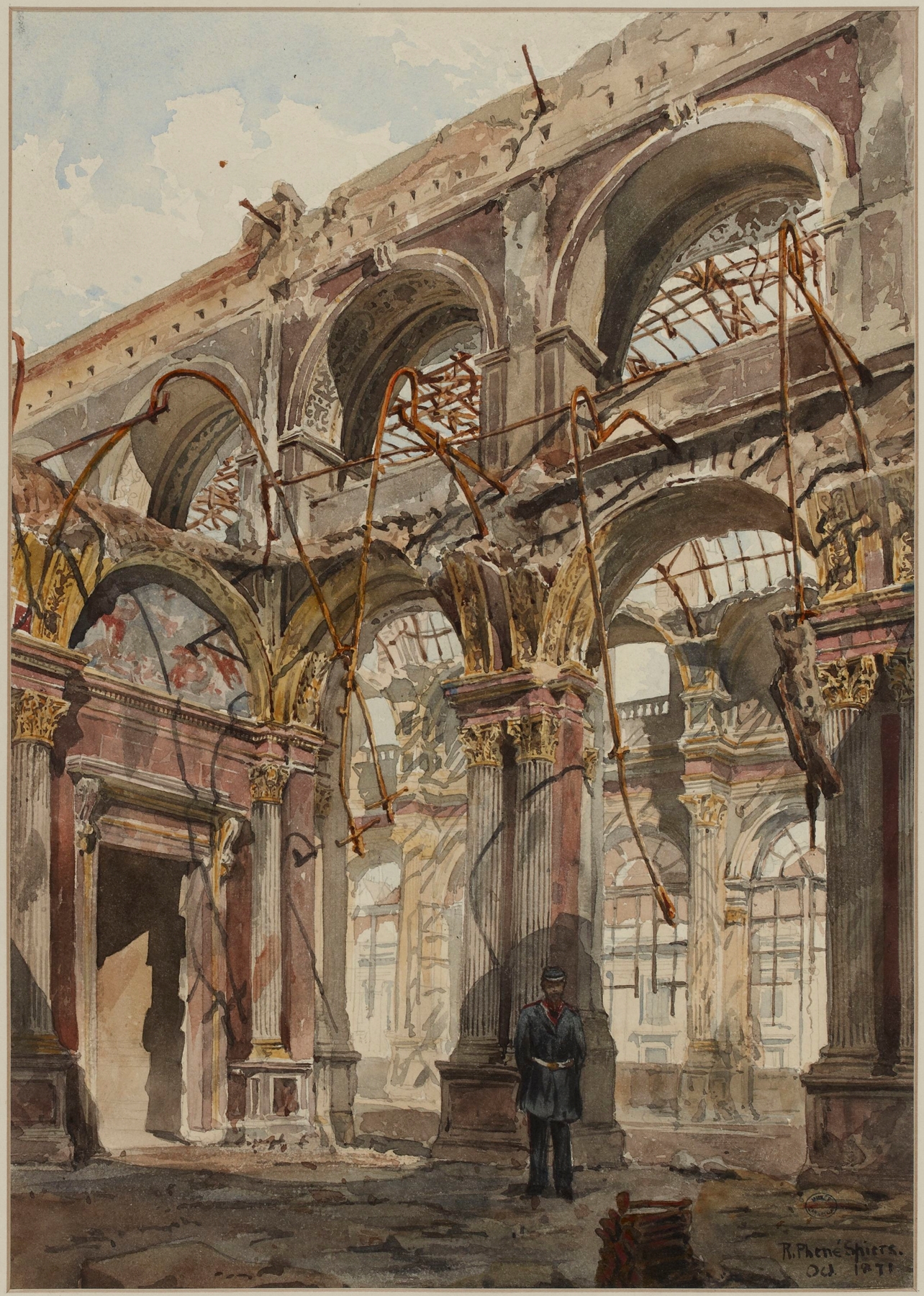
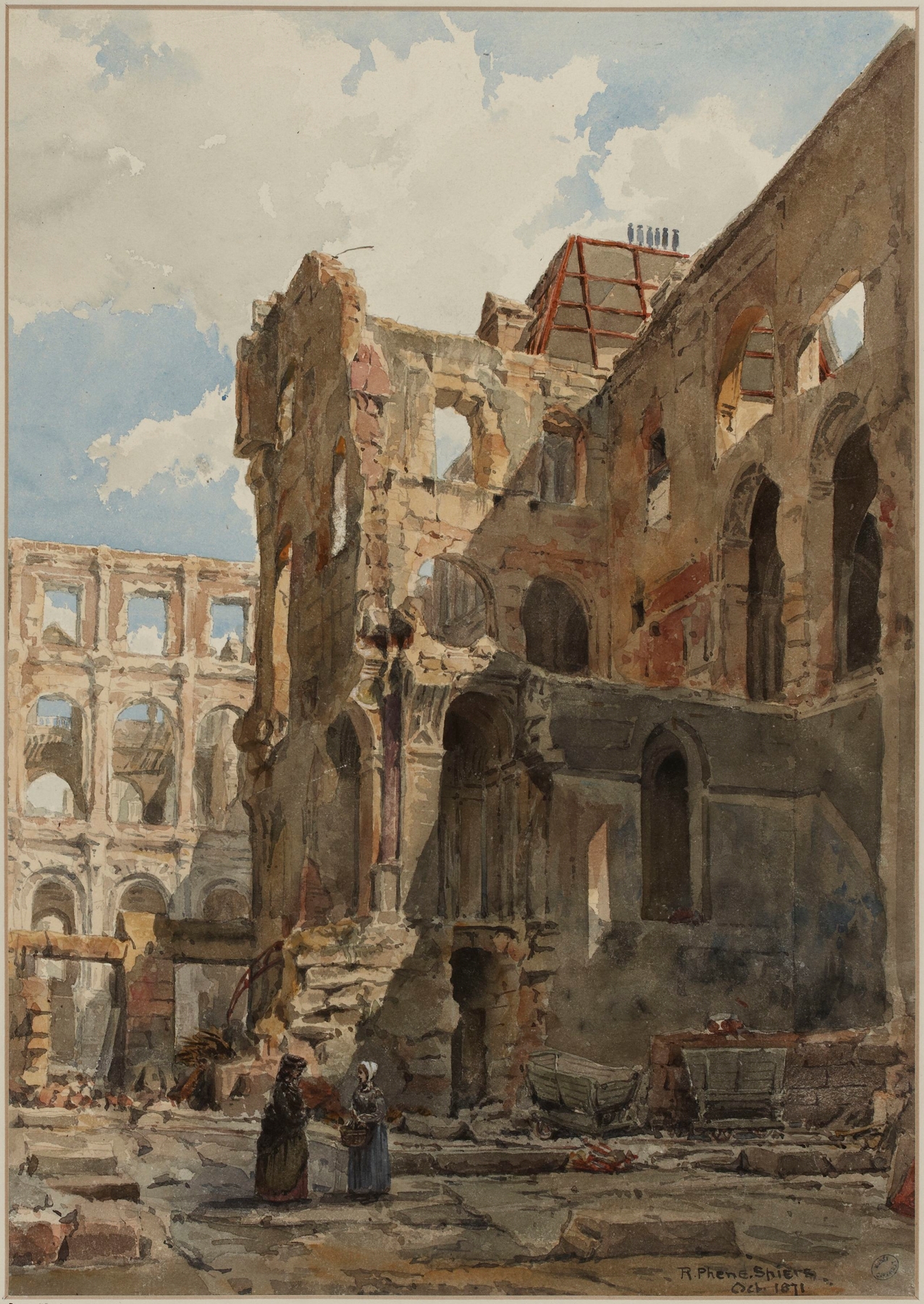
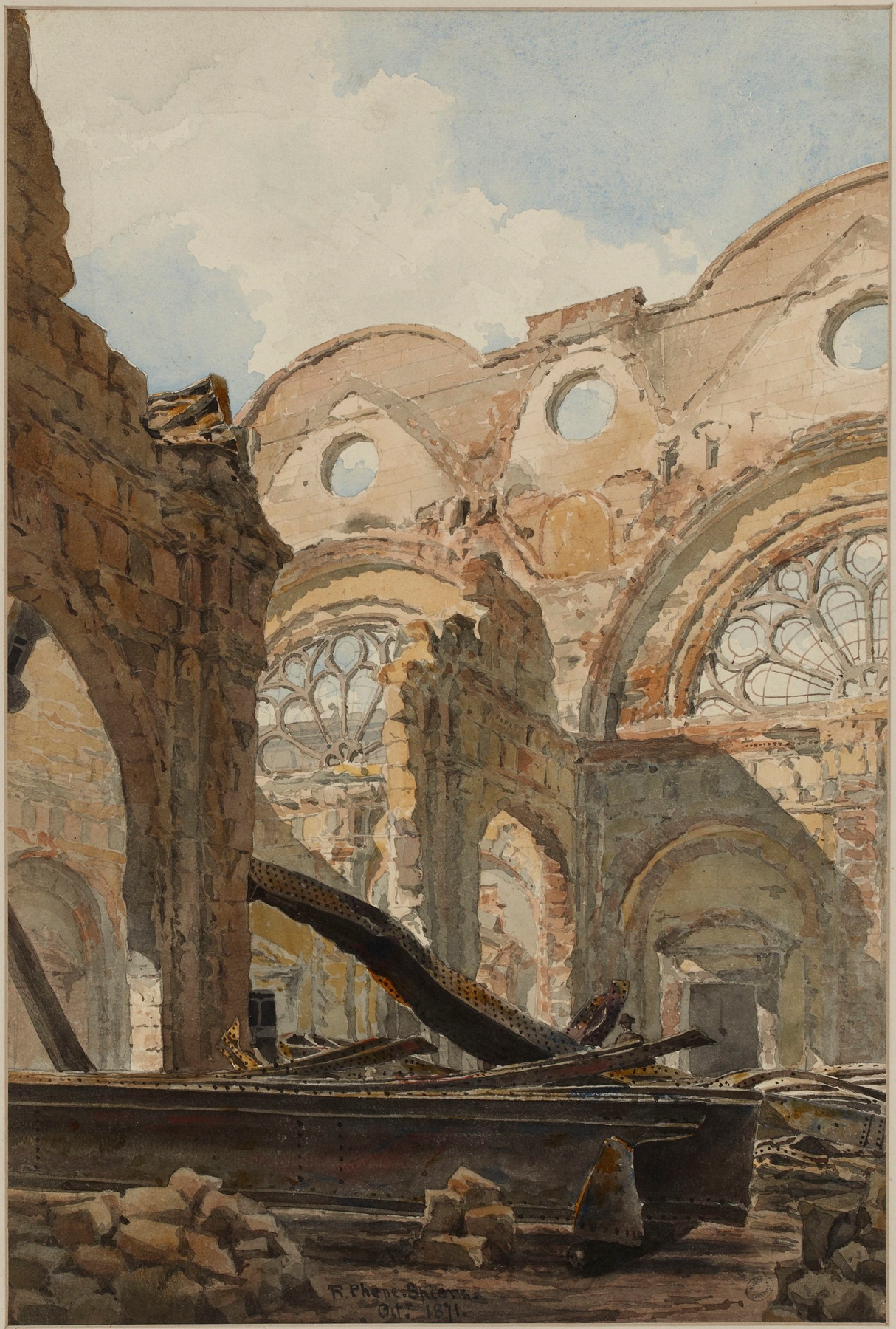
Notice how the light pours through the broken windows, casting ethereal beams that dance across the debris-laden floor, emphasizing both the frailty and resilience of the structure. The muted palette enhances the somber atmosphere, inviting contemplation on both the beauty and tragedy intertwined in the scene. Hidden within these ruins are the echoes of a vibrant past, contrasting the pain of absence with the hope of renewal. The remnants of adornment suggest not only decay but also the endurance of beauty through time.
As light illuminates specific details, it becomes a metaphor for faith itself—flickering yet persistent, a reminder that even in destruction, there lies the potential for rebirth and reflection. In 1871, Spiers painted this work amid the tumult of the Franco-Prussian War, during which the Palais des Tuileries suffered devastating fires. Capturing the ruins, he offered a poignant commentary on the loss of cultural heritage in a time of conflict. Living in Paris at the time, he was influenced by the prevailing themes of resilience and memory in the art world, leaving a lasting mark on the narrative of his era.