Ruines de la façade de l’Hôtel de Ville en 1871. — History & Analysis
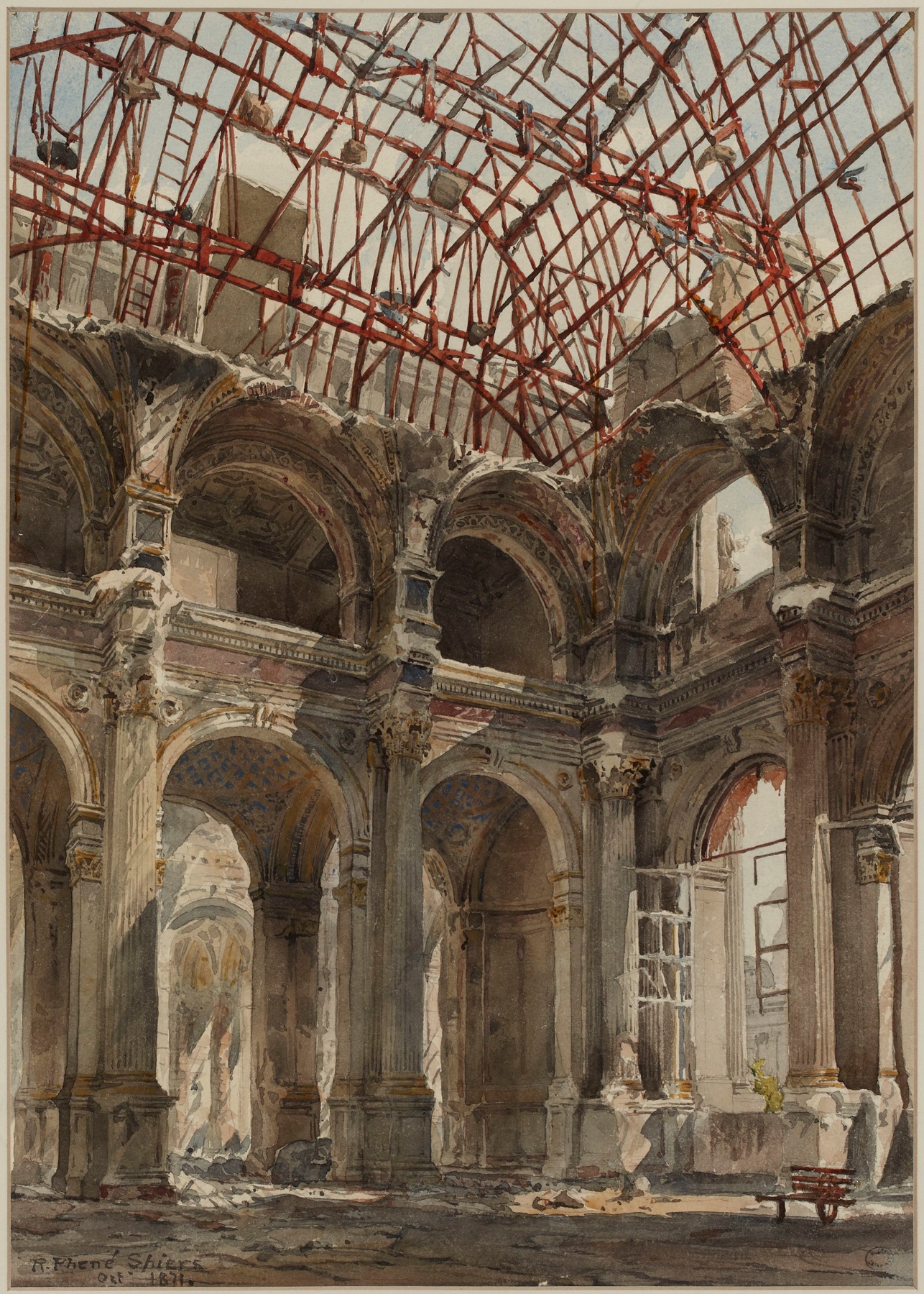
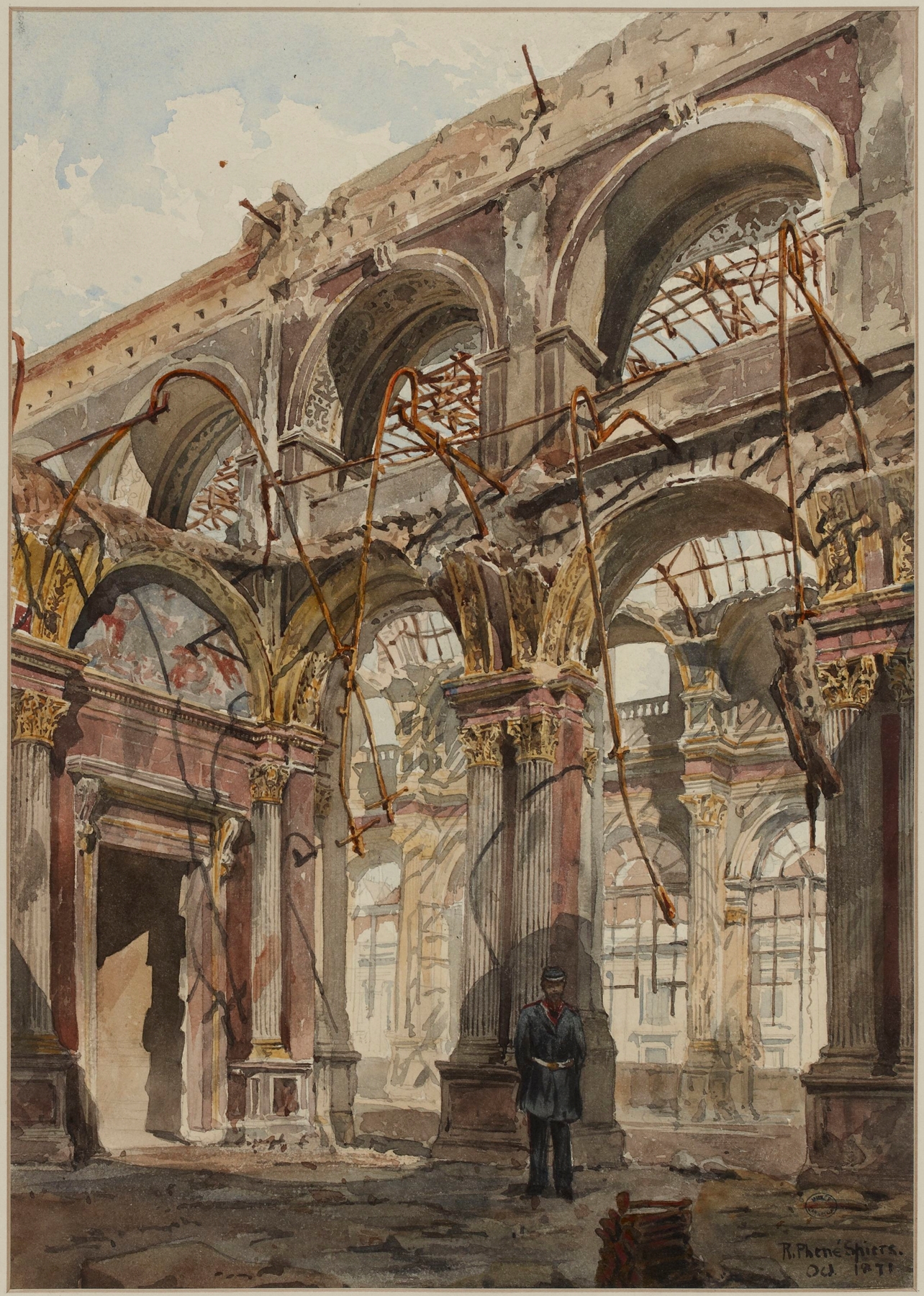
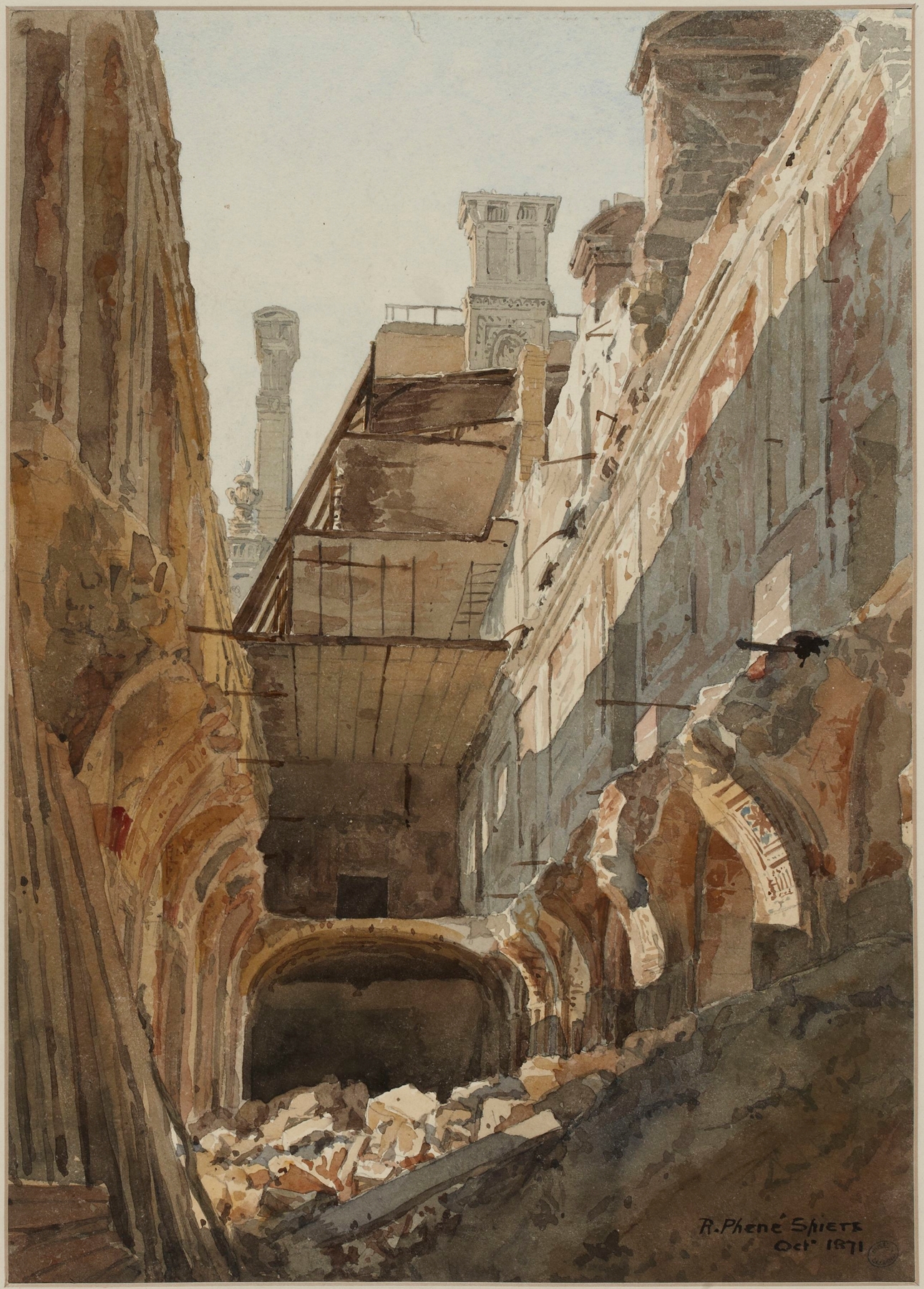
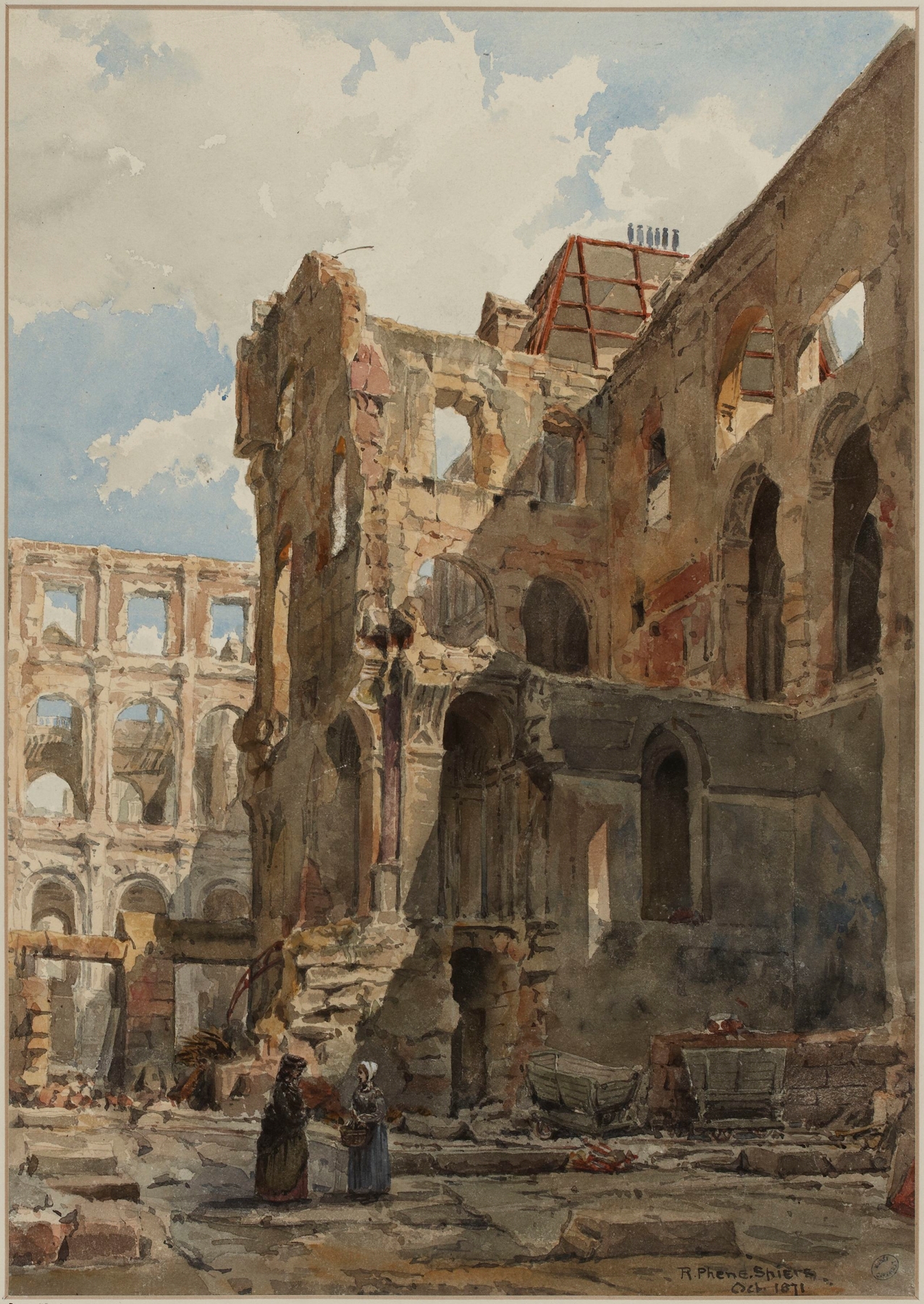
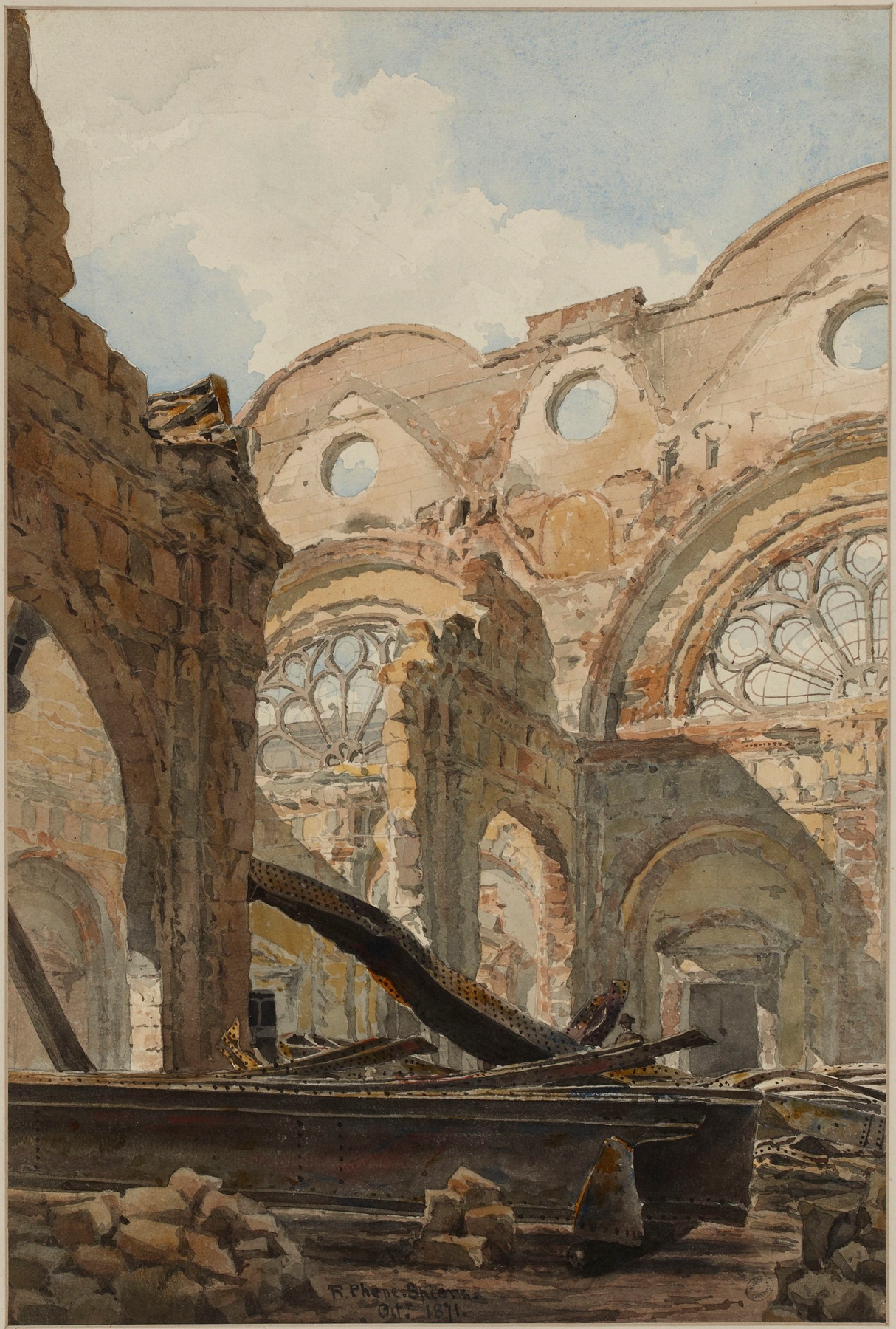
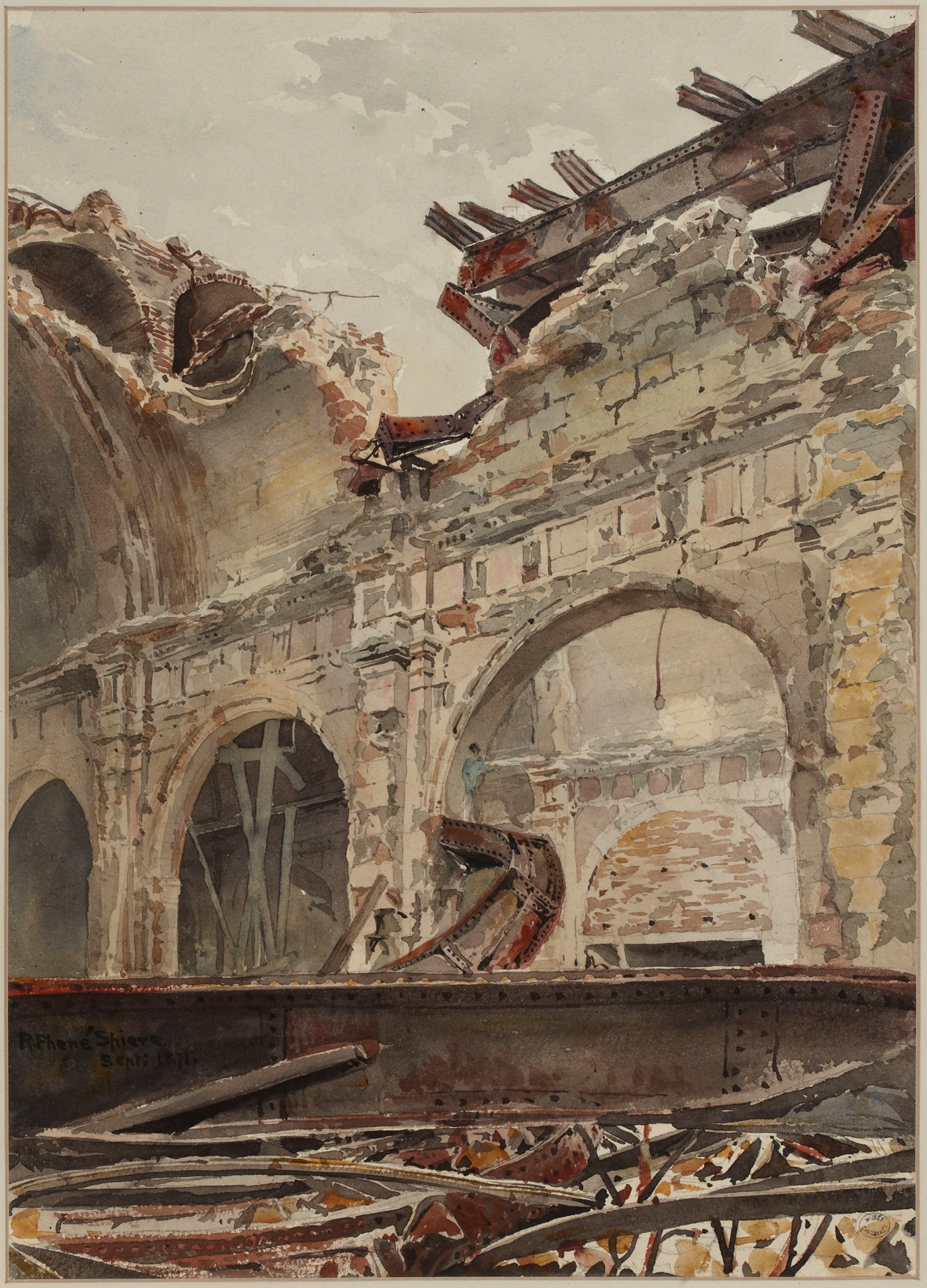
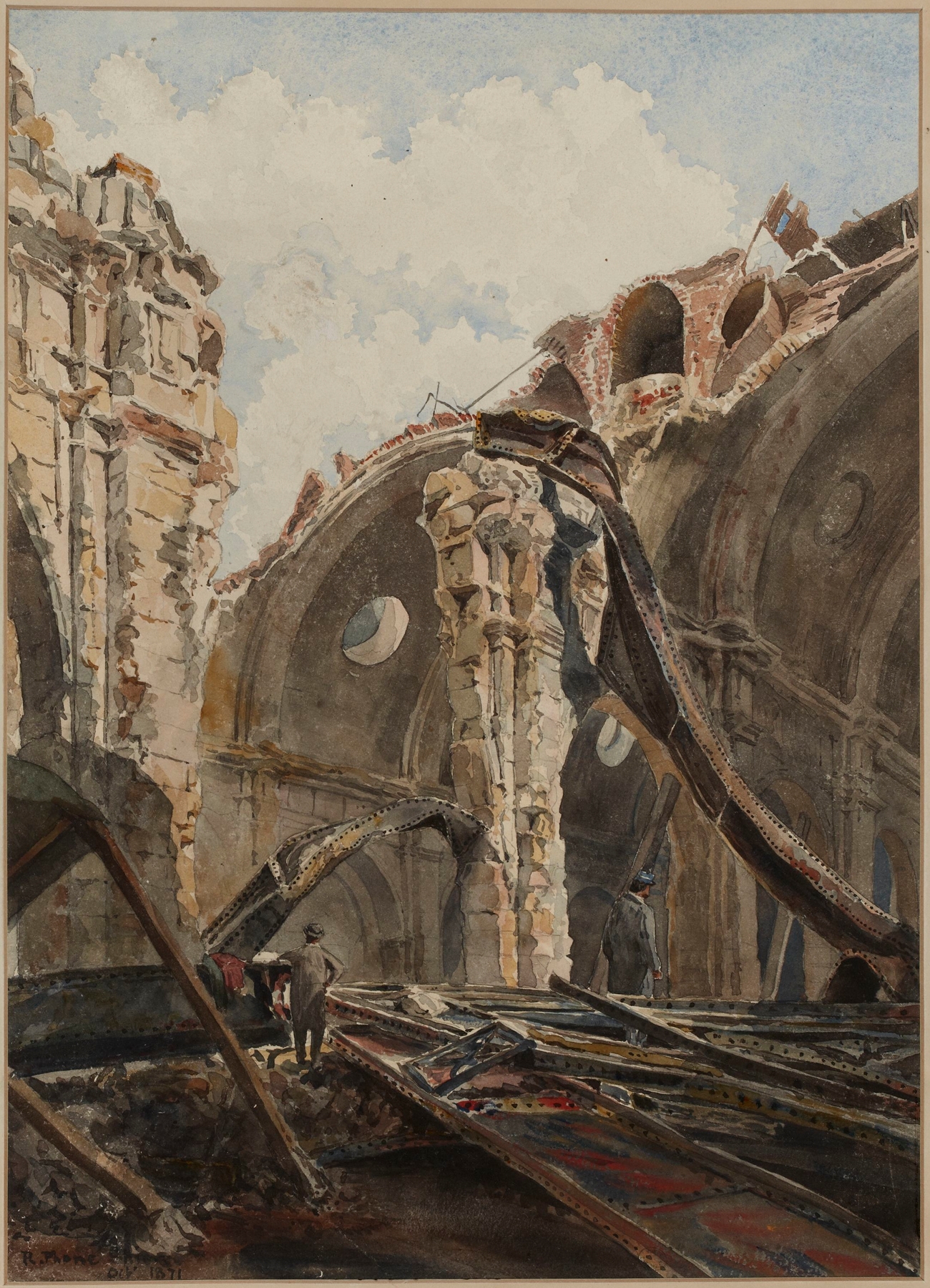
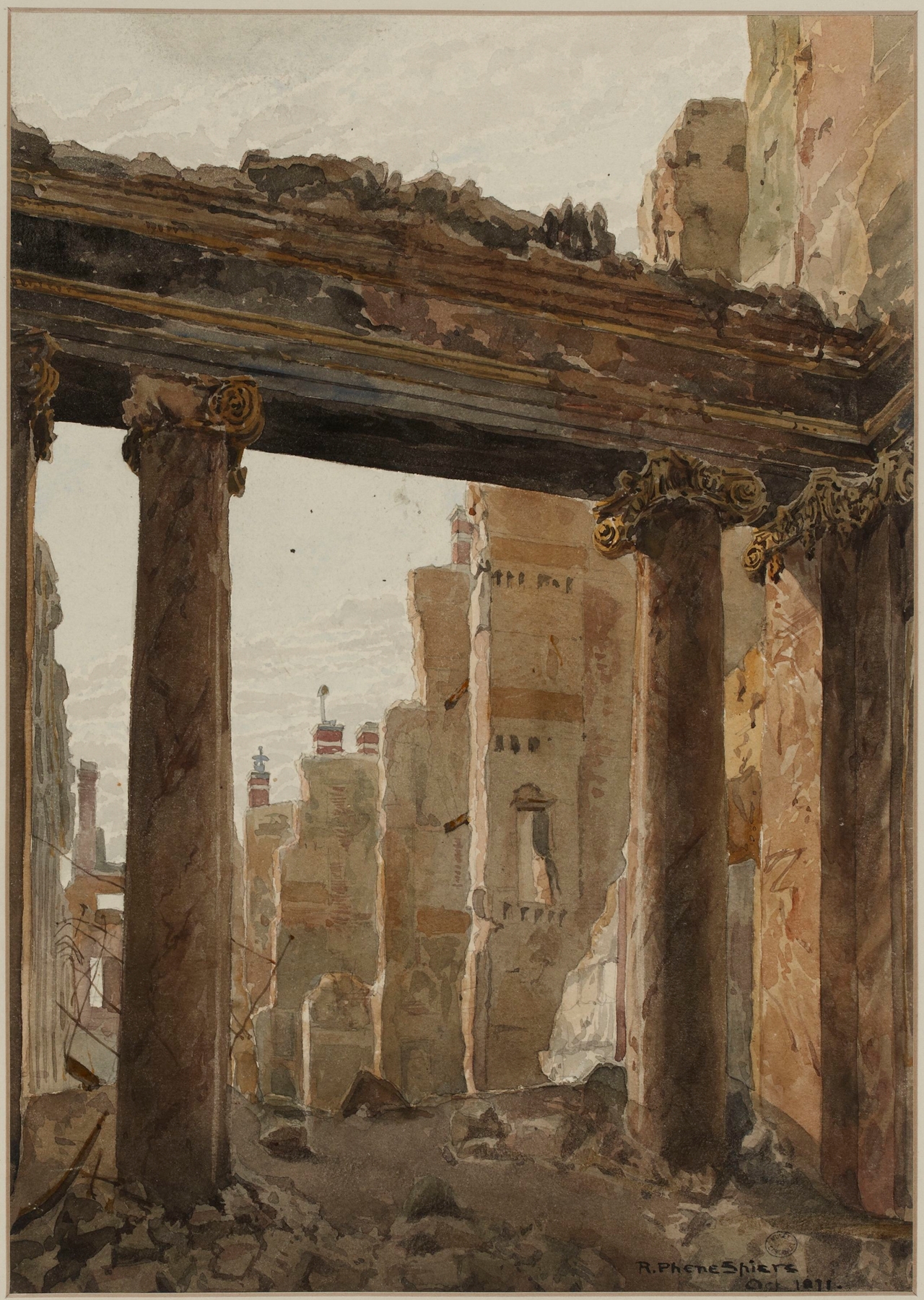
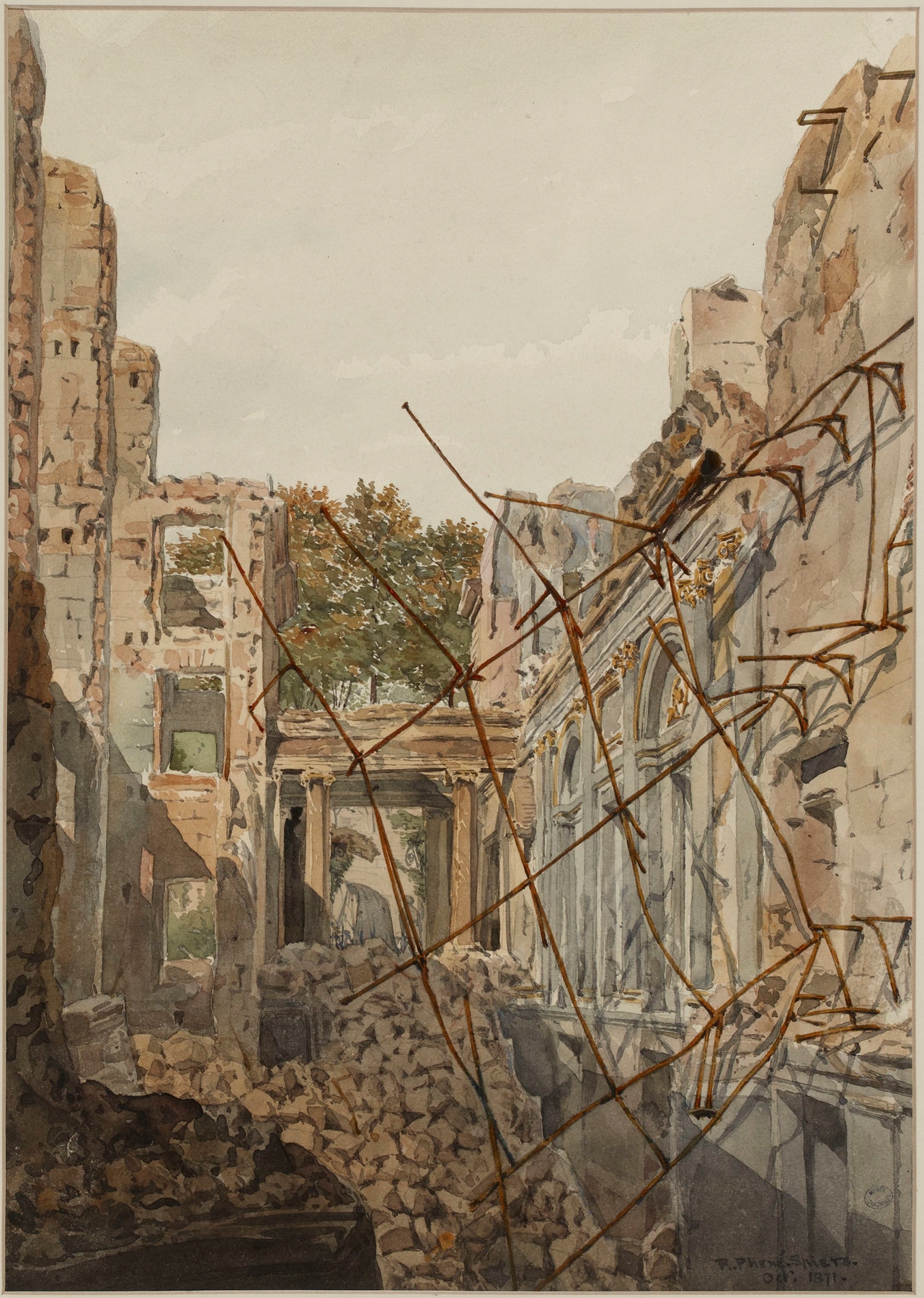
Could a single brushstroke hold eternity? In Ruines de la façade de l’Hôtel de Ville en 1871, the artist captures not just a moment, but a profound sense of loss and resilience in a world forever altered. The ruins of the Hôtel de Ville stand as silent witnesses to the tumultuous waves of history, inviting viewers to explore the depths of their own emotions as they confront the passage of time. Look to the center of the canvas, where the crumbling façade emerges in striking detail against a backdrop of muted colors.
Notice how the light illuminates the weathered stones, enhancing the interplay between shadow and texture. The delicate brushwork evokes a sense of movement, as if the ruins are gently swaying in the soft breeze, while the subtly blended hues of grey and beige suggest both decay and the memory of former grandeur. These architectural remnants harbor rich layers of meaning, speaking to the fragility of civilization and the resilience of the human spirit. The juxtaposition of decay and beauty prompts reflection on impermanence, creating a tension between despair and hope.
Each chipped stone and faded archway tells stories of lives once intertwined within its walls, now reduced to echoes of what was, inspiring contemplation about the nature of progress and loss. In 1871, while living in London, Richard Phené Spiers created this poignant piece amidst the political upheaval of the Paris Commune. An architect himself, he was deeply influenced by the destruction he witnessed, channeling his observations into art during a time when the world was grappling with the consequences of conflict and change. This work stands not only as a testament to a specific event but as a reflection of broader historical currents shaping the trajectory of art and society.