Ruines de l’Hôtel de Ville en 1871 — History & Analysis
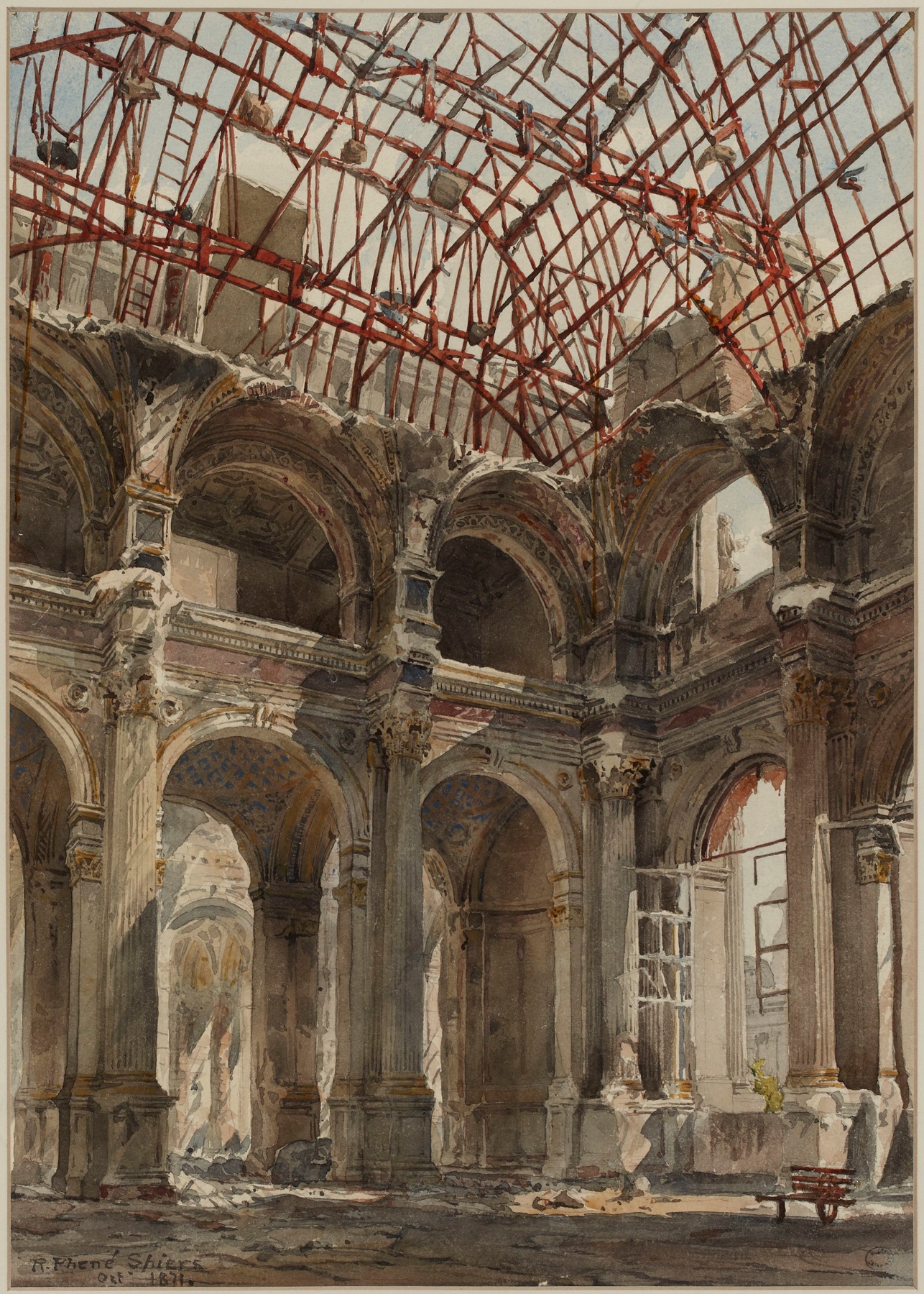
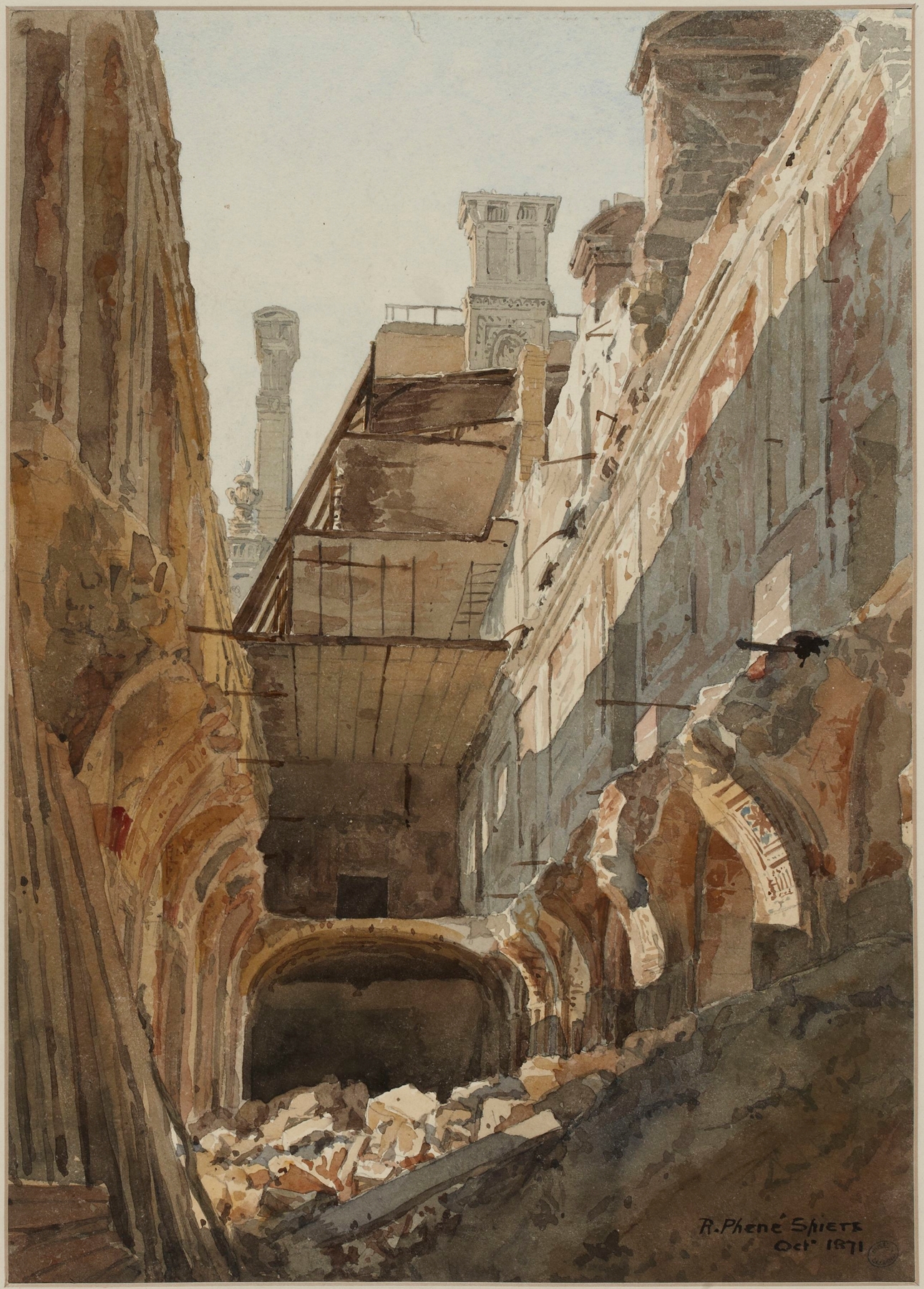
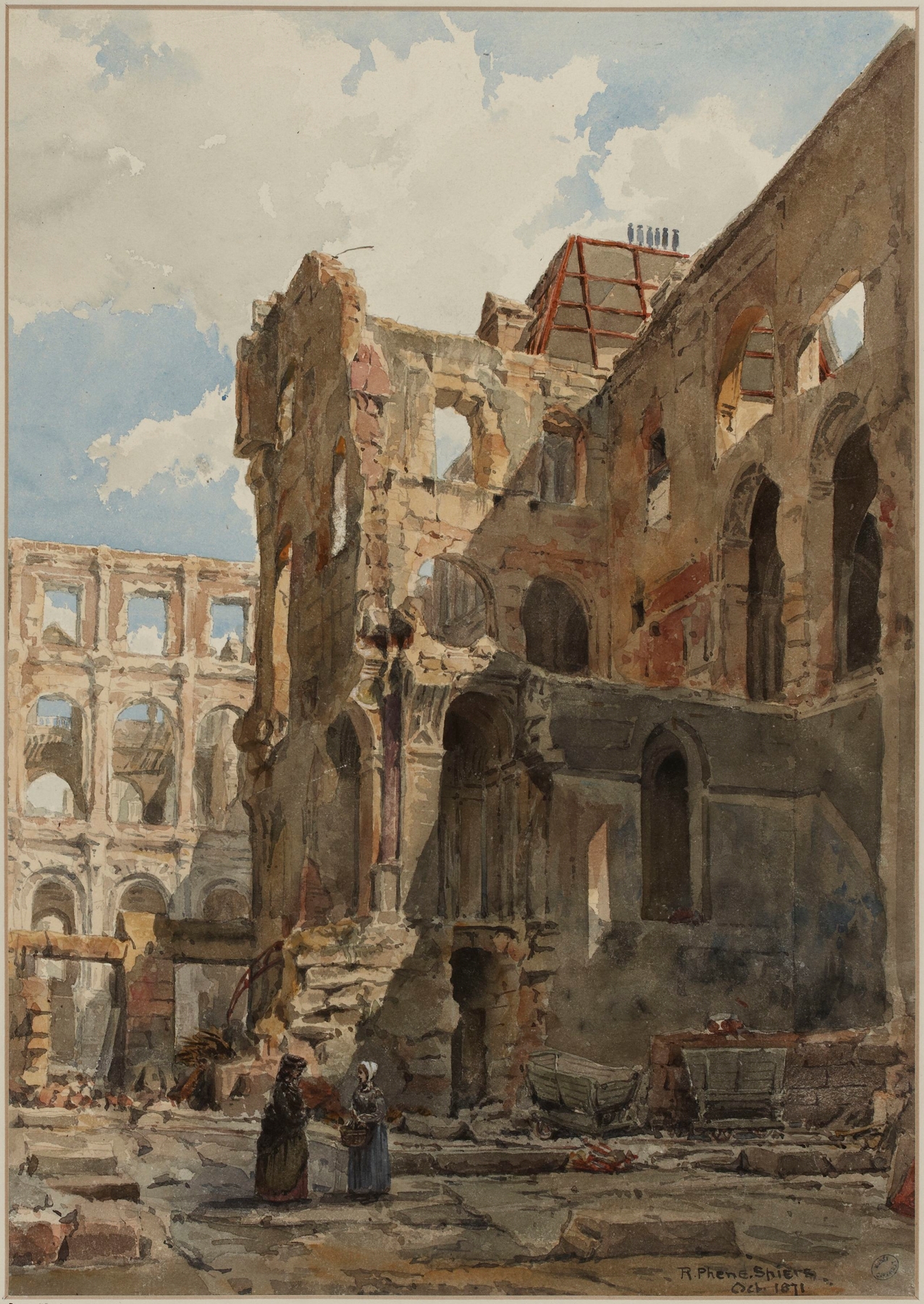
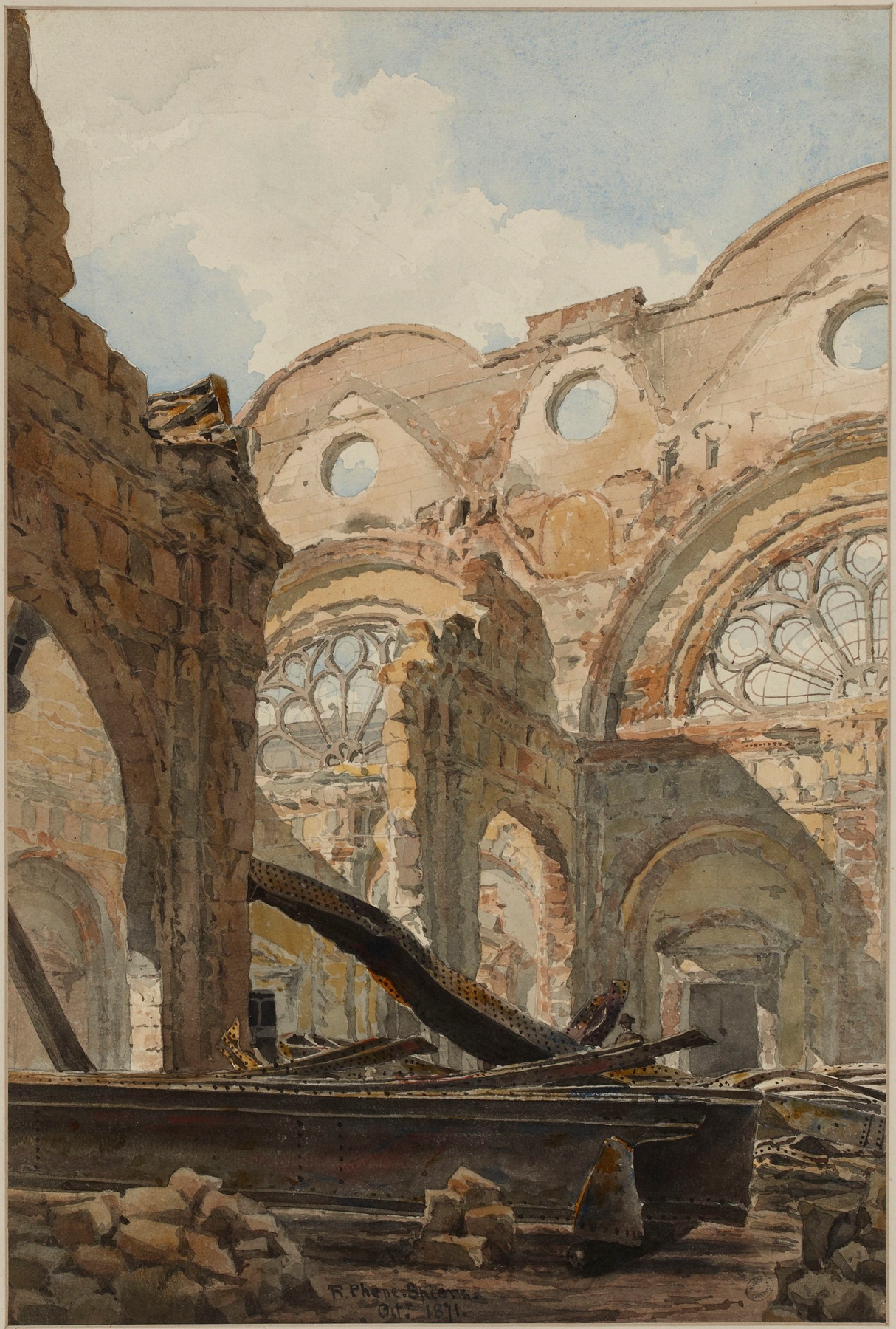
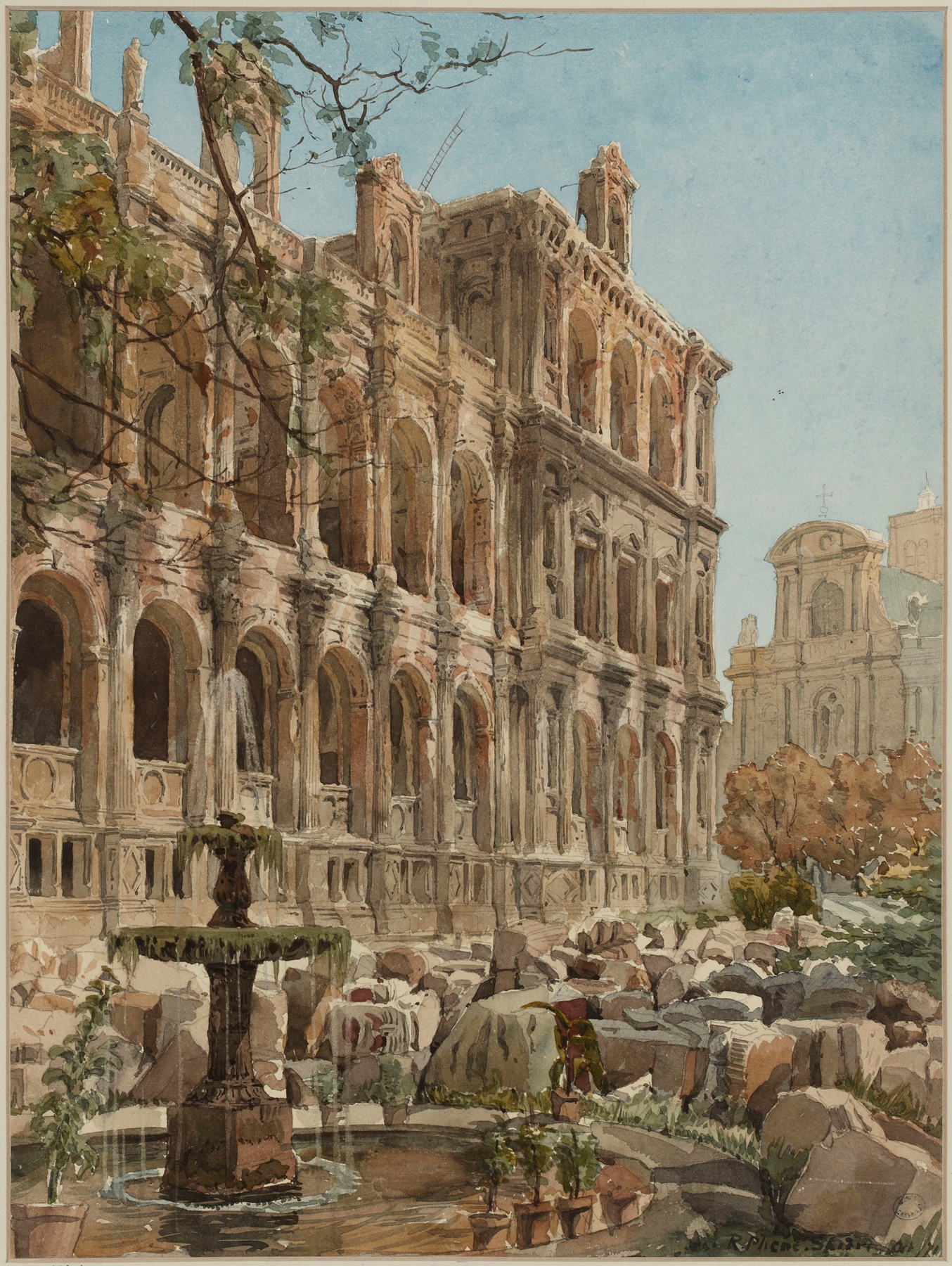
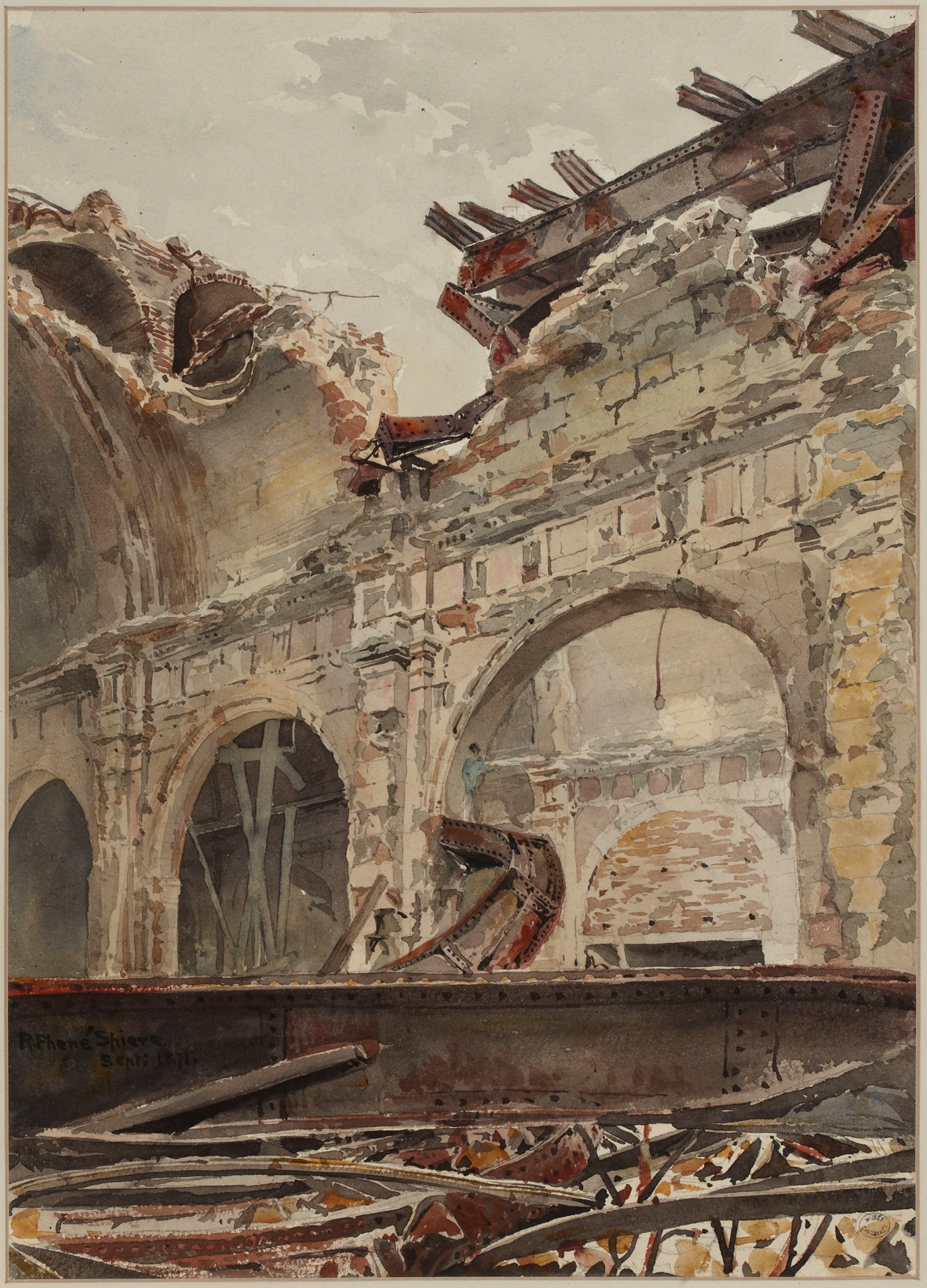
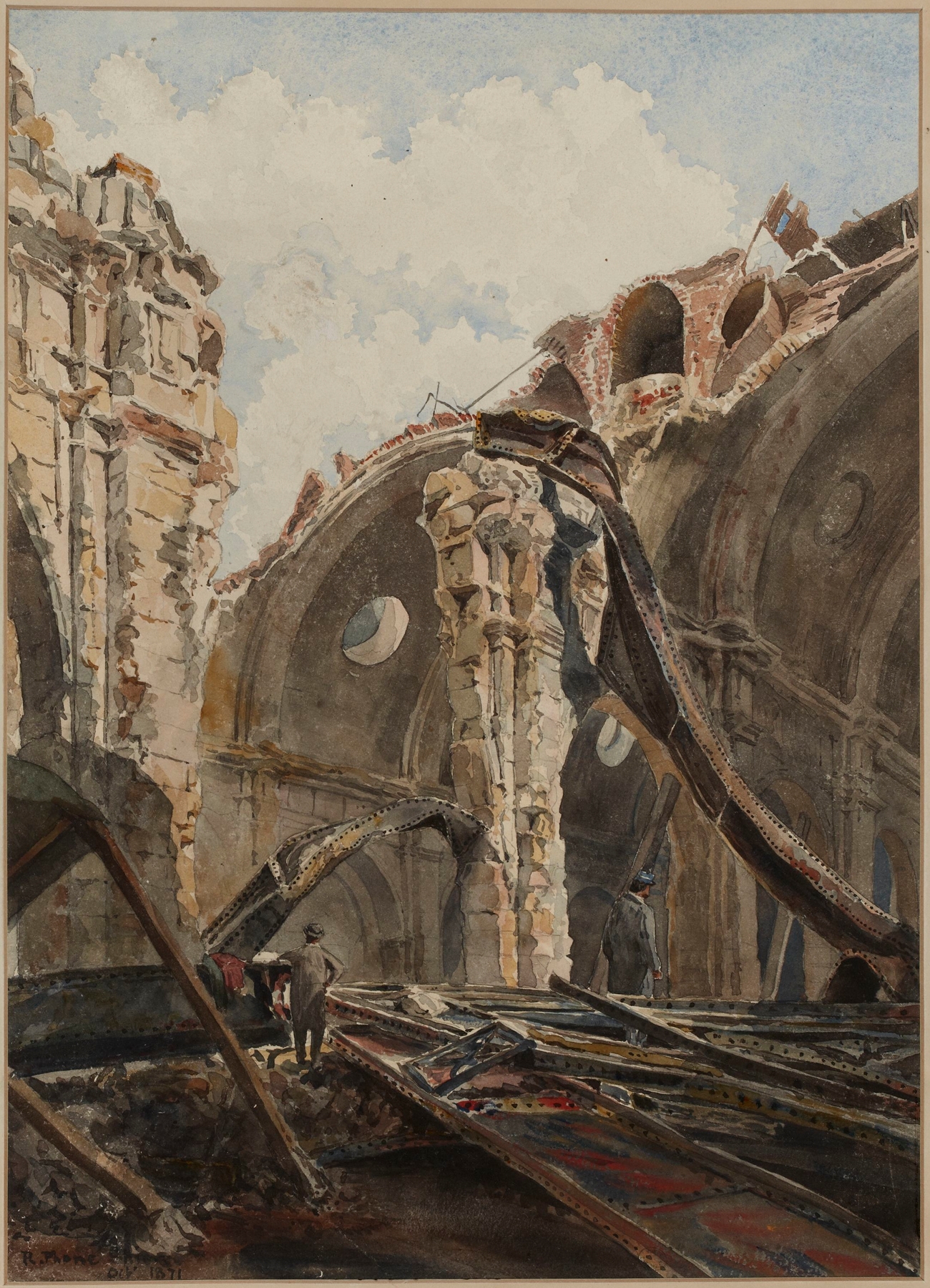
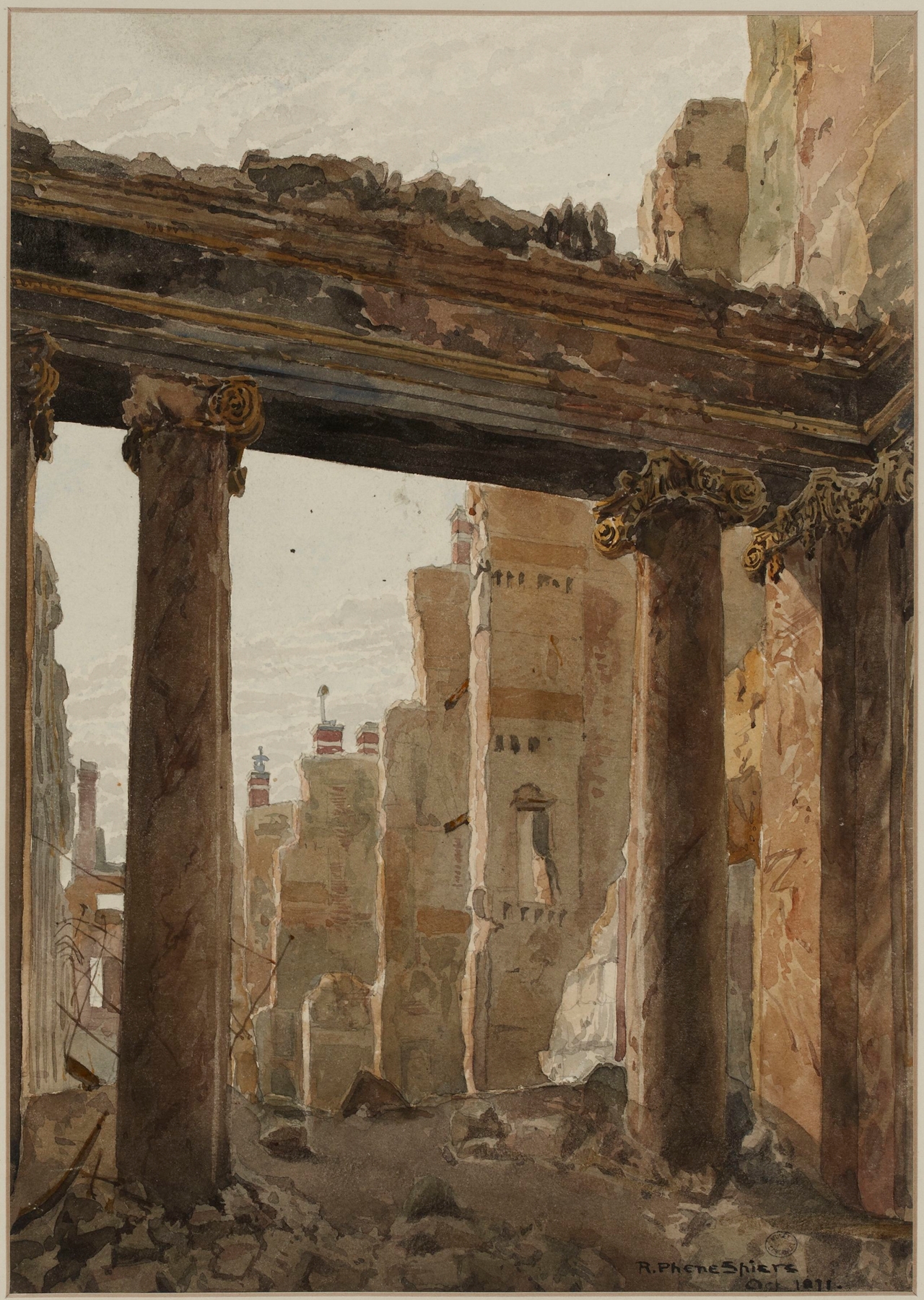
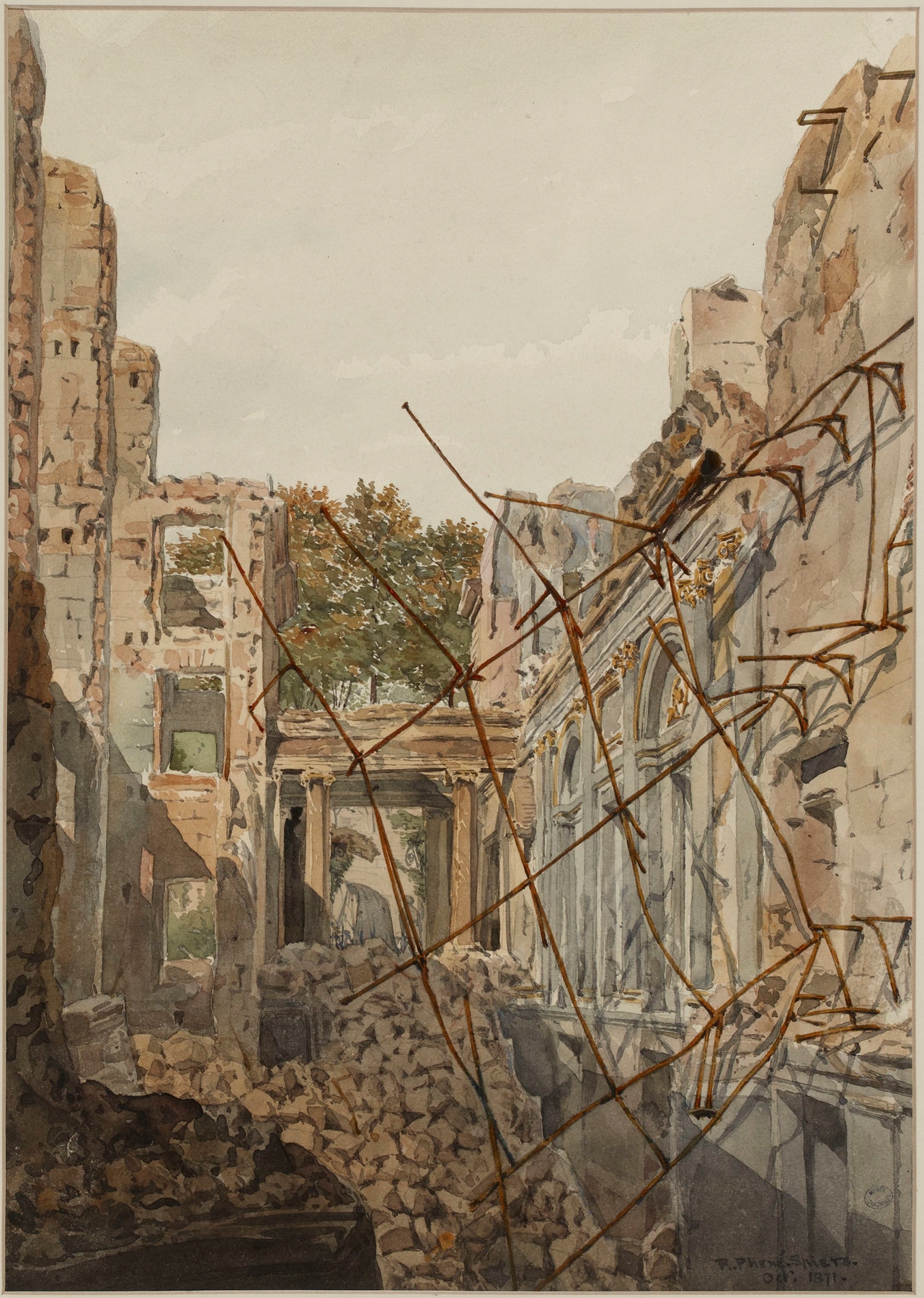
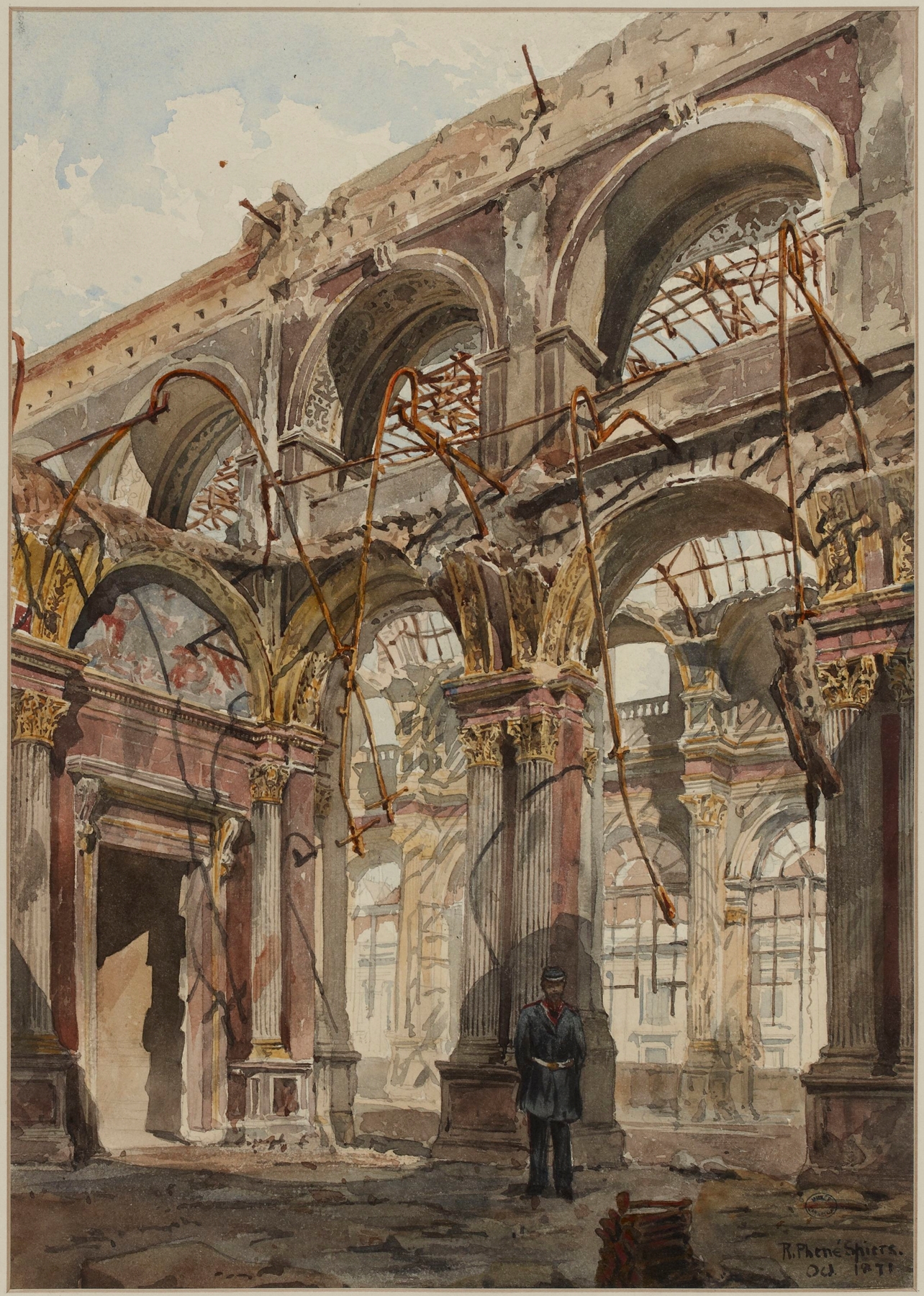
“Art reveals the soul when the world turns away.” In the aftermath of devastation, the true essence of a place often emerges. This poignant moment captures more than mere ruins; it offers a glimpse into resilience and transcendence amidst chaos. Look to the center of the canvas where the skeletal remains of the Hôtel de Ville rise defiantly against the sky. Notice how light filters through the decrepit arches, casting an ethereal glow that juxtaposes the starkness of the rubble. Surrounding this focal point, the somber tones of gray and brown dominate, emphasizing the weight of loss while hints of color suggest life trying to break through the desolation.
The composition draws the eye upward, as if to seek hope amongst the ruins. Delve deeper into the contrasts present within the work. The interplay of light and shadow evokes a duality of despair and hope, where the former clings to the earth and the latter yearns for ascendance. Tiny figures in the foreground, almost ghostly in their presence, hint at the human stories woven into the fabric of destruction.
Their stillness amidst the wreckage speaks of an enduring spirit, reminding us that even in the darkest moments, there exists the possibility of rebirth. In 1871, Richard Phené Spiers painted this piece during a tumultuous period marked by the Paris Commune and the destruction that followed. Living in England but deeply affected by events in his homeland, he was part of a movement that sought to capture the essence of contemporary life through the lens of realism. This work reflects not only a historical moment but also a personal confrontation with the fragility of civilization and the enduring strength of the human spirit.