Ruines du Palais de Saint-Cloud en 1871. — History & Analysis
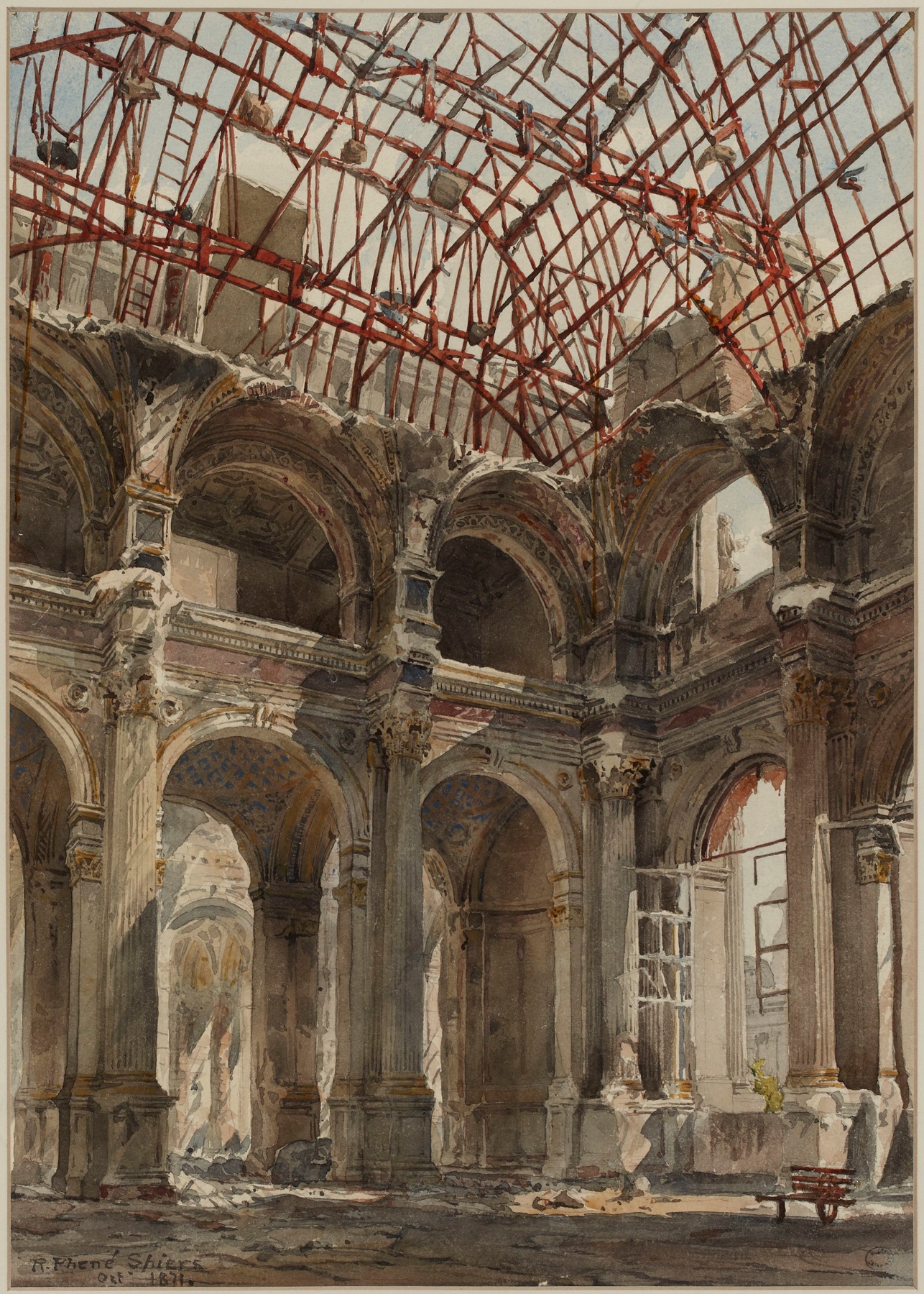
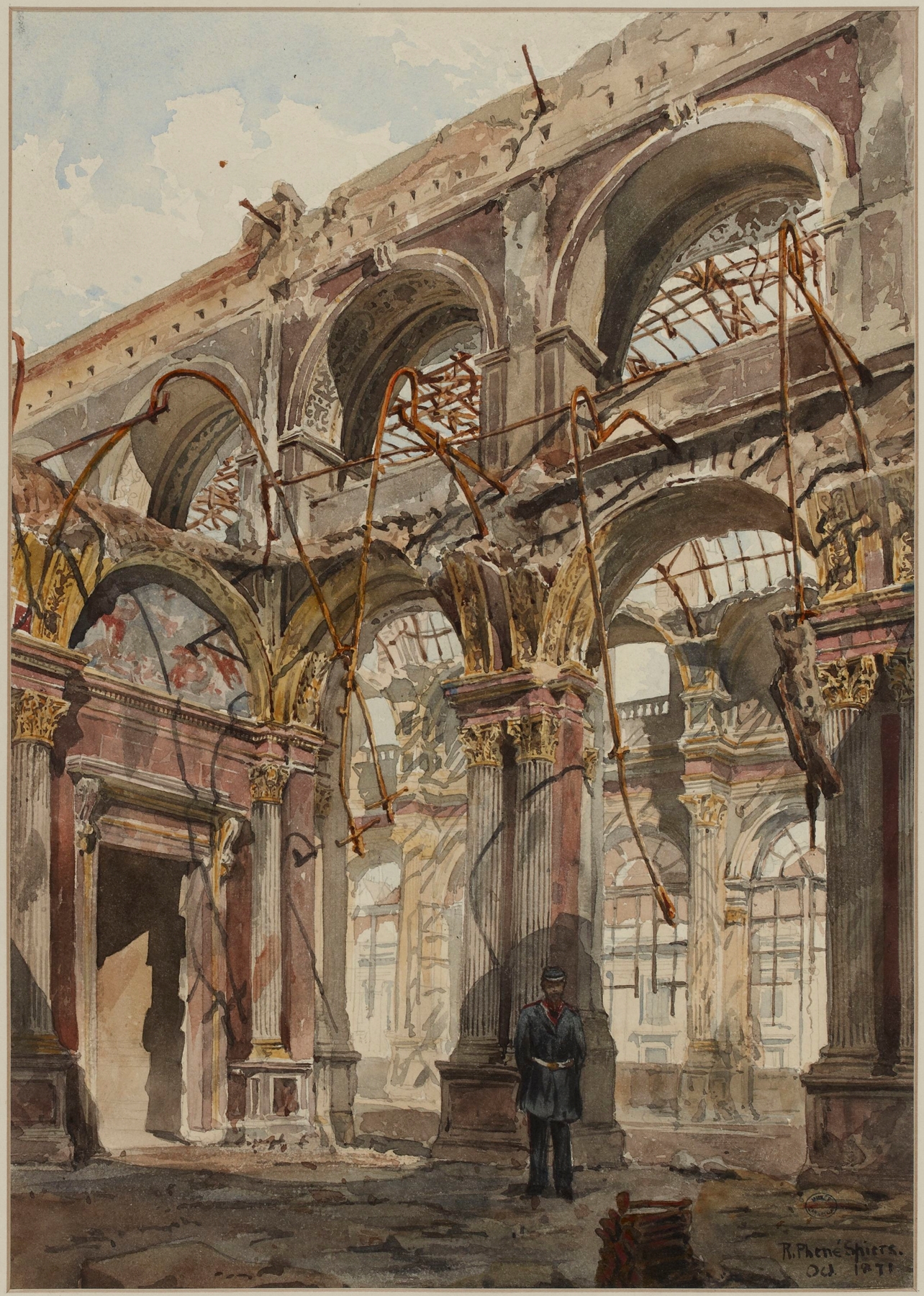
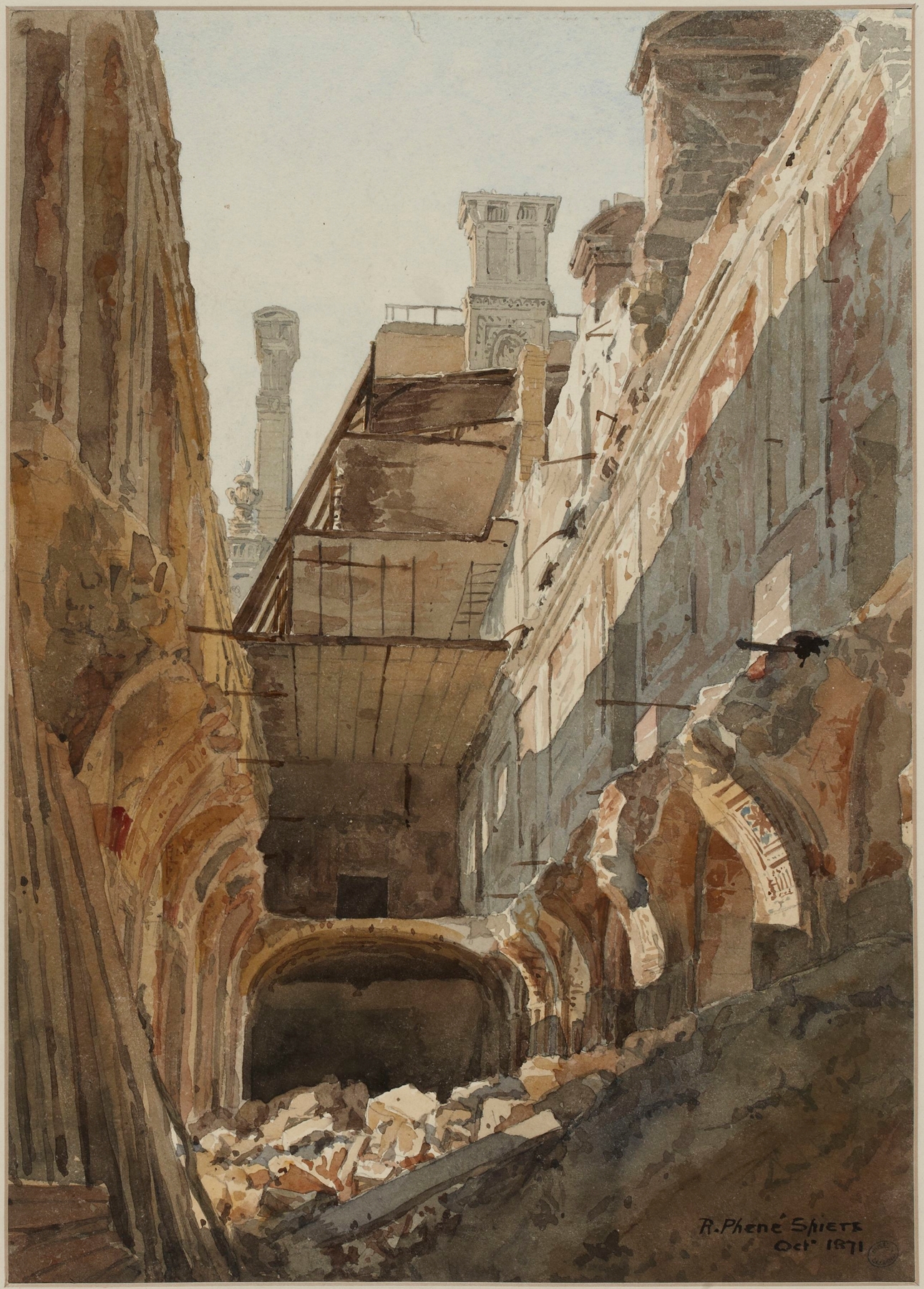
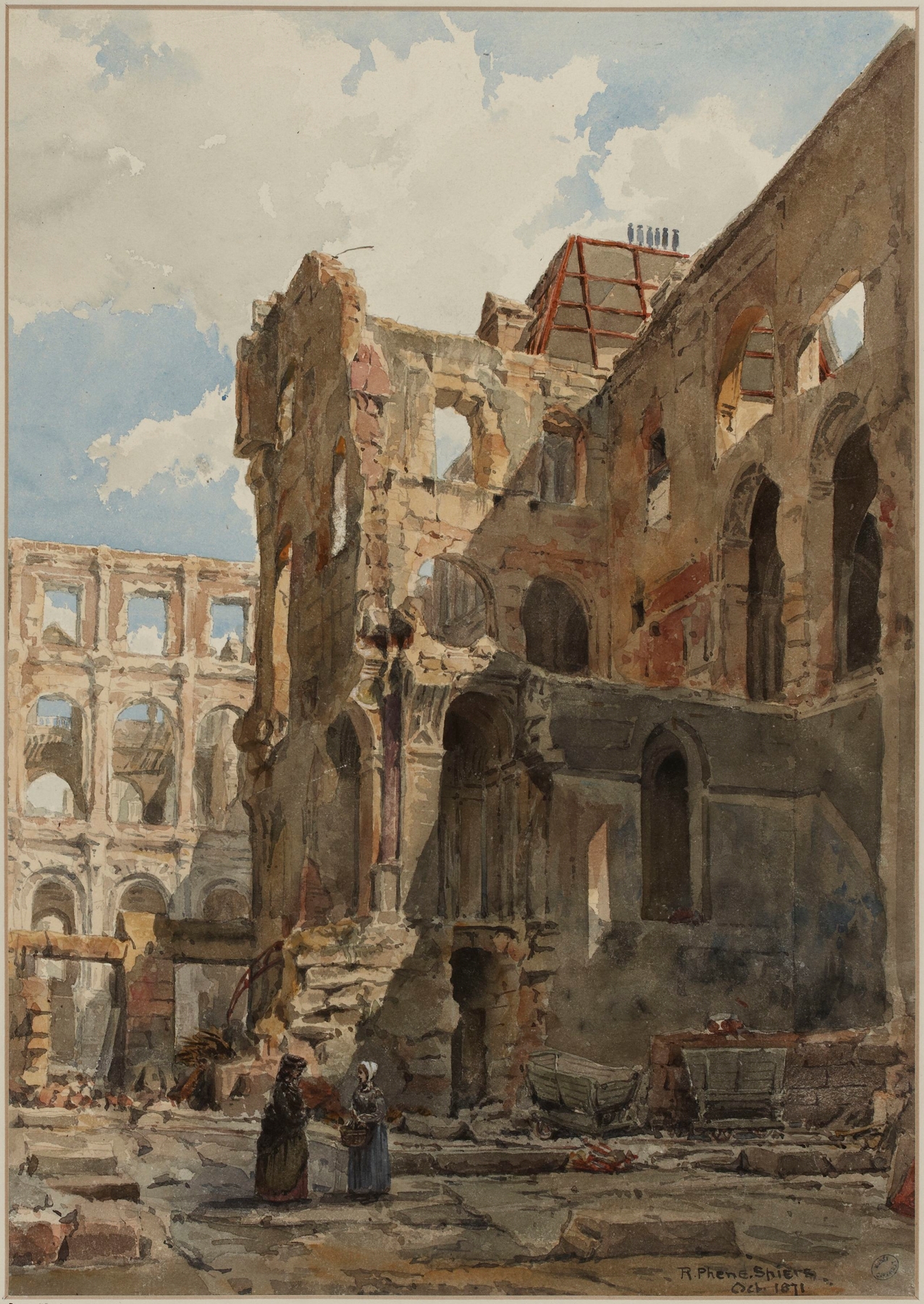
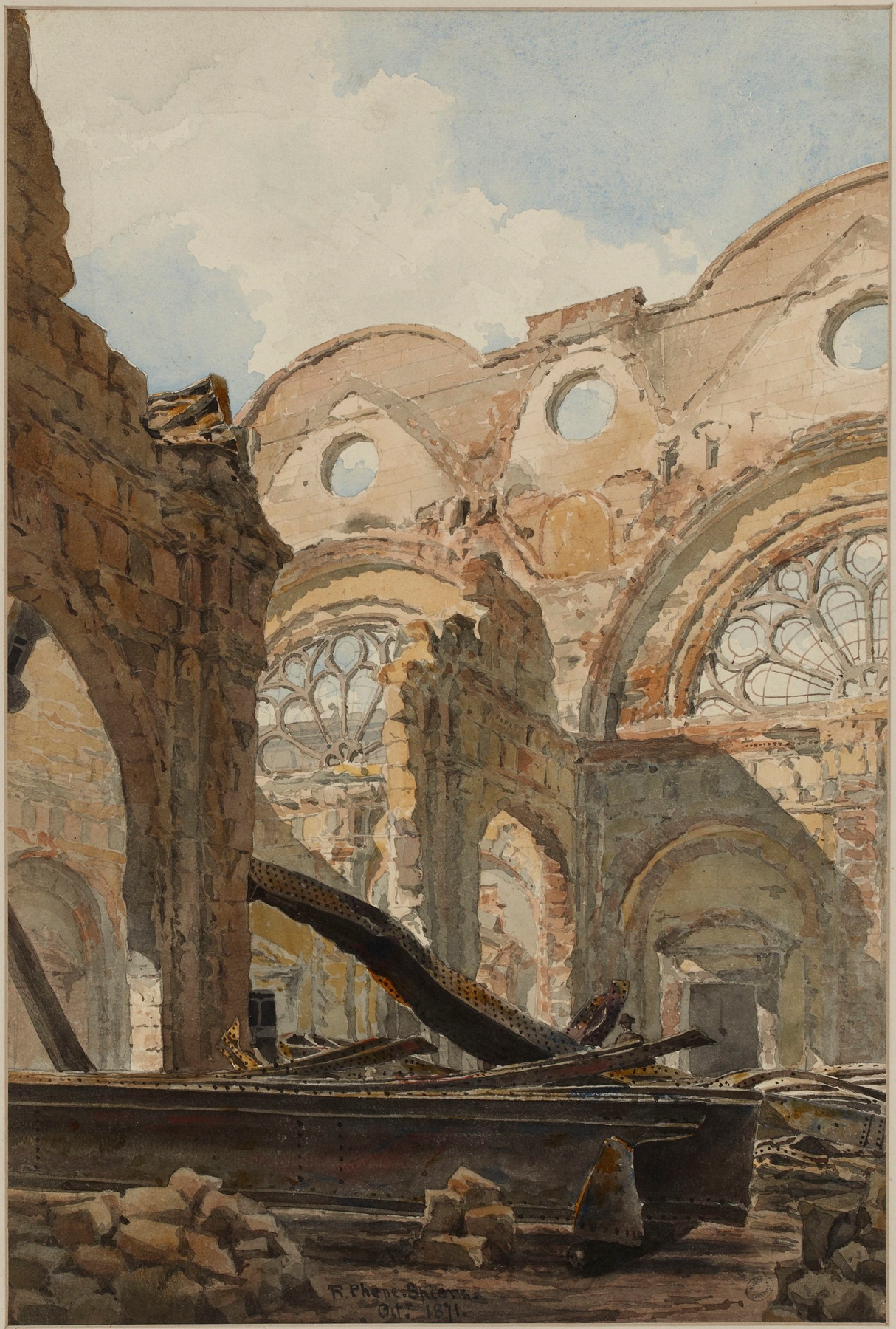
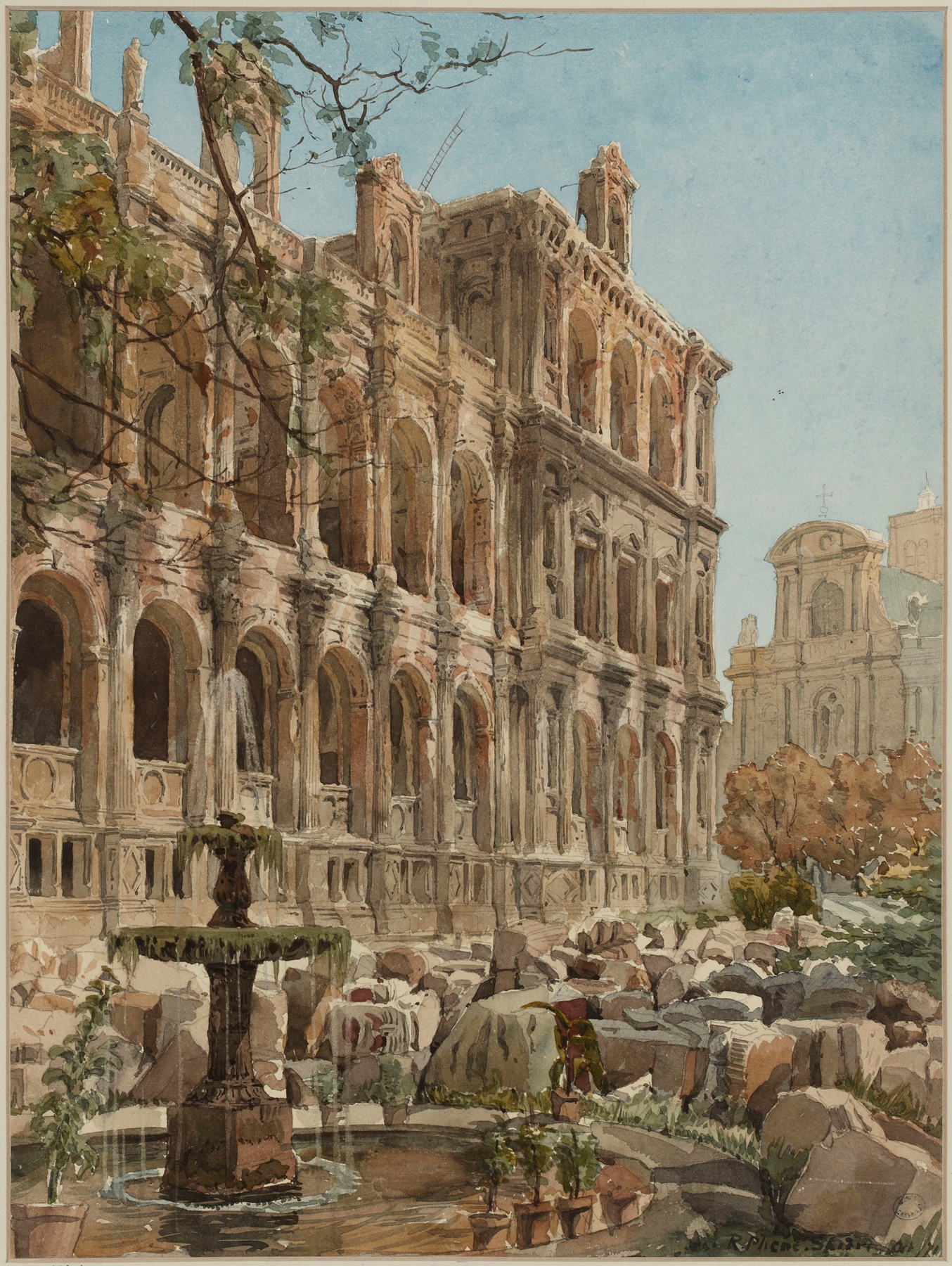
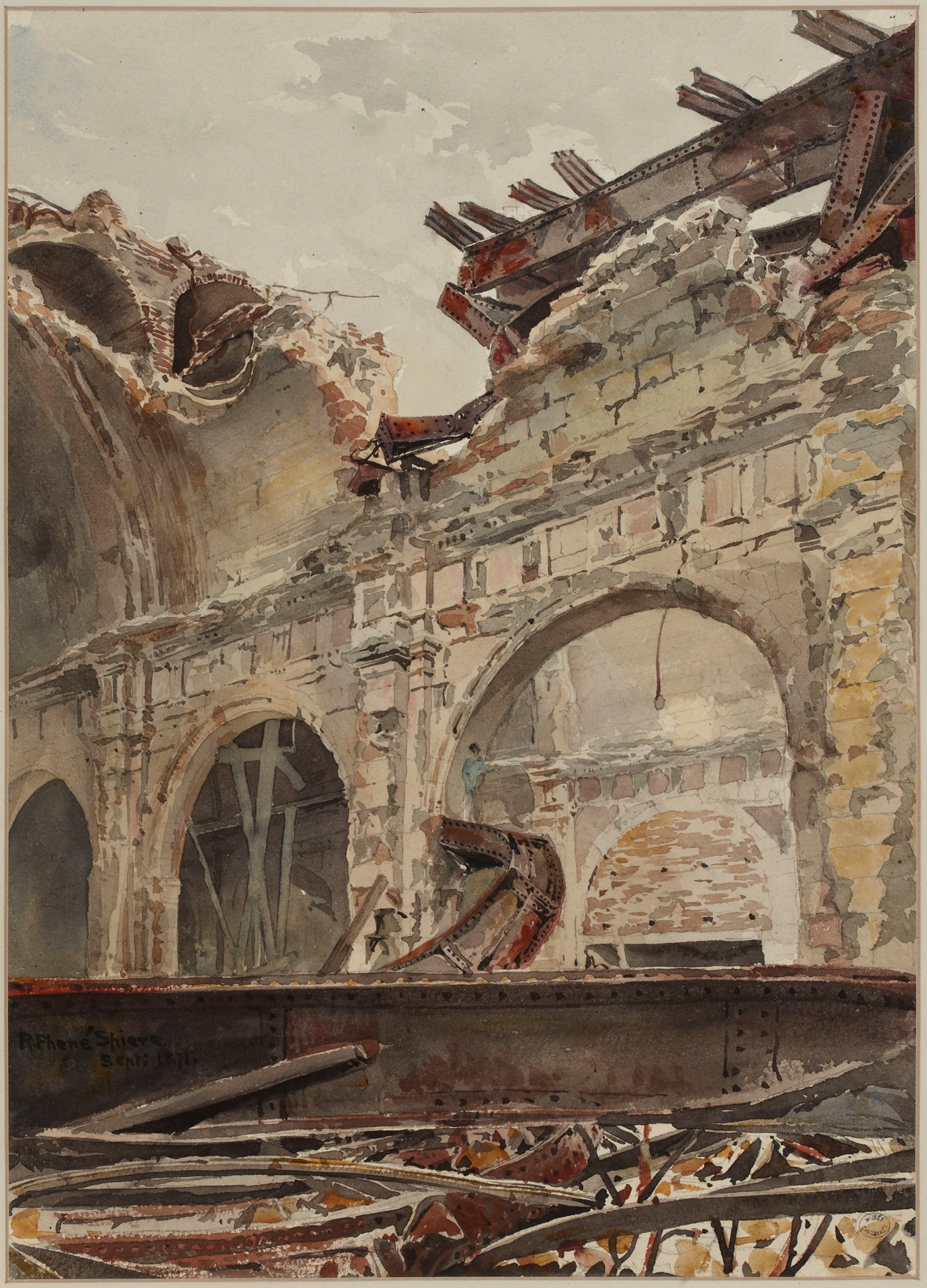
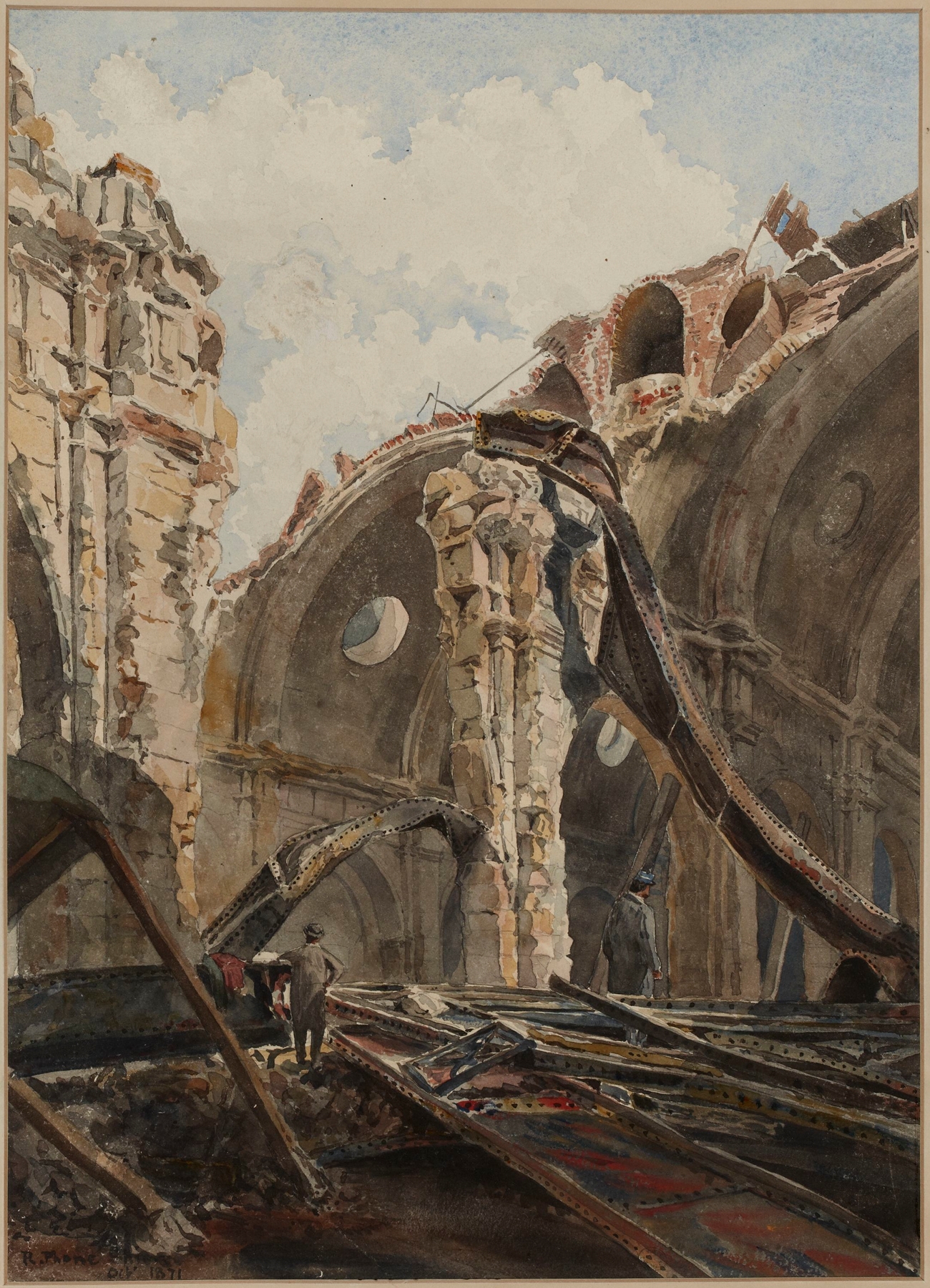
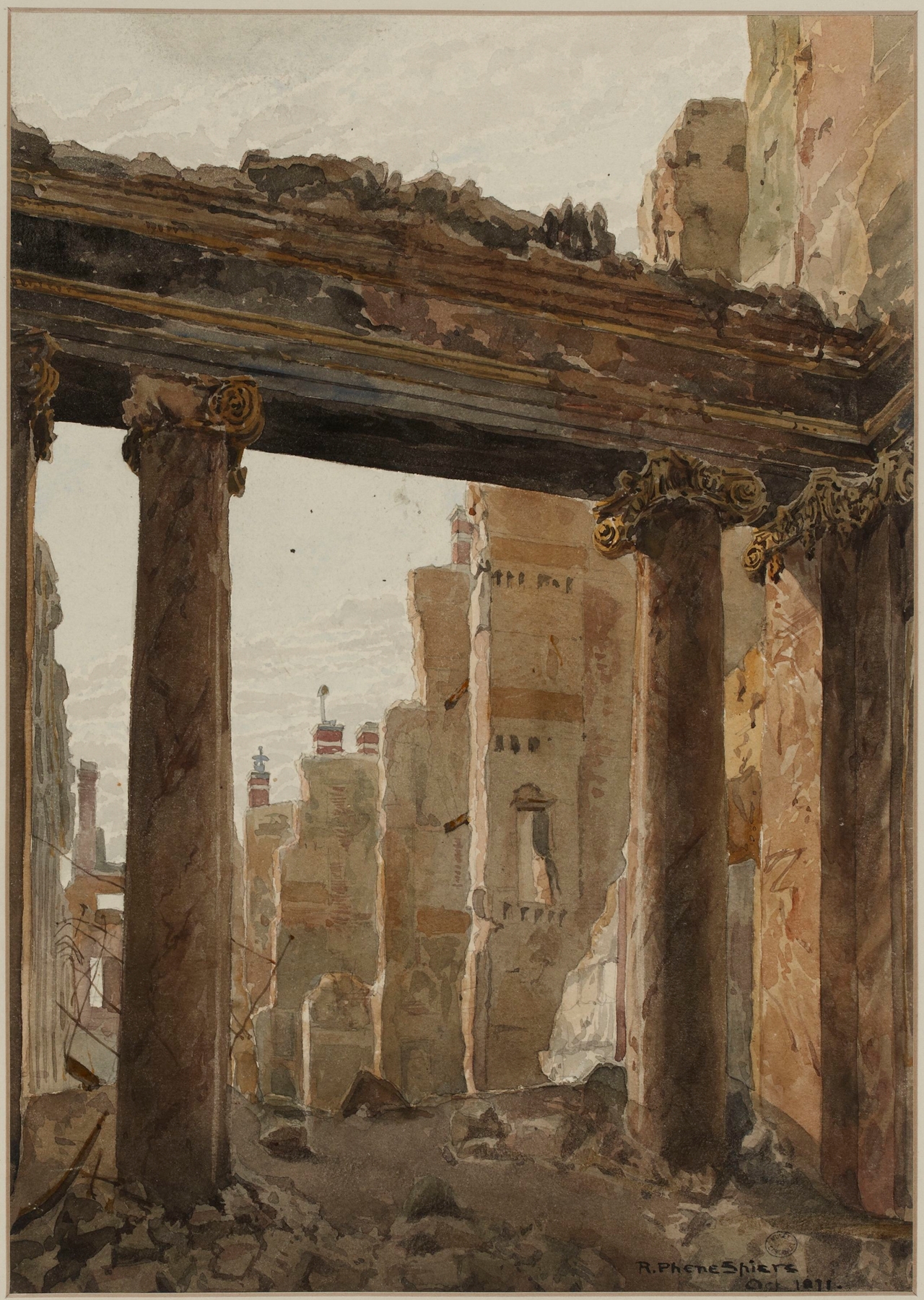
Did the painter know this moment would outlive them? In the silent echoes of what once was, the void of history speaks through each brushstroke, as time holds its breath. Look to the left, where the crumbled facade of the palace looms, its once-grand arches now intertwined with nature's relentless reclaiming. Notice how the artist masterfully uses muted earth tones, contrasting the faded grandeur of the structure with the vibrant greens that push through the stone.
The composition draws you in, guiding your gaze through the delicate interplay of light and shadow, revealing the melancholy beauty of decay. Yet, within this stillness lies a profound tension. The ruins symbolize not just the physical destruction, but also the loss of an era, a poignant reminder of fragility amidst grandeur. Each crack and crevice hints at stories untold, while the encroaching greenery presents nature's quiet resilience.
The void of human presence amplifies the solitude, evoking a sense of reflective mourning for what can never be reclaimed. In 1871, Spiers painted this poignant scene amidst the aftermath of the Franco-Prussian War, a time when destruction and loss permeated the landscape of France. As an architect and painter, he witnessed firsthand the desolation of cultural landmarks, and his work reflects a world grappling with change. This piece not only captures the remnants of a once-majestic palace but also serves as a historical testament to resilience and the passage of time.