Ruines du Palais de Justice, salle des Pas-Perdus, après l’incendie de 1871 — History & Analysis
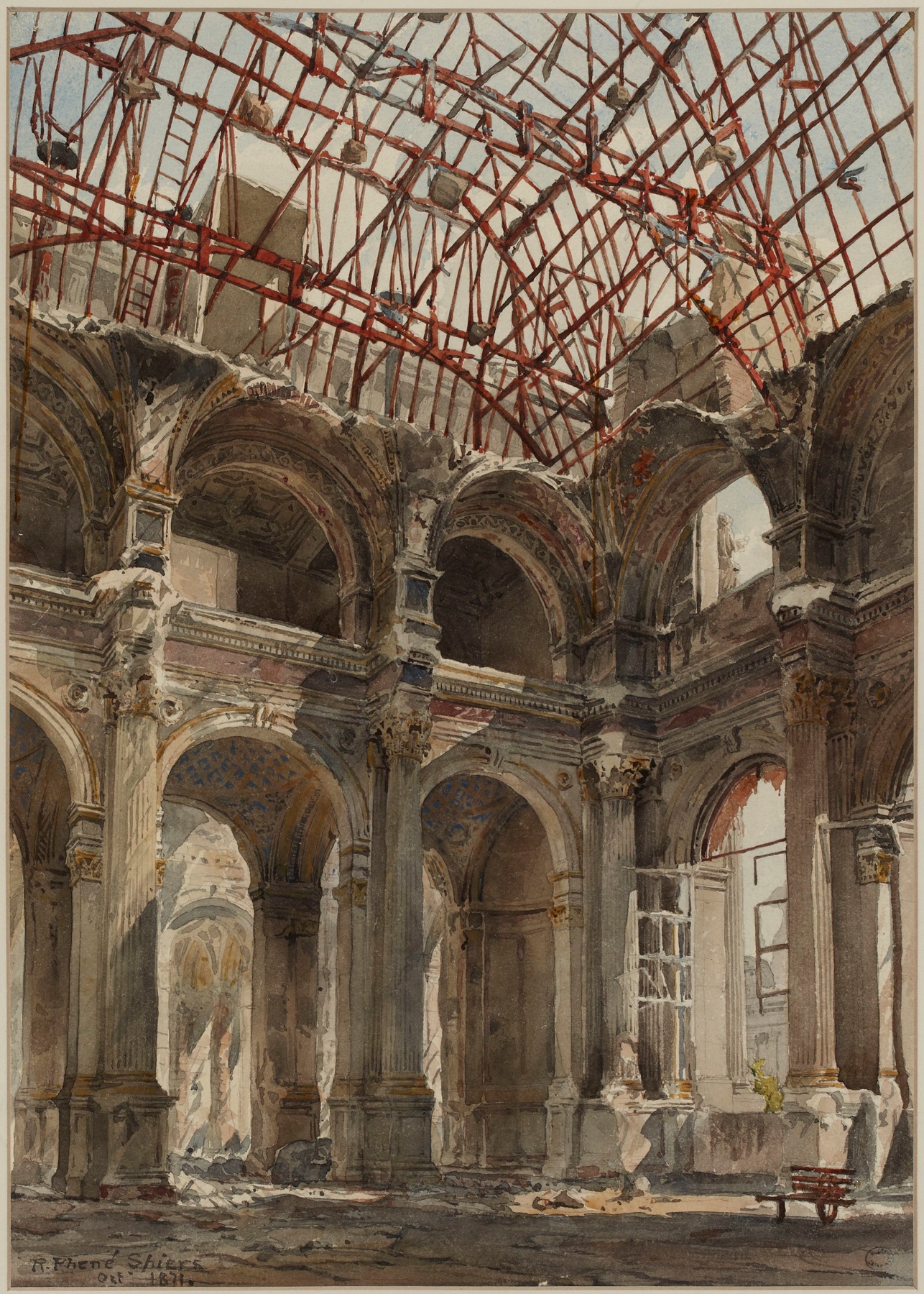
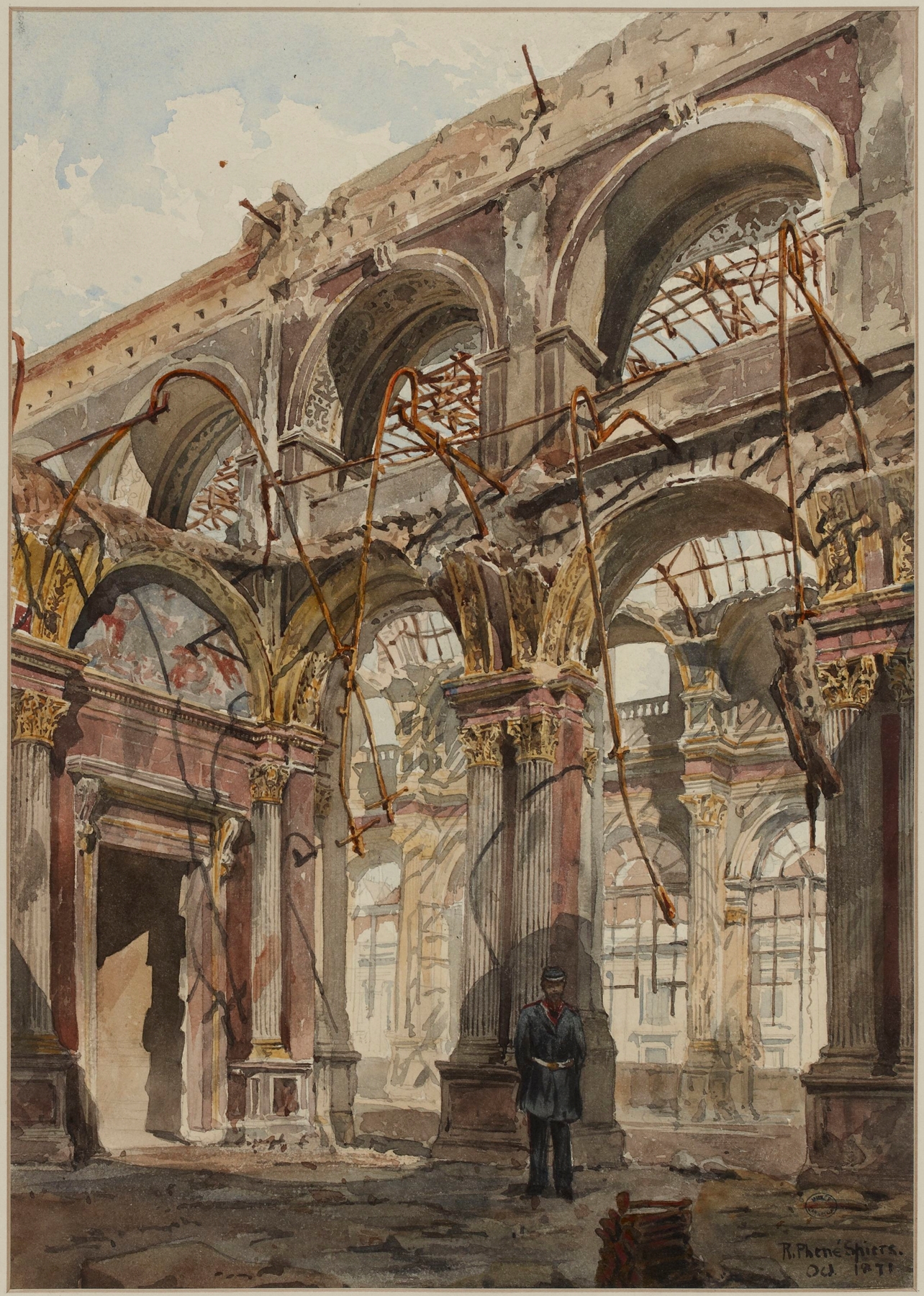
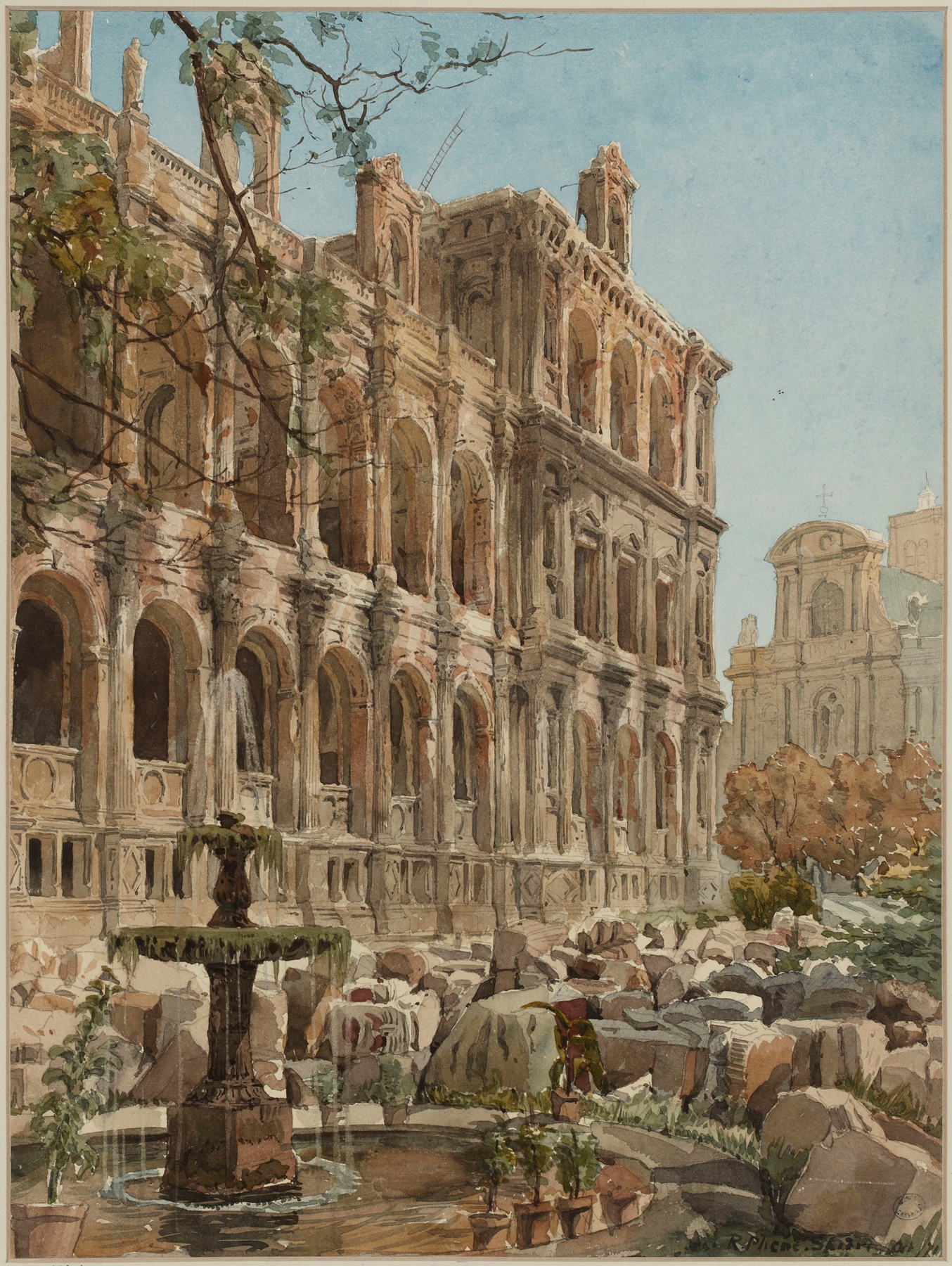
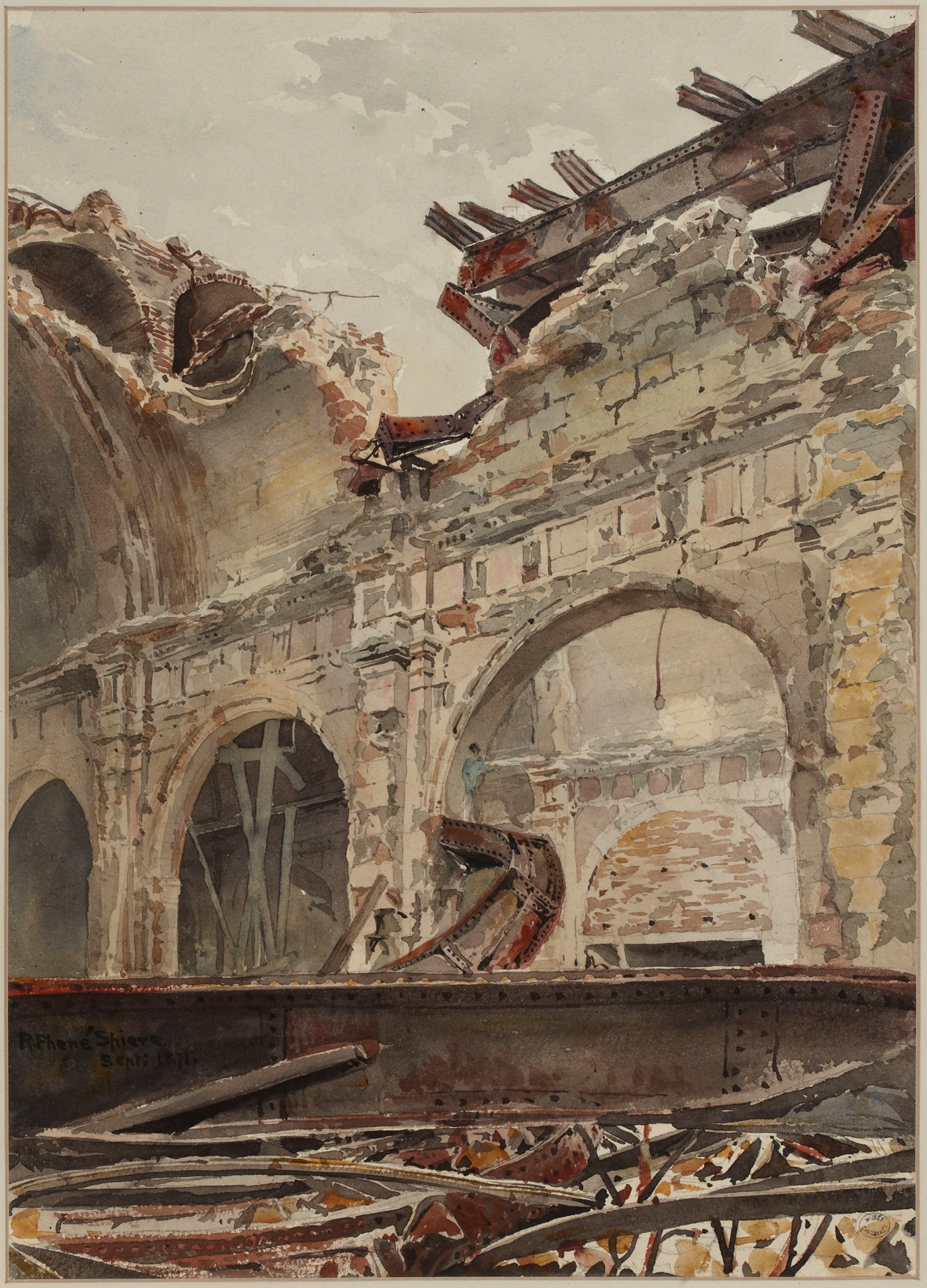
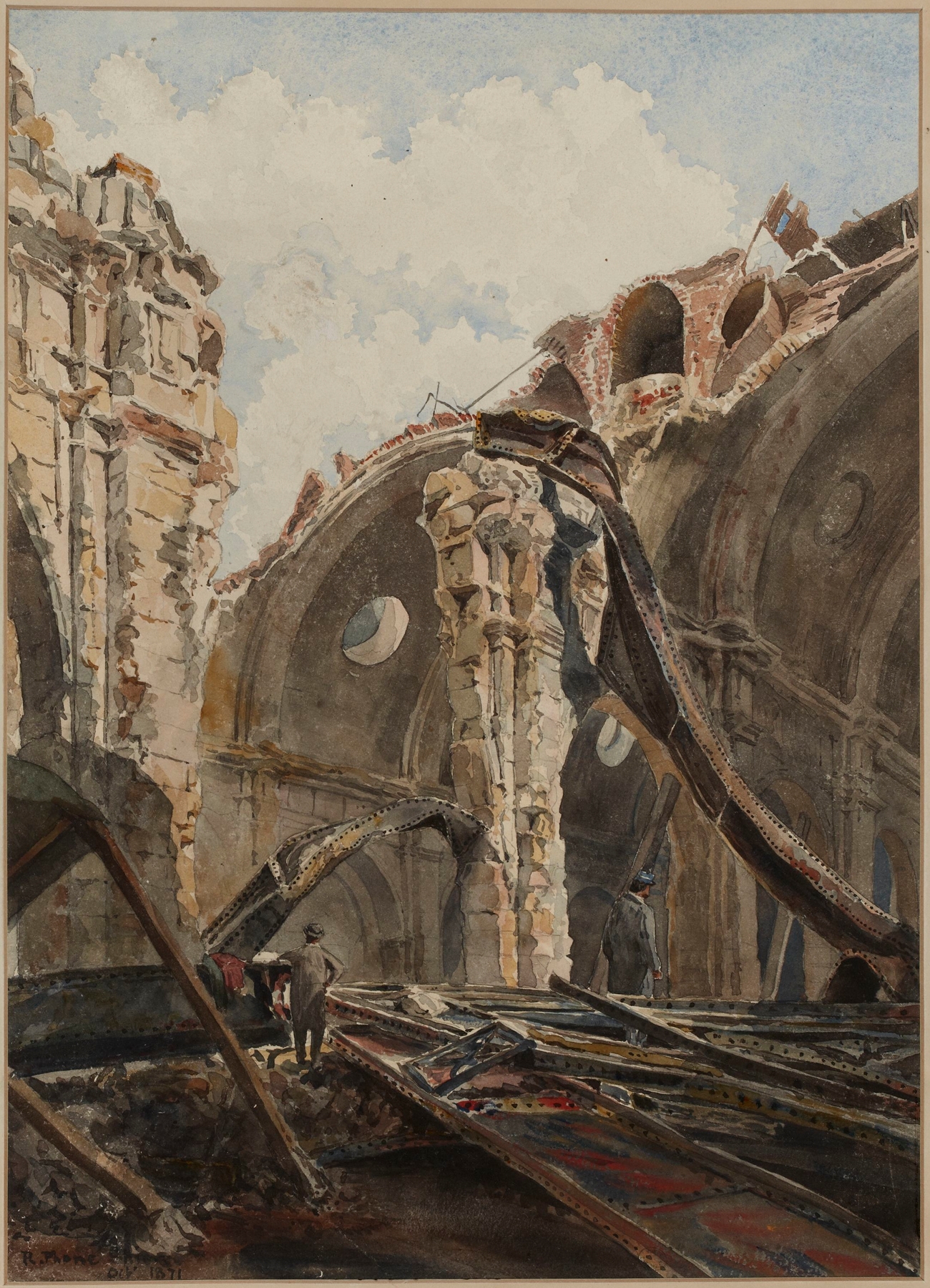
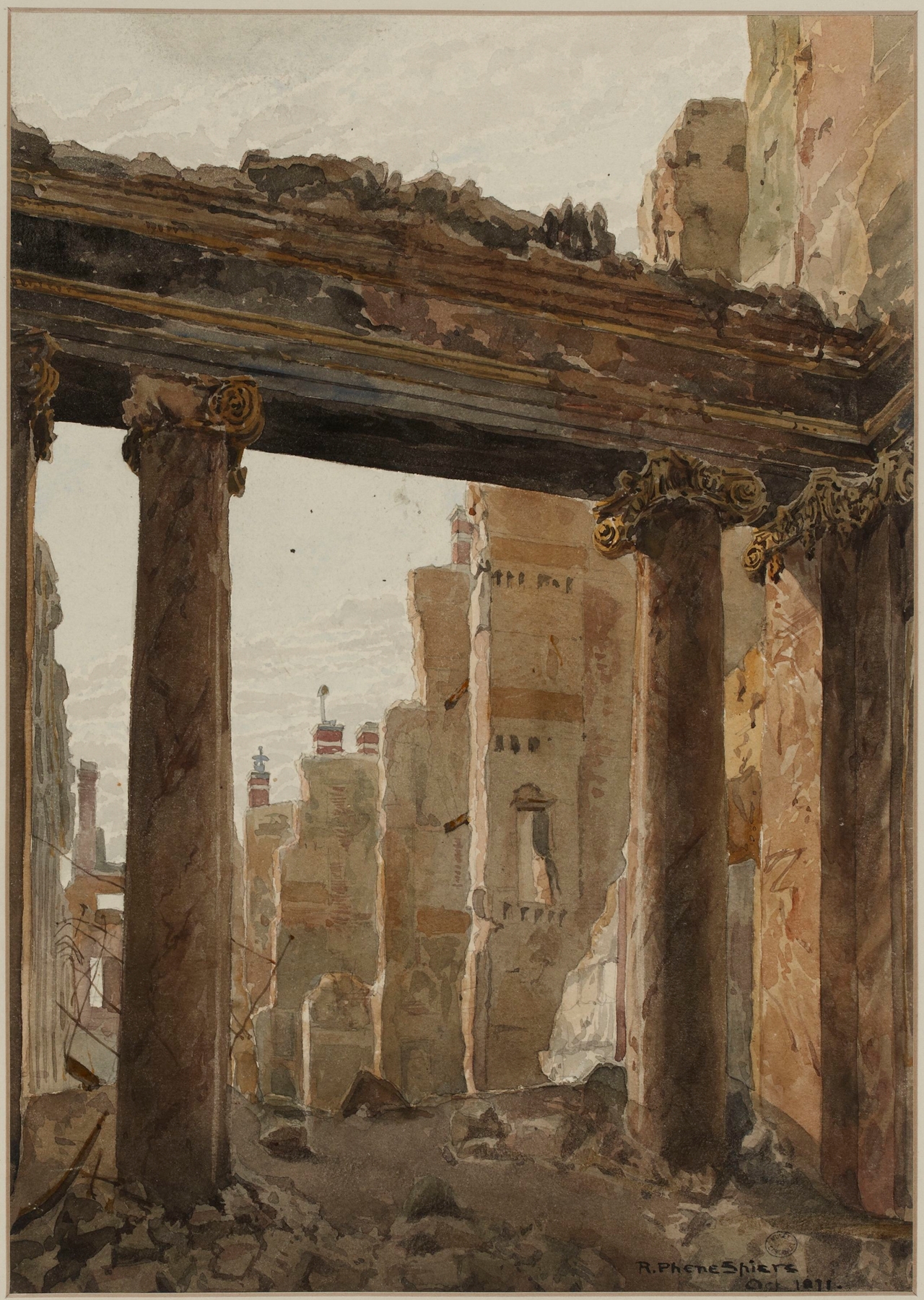
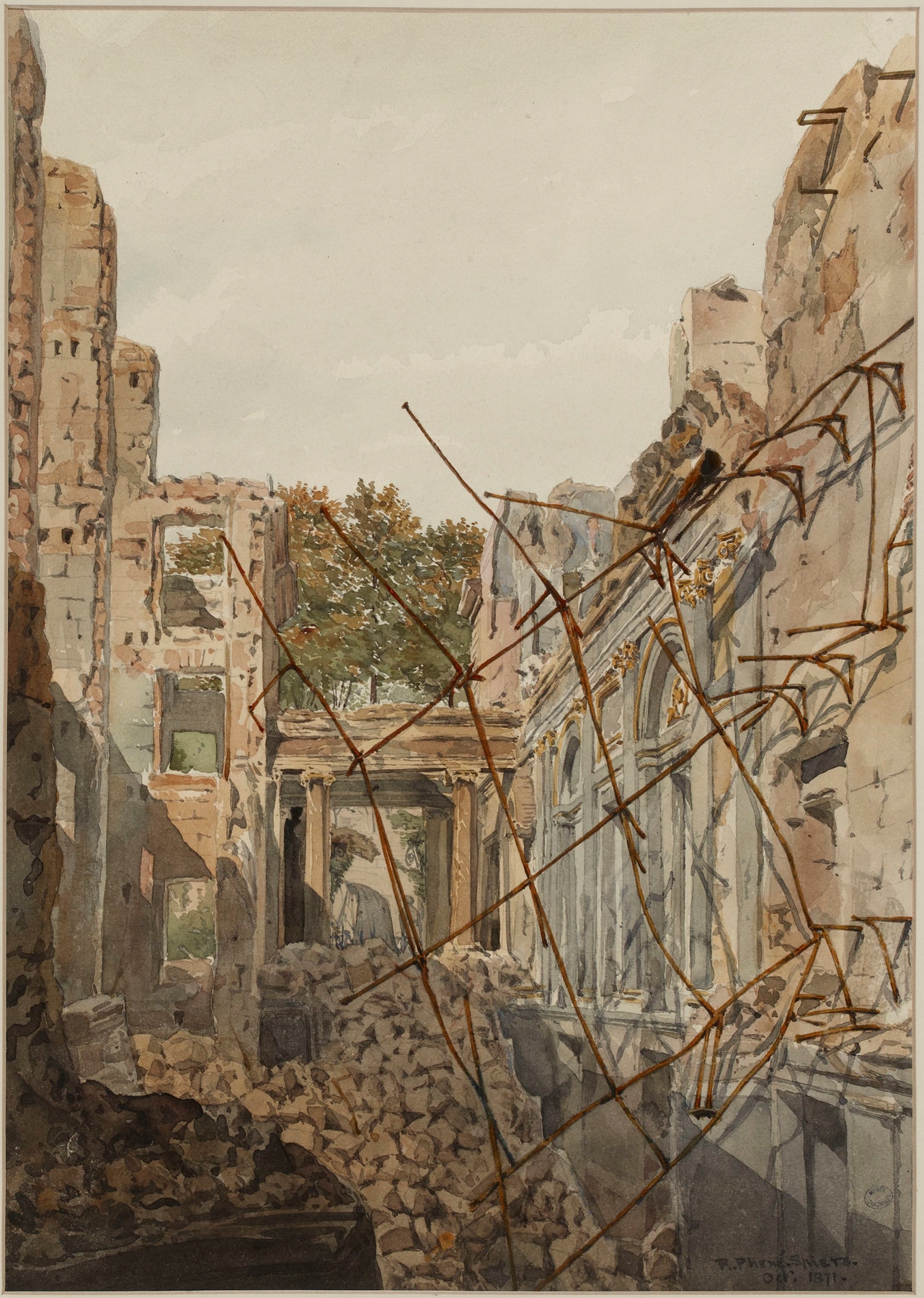
Is this a mirror — or a memory? In the aftermath of destruction, the remnants of grandeur stand in quiet contemplation, revealing both fragility and resilience. Look to the center at the charred remains of the once-majestic interior. The traces of soot-blackened walls and fallen debris create a haunting contrast with the soft light filtering through fractured windows.
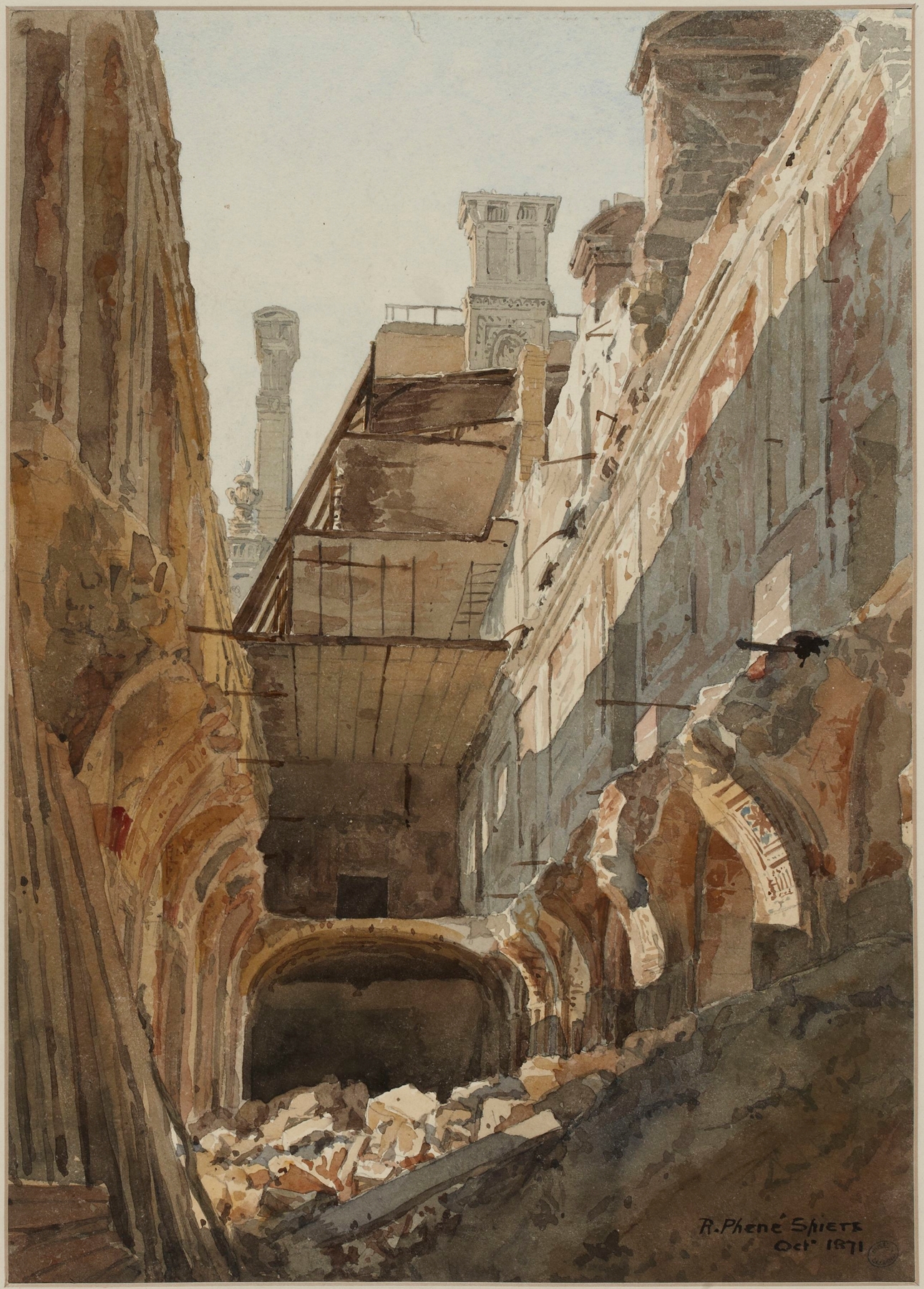
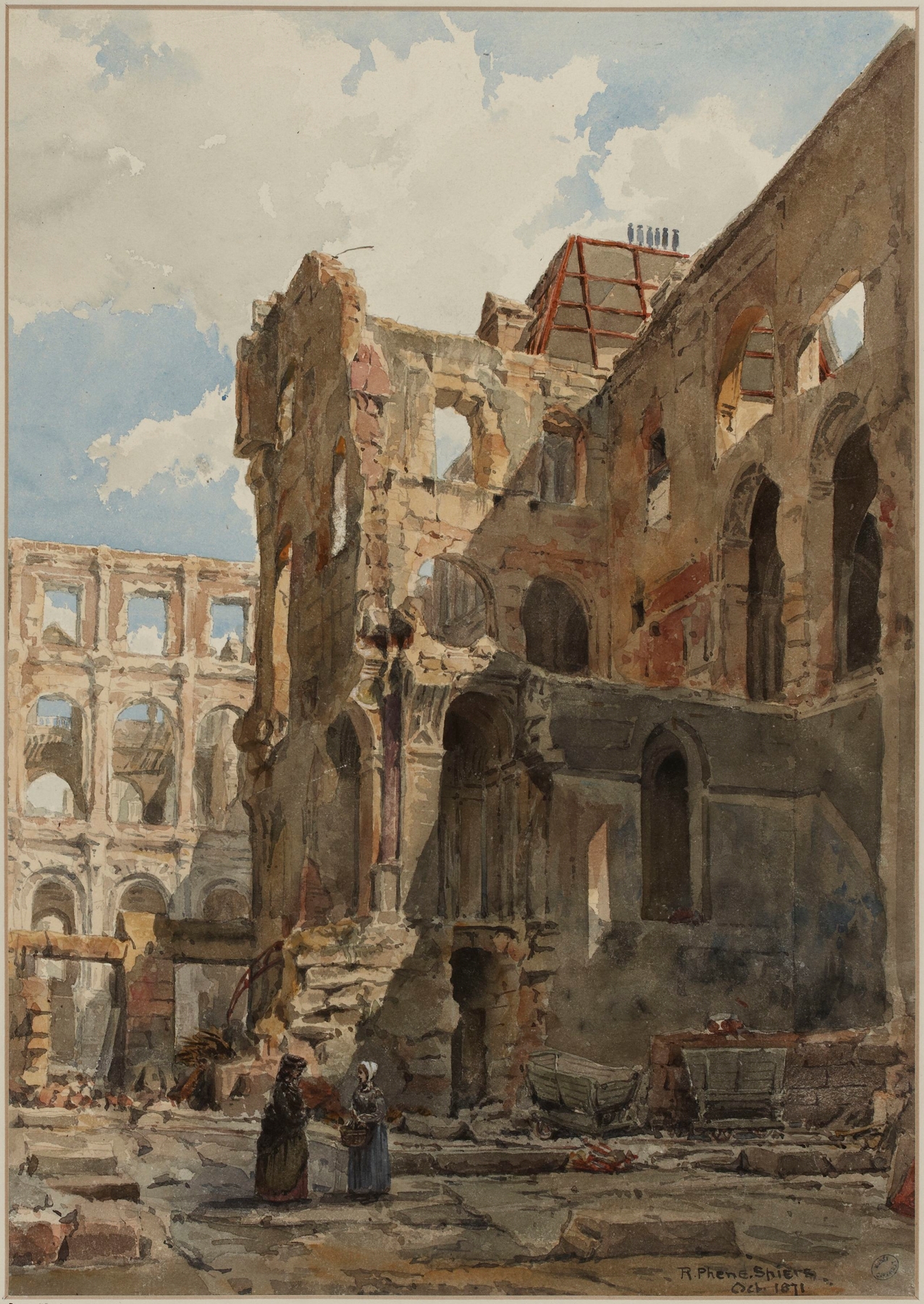
Notice how the careful brushwork captures the play of shadows, emphasizing the decay while simultaneously revealing the architectural beauty that once was. The muted palette of browns and grays lends a somber tone, evoking the emotional weight of loss and the passage of time. In the juxtaposition of light and shadow lies a poignant tension; the ethereal glow around the remnants suggests hope amid despair. Tiny details, like the delicate ornamentation still clinging to life in the backdrop, speak of a bygone elegance, while the starkness of destruction invites a reflection on the fragility of human endeavors.
This interplay between beauty and devastation encapsulates not just a physical space but the emotional landscape of a society grappling with its scars. In 1871, Richard Phené Spiers painted this scene amidst a period of tumult in Paris, shortly after the city had faced the ravages of the Franco-Prussian War and the subsequent Commune. Having established himself as an architect and artist, he sought to document the aftermath of the fire that consumed the Palais de Justice, capturing both a literal and metaphorical testament to loss in a city teetering on the edge of transformation.