Vestiges d’éléments sculptés décorant l’Hôtel de Ville en 1871 — History & Analysis
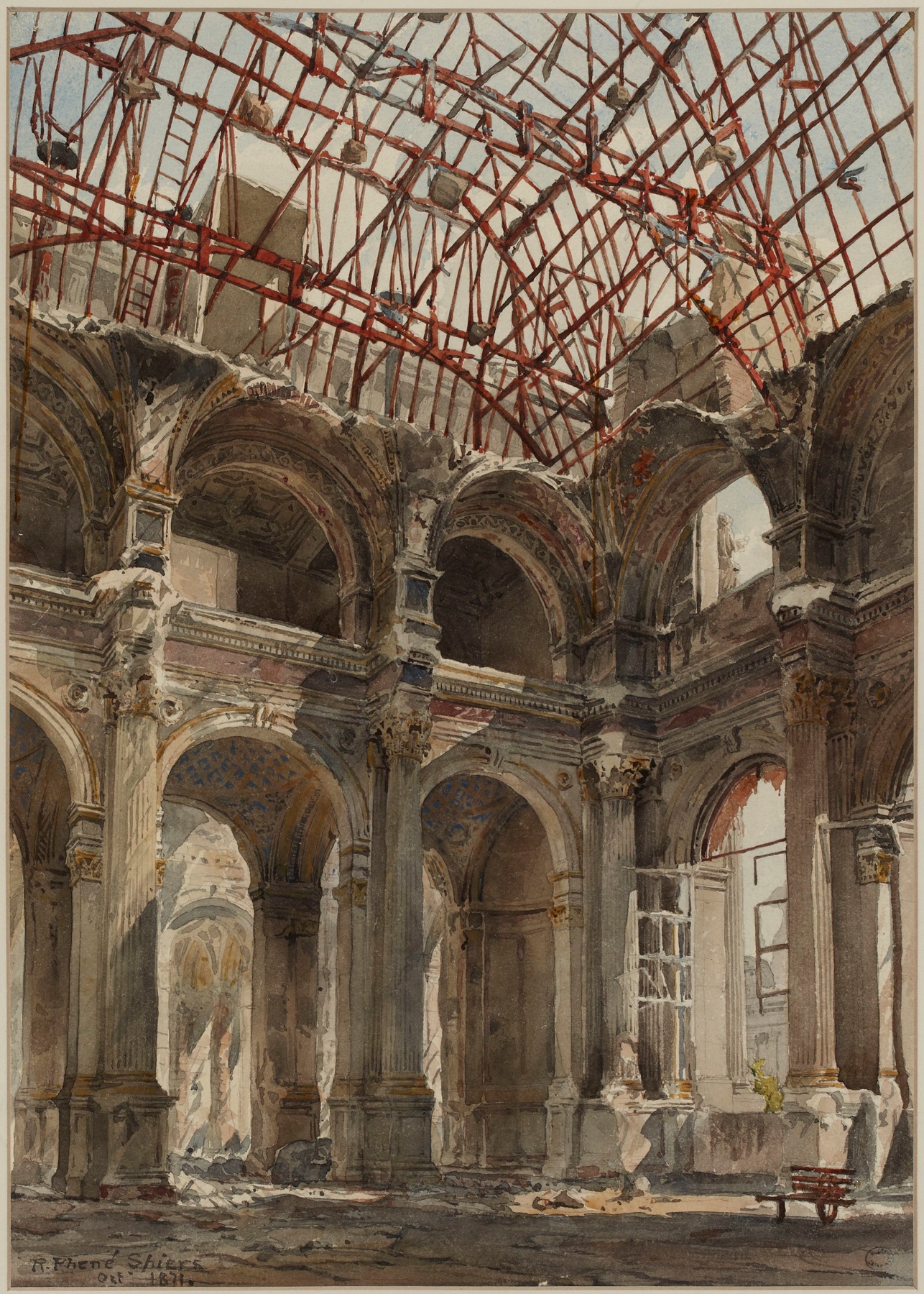
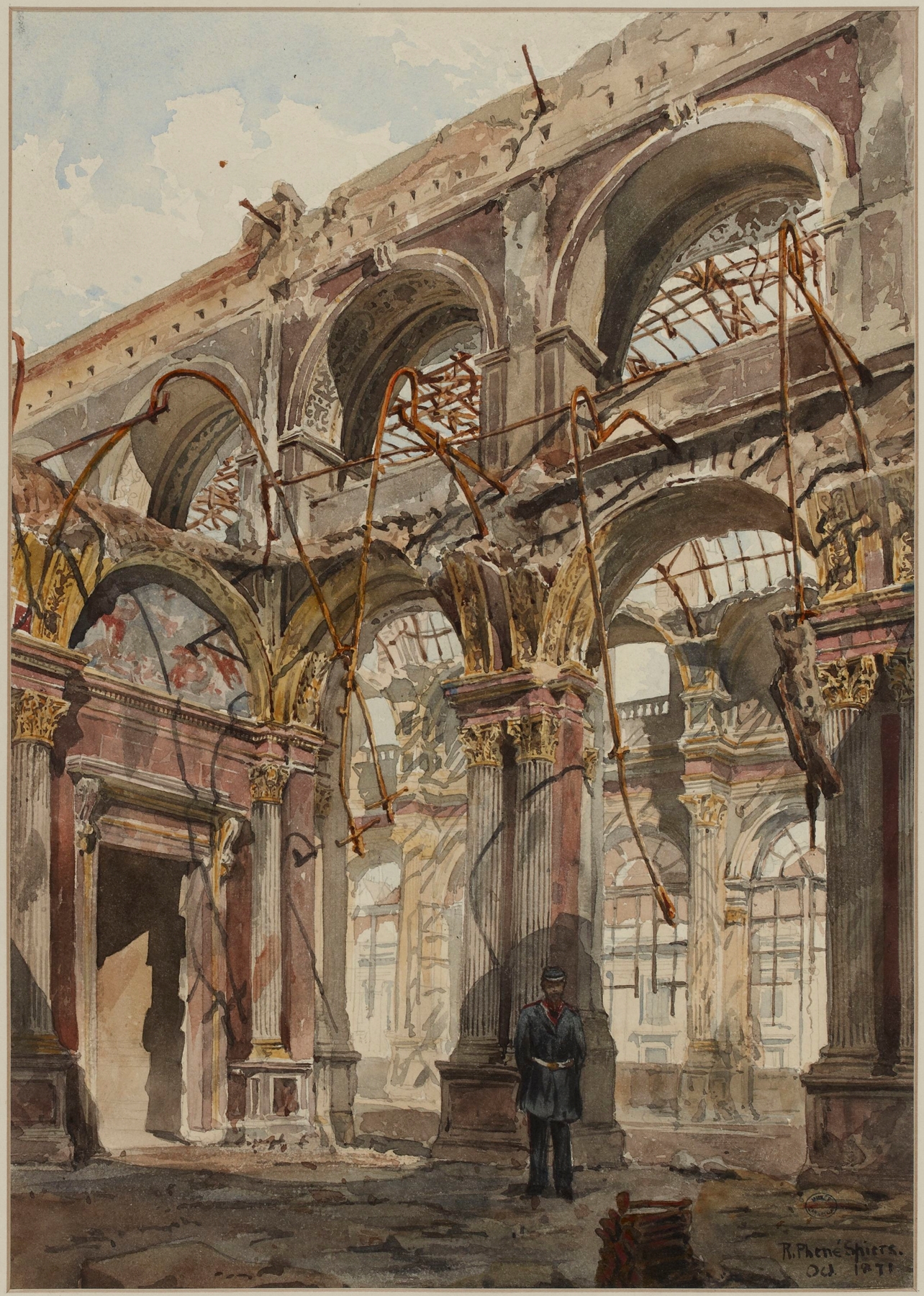
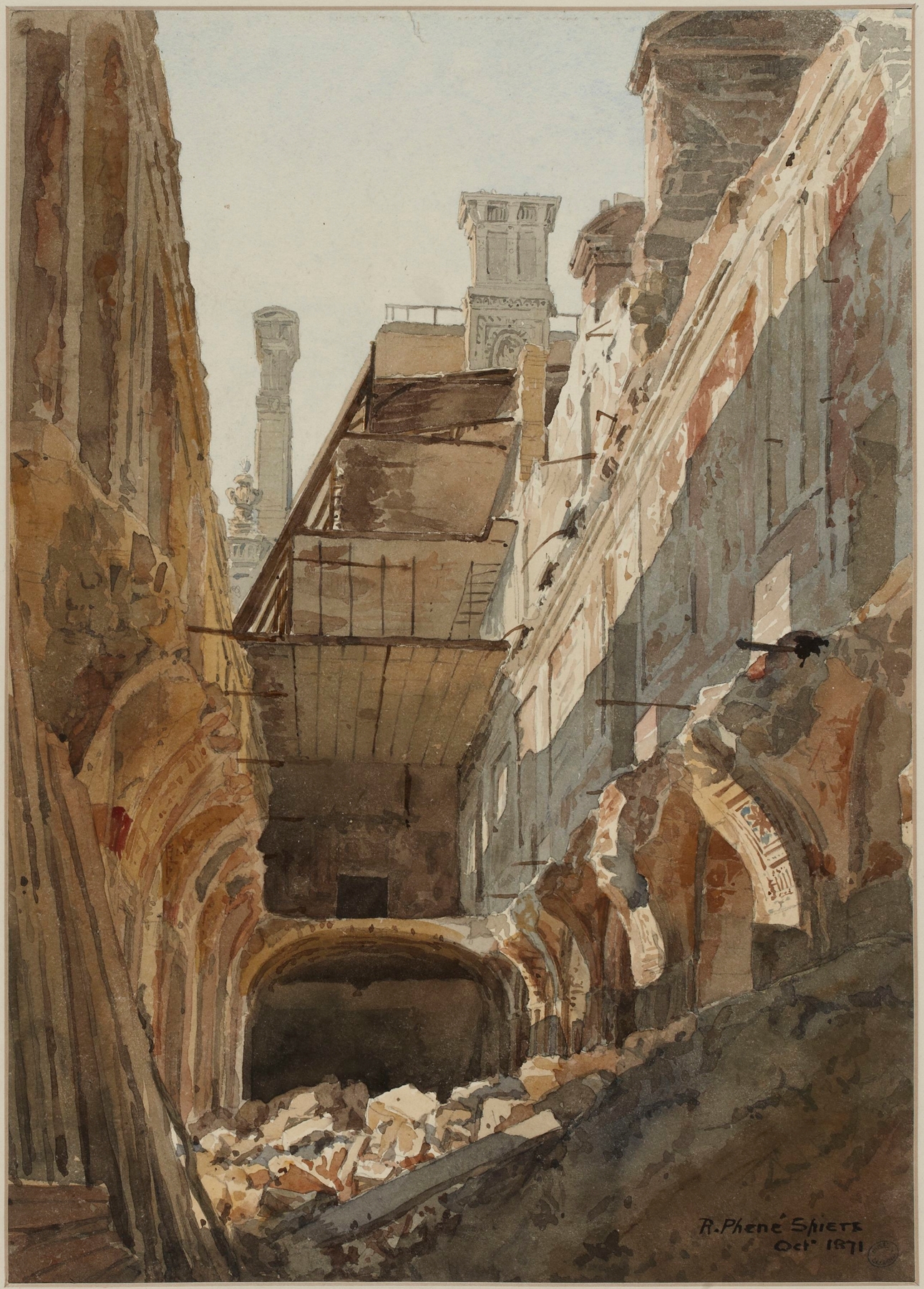
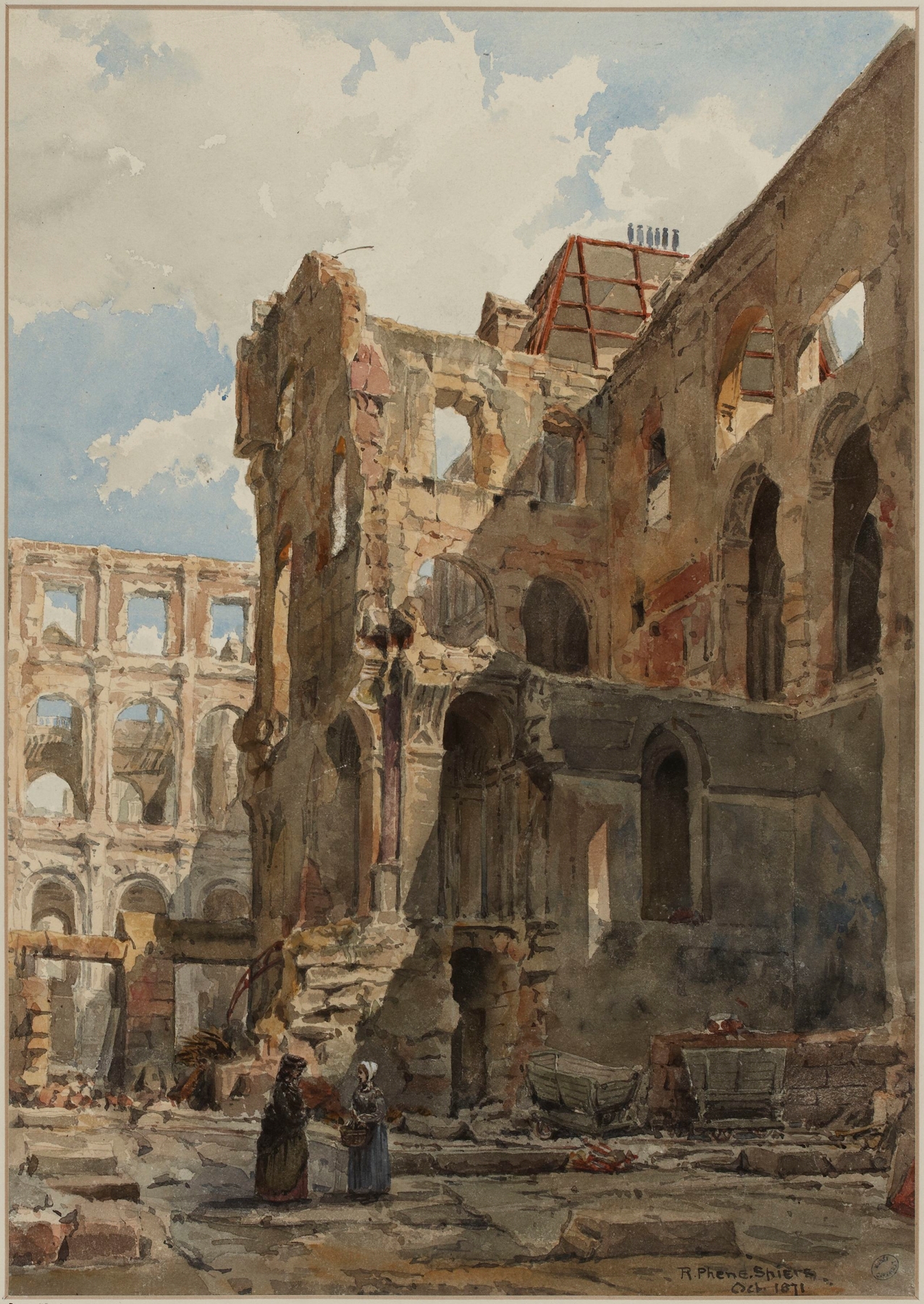
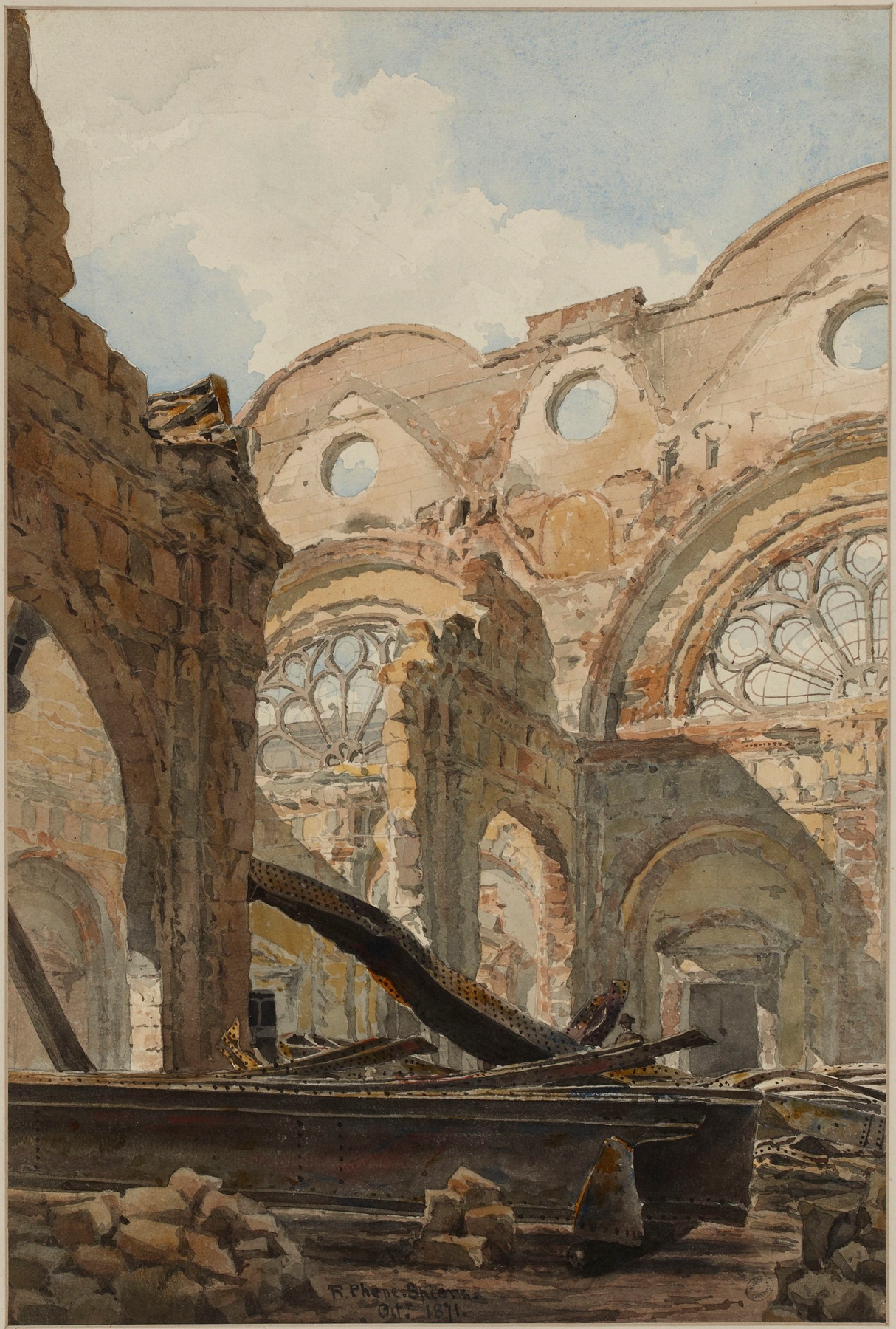
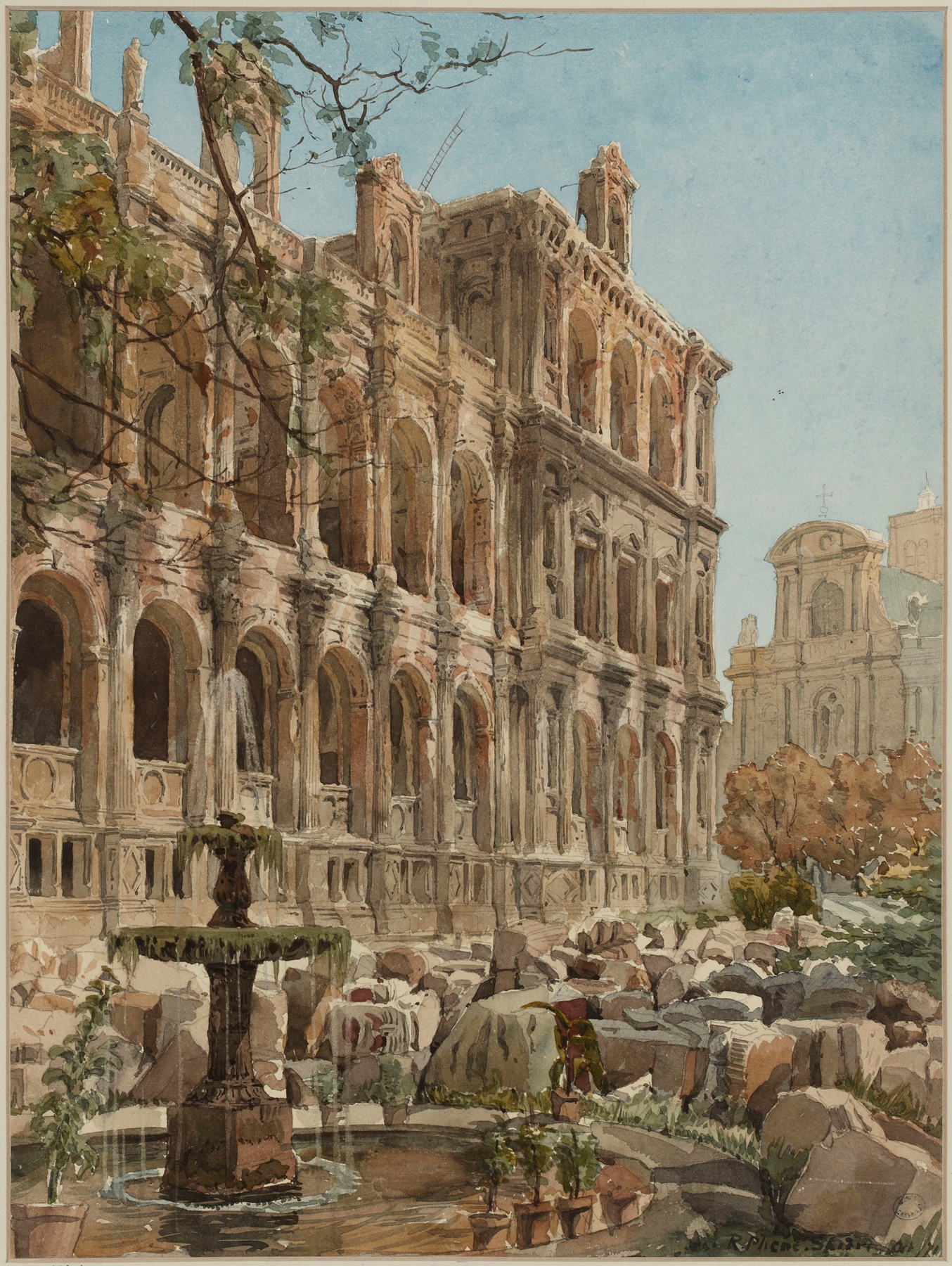
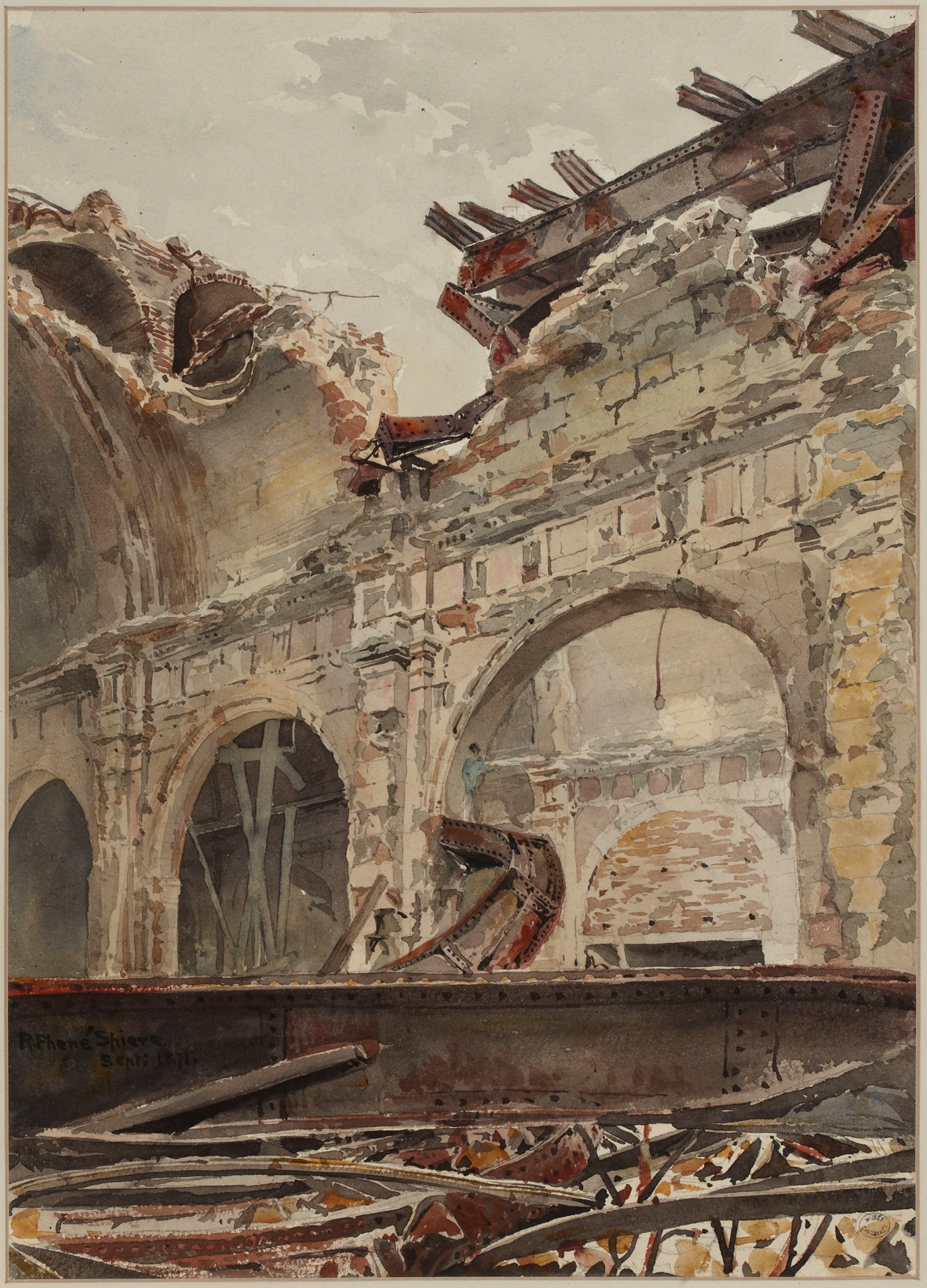
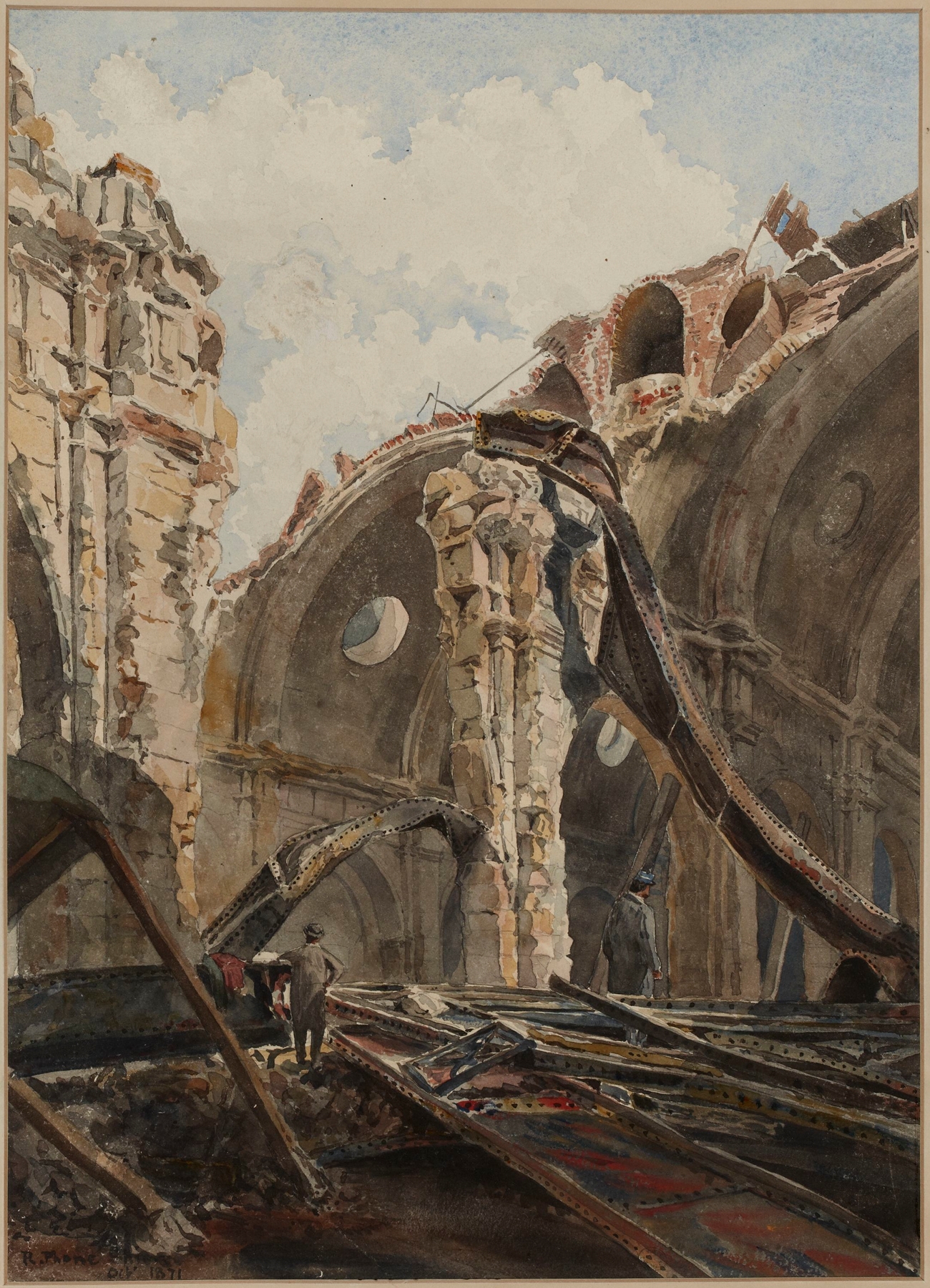
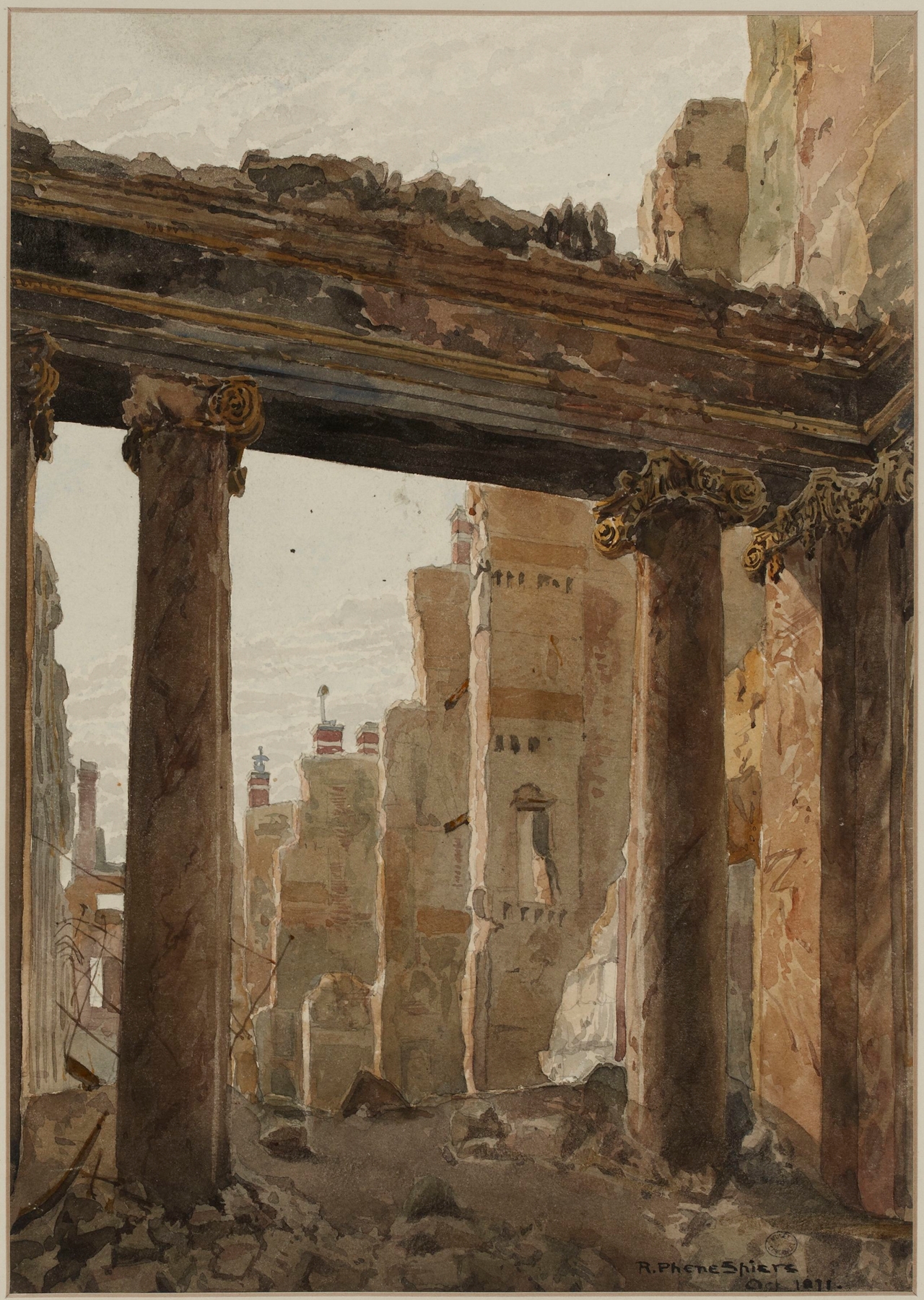
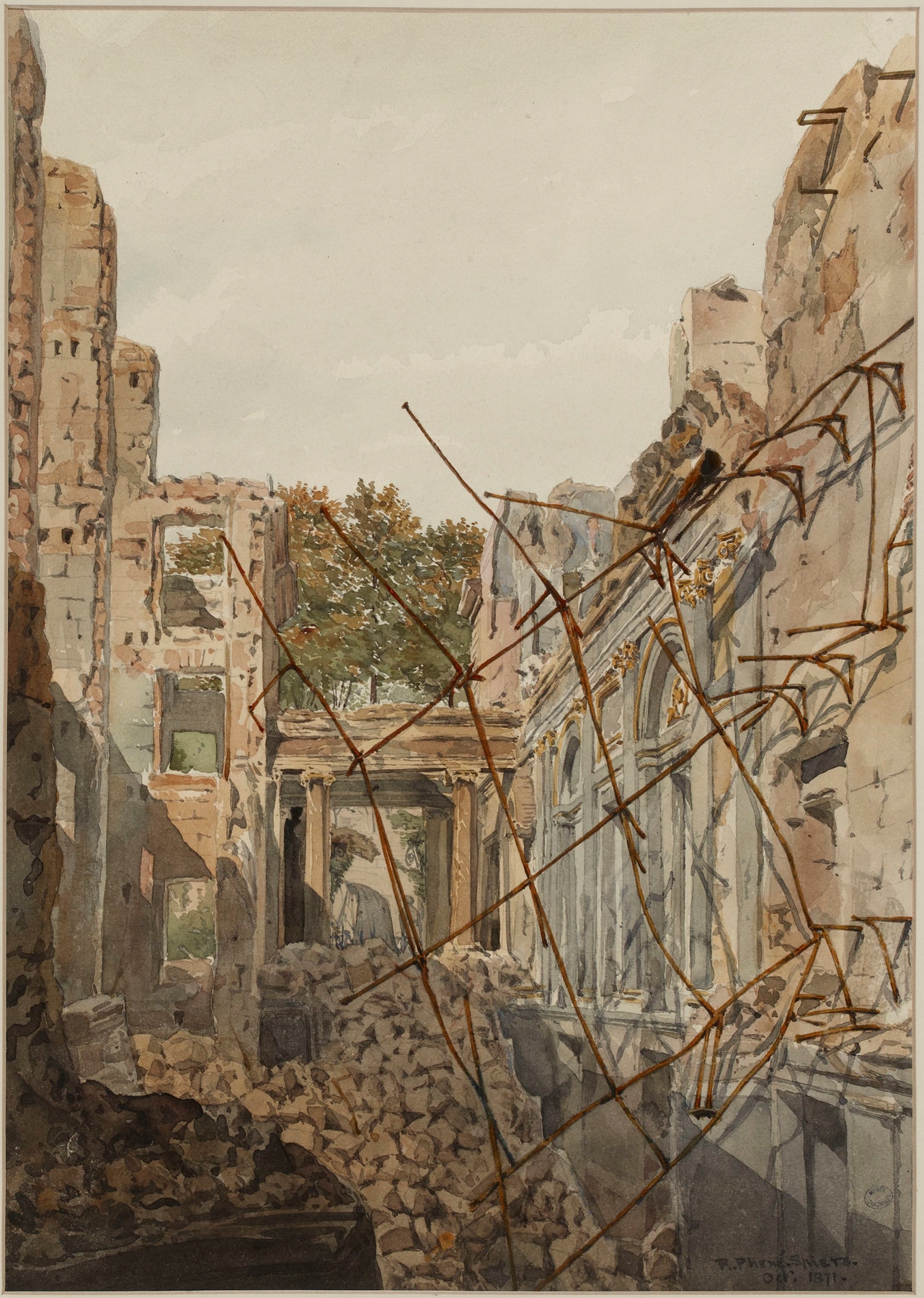
Could beauty survive in a century of chaos? In Richard Phené Spiers’ Vestiges d’éléments sculptés décorant l’Hôtel de Ville en 1871, we are beckoned to contemplate the remnants of artistry amidst the ruins of history. This work stands as a testament to resilience, capturing a moment where the elegance of past craftsmanship confronts the stark reality of a world in turmoil. Look closely at the intricate details of the sculptural fragments depicted in the composition. Focus on the delicate curves and ornate designs that speak to a time when artistry flourished.
The play of light across the stone surfaces highlights both their grandeur and decay, revealing rich textures of weathered stone contrasted with the soft shadows that dance around them. The artist’s choice of muted colors evokes a somber reflection, inviting the viewer to feel the weight of loss intertwined with beauty. These elements resonate with deeper meanings, suggesting a juxtaposition between permanence and transience. The remnants symbolize not just the physical destruction of the Hôtel de Ville, but also the cultural and emotional toll of the events surrounding the Paris Commune.
The artist captures a haunting stillness; these vestiges become witnesses to history, emblematic of both the fragility of human creation and the enduring spirit of artistic endeavor. In 1871, while the world around him was engulfed in political upheaval and conflict, Spiers found himself in Paris, an artist grappling with the recent traumas of war. The city, reeling from the aftermath of the Franco-Prussian War and the Commune's siege, provided a poignant backdrop for reflection. This piece embodies a quiet defiance against the chaos, reaffirming the notion that art, even in its remnants, holds the power to inspire and provoke thought in an unsettled world.