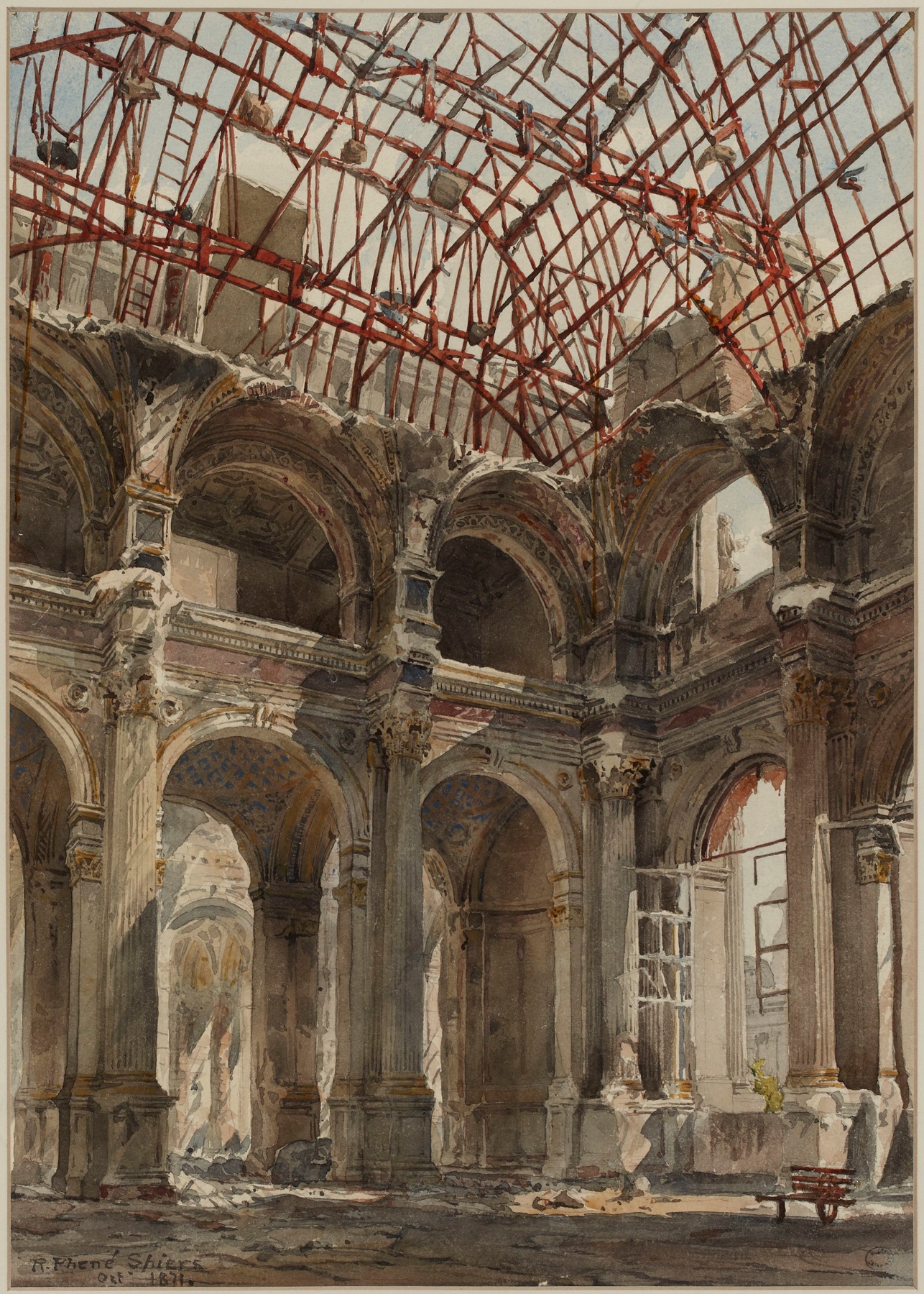
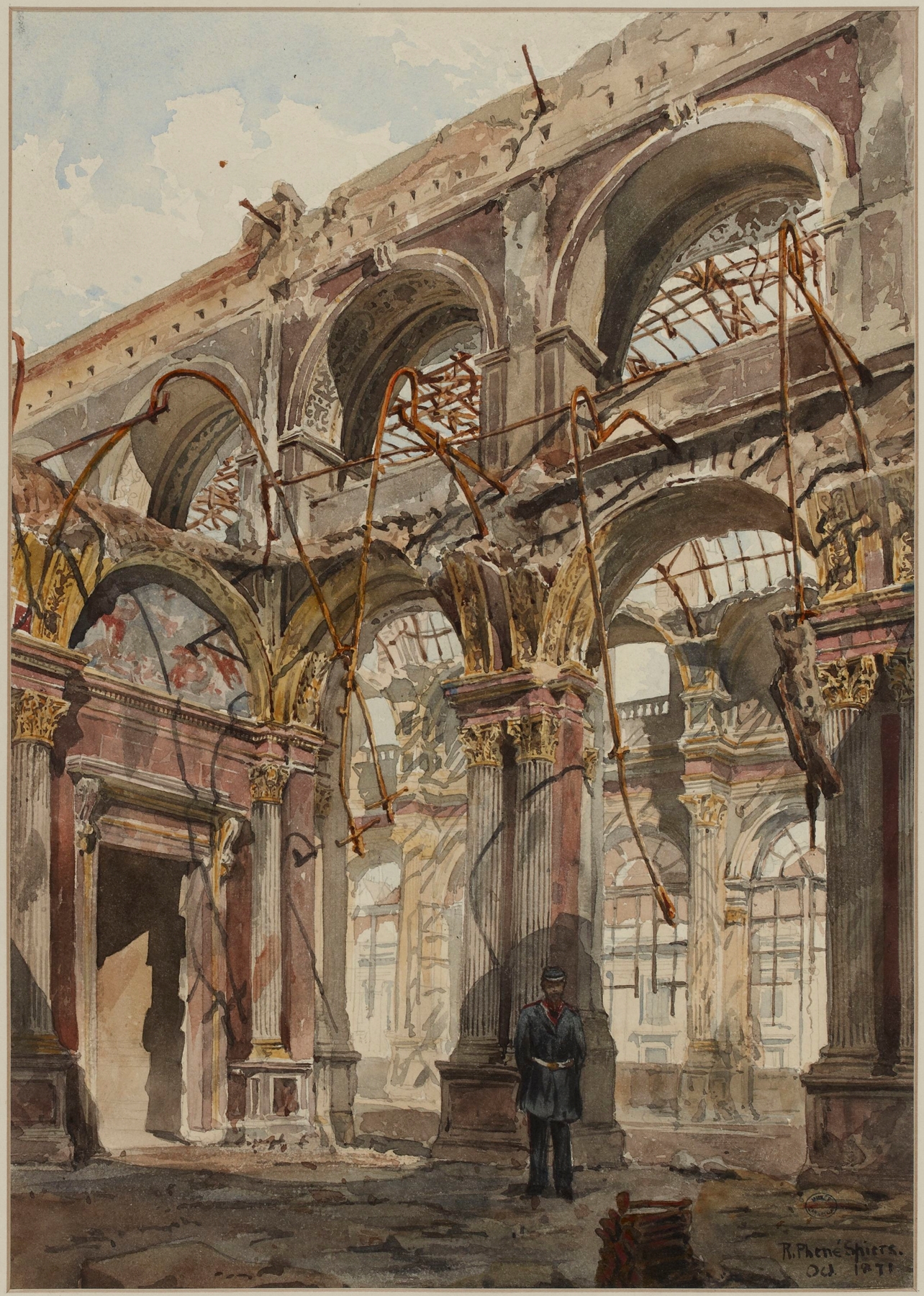
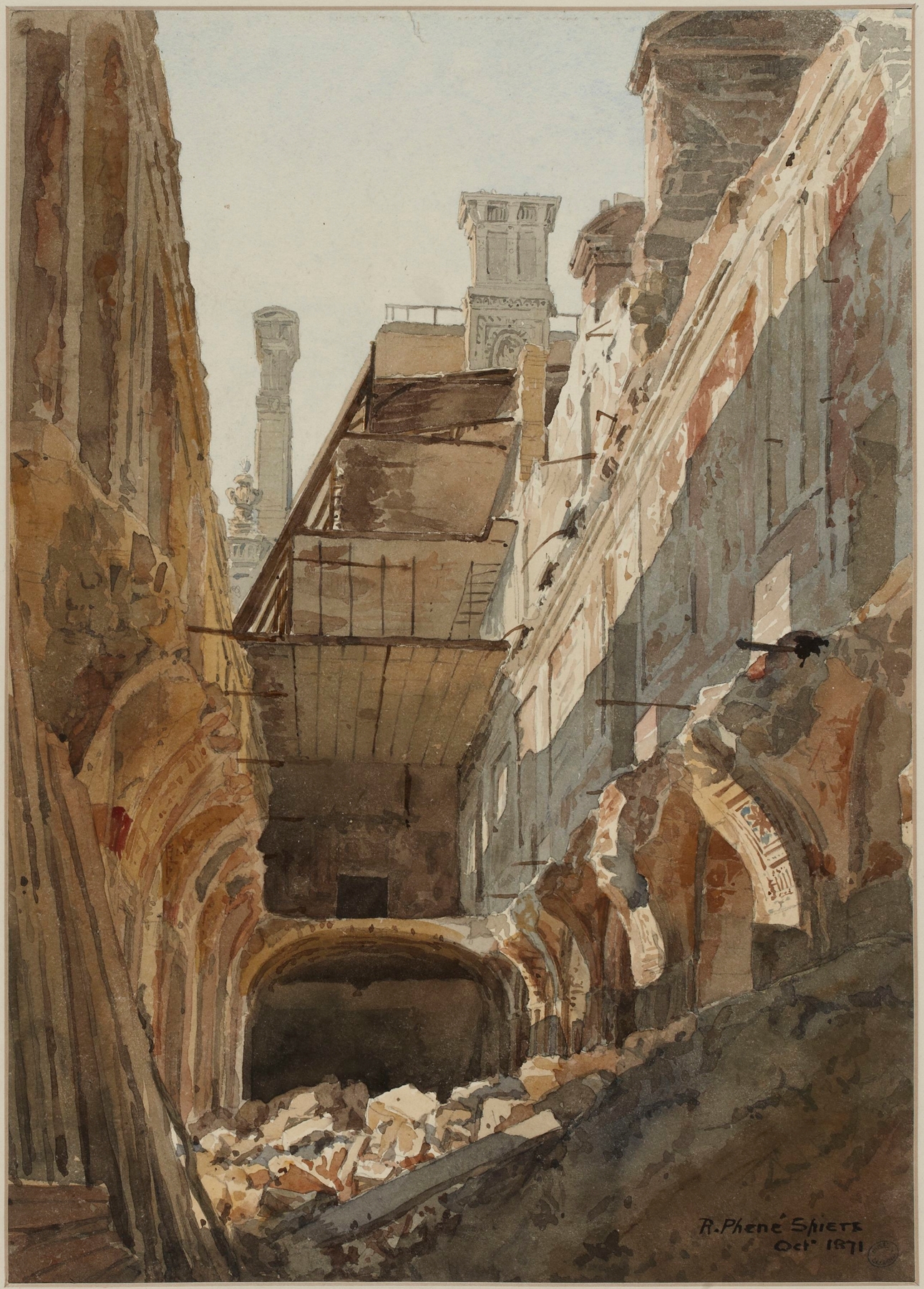
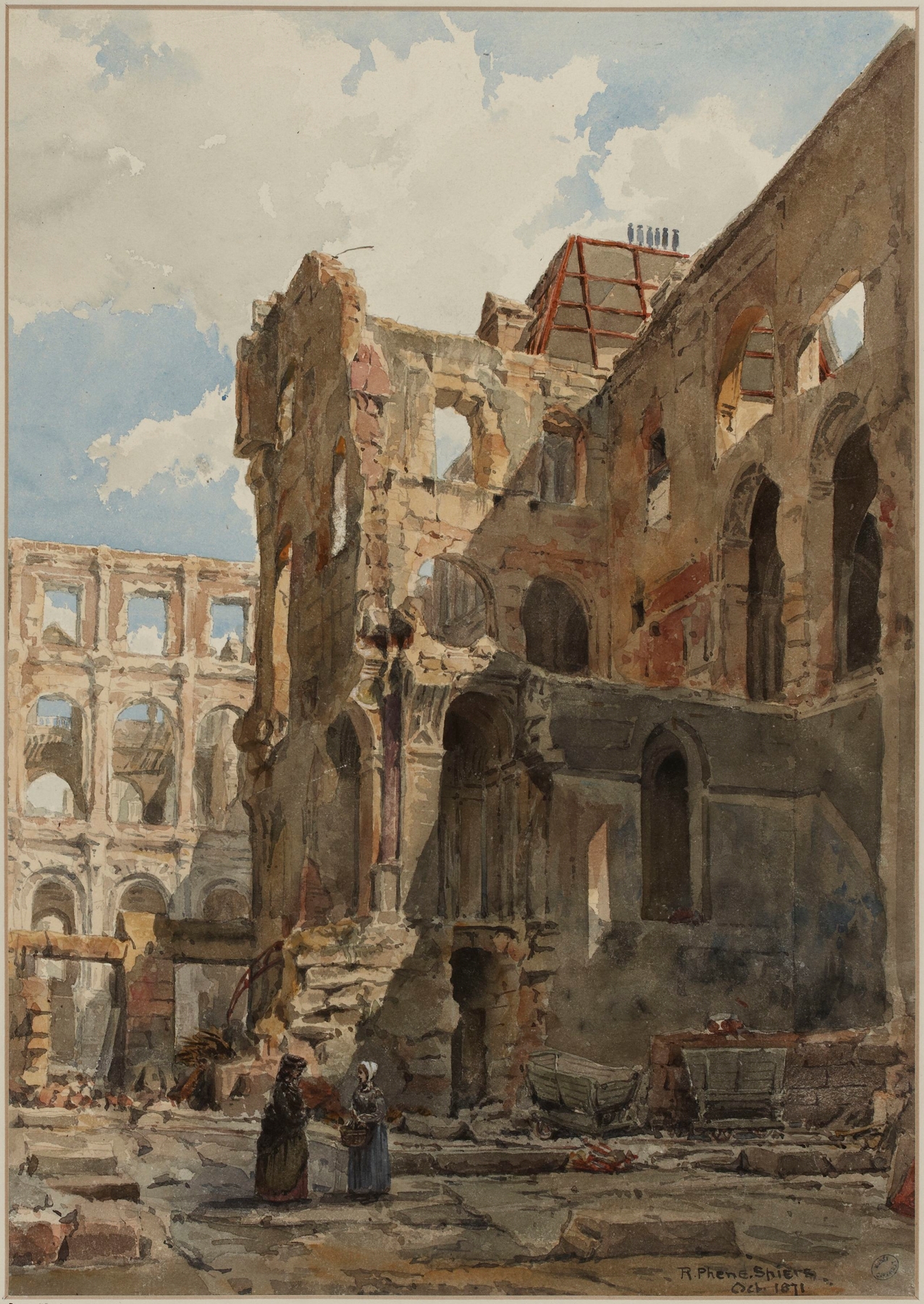
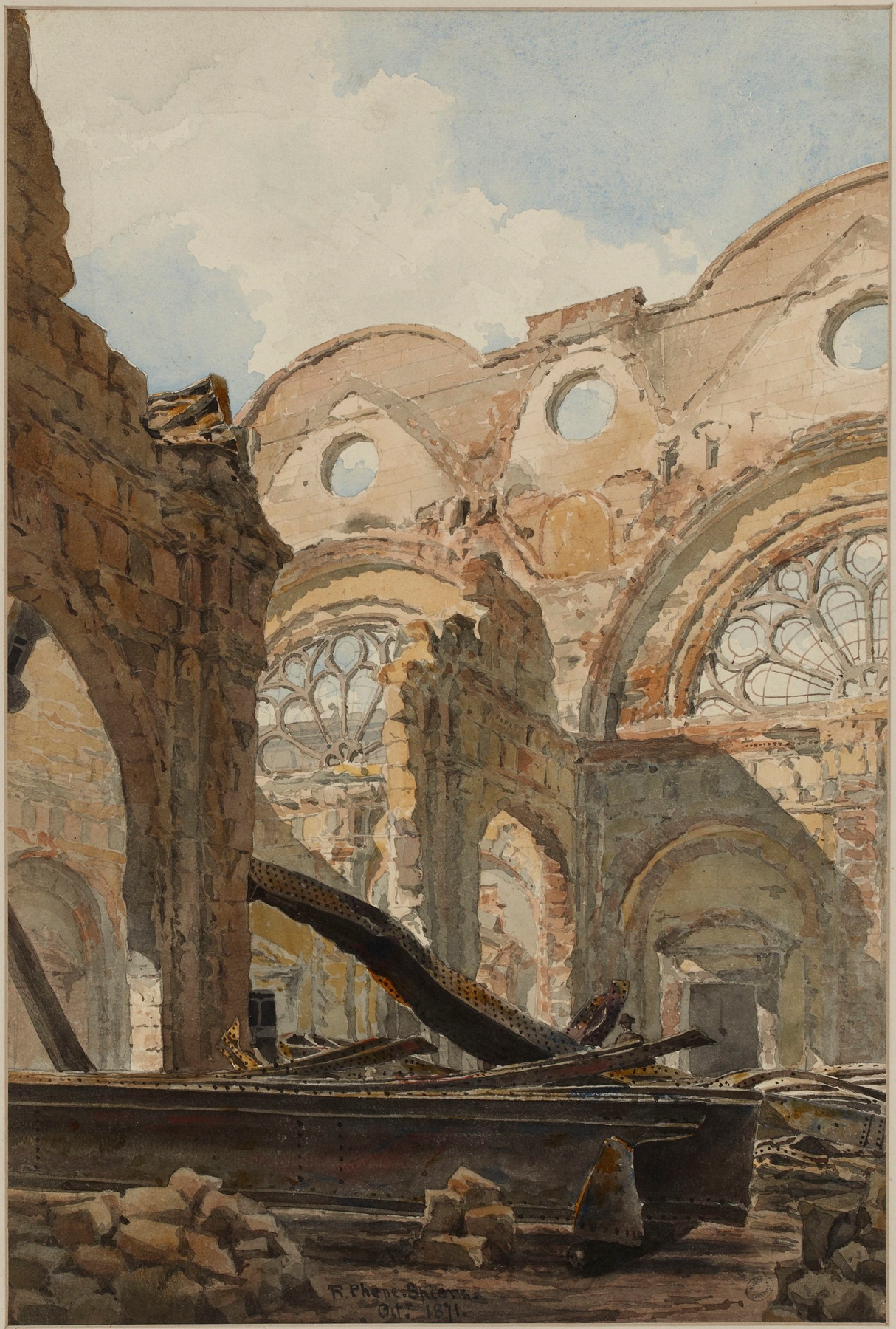
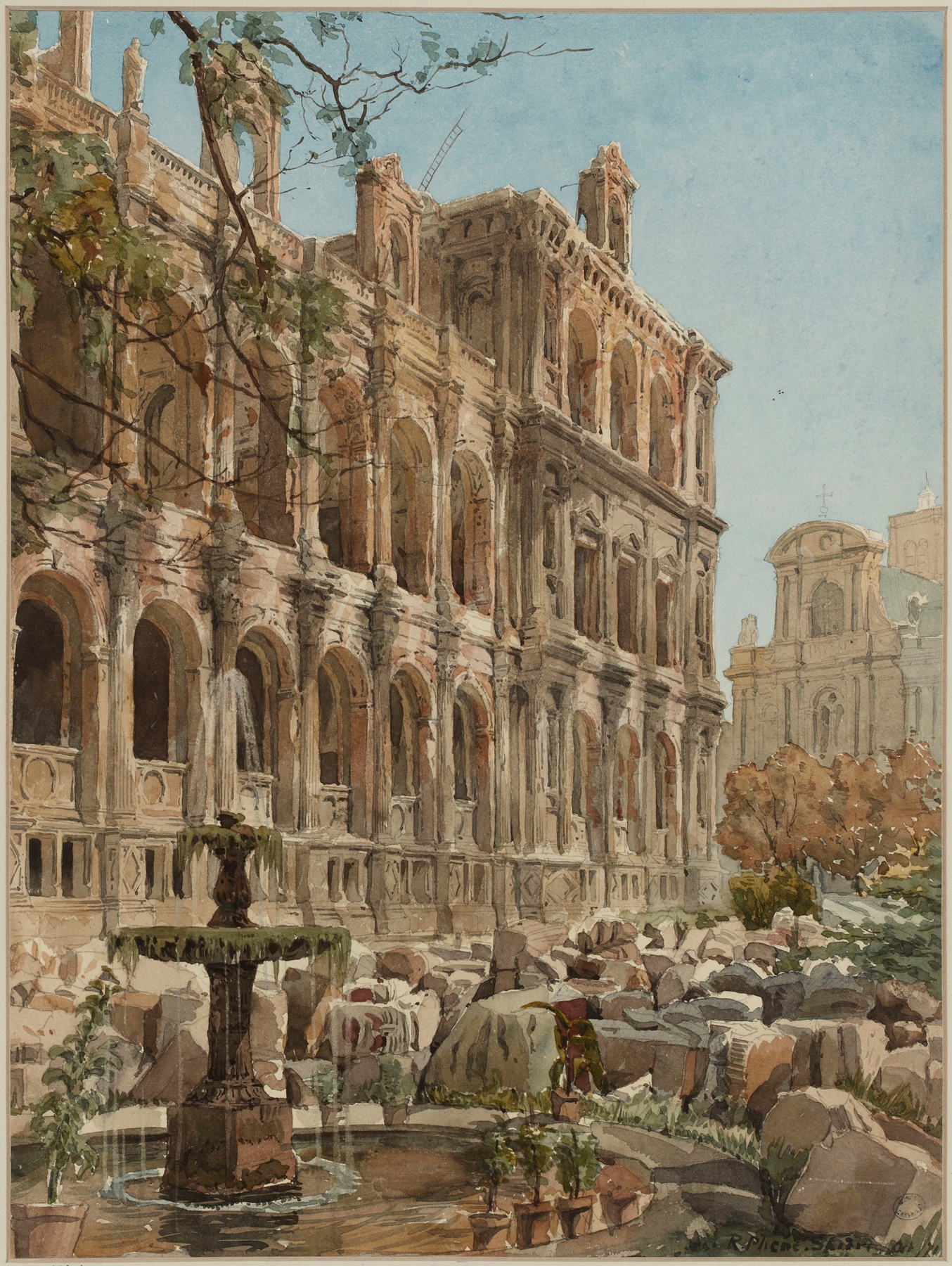
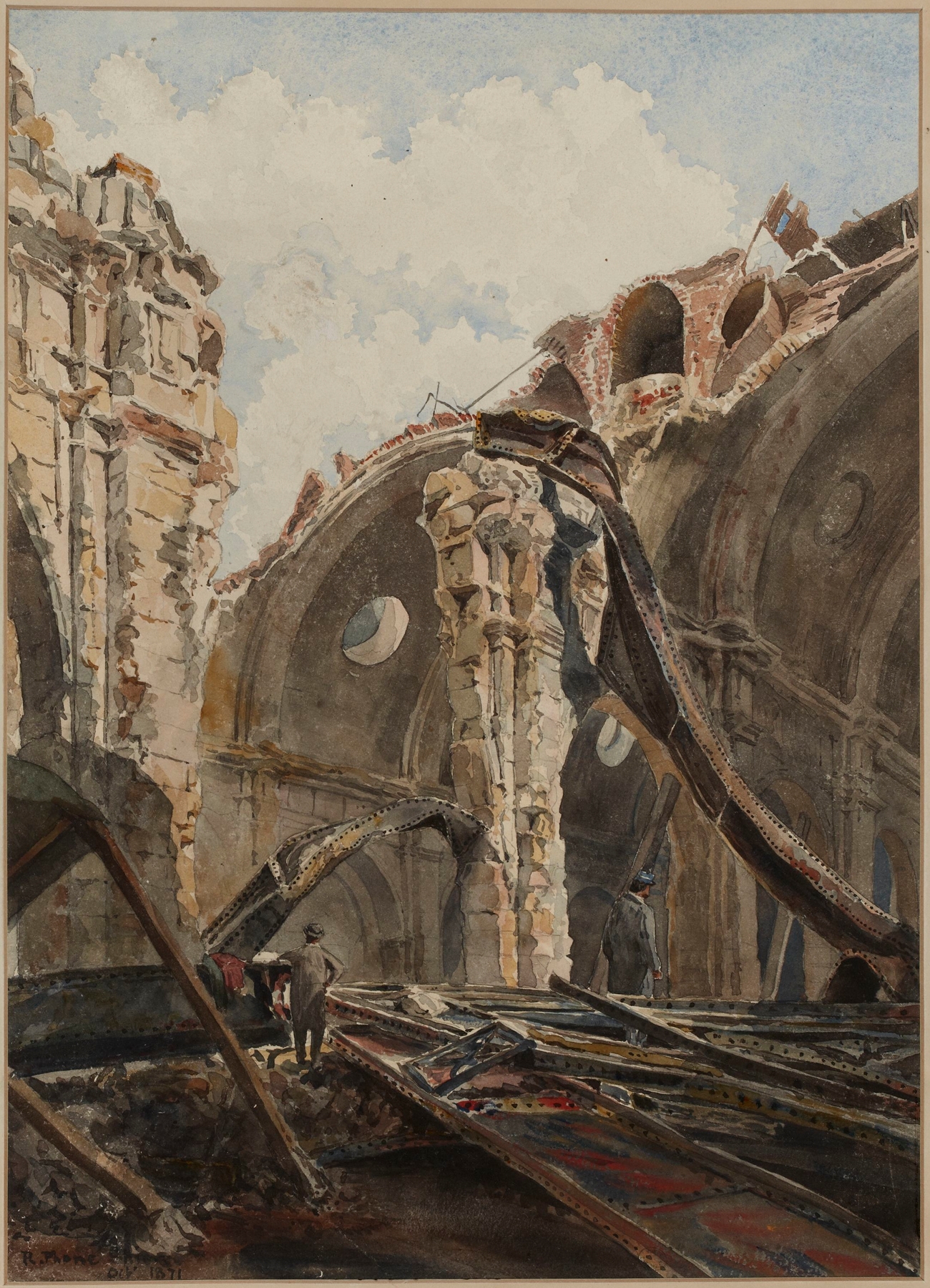
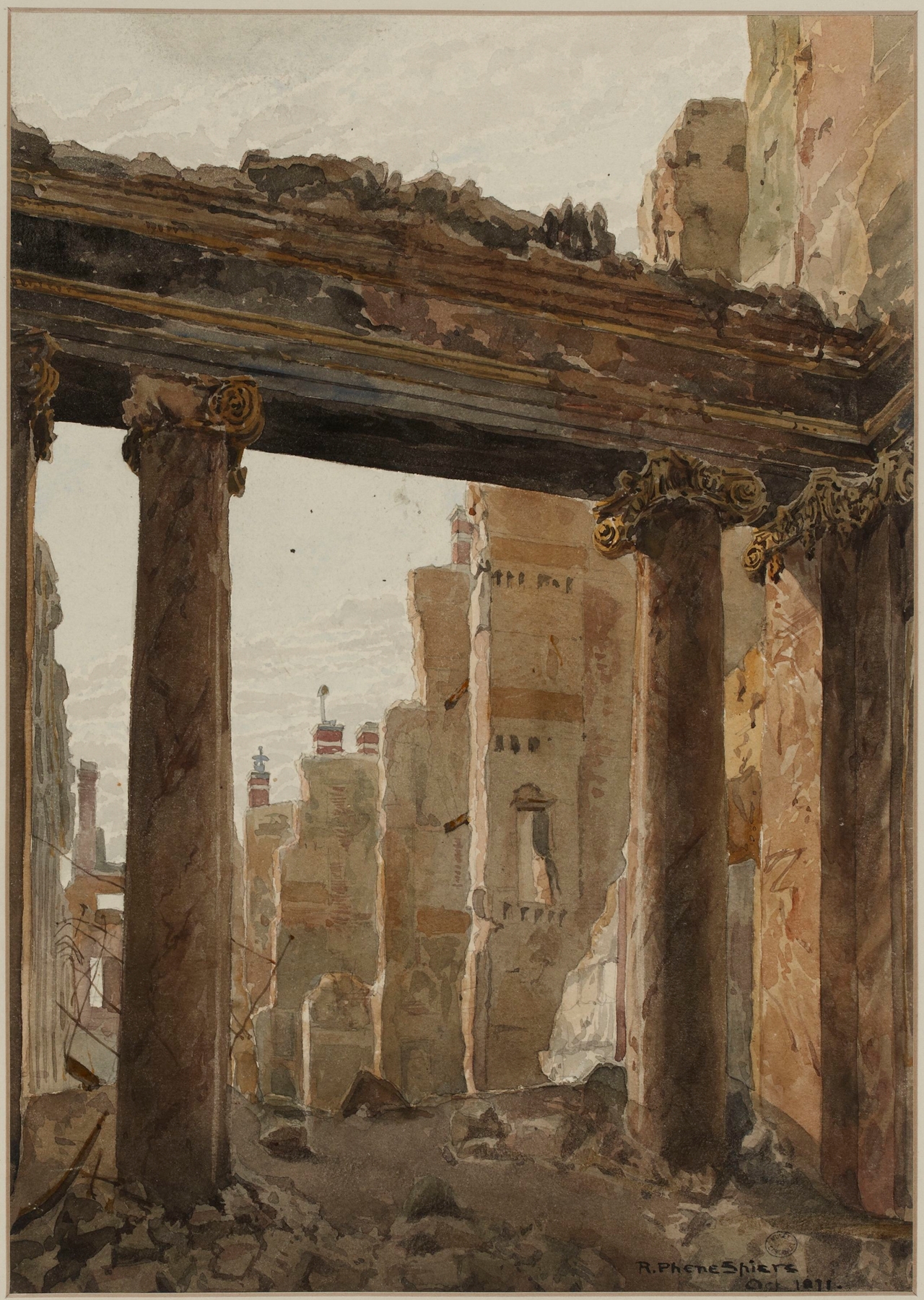
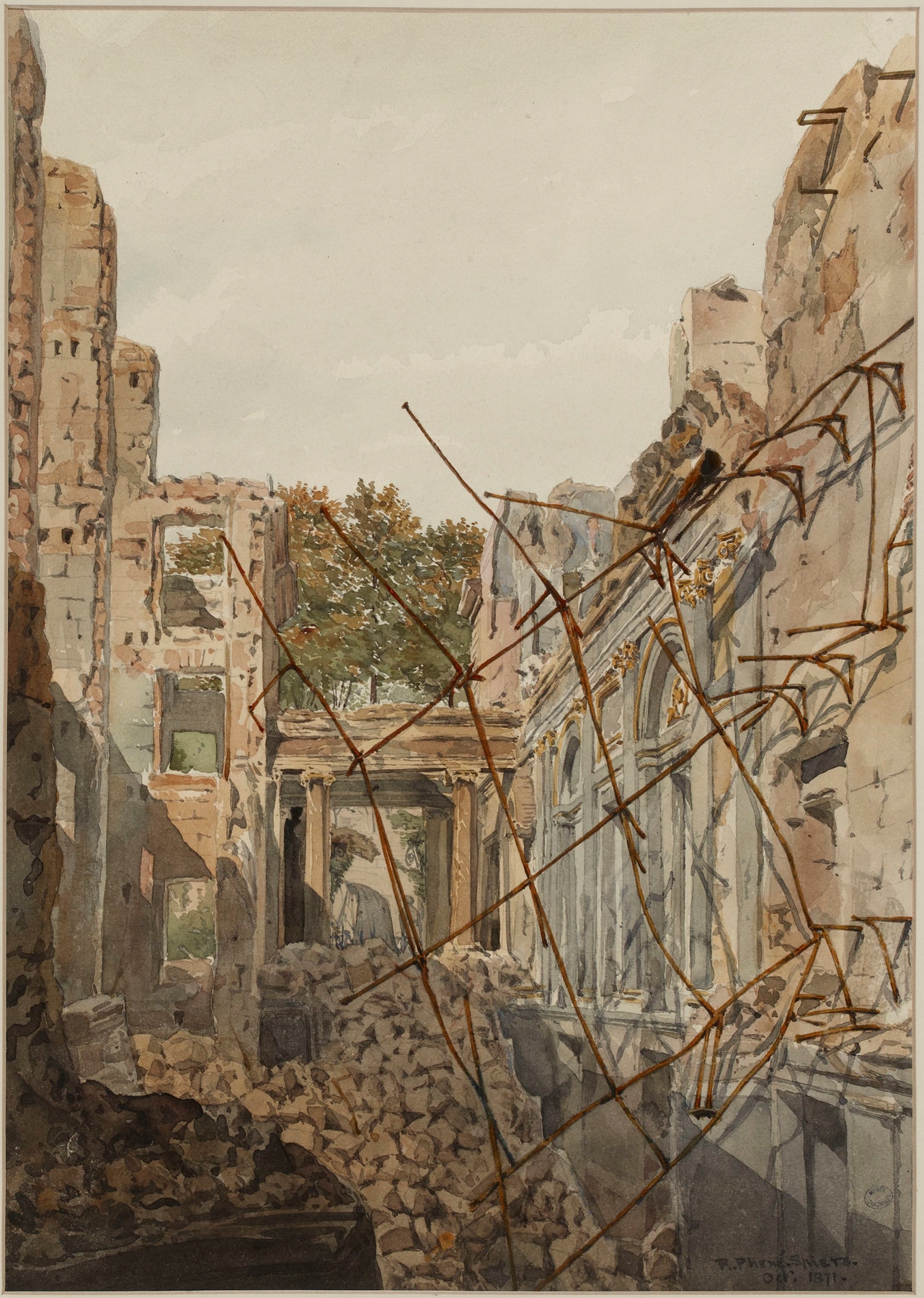
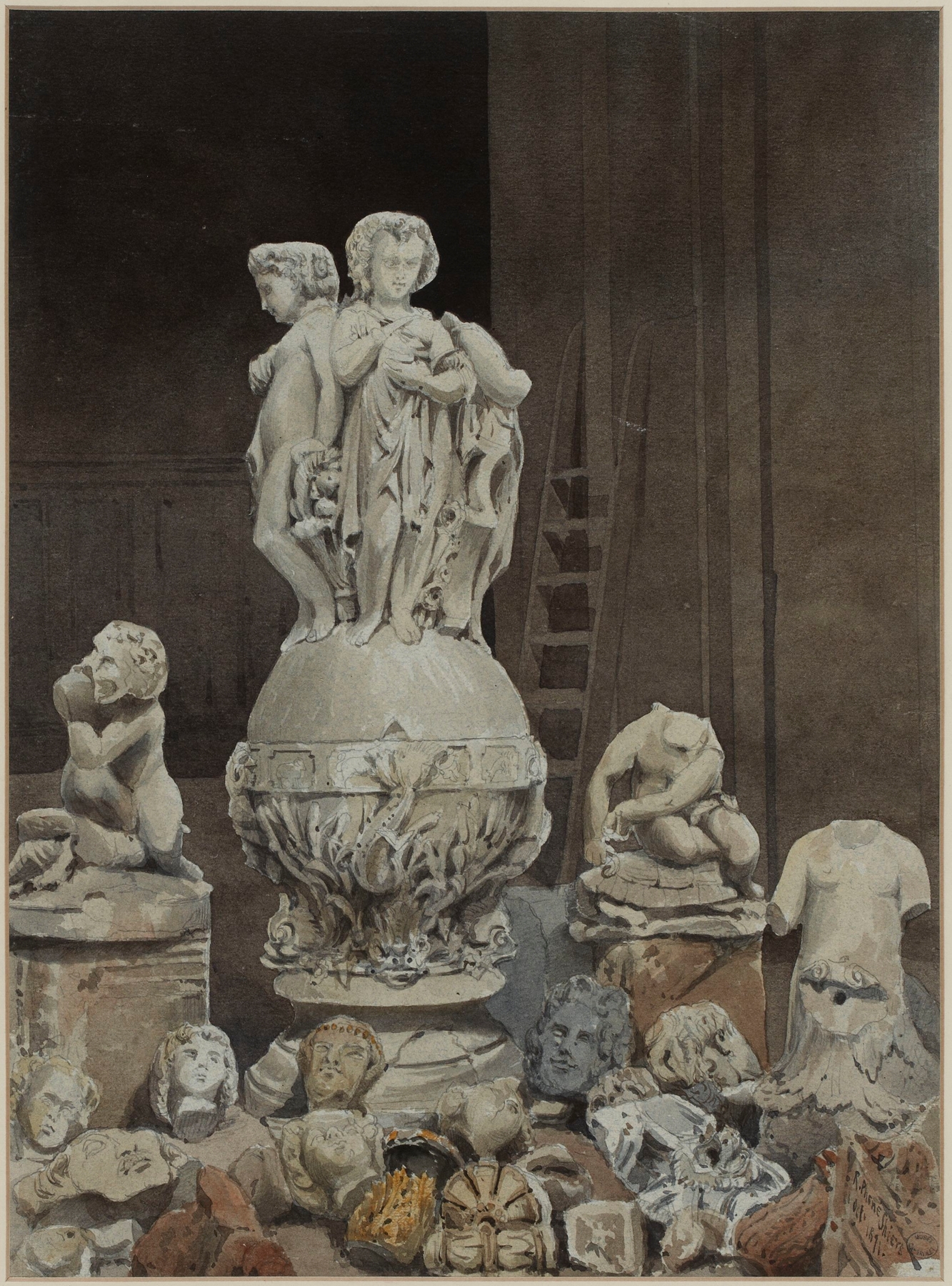
Ruines du Palais de Justice, salle des Pas-Perdus, après l’incendie de 1871. — History & Analysis
“The canvas doesn’t lie — it simply waits.” In the stillness of a burned world, loss becomes palpable, each brushstroke echoing the silence of what used to be. Focus on the charred remnants of the grand architectural lines that once defined the Palais de Justice. Look closely at the stark contrast between the ash-gray shadows and the remnants of white marble, where light filters weakly through the skeletal structure. The composition draws your eye upwards, inviting you to consider not only what has been lost but also what remains, a haunting beauty in decay.
The meticulous detailing highlights the once-majestic pillars, now warped and desolate, a testament to the ravages of time and fire. Amidst the devastation, there is a tension between despair and resilience. Notice how the light, though faint, clings to the edges of the debris, suggesting that hope lingers even in destruction. The emotional weight of the scene speaks to the fragility of human achievement, where grandeur can be reduced to ashes in an instant.
Each crack and hollow space whispers stories of the past, while the overall somber palette mirrors the grief that envelopes the viewer. Richard Phené Spiers created this poignant work in the aftermath of the Paris Commune, a tumultuous period in 1871, where civil unrest led to the devastation of historic landmarks. As a British architect and painter residing in Paris, he captured the emotional aftermath of this event, reflecting not only on the physical destruction but also on the collective sorrow of a city in mourning.