Medfield Landscape — History & Analysis
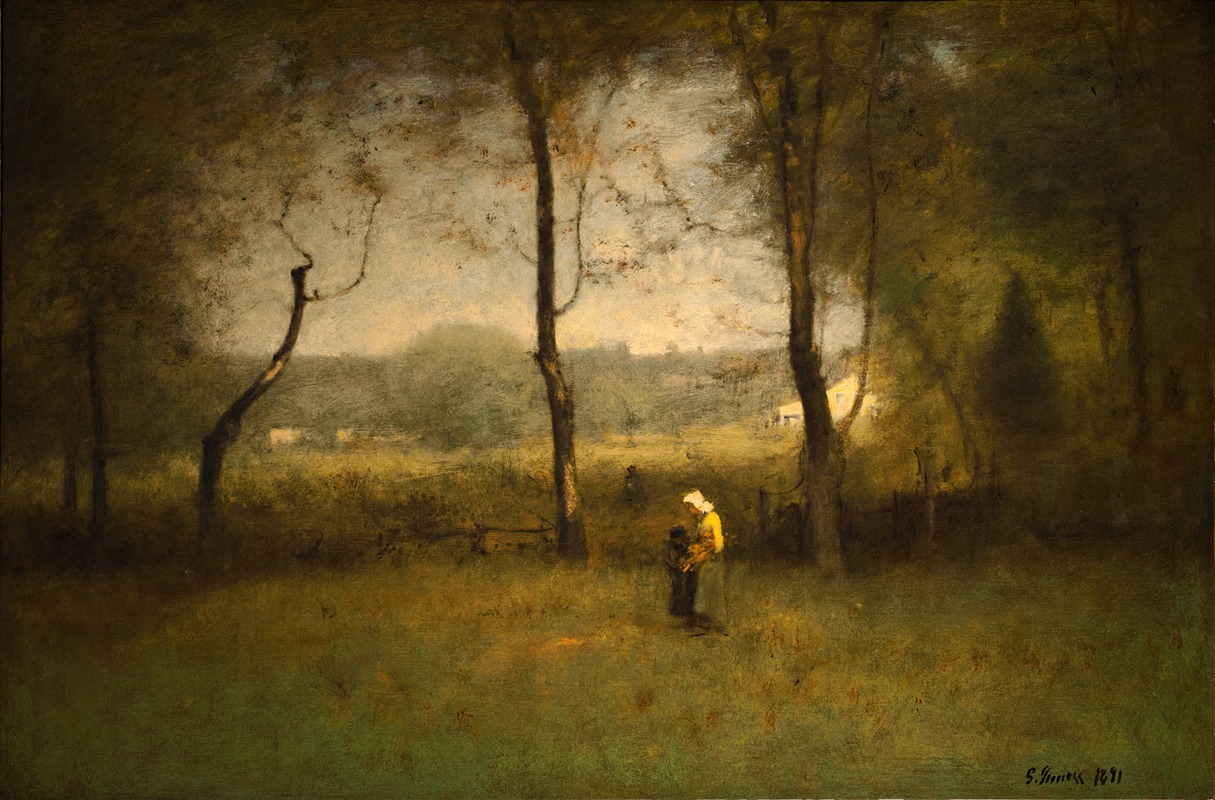
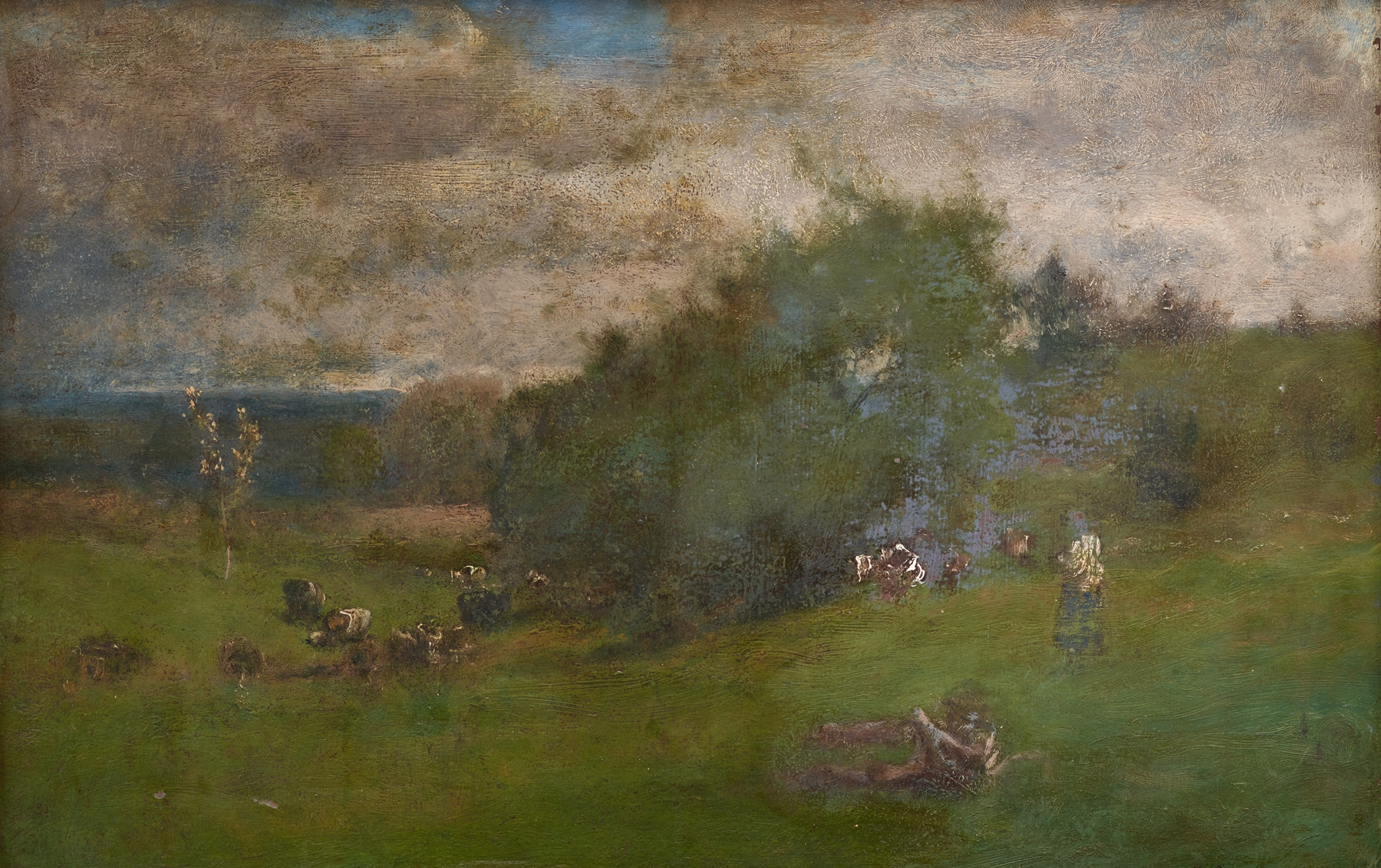
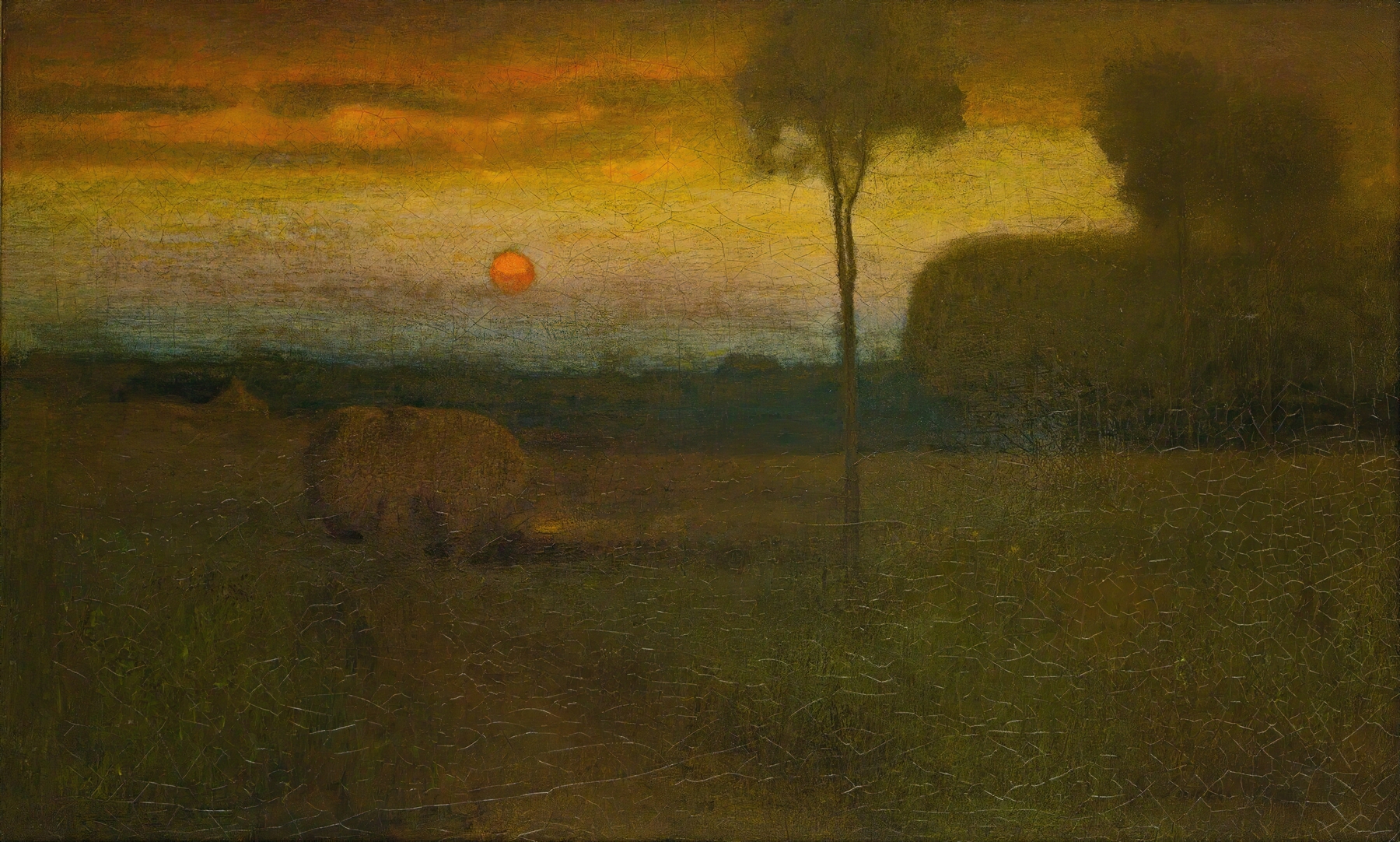
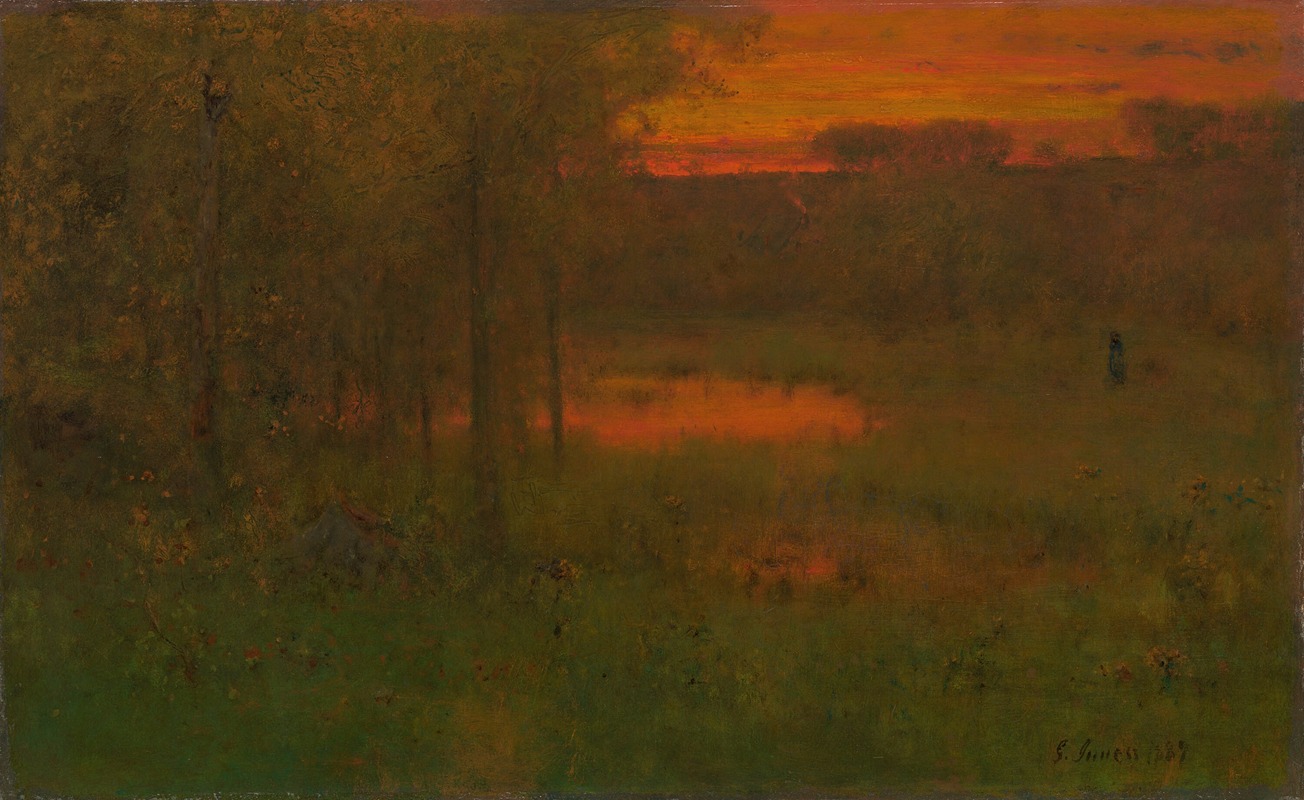
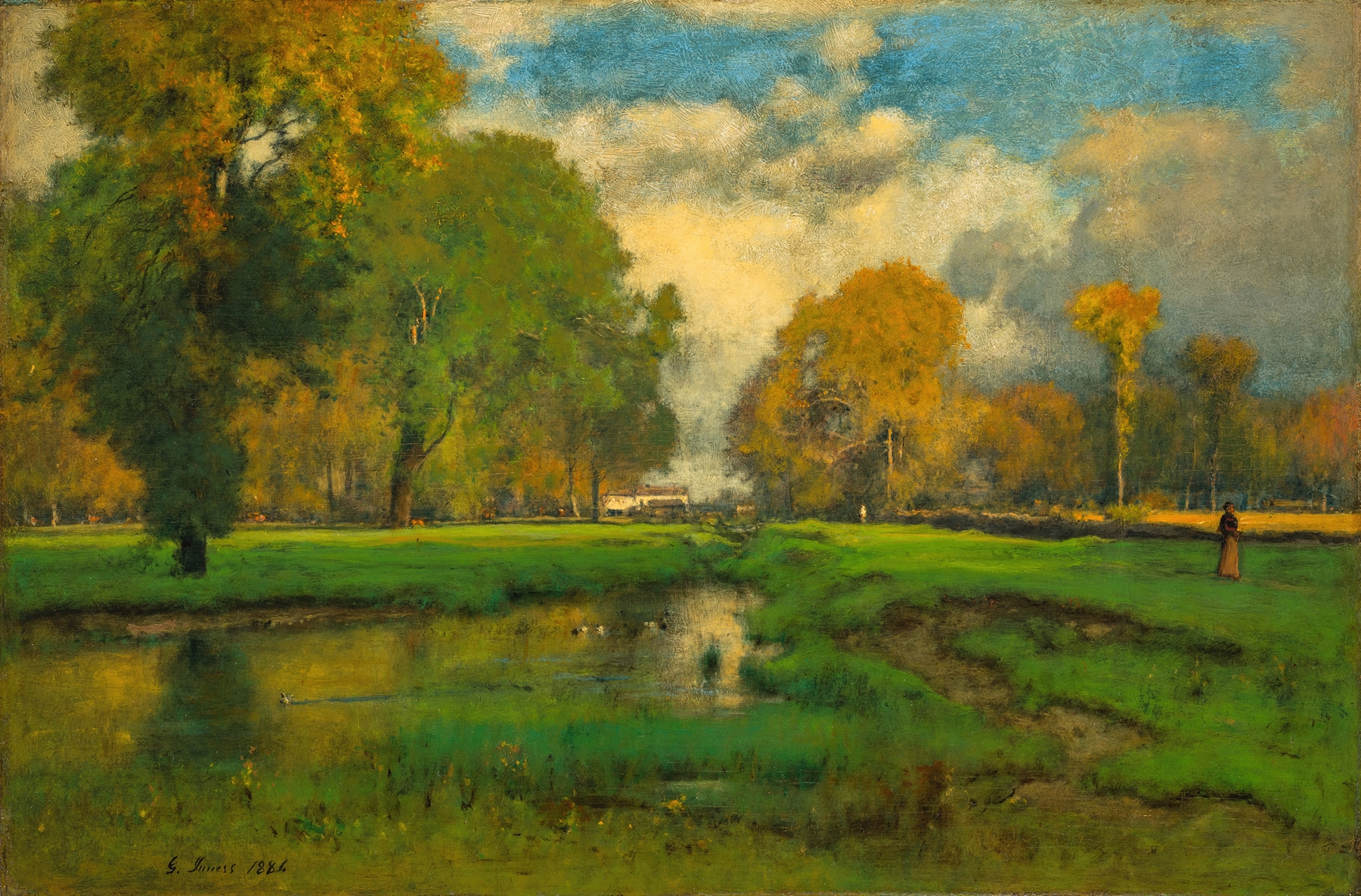
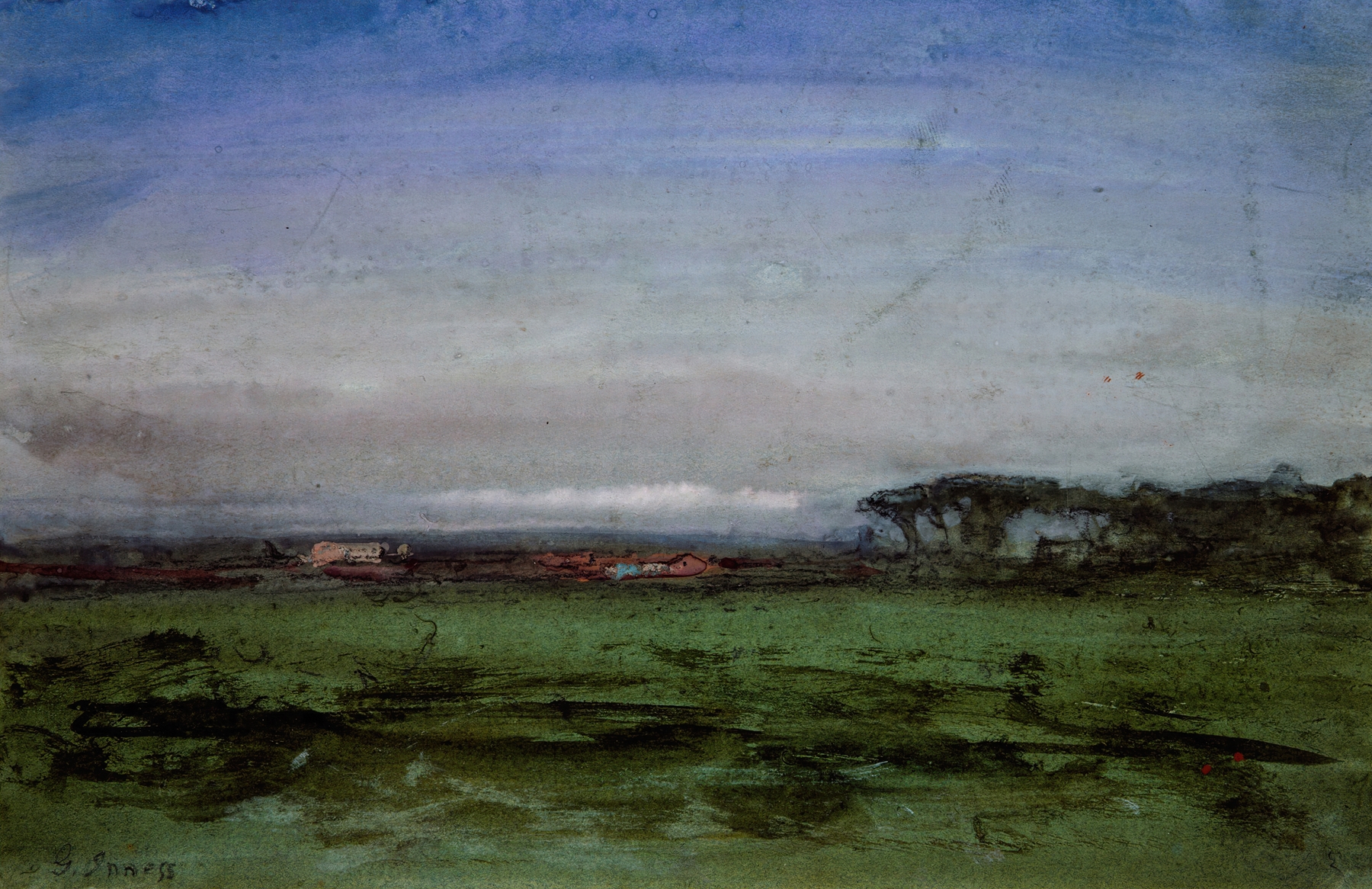
What if silence could speak through light? In Medfield Landscape, the stillness of nature whispers profound truths, inviting the viewer to pause and listen. Look to the left at the gentle curve of the river, where soft blues and greens intertwine, creating a serene flow that draws the eye toward the horizon. Notice how the light filters through the canopy of trees, casting dappled shadows on the ground and illuminating the delicate brushstrokes that breathe life into the foliage.
The careful balance of composition, with a subtle play between the foreground and background, creates a sense of depth that is both calming and expansive. As you explore deeper, consider the emotional tension between the tranquil landscape and the unseen presence of human influence. The solitary figure in the distance, almost insignificant against the vastness of nature, reflects our relationship with the environment—at once awe-inspiring and humbling. The palette, dominated by soft earth tones, evokes a feeling of nostalgia and longing, while the towering trees stand as silent guardians of the landscape, bridging the promise of serenity and the weight of time.
George Inness painted this work between 1868 and 1869, during a transformative period in American art. Living in Medfield, Massachusetts, he was deeply influenced by the burgeoning transcendentalist movement, which sought to elevate the spiritual experience of nature. This painting captures not only his mastery of light and form but also his profound engagement with the natural world during a time when artists were redefining their identities and roles in society.